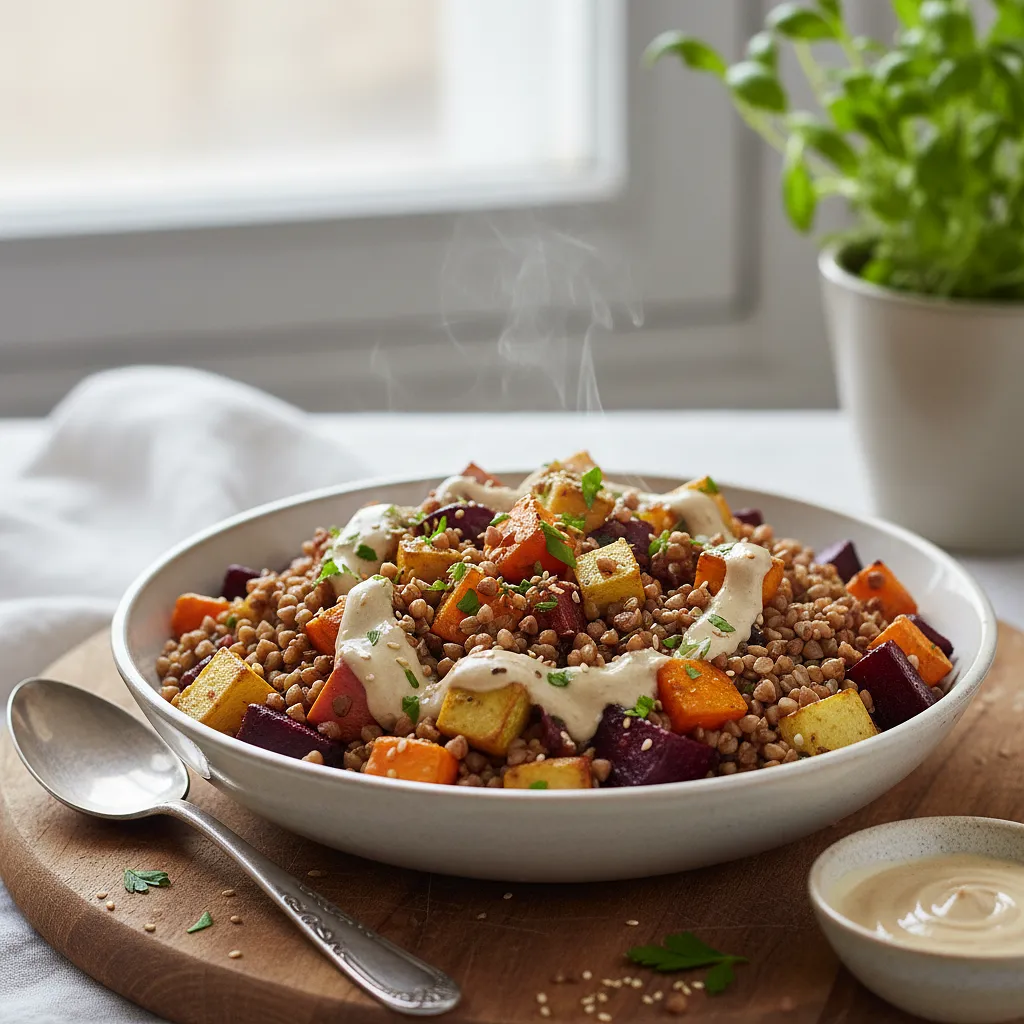
This dish is the essence of conscious and healthy cooking, perfect for cooler days. Its heart is raw buckwheat, with a delicate, nutty flavor that provides an excellent backdrop for the sweetness of roasted root vegetables – carrots, parsnips, and beets. The vegetables, roasted to tenderness with sprigs of thyme, release their natural sugars, creating a deep, caramelized flavor. Fresh kale adds crunch and nutritional value, which is 'massaged' with a bit of olive oil to make it tender and pleasant to eat. The whole dish is tied together with a velvety, creamy sauce made from tahini paste, lemon juice, and maple syrup, which adds a distinctive character and a slightly exotic note. The dish is not only delicious and filling but also incredibly nutritious – rich in fiber, plant protein, vitamins, and minerals. Visually, it presents beautifully, with a palette of colors from the deep purple of the beets, through the orange of the carrots, to the intense green of the kale. It is perfect as a wholesome lunch or a light dinner.
Start by preheating the oven. Set it to 200°C with the convection function or 220°C in top-bottom mode. Prepare a large baking tray by lining it with parchment paper. The paper will prevent the vegetables from sticking to the tray, and cleaning it will be much easier.
The oven must be well preheated before you put the vegetables in. Placing them in a cold oven will cause them to cook instead of roast, and they won't achieve a delicious, caramelized crust.
2
Thoroughly wash and peel the carrots, parsnip, and beets. You can use a vegetable peeler. Then cut them into equal pieces, e.g., cubes with a side of about 2 cm or into sticks. Peel the red onion and cut it into wedges. Equal pieces will ensure that all the vegetables roast at the same time.
Ingredients:
Carrot, Parsnip, Beetroot, Red onion
Be careful when cutting beets, as they stain heavily. You can wear disposable gloves or cut them on a board that is easy to clean. If the parsnip has a hard, woody core (which happens in larger specimens), cut it out before slicing the rest.
3
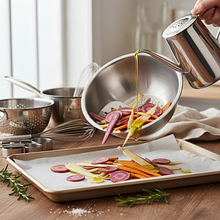
Transfer all the chopped vegetables to the prepared baking tray. Drizzle with 2 tablespoons (30g) of olive oil, sprinkle with salt (about 2 pinches) and freshly ground pepper. If you are using fresh thyme, place whole sprigs among the vegetables. Now mix everything thoroughly with your hands, ensuring that each piece of vegetable is coated with a thin layer of oil and seasoning.
It's best to mix the vegetables directly on the baking sheet – it means less washing up. Spread them out in a single layer. If the vegetables are piled on top of each other, they will steam instead of roast, which will result in a poorer taste and visual effect.
4
Place the tray in the preheated oven and bake for about 30-40 minutes. Halfway through baking (after about 15-20 minutes), remove the tray and stir the vegetables with a spatula to ensure they brown evenly. The vegetables are ready when they are soft inside (check with a fork) and have slightly browned, caramelized edges.
Every oven is different, so the baking time may vary slightly. Keep an eye on the vegetables towards the end of baking to avoid burning them. The finished vegetables should be sweet and aromatic.
Cooking the groats
5
While the vegetables are baking, cook the buckwheat. Pour 150g of buckwheat into a fine sieve and rinse it thoroughly under cold running water. Rinse until the water flowing from the sieve is clear. This step removes the bitter taste and impurities.
Ingredients:
raw buckwheat (white)
Do not skip rinsing the groats! This is a key step that significantly affects their flavor. Use a sieve with small enough holes so that the tiny groats do not escape.
6
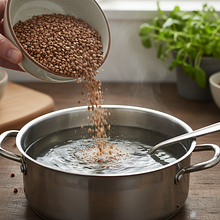
Rinse the groats and transfer them to a small pot with a thick bottom. Pour in 300 ml of water and add a pinch of salt. Bring to a boil over medium heat. Once the water starts to boil, reduce the heat to the minimum, cover the pot with a lid, and cook for about 15 minutes. After this time, turn off the heat and let the groats sit covered for another 5-10 minutes to absorb the remaining steam and become perfectly fluffy.
Ingredients:
raw buckwheat (white), Water, Salt
While cooking the groats, do not lift the lid and do not stir! This will allow it to absorb the water evenly. After cooking, you can gently 'fluff' it with a fork to separate the grains.
Preparation of the sauce and kale
7
Prepare the kale. Wash the leaves thoroughly and dry them. Tear the green parts from the tough, thick stems (discard the stems or use them for broth). Tear the leaves into smaller pieces and place them in a large bowl. Add one tablespoon (15g) of olive oil and a pinch of salt. Now the most important step: massage the leaves with your hands for about 1-2 minutes, kneading them until they become darker, softer, and reduce in volume.
Ingredients:
Kale, Extra virgin olive oil, Salt
Massaging kale is a technique that breaks down its tough structure, making it much tastier and easier to digest raw. Don't skip this step, the difference is huge!
8
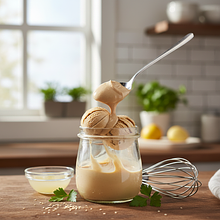
In a small jar or bowl, prepare the sauce. Place 3 tablespoons (45g) of tahini paste, 30 ml of lemon juice, 1 tablespoon (20g) of maple syrup, and 1 clove of garlic, pressed through a garlic press, into the container. Add 4 tablespoons (60ml) of water. Screw the jar lid on and shake vigorously until all the ingredients combine into a smooth, creamy sauce. If using a bowl, mix everything with a small whisk or fork. Taste and season with salt or pepper if needed.
Ingredients:
Pasta tahini, Lemon juice, Maple syrup, Garlic, Water
Initially, tahini may curdle and look separated – this is normal. Keep mixing, and after a while, it will achieve a smooth, creamy consistency. If the sauce is too thick, add a little more water (one teaspoon at a time) until you reach the desired pourable consistency.
Assembling the dish
9
When the vegetables are roasted and the buckwheat is cooked, it's time to combine the ingredients. In a large bowl, where the kale is already prepared, add the warm buckwheat and the hot roasted vegetables (remove the thyme sprigs). Gently mix everything with a large spoon to combine the flavors.
Ingredients:
raw buckwheat (white), Kale
Gently mix to avoid crushing the soft, roasted vegetables. The heat from the grains and vegetables will further soften the kale.
10
Transfer the finished dish to two plates or deep bowls. Generously drizzle each portion with the prepared tahini sauce. Sprinkle roasted pumpkin seeds on top for crunch. If you have fresh parsley, chop it and garnish the dish. Serve immediately while it's warm.
Ingredients:
Pumpkin seeds
The dish tastes delicious even cold, so it’s perfect for taking in a lunch box to work or school. You can store the sauce separately and drizzle it over the dish just before eating.
Fun Fact
💡
Buckwheat, contrary to its name, is not a grain. It belongs to the so-called pseudograins and is related to rhubarb and sorrel. This makes it naturally gluten-free and a great alternative for those with gluten intolerance.
Serve the dish in deep ceramic bowls that highlight its rustic character. You can add a dollop of vegan natural yogurt on top for extra creaminess and a tangy note. It pairs wonderfully with a glass of light, dry white wine.
🥡Storage
Store leftovers in the refrigerator in an airtight container for up to 3 days. It's best to store the sauce separately and drizzle it over the dish after reheating or just before eating it cold. The groats with vegetables can be reheated in a pan with a little water or in the microwave.
Main courses are the heart of every meal - hearty, delicious, and full of nutrients. Meats: beef, pork, poultry, and lamb in various versions. Fish and seafood: baked, fried, grilled, and stewed. Vegetarian dishes: tofu, tempeh, legumes as the main protein. Casseroles: pasta, potato, vegetable wi...
Vegetarian cuisine is a wealth of flavors without meat - healthy, colorful, and filling. Plant-based proteins: lentils, chickpeas, beans, peas, and soy take center stage. Cheeses and dairy: feta, halloumi, ricotta, and mascarpone in main dishes. Eggs in various forms: omelets, frittata, shakshuka...
Vegan cuisine features delicious dishes without animal products - healthy, ethical, and environmentally friendly. Plant-based protein: tofu, tempeh, soy, lentils, chickpeas, and beans take center stage. Vegan dairy substitutes: plant milks, cashew cheese, and vegan yogurts. Recipes for vegan burg...
Lunches are the main meal of the day - filling, balanced, and full of flavor. Traditional two-course lunches: soup and a main dish in Polish tradition. Pork chop with potatoes and cabbage - a classic of Polish lunches. Dumplings with meat, cheese, and fruit - hand-formed delicacies. Beef goulash,...
Gluten-free cuisine is the answer to the needs of people with celiac disease and gluten intolerance. Our recipes use flours: rice, corn, buckwheat, almond, and coconut. Gluten-free bread that tastes like traditional - breads, rolls, baguettes, and focaccias. Pasta made from rice, buckwheat, and c...
Fresh salads are the perfect dishes for any occasion - from a light lunch to an elegant dinner. In our collection, you will find both classic Greek and Caesar salads, as well as modern compositions with avocado, quinoa, or arugula. Recipes for vegetable, fruit, and salads with meat or seafood. Ea...





Comments (0)
Be the first to comment on this recipe!
Add a comment