Stale bread
Description
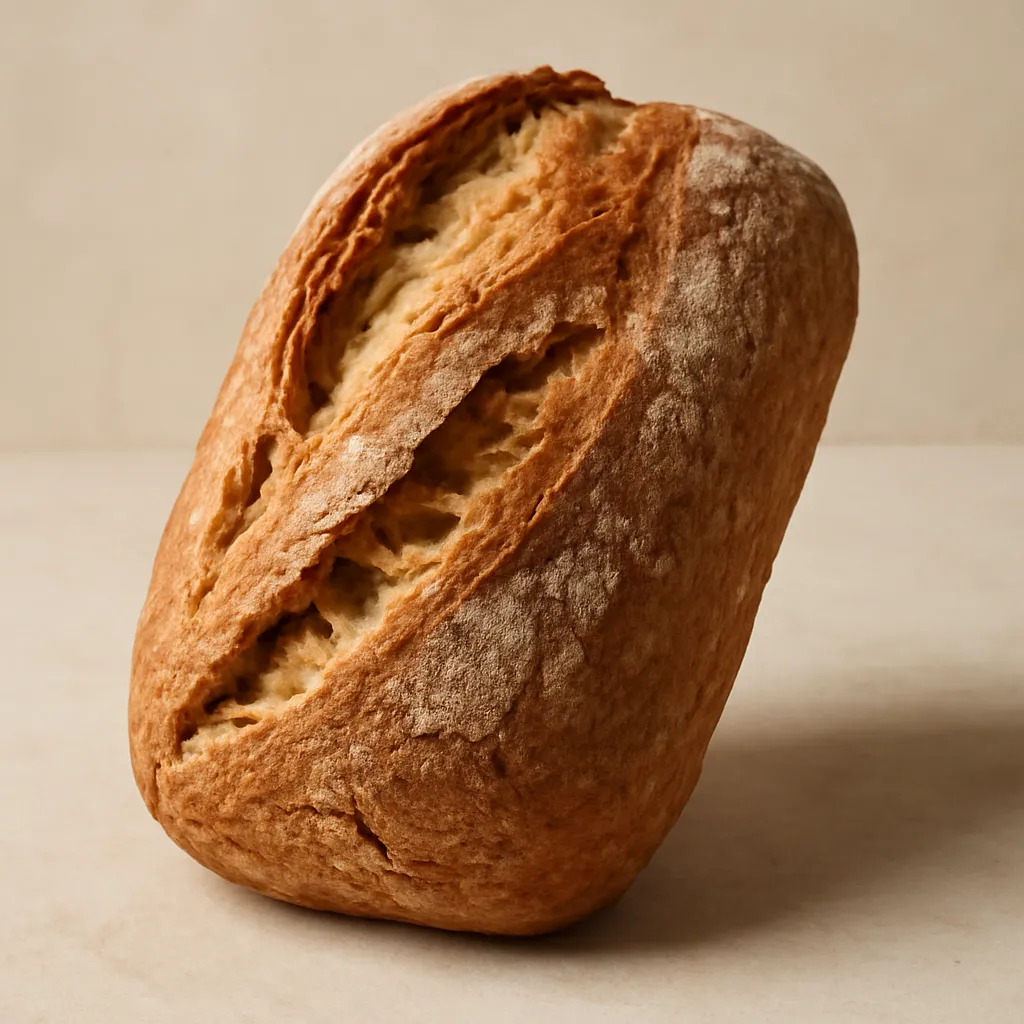
Stale bread has a hard, dry crust and a denser, slightly chewy crumb with a muted, often slightly sour aroma in the case of sourdough. It looks dull, breaks without elasticity, and makes a muffled sound when sliced, which immediately signals a loss of freshness, although the taste remains usable. Nutritionally, it is still a source of energy mainly in the form of carbohydrates, with some protein, fiber, B vitamins, and minerals depending on the type of flour; whole grain bread retains more value than white. Stale bread is useful in cooking as a coating, croutons, for casseroles, puddings, panzanella salad, or dumplings, and it refreshes well by moistening and toasting. Store it in a paper or linen bag in a cool, dry place, freeze it for longer storage, and thaw in portions, avoiding the refrigerator, which speeds up staleness.