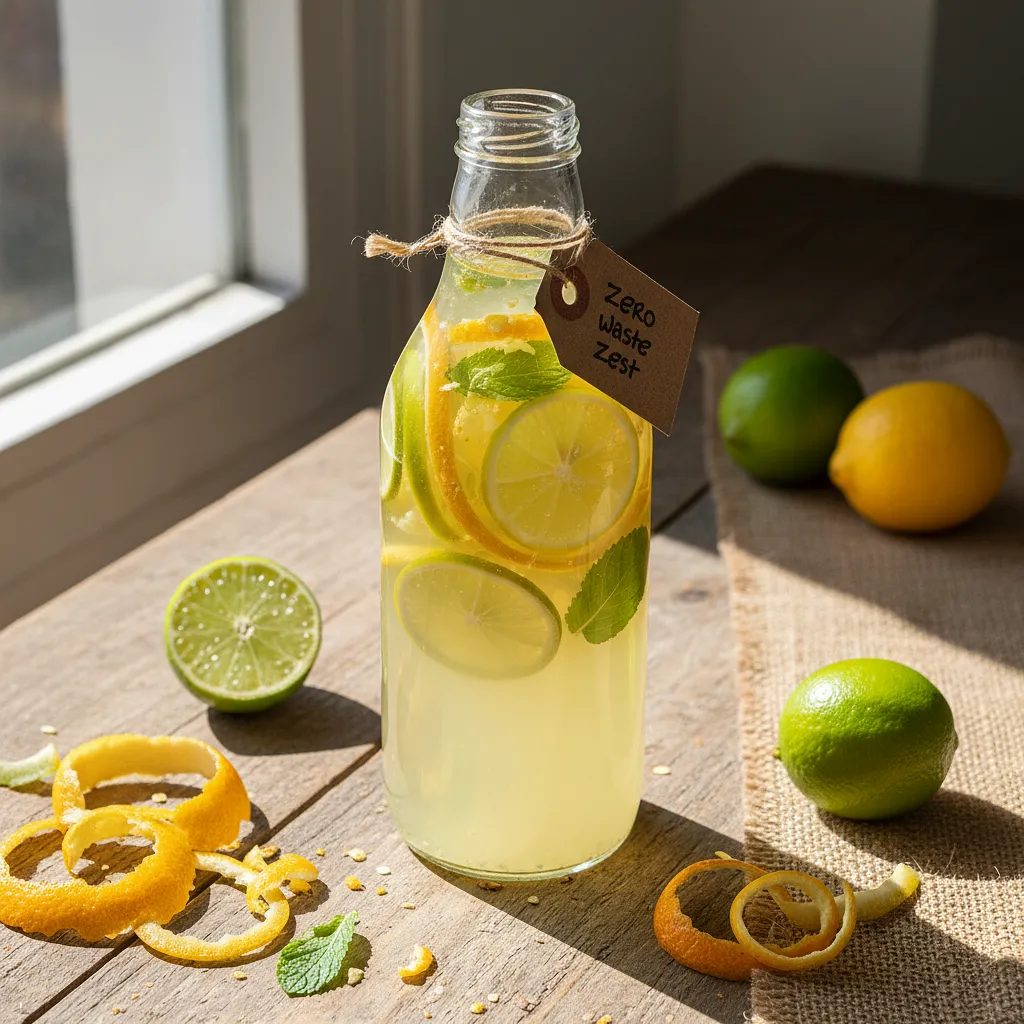
Zero Waste Citrus Cordial with Lime and Lemon

Drinks For Kids Vegan dishes 270 min Easy 30 wyświetleń ~35.80 PLN - (0)
Rate:
(0)
Start Cooking

Description

Discover the magic of a truly homemade drink with our zero waste citrus cordial! This is not just an ordinary lemonade – it’s an intense, aromatic syrup that captures the essence of lemons and limes. The secret lies in the 'oleo-saccharum' method, a 17th-century bartending technique that involves extracting essential oils from citrus peels using sugar. This results in a deep, multi-dimensional flavor that cannot be achieved by using juice alone. This recipe is a manifesto of the zero waste philosophy – we use the whole fruit, from the peel to the last drop of juice, minimizing waste. The finished cordial is incredibly versatile: when diluted with sparkling water, it creates a refreshing lemonade, added to tea it gives a citrusy note, and as an ingredient in cocktails (e.g., with gin or vodka) it elevates them to a higher level. Visually, the cordial has a beautiful, slightly cloudy, straw-green color, and its aroma is simply stunning.

Ingredients (6)

Servings:
15
  • Lemon 7.5 szt.
  • Lime 6.4 szt.
  • White sugar 400 g
  • Water 500 ml
  • ✨ Opcjonalne
  • Fresh ginger 30 g
  • Fresh mint 0.2 pęczków
💰 Szacowany koszt dania: ~35.80 PLN (2.39 PLN/porcję)

💡 Kliknij na składnik aby oznaczyć jako użyty

Preparation steps

Aromatic base 'Oleo-Saccharum'

1

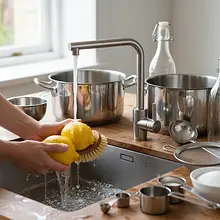
Thoroughly wash the lemons and limes in warm water, using a vegetable brush to remove any dirt and possible wax. Dry them with a paper towel. Using a vegetable peeler (either 'julienne' or regular), carefully remove the thin zest from the fruits, trying to take as little of the white, bitter part (albedo) as possible. We only want the colorful outer layer, where the essential oils are concentrated.

Ingredients: Lemon, Lime
The best tool will be a sharp vegetable peeler. If you don't have one, you can use a small, sharp knife, but be careful not to cut the peel too thickly. The white part under the peel is bitter and will ruin the taste of the cordial.
2

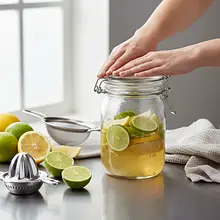
Transfer all the peels to a large, clean jar (about 1-1.5 liters) or a bowl with a tight-fitting lid. If you are using optional ginger, peel it and cut it into thin slices, then add it to the peels. Pour in all the sugar. Close the jar and shake it vigorously for about 30 seconds to coat each peel with sugar. Then open the jar and gently muddle the peels with the sugar using a wooden spoon or muddler for about a minute. This will help release the oils.

Ingredients: White sugar, Fresh ginger
Use a jar with a wide opening, which will make mixing and later removing the peels easier. The purpose of mashing is not to crush the peels, but merely to lightly 'stimulate' them to release their aromas.
3

Seal the jar tightly and set it aside at room temperature for at least 4 hours, preferably for 12 to 24 hours. During this time, the sugar, through the process of osmosis, will 'extract' the intensely fragrant oils from the peels, creating a thick, aromatic syrup at the bottom of the jar. Every few hours, you can shake the jar to mix the contents. You will know the process is working when you see the sugar starting to dissolve and form liquid, and when you open the jar, an incredible citrus aroma will rise.

Don't worry if there is still a lot of undissolved sugar after 4 hours. The process takes time. The longer it sits, the more intense the flavor will be. You can leave it for even the whole night.

Preparation of juice and syrup

4

When the oleo-saccharum is ready, prepare the juice. Cut all the previously peeled lemons and limes in half. Using a citrus juicer (manual or electric), squeeze all the juice into a separate container, such as a pitcher. Try to extract as much juice as possible. You should get about 400-500 ml of juice.

Ingredients: Lemon, Lime
To get more juice, roll the fruits on the countertop, pressing down firmly with your hand before cutting them. This will loosen their internal structure. Strain the juice through a sieve if you don't like pulp in it.
5

In a small saucepan, bring 500 ml of water to a boil. Pour the hot (but not boiling) water into a jar with aromatic peels and sugar. Close the jar and shake it vigorously (be careful, it's hot - use a cloth!) or stir with a spoon until all the remaining sugar is completely dissolved. Set the mixture aside for about 15 minutes to allow the flavors to meld.

Ingredients: Water
Adding hot water helps dissolve the remaining sugar and 'rinse' the last oils from the peels, maximizing flavor. Do not use boiling water to avoid steeping the peels and introducing bitter notes.

Finalizing the cordial

6

Prepare a large bowl or pitcher, and place a fine sieve or strainer lined with cheesecloth on top. Pour the entire contents of the jar (liquid along with the peels) through the sieve. Using the back of a spoon or spatula, press the peels firmly against the sieve to extract as much valuable, aromatic syrup as possible. You can throw the peels in the compost – they have already given all their best.

This step is crucial for achieving maximum flavor. Take your time and thoroughly squeeze the peels. What remains in the strainer is the essence of your cordial.
7

Into the strained, aromatic sugar syrup, pour the previously squeezed juice from lemons and limes. Mix everything thoroughly with a spoon or whisk until the liquids combine, creating a uniform cordial. If you are using optional mint, you can now add a few sprigs to the syrup and let it sit for 30 minutes for extra flavor, then remove them.

Ingredients: Fresh mint
The combination of sweet, aromatic syrup with fresh, sour juice creates the perfect balance of flavor. The taste of the cordial at this stage will be very intense - and that's how it should be, as it is a concentrate.
8

Prepare a clean, sterilized glass bottle or jar with a lid. To sterilize the container, you can scald it with boiling water or wash it in the dishwasher on the highest temperature. Using a funnel, pour the finished cordial into the bottle. Seal tightly and place it in the refrigerator. The cordial is ready to use immediately, but its flavor will be even better after 24 hours of 'marinating' in the fridge.

Sterilizing the bottle is important as it significantly extends the shelf life of the cordial, preventing the growth of bacteria. Always store it in the refrigerator.

Fun Fact

💡

The 'oleo-saccharum' method (from Latin: oil-sugar) was the foundation for creating almost every punch in the 17th and 18th centuries. It was considered the only proper way to extract the true essence of citrus fruits before modern bartending techniques were invented.

Best for

Tips

🍽️ Serving

To prepare the perfect lemonade, mix 1 part cordial with 3-4 parts cold sparkling or still water. Serve in a tall glass with plenty of ice, a slice of lemon or lime, and a sprig of fresh mint. The cordial is also a fantastic base for cocktails – try combining 40 ml of gin, 30 ml of cordial, and topping it up with sparkling water. You can also use it to soak sponge cakes or drizzle over vanilla ice cream.

🥡 Storage

Store the cordial in a tightly sealed, sterilized bottle in the refrigerator. Due to the high sugar content and acidity of the citrus juice, it will stay fresh for about 2-3 weeks. If you notice any change in smell or signs of fermentation, it should be discarded.

📸 Ugotowane przez społeczność

Zaloguj się, aby dodać zdjęcie
Dodaj zdjęcie gotowej potrawy

Po zatwierdzeniu przez moderatora otrzymasz 10 punktów doświadczenia.

🍲

Nikt jeszcze nie dodał zdjęcia. Bądź pierwszy!

Comments (0)

Be the first to comment on this recipe!

Add a comment

You might also like

Recipe Categories

Drinks
Drinks in: New Year's Eve

Drinks for New Year's Eve should be diverse so that every guest can find something for themselves - from champagne to cocktails.

See all recipes in this category

Recipes for kids are tasty, healthy, and visually appealing dishes - for little picky eaters and food lovers. Colorful and fun dishes: animals made from vegetables, faces from food, and rainbow plates. Hidden vegetables: spinach in pancakes, carrots in sauce, and zucchini in batter. Energetic bre...

See all recipes in this category

Vegan cuisine features delicious dishes without animal products - healthy, ethical, and environmentally friendly. Plant-based protein: tofu, tempeh, soy, lentils, chickpeas, and beans take center stage. Vegan dairy substitutes: plant milks, cashew cheese, and vegan yogurts. Recipes for vegan burg...

See all recipes in this category

New Year's Eve is a special time when we bid farewell to the old year and welcome the new one with great joy and hope. It is an extraordinary occasion that brings loved ones together at the table, where delicious dishes and drinks are a must. Traditionally, we celebrate this evening with a variet...

See all recipes in this category
Reklama