Homemade Egg Noodles in Turkish Style (Erişte)

Wegetariańskie Pasta and Risotto Middle Eastern Cuisine Main Dishes 180 min Medium 6 wyświetleń ~20.66 PLN - (0)
Rate:
(0)
Start Cooking

Description

Erişte is a traditional, homemade Turkish pasta that has been prepared in Anatolian homes for generations, especially in preparation for winter. Its name comes from the Persian word meaning 'thread'. It is characterized by a simple composition – flour, eggs, milk, and salt – but its secret lies in the hand-kneading and patience. As a result, we get short, flat noodles with a wonderfully elastic, meaty texture that absorbs sauces perfectly. Unlike Italian pasta, erişte is often dried before cooking, which gives it a unique character. It is most commonly served in a very simple yet incredibly tasty way: with browned butter, toasted walnuts, and a bit of spicy chili flakes. The dish is extremely filling and warming, perfect for cooler days. Its rustic appearance and deep, eggy flavor make it the essence of homemade, comfort food.

Ingredients (10)

Servings:
4
  • Wheat flour type 500 500 g
  • Free-range chicken eggs 4 szt.
  • Milk 3.2% 125 ml
  • Extra virgin olive oil 0.2 łyżek
  • Clarified butter (ghee) 80 g
  • Walnuts 100 g
  • 🌿 Przyprawy
  • Sól drobnoziarnista 2 łyżeczki
  • ✨ Opcjonalne
  • Semolina flour for dusting 50 g
  • Chili flakes (pul biber) 2 szczypty
  • Fresh parsley 0.5 pęczek
💰 Szacowany koszt dania: ~20.66 PLN (5.16 PLN/porcję)

💡 Kliknij na składnik aby oznaczyć jako użyty

Preparation steps

Preparing the dough

1

Prepare a large, wide bowl. Sift the wheat flour into it along with the salt. Sifting is not just to get rid of lumps – it aerates the flour, making the dough lighter. Then, using your hand or a spoon, create a wide indentation in the center of the flour, resembling a volcano crater. The bottom of the indentation should be visible.

Ingredients: Wheat flour type 500, Sól drobnoziarnista
Use a fine mesh strainer. Choose a bowl that is large enough for you to mix the ingredients freely without spilling flour outside. The indentation will prevent the liquid ingredients from spilling all over the bowl.
2

In a second, smaller bowl, combine the liquid ingredients. Crack the eggs, pour in the milk and olive oil. Using a fork or whisk, vigorously beat the ingredients for about a minute until you achieve a smooth, light yellow emulsion. Mixing well at this stage will ensure even distribution of the fat and eggs in the batter.

Ingredients: Free-range chicken eggs, Milk 3.2%, Extra virgin olive oil
Make sure the eggs and milk are at room temperature. Cold ingredients will cause the gluten in the flour to develop poorly, resulting in a tougher dough. Taking them out of the fridge 30-60 minutes before you start working will do the trick.

Kneading and resting the dough

3

Slowly, in a thin stream, pour the egg mixture into the well in the flour. Take a fork and gently start mixing the liquid in the center, gradually incorporating the flour from the inner walls of the 'crater'. Continue until a thick, sticky mass forms. When the fork can no longer manage, switch to kneading by hand, incorporating the remaining flour.

Do not pour the entire egg mixture at once, especially if you are unsure about the moisture of the flour. Do it gradually. If the dough seems too dry, you can add a teaspoon of water. If it is too sticky, sprinkle a little flour.
4

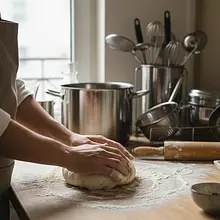
Transfer the dough from the bowl to a lightly floured work surface or clean kitchen countertop. Start kneading the dough. Use the heel of your hand to push the dough away from you with force. Then fold it in half, turn it 90 degrees, and repeat the process. Knead this way for 10-15 minutes. The finished dough should be smooth, very elastic, and springy. When pressed with a finger, it should slowly return to its shape. It should also not stick to your hands.

This is the most important step! Kneading develops the gluten network, which gives the pasta its elasticity. Do not shorten this time. If you have a stand mixer, you can use the dough hook and knead on low speed for 8-10 minutes. A common mistake is adding too much flour while kneading – the dough will become tough. Sprinkle the work surface minimally.
5

Form a smooth ball from the kneaded dough. Wrap it tightly in plastic wrap or place it in a bowl and cover it with a damp cloth. Let the dough rest for at least 60 minutes at room temperature. This time is essential for the gluten in the dough to relax, which will make it much easier to roll out.

Do not skip this step! Trying to roll out the dough immediately after kneading will be very difficult; the dough will shrink and resist. Wrapping it tightly prevents drying out and the formation of a hard crust on the surface.

Shaping the pasta

6

After resting, unwrap the dough and place it on the countertop. It will now be noticeably softer and more pliable. Use a sharp knife or dough scraper to divide the ball into 4 equal parts. Keep the parts you are not currently using covered (with plastic wrap or a cloth) to prevent them from drying out.

Dividing the dough into smaller portions makes the rolling process much easier. It's easier to manage a smaller piece and achieve an even thickness across the entire surface.
7

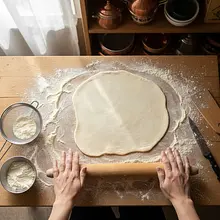
Take one portion of the dough and gently flatten it. Dust the work surface with semolina flour or regular flour. Using a rolling pin, start rolling the dough from the center outwards, regularly turning the dough 90 degrees. Roll patiently until you achieve a very thin, round or rectangular dough with a thickness of about 1-2 mm. It should be almost transparent – you should be able to see the outlines of your hand through it.

Ingredients: Semolina flour for dusting
Use a long, heavy rolling pin. If the dough starts to stick to the pin or the work surface, sprinkle it with a little semolina. Semolina is better because it doesn't absorb into the dough as easily. Regularly turning the dough ensures even rolling.
8

Roll out the dough and leave it on the countertop for about 15-20 minutes to dry slightly. The surface of the dough should become matte and feel like skin to the touch, but still be elastic. Do not let it dry out completely, as it will start to crumble when cutting. Repeat the rolling and drying process with the remaining 3 pieces of dough.

This step is crucial to prevent the pasta from sticking together after cutting. You can hang the dough sheets over the backs of chairs covered with clean towels to speed up the process.
9

Dust the dried dough sheet generously with flour, then roll it loosely like a pancake or fold it several times to create a flat, multi-layered strip. Using a very sharp knife or a pizza cutter, cut the dough crosswise into strips about 5 mm wide. Then, unfold the cut 'ribbons' and cut them into shorter pieces 4-5 cm long.

A very sharp knife is essential to cut through the layers of dough without crushing them. After cutting, gently toss the sliced pasta with your hands to separate the individual pieces and dust them with flour to prevent sticking.
10

Spread the prepared pasta loosely on a clean kitchen towel or on a baking sheet lined with parchment paper. Leave it to dry for another 30-60 minutes before cooking. If you want to store the pasta for later, dry it for 12-24 hours in a well-ventilated place until it is completely hard and brittle.

While drying, occasionally toss the pasta with your hands to ensure even drying on all sides. Well-dried pasta can be stored in an airtight container for up to several months.

Cooking and serving

11

In a large pot (minimum 4-5 liters), bring water to a boil. When the water starts to boil vigorously, add a generous pinch of salt (about 1 tablespoon for 3 liters of water). Add the prepared pasta in batches to the boiling water, gently stirring to prevent it from sticking to the bottom. Cook for 5-8 minutes. The cooking time depends on the thickness and dryness of the pasta. It's best to taste it after 5 minutes. The pasta should be 'al dente' – cooked but still slightly firm.

Use a really large pot. The pasta needs plenty of room to swim freely, otherwise it will stick together. Don't pour out all the cooking water! Save about half a cup – it might come in handy for thinning the sauce.
12

While the pasta is cooking, prepare the sauce. In a large skillet, melt ghee over medium heat. When the ghee has melted and starts to gently foam, add coarsely chopped walnuts. Fry, stirring frequently, for 2-3 minutes, until the nuts are lightly browned and the ghee takes on an amber color and begins to release an intense, nutty aroma. Be careful not to burn the ghee.

Ingredients: Clarified butter (ghee), Walnuts
The best choice is a pan with a light bottom, which makes it easier to control the color of the butter. The process of browning the butter (beurre noisette) is very quick, so don't step away from the pan. As soon as you smell the nutty aroma, remove the pan from the heat.
13

Drain the cooked pasta in a colander. Do not rinse it with cold water! Immediately transfer the hot pasta to the pan with browned butter and nuts. Gently mix everything using two spoons or kitchen tongs, so that each piece is coated with the sauce. Transfer to plates. Optionally, sprinkle with freshly chopped parsley for freshness and chili flakes for a bit of heat. Serve immediately.

Ingredients: Chili flakes (pul biber), Fresh parsley
If the sauce seems too thick, you can add 2-3 tablespoons of the water reserved from cooking the pasta. The starch in this water will help create a velvety emulsion.

Fun Fact

💡

In Turkey, preparing erişte is often a family and social ritual. Women from the neighborhood gather together to make large quantities of pasta for the winter. After cooking and drying, it is stored in cloth bags, serving as a base for quick and nutritious meals.

Best for

Tips

🍽️ Serving

A classic serving with browned butter and nuts is excellent on its own. You can enhance it by adding crumbled feta cheese or Turkish tulum cheese. Another popular version is serving the pasta with a thick yogurt sauce with garlic and dried mint. Erişte also works great as an addition to thick soups and stews.

🥡 Storage

Freshly prepared, uncooked pasta can be stored in the refrigerator for up to 2 days, loosely arranged and sprinkled with semolina. To store it for a longer period, it should be completely dried (for 24-48 hours) until it is hard and brittle. Such pasta should be kept in an airtight container in a dry and dark place for up to 6 months. Cooked pasta can be stored in the refrigerator for up to 3 days.

📸 Ugotowane przez społeczność

Zaloguj się, aby dodać zdjęcie
Dodaj zdjęcie gotowej potrawy

Po zatwierdzeniu przez moderatora otrzymasz 10 punktów doświadczenia.

🍲

Nikt jeszcze nie dodał zdjęcia. Bądź pierwszy!

Comments (0)

Be the first to comment on this recipe!

Add a comment

You might also like

Recipe Categories

Pasta and risotto are Italian classics loved by the whole world - creamy, hearty, and delicious. Pasta carbonara, bolognese, puttanesca, arrabiata, and cacio e pepe - sauces with tradition. Fresh homemade pasta: tagliatelle, fettuccine, and ravioli with handmade dough. Meat and vegetarian lasagna...

See all recipes in this category

Middle Eastern cuisine is a mosaic of flavors from Lebanon, Israel, Turkey, and Iran - aromatic and rich in spices. Hummus, falafel, baba ghanoush, and tahini are staples you can prepare at home. Kebabs, shawarma, and kofta - meat specialties from the grill and rotisserie. Tabbouleh, fattoush, an...

See all recipes in this category
Main Dishes
Main Dishes in: Christmas Eve Dinner

Main courses are the heart of every meal - hearty, delicious, and full of nutrients. Meats: beef, pork, poultry, and lamb in various versions. Fish and seafood: baked, fried, grilled, and stewed. Vegetarian dishes: tofu, tempeh, legumes as the main protein. Casseroles: pasta, potato, vegetable wi...

See all recipes in this category

Vegetarian cuisine is a wealth of flavors without meat - healthy, colorful, and filling. Plant-based proteins: lentils, chickpeas, beans, peas, and soy take center stage. Cheeses and dairy: feta, halloumi, ricotta, and mascarpone in main dishes. Eggs in various forms: omelets, frittata, shakshuka...

See all recipes in this category
Reklama