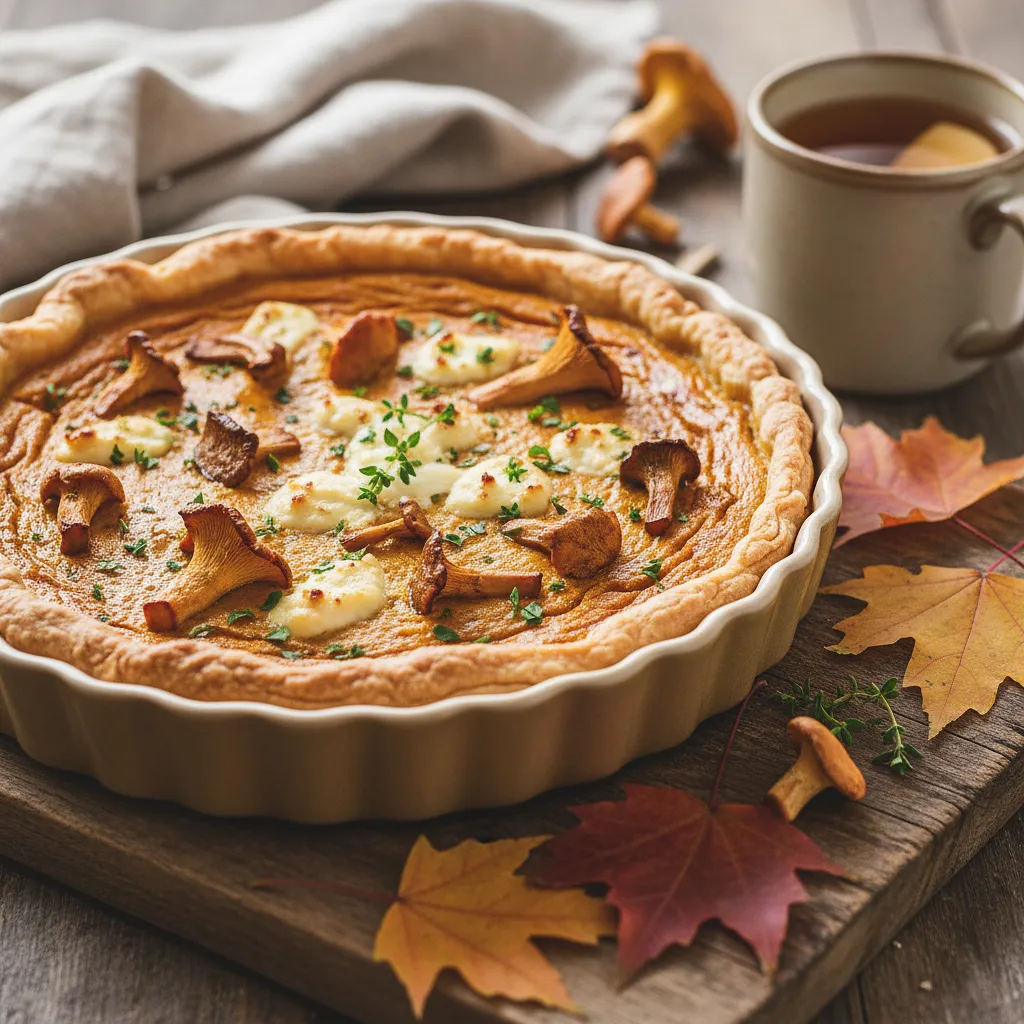
This autumn tart is the essence of seasonal flavors, perfect for chilly evenings. The crumbly, buttery crust is filled with a velvety, slightly sweet puree of roasted Hokkaido pumpkin, which pairs beautifully with the intense, earthy aroma of wild mushrooms. The whole dish is balanced by the characteristic creamy and slightly tangy note of goat cheese, which creates appetizing golden spots on the surface after baking. The addition of fresh thyme and nutmeg enhances the depth of flavor and adds elegance to the dish. The tart looks incredibly appetizing thanks to the contrast of the orange filling and the darker mushrooms. It is a dish that works well as an exquisite lunch, a main course at a gathering with friends, or a hearty dinner. It can be served warm, accompanied by a simple arugula salad and vinaigrette, creating a balanced and complete meal.
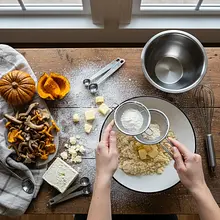
Sift the flour onto a clean work surface or into a large bowl. Add a pinch of salt and mix. Cut the cold butter into small cubes (about 1x1 cm) and add it to the flour. Using a knife or a special pastry cutter, chop the butter into the flour vigorously until the mixture resembles wet sand or crumbs. The goal is to warm the butter as little as possible with your hands.
Ingredients:
Wheat flour type 500, Butter, Salt
The best tool is a large chef's knife or a pastry cutter. Alternatively, you can use a food processor with an 'S' blade - pulse the flour and butter together for a few seconds. The key to flakiness is cold butter and minimal contact with the warmth of your hands.
2
In a small bowl, beat one egg with a fork. Make a small well in the mixture of flour and butter and pour in the beaten egg and a tablespoon of very cold water. Now, very quickly knead the dough with your hands, just until the ingredients come together into a uniform ball. Do not knead the dough for long!
Ingredients:
Egg, Cold water
A common mistake is kneading the dough for too long. This causes the gluten to develop, resulting in a tough rather than crumbly dough after baking. Knead for a maximum of 30-60 seconds. If the dough is too dry and crumbles, add a second tablespoon of cold water.
3
Shape the dough into a ball and slightly flatten it to form a disk. Wrap it tightly in plastic wrap and place it in the refrigerator for at least 30 minutes, preferably for an hour. Chilling the dough is crucial for the butter to firm up, which will ensure perfect flakiness after baking.
Do not skip this step! Chilling the dough prevents it from shrinking during baking and makes it easier to roll out. You can prepare the dough a day in advance and store it in the refrigerator.
4
Preheat the oven to 190°C (fan). Take the chilled dough out of the fridge. Lightly dust the work surface with flour. Roll out the dough into a round disc about 3-4 mm thick and larger in diameter than your tart pan. To transfer the dough, gently roll it onto the rolling pin and unroll it over the pan. Carefully press the dough into the bottom and sides of the pan, using your fingers. Trim off the excess dough with a knife, running it along the edge of the pan.
Ingredients:
Wheat flour type 500
Use a tart pan with a removable bottom, 24-26 cm in diameter. If the dough cracks while transferring, don't worry - just 'patch' the hole with a piece of dough, pressing it together in the pan. Prick the bottom of the pan with a fork in several places to allow steam to escape.
5
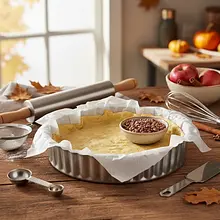
Place a piece of parchment paper on the dough in the mold, ensuring it covers the entire surface. Pour weights onto the paper - this can be dry beans, peas, rice, or special ceramic baking beads. Put the mold in the preheated oven and bake for 15 minutes. After this time, carefully remove the paper with the weights and bake the bottom for another 10 minutes, until it is lightly golden and dry. Remove from the oven and set aside.
This process is called 'blind baking'. It is essential for the tart crust to be crispy and not absorb moisture from the filling. The weight prevents the dough from rising during baking.
Preparation of the Filling
6
Meanwhile, while the crust is baking, prepare the pumpkin. Wash it, cut it in half, and use a spoon to remove the seeds along with the fibrous flesh. Cut the pumpkin into smaller pieces (you don't need to peel it). Arrange on a baking sheet lined with parchment paper, drizzle lightly with oil, sprinkle with salt, and place in the oven (you can bake it together with the crust if you have space) for about 20-25 minutes at 190°C, until the flesh is completely soft.
Ingredients:
Hokkaido pumpkin, Olive oil, Salt
Hokkaido pumpkin has an edible skin that becomes soft when roasted, adding color and nutritional value. You can check if it's ready by piercing it with a fork - it should go in easily.
7
When the baked pumpkin has cooled slightly, separate the flesh from the skin (it should come off easily) and transfer it to a bowl. Blend into a smooth purée using an immersion blender or a countertop blender. Measure out about 400g of purée and set aside to cool completely.
Ingredients:
Hokkaido pumpkin
If you don't have a blender, you can mash the pumpkin very thoroughly with a potato masher or a ricer. It's important that the purée is smooth and lump-free, and also cooled before adding the eggs, otherwise they may curdle.
8
Clean the mushrooms thoroughly (do not soak them in water, use a brush or a damp cloth) and cut them into thicker slices or smaller pieces. Peel the shallots and chop them into small cubes. Peel the garlic and slice it thinly.
Ingredients:
Grzyby leśne (świeże lub mrożone), Shallot onion, Garlic
If you are using frozen mushrooms, toss them directly onto the heated pan without thawing them first. This way, they will release water and fry instead of boiling.
9
In a large skillet, heat 2 tablespoons of olive oil. Add the chopped shallot and sauté over medium heat for 2-3 minutes until translucent. Add the garlic and sauté for another minute, being careful not to burn it. Increase the heat, add the mushrooms, and sauté, stirring occasionally, for 5-7 minutes until the mushrooms are browned and their moisture has evaporated. Season with salt and pepper. Remove from heat.
It's best to use a large skillet so that the mushrooms have plenty of space to fry freely rather than steam. Cooking over higher heat will help achieve a nice brown color and intense flavor.
Assembly and Baking
10
In a large bowl, place the cooled pumpkin puree. Add the cream, 2 eggs, freshly grated nutmeg, and the leaves from one sprig of thyme. Season with salt and pepper. Mix everything thoroughly with a whisk until you have a smooth, uniform mixture.
Make sure the mixture is well seasoned. Taste a little (keeping in mind that it contains raw eggs) and add more salt or pepper if needed. It should be bold in flavor.
11
On the pre-baked tart base, evenly spread the sautéed mushrooms with shallots. Then, gently pour the prepared pumpkin mixture over them, spreading it to cover the entire surface. Cut the goat cheese into slices about 0.5 cm thick and arrange them on top of the mixture.
Ingredients:
Goat cheese (roll)
Pour the mixture slowly and carefully to avoid disturbing the layer of mushrooms. You can gently tap the mold on the countertop to help the mixture spread evenly and remove air bubbles.
12
On top of the tart, arrange the remaining sprigs of thyme. If using, sprinkle the tart with chopped walnuts. Reduce the oven temperature to 180°C (fan) and place the tart inside. Bake for about 30-35 minutes. The filling should set (the center may still be slightly wobbly), and the top, including the cheese, should be appetizingly browned.
Ingredients:
Fresh thyme, Walnuts
To check if the tart is ready, gently shake the pan. If the center is very liquid, bake for another 5-10 minutes. A slight jiggle in the very center is fine - the tart will 'set' while cooling.
13
Remove the tart from the oven and let it cool for at least 15-20 minutes before slicing. This will allow the filling to set, making it easier to cut the tart into neat pieces. Serve warm.
Cutting a hot tart straight from the oven will cause the filling to spill out. Patience is key to achieving perfect portions. The tart is also delicious the next day, after reheating.
Fun Fact
💡
Pumpkin, although commonly regarded as a vegetable, is botanically a fruit, specifically a berry! It belongs to the same family as watermelons and cucumbers.
Serve the tart warm, garnished with fresh thyme leaves. It pairs perfectly with a light arugula salad drizzled with a vinaigrette made from balsamic vinegar and olive oil, which will balance the richness of the tart's flavors. You can also serve a dollop of thick natural yogurt.
🥡Storage
Store the remaining tart in the refrigerator, covered with plastic wrap, for up to 3 days. It is best to reheat it in an oven preheated to 160°C for 10-15 minutes to restore the crispness of the crust. Reheating in the microwave will make the pastry soft.
Main courses are the heart of every meal - hearty, delicious, and full of nutrients. Meats: beef, pork, poultry, and lamb in various versions. Fish and seafood: baked, fried, grilled, and stewed. Vegetarian dishes: tofu, tempeh, legumes as the main protein. Casseroles: pasta, potato, vegetable wi...
Dishes for special occasions are culinary masterpieces for birthdays, anniversaries, and holidays. Grilled beef steak with herb butter - restaurant quality at home. Beef Wellington - beef in puff pastry with duxelles. Roast duck with apples - a holiday tradition in a new edition. Pink salmon with...
Vegetarian cuisine is a wealth of flavors without meat - healthy, colorful, and filling. Plant-based proteins: lentils, chickpeas, beans, peas, and soy take center stage. Cheeses and dairy: feta, halloumi, ricotta, and mascarpone in main dishes. Eggs in various forms: omelets, frittata, shakshuka...
Lunches are the main meal of the day - filling, balanced, and full of flavor. Traditional two-course lunches: soup and a main dish in Polish tradition. Pork chop with potatoes and cabbage - a classic of Polish lunches. Dumplings with meat, cheese, and fruit - hand-formed delicacies. Beef goulash,...
Comments (0)
Be the first to comment on this recipe!
Add a comment