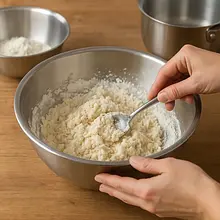
Prepare a large bowl. Place the semi-fat curd in it. If the curd is very moist, it is worth draining it first in a clean cloth or cheesecloth. Using a fork, thoroughly mash the curd into the smallest possible lumps until its consistency resembles a thick paste.
Description
Plum dumplings are the quintessence of Czech home cooking, a dish that evokes childhood memories and the warmth of family home. They are delicate, fluffy dumplings made from a cheese dough, with a juicy, ripe plum at their heart. Traditionally served as a sweet main dish, especially in the summer and early autumn, they also work well as a hearty dessert. In this version, classic meets modernity: instead of simple butter with sugar, the dumplings are drizzled with a velvety cheese sauce with real vanilla, and the whole is sprinkled with aromatic, dry-roasted poppy seeds, which add an extraordinary crunch and nutty flavor. The contrast between the soft, steaming dough, slightly tart fruit, creamy sauce, and crunchy topping creates an unforgettable taste experience. The dish is not only delicious but also beautifully presented on the plate, enticing with its colors and textures.
Ingredients (13)
- Semi-fat cottage cheese 250 g
- Wheat flour type 450 250 g
- Egg 1 szt.
- sugar 15 g
- Hungarian plums 480 g
- Cottage cheese for cheesecake or vanilla homogenized cheese 200 g
- Milk 3.2% 50 ml
- Powdered sugar 30 g
- Vanilla extract 5 g
- Masło 82% 50 g
- Blue poppy seeds 3 łyżki
- 🌿 Przyprawy
- Salt 0.1 szczypt
- ✨ Opcjonalne
- Fresh mint 0.2 pęczków
💡 Kliknij na składnik aby oznaczyć jako użyty
Preparation steps
Dough for Dumplings
In a bowl with the crushed cottage cheese, add the sifted wheat flour, sugar, and two pinches of salt. Initially mix the dry ingredients with the cottage cheese using a spoon or spatula, creating a loose, crumbly mixture. Then, crack one egg into the center.
Start kneading the dough. First, combine the ingredients in a bowl using a spoon, and when they start to come together, transfer the dough to a lightly floured surface or kitchen countertop. Knead the dough by hand for about 5-7 minutes. Press it, fold it in half, and turn it. Continue until the dough becomes smooth, elastic, and uniform. It should be soft and slightly sticky, but come away from your hands.
Wrap the formed ball of dough in plastic wrap or cover it with a clean kitchen towel in a bowl. Let the dough rest for about 30 minutes at room temperature. This step allows the gluten in the flour to relax, making the dough more pliable and easier to roll out.
Preparation of the Filling and Shaping
While the dough is resting, prepare the plums. Wash them thoroughly under running water and dry with a paper towel. Cut each plum in half lengthwise and remove the pit. If the plums are very sour, you can sprinkle a little sugar inside each half.
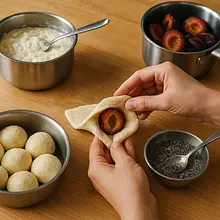
Transfer the rested dough onto a lightly floured work surface. Roll it out into a sheet about 3-4 mm thick. Using a knife or pastry cutter, cut the sheet into equal squares with a side of about 6-7 cm. Place half a plum (cut side up) in the center of each square.
Now the most important step: shaping the dumplings. Grab two opposite corners of the square of dough and pinch them tightly over the plum. Then take the two remaining corners and pinch them as well, creating a pouch. Seal all the edges of the dough carefully to ensure the plum is securely enclosed inside. Finally, gently roll the dumpling in your hands, shaping it into a neat, smooth ball. Make sure there are no holes or cracks.
Cooking Dumplings
In a large, wide pot, bring a substantial amount of water to a boil (at least 3-4 liters). Salt the water (about 1 teaspoon of salt for every 2 liters of water). The water should be gently boiling, but not bubbling vigorously. Reduce the heat to medium.
Carefully, in batches, place the dumplings into boiling water using a slotted spoon. Do not drop them all in at once. Gently stir the water with a wooden spoon to prevent the dumplings from sticking to the bottom. Cook them for about 4-5 minutes from the moment they float to the surface. They will be ready when they become fluffy and increase in volume.
Preparation of Additions and Serving
In a small, dry skillet (without oil), place the poppy seeds. Heat over medium heat for 2-3 minutes, stirring or shaking the skillet frequently. The poppy seeds are ready when they start to smell intensely nutty and gently 'pop'. Be careful not to burn them, as they will become bitter. Immediately transfer to a cold plate to stop the roasting process.
In a small bowl, place the cheese for the cheesecake or homogenized cheese. Add powdered sugar, vanilla extract, and 2-3 tablespoons of milk. Using a whisk or fork, mix everything vigorously until you achieve a smooth, uniform sauce. If the sauce is too thick, add a little more milk until you reach the desired pourable consistency.
In a small saucepan, melt the butter over low heat. Heat it only until it is completely melted. Do not bring it to a boil or let it burn.
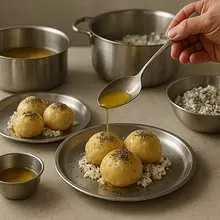
On the plates, arrange 3-4 hot, freshly cooked dumplings. Drizzle them generously with melted butter. Then, place a large spoonful of vanilla cottage cheese sauce in the center of each plate. Sprinkle everything generously with toasted poppy seeds. Optionally, for extra sweetness and decoration, dust everything with powdered sugar through a sieve and garnish with fresh mint leaves. Serve immediately.
Fun Fact
In the Czech Republic, fruit dumplings (ovocné knedlíky) are so popular that they are often eaten for lunch as a main dish rather than a dessert. There are many variations with different seasonal fruits, such as strawberries, apricots, or blueberries.
Best for
Tips
Serve the dumplings immediately after cooking, when they are the most delicate. The dish pairs wonderfully with a glass of cold milk or a light fruit compote. To make the dish more filling, you can increase the number of dumplings per serving.
Dumplings taste best fresh. If there are any leftovers, store them in the refrigerator in a closed container for up to 2 days. Keep the sauce and topping separate. Reheat the dumplings by steaming them for a few minutes or briefly placing them in hot water – they will regain their fluffiness. Do not reheat in the microwave, as they will become rubbery.
📸 Ugotowane przez społeczność
Zaloguj się, aby dodać zdjęcieDodaj zdjęcie gotowej potrawy
Po zatwierdzeniu przez moderatora otrzymasz 10 punktów doświadczenia.
Nikt jeszcze nie dodał zdjęcia. Bądź pierwszy!
Comments (0)
Be the first to comment on this recipe!
Add a comment