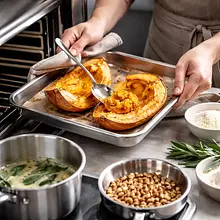
Preheat the oven to 200°C (fan). Wash the Hokkaido pumpkin thoroughly, cut it in half, and use a spoon to remove the seeds and fibrous flesh. Cut the pumpkin into smaller pieces (quarters or eighths). Place them skin side down on a baking sheet lined with parchment paper. Bake for 30-40 minutes, until the flesh is very soft (check with a fork - it should go in easily).
Description
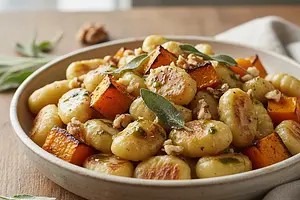
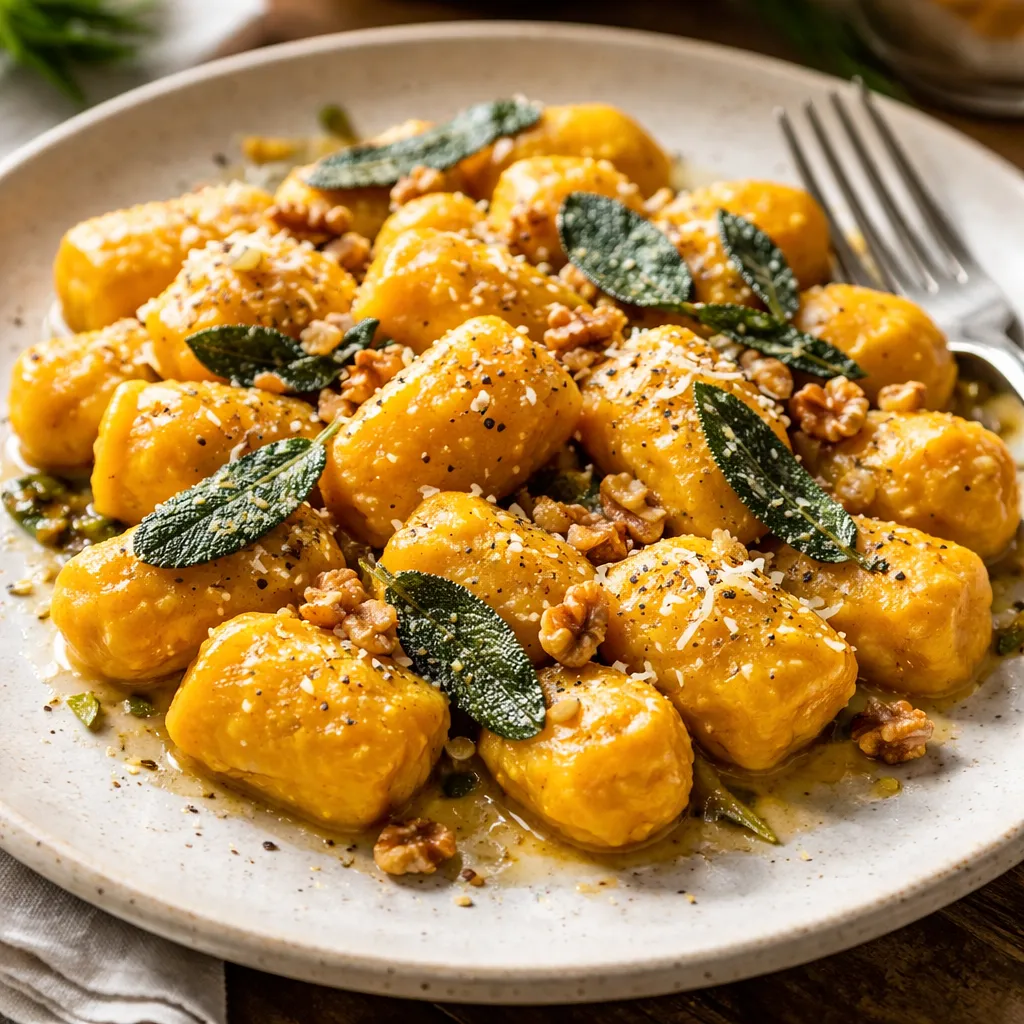
This is the essence of autumn captured in delicate, fluffy dumplings. Pumpkin gnocchi is a classic Italian dish that combines the natural sweetness of roasted pumpkin with the velvety texture of potatoes and flour. Each dumpling, carefully shaped, is like a little pillow that melts in your mouth. The whole dish is enveloped in an aromatic sauce of browned butter with crispy sage leaves, which gives the dish a deep, nutty flavor. The addition of toasted walnuts introduces a pleasant crunch and completes the flavor composition. The dish is not only incredibly tasty but also beautifully presented on the plate, delighting with its warm, orange color. It is perfect as an elegant, warming lunch or a gourmet dinner on chilly autumn evenings. Serve it as a main course, sprinkled with freshly grated Parmesan.
Ingredients (11)
- Hokkaido pumpkin 1000 g
- Potatoes 2 szt.
- Type 00 wheat flour 250 g
- Egg yolk 1.1 szt.
- Parmesan 50 g
- Butter 100 g
- Fresh sage 0.5 pęczek
- Walnuts 50 g
- 🌿 Przyprawy
- Salt 15 g
- ✨ Opcjonalne
- Nutmeg 2 szczypty
- Pieprz czarny świeżo mielony 2 szczypty
💡 Kliknij na składnik aby oznaczyć jako użyty
Preparation steps
Preparation of pumpkin and potato purée
In the meantime, wash the potatoes thoroughly and boil them in their skins in salted water until soft (about 20-30 minutes). Drain and let them sit for a moment to steam off. While still hot, peel the potatoes (be careful not to burn yourself - you can pierce the potato with a fork) and pass them through a potato ricer or mash them thoroughly with a masher until smooth.
When the pumpkin is baked, take it out of the oven and let it cool slightly. Use a spoon to separate the flesh from the skin. Transfer the flesh to a bowl and blend it into a smooth purée or pass it through a ricer. Combine the pumpkin purée with the pressed potatoes. Spread the mixture on a large tray or countertop to cool completely. This is very important, as a hot mixture will require significantly more flour.
Kneading the dough for gnocchi
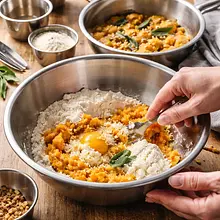
On a clean countertop or pastry board, make a mound of sifted flour. Create a large well in the center. In the well, add the cooled pumpkin and potato purée, the yolk, grated Parmesan, a teaspoon of salt (5g), and, if using, a pinch of freshly grated nutmeg.
Using a fork or your fingers, start gently mixing the wet ingredients in the center, gradually incorporating the flour from the edges of the mound. When the ingredients begin to come together, start kneading the dough with your hands. Knead the dough briefly, just until the ingredients form a uniform, smooth, and soft ball (about 2-3 minutes). The dough should be slightly sticky but come away from your hands.
Shaping the gnocchi
Dust the countertop with a little flour. Divide the ball of dough into 4 equal parts. Roll each part with your hands into a long stick about 1.5-2 cm thick (the thickness of your thumb). Try to keep the stick even along its entire length.
Using a knife or pastry scraper, cut each roll into small pieces about 2 cm long. This will give you small pillow-like dumplings. Place them on a tray or board generously sprinkled with flour, making sure they do not touch each other.
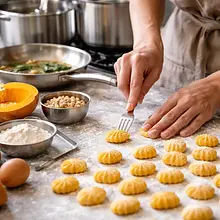
Now give the gnocchi their characteristic shape. Take a fork and place it with the tines facing down on the counter. Gently roll each dumpling over the tines of the fork while lightly pressing it with your thumb. A small indentation will form on the other side. This shape allows the sauce to cling perfectly to the dumplings.
Cooking gnocchi and preparing the sauce
In a large, dry skillet, toast the walnuts over medium heat for 3-4 minutes, stirring frequently, until they become lightly golden and start to smell fragrant. Be careful not to burn them. Remove from the skillet and set aside. Once cooled, roughly chop them.
In a large pot, bring a large amount of salted water to a boil (about 10g of salt per 1 liter of water). At the same time, in a large skillet (the same one you used to toast the nuts), melt the butter over medium heat. Once the butter has melted, add whole sage leaves. Fry for 2-3 minutes, until the butter starts to foam, lightly browns, and begins to smell nutty, and the sage leaves become crispy. Reduce the heat to the minimum.
Drop the gnocchi into boiling water in batches. Gently stir to prevent them from sticking to the bottom. Cook for about 2-3 minutes. The gnocchi are ready when they float to the surface. Cook them for another 30 seconds after they have floated.
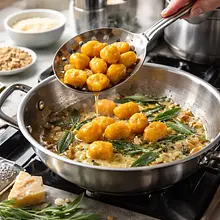
Using a slotted spoon, remove the cooked gnocchi and transfer them directly to the pan with sage butter. Increase the heat under the pan and gently mix by shaking the pan so that all the dumplings are coated in the sauce. If the sauce is too thick, add 2-3 tablespoons of the gnocchi cooking water. Serve immediately, topped with toasted nuts, freshly grated Parmesan, and optionally freshly ground black pepper.
Fun Fact
The word 'gnocchi' likely comes from the Italian word 'nocca', meaning 'knuckle', or 'nocchio', which means 'knot in wood', referring to their characteristic shape. Although today we mainly associate them with potatoes, the first versions of gnocchi were made from flour, breadcrumbs, or semolina, as potatoes only arrived in Europe in the 16th century.
Best for
Tips
Serve the gnocchi immediately after preparation, on warmed plates, to keep them hot for as long as possible. Top with a few crispy sage leaves from the pan, generously sprinkle with chopped nuts and freshly grated Parmesan. A glass of dry white wine, such as Pinot Grigio, pairs perfectly with the dish.
Raw gnocchi can be stored for a few hours on a tray generously sprinkled with flour in the refrigerator. They can also be frozen - first, spread them out on a tray in a single layer and freeze, then transfer to a bag. Frozen gnocchi should be added directly to boiling water (do not thaw them beforehand). The cooked dish is best eaten immediately, but any leftovers can be stored in the refrigerator for up to 2 days and reheated in a pan with a little butter.
📸 Ugotowane przez społeczność
Zaloguj się, aby dodać zdjęcieDodaj zdjęcie gotowej potrawy
Po zatwierdzeniu przez moderatora otrzymasz 10 punktów doświadczenia.
Nikt jeszcze nie dodał zdjęcia. Bądź pierwszy!
Comments (0)
Be the first to comment on this recipe!
Add a comment