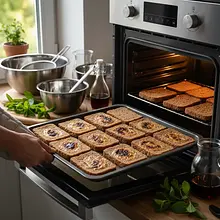
Preheat the oven to 180°C (fan) or 200°C (top-bottom). Cut the whole grain bread into cubes with sides of about 2-3 cm. Don't worry if the cubes are not perfectly even. Spread them evenly on a large baking sheet lined with parchment paper.
Description
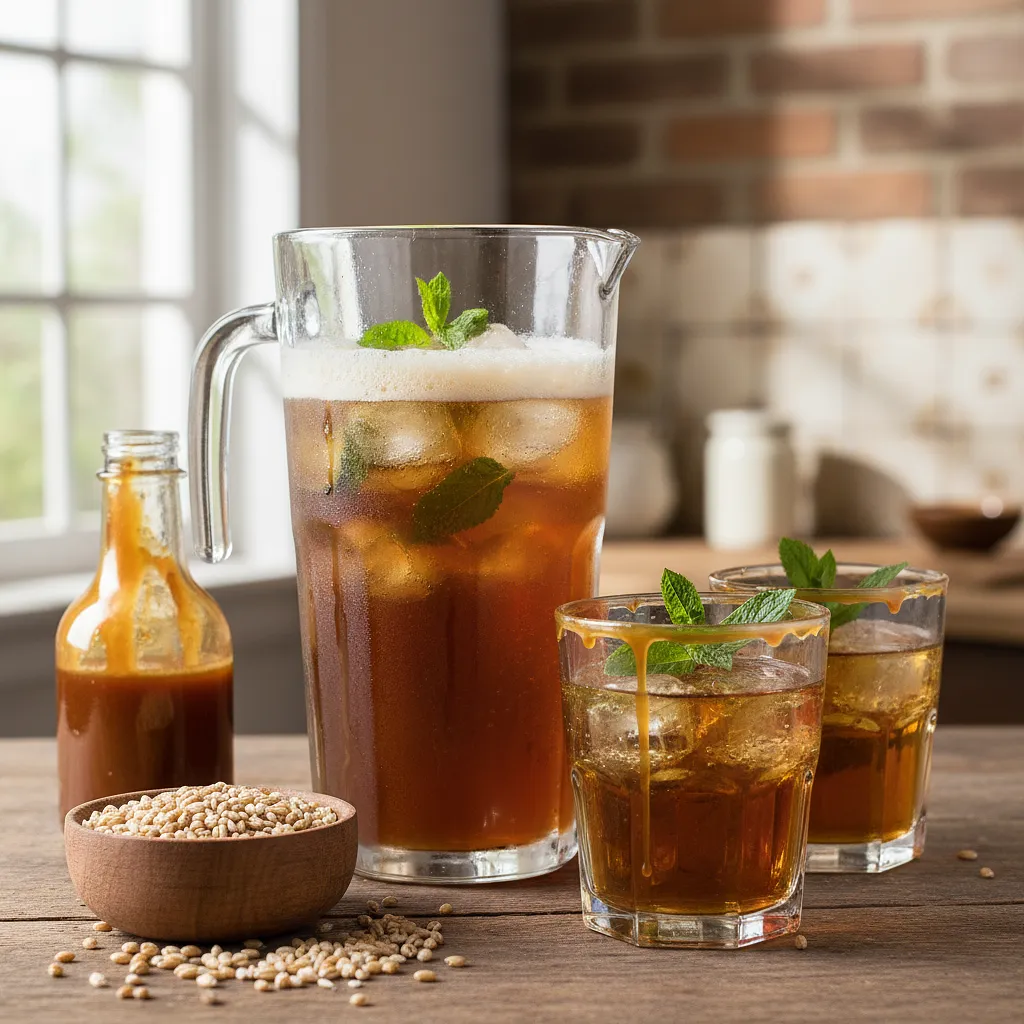
Rediscover the treasure of traditional Eastern European cuisine – homemade kvass. It is not just a drink, but a whole story captured in a bottle. Our version is a tribute to the classic with a modern twist. The base is rye bread made with sourdough, whose deep, malty flavor is the foundation of the entire beverage. Through a process of slow, controlled fermentation, the kvass acquires characteristic, fine bubbles and a refreshing, sweet-and-sour profile. We enriched it with a hint of homemade caramel made from brown sugar, which adds depth and subtle sweetness, as well as fresh mint, which brings a touch of lightness and freshness. Visually, the drink looks beautiful – it has a deep amber color and a delicate foam on the surface. It is the perfect, natural probiotic that quenches thirst on hot days and serves as a great non-alcoholic alternative to beer or sweet carbonated drinks. Serve it chilled to fully appreciate its complex flavor bouquet.
Ingredients (7)
- Wholemeal sourdough bread 500 g
- Filtered water 4000 ml
- Brown sugar 150 g
- Fresh yeast 10 g
- Raisins 30 g
- Fresh mint 0.7 pęczek
- ✨ Opcjonalne
- Skórka otarta z cytryny 10 g
💡 Kliknij na składnik aby oznaczyć jako użyty
Preparation steps
Preparation of Bread Base
Place the baking tray with the bread in the preheated oven. Bake for 20-25 minutes until the bread becomes very dry, hard, and deeply browned, almost on the verge of burning (but not burnt!). The pieces should have a dark brown color. Halfway through baking, stir them with a spatula to ensure they toast evenly. This step is crucial for achieving a deep color and flavor of the sourdough.
Creating the Wort
Prepare a large pot or jar with a capacity of at least 5 liters. Pour the hot, baked bread crumbs into it. Boil 4 liters of water in a kettle. Carefully pour the boiling water over the bread. Gently stir with a wooden spoon to ensure all pieces of bread are submerged. Cover the container with a clean cloth and set it aside at room temperature for 6-8 hours, or preferably overnight.
Prepare a second large container. Place a large sieve lined with double-layered cheesecloth or a clean dish towel on top. Slowly pour the contents of the first container through the sieve to separate the liquid (wort) from the soaked bread. Once most of the liquid has drained, gather the corners of the cheesecloth and squeeze out the remaining liquid from the bread. Every drop is precious!
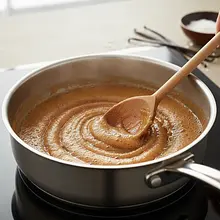
In a small, dry skillet or a saucepan with a thick bottom, place 100g of brown sugar. Heat over medium heat, without stirring, until the sugar melts and turns into a liquid, dark caramel. When the caramel starts to smoke, carefully pour in about 100 ml of the previously prepared wort (bread liquid). Be careful, it will splatter a lot! Stir vigorously until the caramel completely dissolves in the liquid. Pour the caramel solution into the rest of the wort and add the remaining 50g of sugar. Stir until dissolved.
Fermentation
Cool the wort to a temperature of about 30-35°C. This is very important – too hot liquid will kill the yeast. In a small bowl, place the crumbled fresh yeast, add a teaspoon of sugar (from the 50g) and pour in 50 ml of lukewarm wort. Mix until the yeast dissolves and set aside for 10-15 minutes. The active yeast should start to foam. Pour the activated yeast starter into the main vessel with the wort and gently mix.
Cover the container with a clean cheesecloth or towel and secure it with a rubber band or string. The fabric will allow gases to escape while protecting the drink from insects and contaminants. Place the container in a warm, non-sunny spot (e.g., near a radiator or in a turned-off oven with the light on) for 24-48 hours. After about 12 hours, a foam should appear on the surface, and the drink will begin to emit a characteristic sour smell.
Bottling and Carbonation
After the first fermentation is complete (when the taste is balanced), remove the foam from the surface. Wash the raisins and mint sprigs thoroughly. If using, grate the lemon zest. Pour the liquid through a strainer into clean, sterilized thick glass bottles with swing-top closures (like Grolsch). Add a few raisins and a sprig of mint (and a pinch of lemon zest) to each bottle. Leave 3-4 cm of headspace at the top.
Seal the bottles tightly and leave them at room temperature for another 12-24 hours. During this time, the remaining sugar and yeast will produce carbon dioxide, which will naturally carbonate the drink. The longer they sit, the fizzier they will become.
When the kvass reaches the desired level of carbonation, transfer all the bottles to the refrigerator. Low temperature will stop the fermentation process and allow the drink to clarify. Kvass tastes best when served very chilled. Serve in tall glasses. Enjoy!
Fun Fact
Bread kvass has a history of over 1000 years and was a popular drink throughout Slavic lands. In ancient Poland, it was consumed by all social classes, from peasants to kings. It was considered a health drink, invigorating and perfectly quenching thirst during hard work in the fields.
Best for
Tips
Serve kvass very well chilled, in tall glasses or mugs. For extra refreshment, you can add a slice of lemon or a few fresh mint leaves to the glass. It pairs wonderfully with Polish dishes such as pierogi, bigos, or grilled dishes.
The finished kvass should be stored in the refrigerator in tightly closed bottles, standing upright. Its shelf life is about 7-10 days. Remember that it is a 'live' drink, so its taste will evolve – it will become less sweet and more sour day by day. Open the bottles carefully, as the pressure inside may be high.
📸 Ugotowane przez społeczność
Zaloguj się, aby dodać zdjęcieDodaj zdjęcie gotowej potrawy
Po zatwierdzeniu przez moderatora otrzymasz 10 punktów doświadczenia.
Nikt jeszcze nie dodał zdjęcia. Bądź pierwszy!
Comments (0)
Be the first to comment on this recipe!
Add a comment