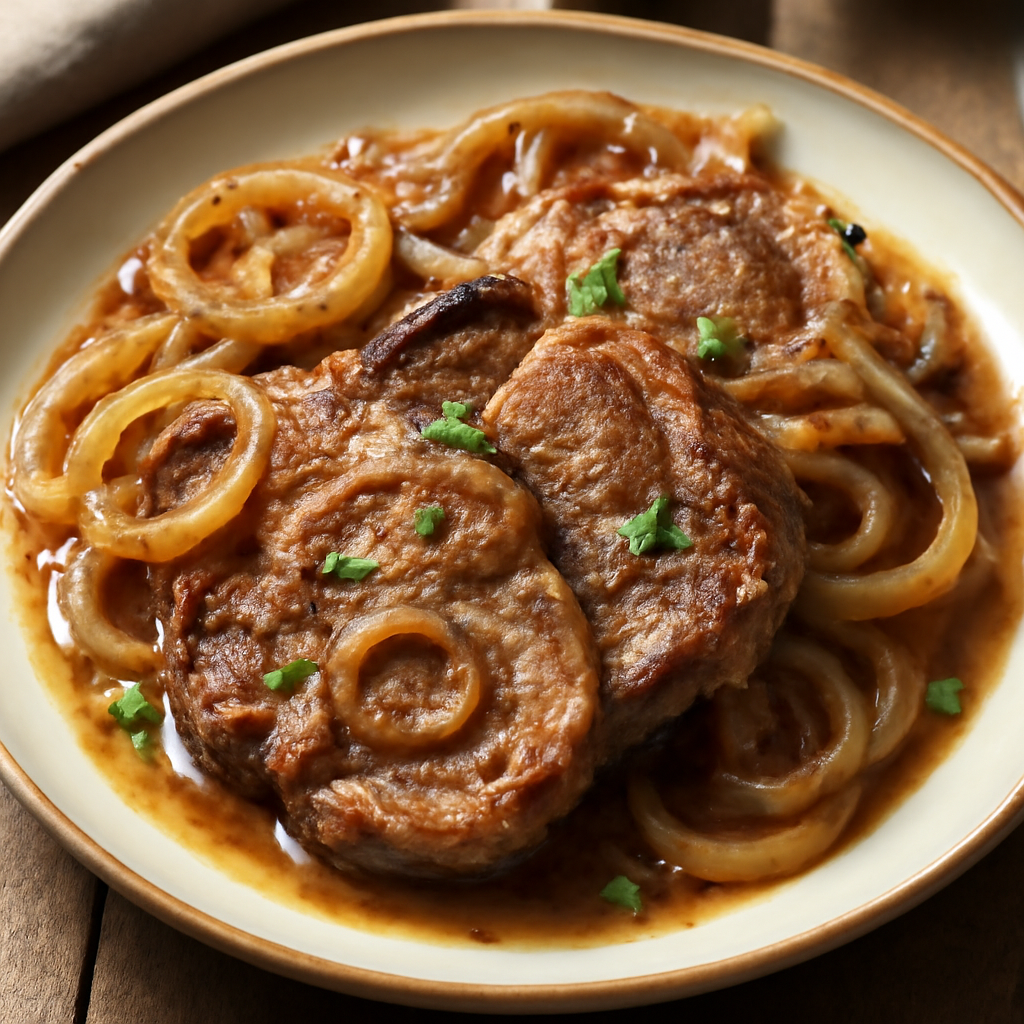
Braised Pork Neck with Onions (Polish, Traditional Version with a Twist)

Pikantne Main dishes Regional Cuisine of Poland 90 min Medium 46 wyświetleń ~27.72 PLN - (0)
Rate:
(0)
Start Cooking

Description

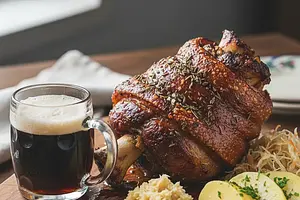
Traditional Polish pork neck braised with onions is a hearty, warming dish from home cooking. Juicy pieces of pork neck are first seared to a golden brown and then slowly braised with a generous amount of caramelized onions and aromatic additions (bay leaf, allspice). The result is an intense, slightly sweet sauce with a velvety consistency, in which the meat remains tender and full of flavor. The dish pairs perfectly with mashed potatoes, gnocchi, Silesian dumplings, or buckwheat, as well as with sauerkraut for a contrast of acidity. It can be enriched with a bit of mustard or cream at the finish and seasoned with marjoram – a modern twist on a classic. Visually, the dish has warm, brown tones: a deep sauce color and golden-brown, slightly glossy onions on top.

Ingredients Used

Ingredients (14)

Servings:
4
  • Pork neck (boneless) 1000 g
  • Onion 3 szt.
  • Garlic 3 ząbki
  • Rapeseed oil 30 g
  • Butter 30 g
  • Wheat flour 40 g
  • Beef broth (or hot water) 500 ml
  • 🌿 Przyprawy
  • Salt 8 g
  • Ground black pepper 2 szczypty
  • Bay leaf 6.7 szt.
  • Allspice 4 g
  • ✨ Opcjonalne
  • Dried marjoram 2 łyżeczki
  • Sarepska mustard 4 łyżeczki
  • 18% cream 50 ml
💰 Szacowany koszt dania: ~27.72 PLN (6.93 PLN/porcję)

💡 Kliknij na składnik aby oznaczyć jako użyty

Preparation steps

Meat preparation

1

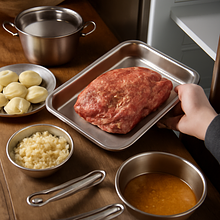
Take the pork neck out of the fridge 20-30 minutes before starting to work, so the meat reaches room temperature — this will ensure it cooks evenly. Pat the meat dry with paper towels. Using a sharp knife, slice the pork neck into pieces about 2.5-3 cm thick (you should get about 6-8 slices, depending on the size). If there is a thick membrane or too thick pieces of fat on the pieces, gently trim them off.

Ingredients: Pork neck (boneless)
Use a sharp knife and a stable cutting board. Drying the meat is key — a wet surface prevents a good browned crust.
2

Salt each slice evenly on both sides (use about 2 g of salt per slice), sprinkle with freshly ground pepper (0.5 g on each side). Then lightly coat each slice in flour — place the flour on a plate and gently coat the meat, shaking off the excess flour.

Ingredients: Pork neck (boneless), Wheat flour, Salt, Ground black pepper
Sprinkle with salt just before coating, so the flour adheres well. Shake off excess flour — too thick a layer will result in a rubbery crust.

Browning

3

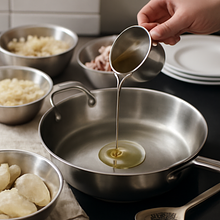
Heat a large, heavy skillet (or a saucepan with a thick bottom) over medium-high heat. Pour in the canola oil and melt 15 g of butter (half of the butter from the recipe). When the fat starts to shimmer slightly, add the pork neck slices — arrange them in a single layer, without crowding. Fry for 3-4 minutes on each side, until the meat develops a deep golden-brown color. Do not flip or move them too often — allow a crust to form.

Ingredients: Pork neck (boneless), Rapeseed oil, Butter
The best is a cast iron skillet or one with a thick bottom, 26–28 cm. If the skillet becomes too dry, add 1 teaspoon of oil. The time depends on the thickness of the slices — look for intense browning. This is a key step for flavor.

Frying the onion

4

Remove the browned slices of meat to a plate. In the same pan, reduce the heat to medium, add the remaining 15 g of butter, and add the sliced onion. Sauté slowly for 12–15 minutes, stirring every 2–3 minutes – the onion should soften, turn golden, and start to caramelize. Finally, in the last 2 minutes, add the finely chopped garlic and sauté briefly together so it doesn't brown too much.

Ingredients: Onion, Garlic, Butter
Do not rush the process by increasing the heat — slow frying will release the sweetness of the onion. Use a wooden spoon to gently detach any stuck pieces.

Deglazing and combining

5

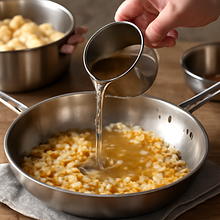
When the onion is soft and golden, slightly increase the heat, pour in 100 ml of hot broth, and vigorously scrape the browned bits from the bottom of the pan with a wooden spoon — these are essential flavors (deglazing). After 1–2 minutes, when the liquid has slightly evaporated, return the pork neck slices to the pan. Add the bay leaves and allspice, and pour in the rest of the hot broth so that the meat is almost covered (about 400 ml).

Ingredients: Pork neck (boneless), Onion, Beef broth (or hot water), Bay leaf, Allspice
Pour in hot broth to avoid stopping the cooking process. Scraping off the brown bits is an important step for depth of flavor.

Stewing

6

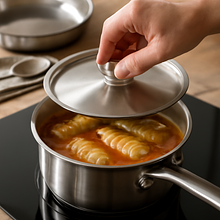
Bring the contents to a gentle simmer over medium heat, then cover with a lid and reduce the heat to low — there should be barely a visible flame, and the liquid should only move slightly. Simmer for 55–65 minutes. Halfway through the simmering (after about 30 minutes), check the liquid level — if it's too low, add hot water or broth. After 45 minutes, check the tenderness with a fork — it should pull away slightly from the fibers.

Ingredients: Pork neck (boneless), Beef broth (or hot water), Bay leaf, Allspice
Stewing over too high heat will result in tough meat — ensure gentle, even simmering. Use a lid that fits the pot.

Checking for tenderness

7

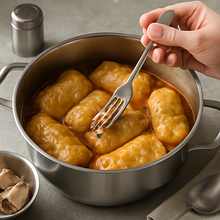
After about 60 minutes, remove the lid and check the tenderness with a fork. Insert the fork into the largest piece of meat; if it goes in easily and the meat slightly falls apart, it is ready. If it is still firm, cover and simmer for another 15–30 minutes. Once removed from the heat, transfer the meat to a plate and cover with foil to rest for 5–10 minutes.

Ingredients: Pork neck (boneless)
The meat should be tender but not fall apart completely — such pieces are best for slicing and serving.

Finishing the sauce

8

If the sauce is too thin, make a thickening: in a small bowl, combine 10 g of flour with 10 g of soft butter, and mash into a smooth paste (beurre manié). Scoop a teaspoon of sauce from the pot and mix it with the beurre manié, then slowly add it back to the pot while whisking, until the sauce thickens and becomes smooth. Cook for another 3–5 minutes over low heat to eliminate the raw flour taste.

Ingredients: Butter, Wheat flour, Beef broth (or hot water)
Add small portions and stir continuously to avoid lumps. If lumps form, strain the sauce through a sieve.

Seasoning and Additions

9

Taste the sauce and season with salt and pepper to your liking. If you want a modern twist, mix 20 g of mustard with 1–2 tablespoons of the sauce and add it to the pot, then (optionally) stir in 50 g of 18% cream and 4 g of marjoram. Cook for another 2 minutes to let the flavors combine.

Ingredients: Salt, Ground black pepper, Dried marjoram, Sarepska mustard, 18% cream
Additionally, you can add mustard and cream for creaminess — always add them gradually and taste to avoid overpowering the flavor.

Serving

10

Slice the pork neck into pieces against the grain (this will make the meat more tender). On a plate, arrange a portion of mashed potatoes or dumplings, add 2–3 slices of pork neck, and generously drizzle with onion sauce. Serve immediately so that the sauce is hot and sticky.

Ingredients: Pork neck (boneless), Onion, Beef broth (or hot water)
Cutting against the grain is an important trick — it reduces the perception of toughness and makes it easier to eat.

Storage and Reheating

11

Store leftovers in an airtight container in the fridge for up to 3 days. The meat sauce develops its flavor well, so the taste often improves the next day. To reheat, transfer to a saucepan, warm over low heat covered, adding a bit of hot water or broth to prevent the sauce from becoming too thick. Do not reheat multiple times.

Ingredients: Pork neck (boneless), Beef broth (or hot water)
Before storing in the refrigerator, cool the dish to room temperature within 1–2 hours, but do not leave it for longer than 2 hours.

Fun Fact

💡

In traditional Polish cuisine, pork neck is valued for its marbling, which transforms into juicy, tender fibers when slow-cooked. Braising with onion is a classic — the onion not only adds flavor but also helps achieve a dark, aromatic sauce thanks to its natural sugars.

Best for

Tips

🍽️ Serving

Serve with mashed potatoes, dumplings, or buckwheat groats, along with sour cabbage or pickled cucumber for contrast. On the plate, arrange the meat on coals drizzled with a few tablespoons of hot sauce. You can also serve a slice of fresh bread for dipping.

🥡 Storage

Store in the refrigerator in an airtight container for up to 3 days. Frozen portions (without cream) can be stored for up to 2 months. Reheat slowly over low heat, adding a little water or broth to prevent the meat from drying out.

📸 Ugotowane przez społeczność

Zaloguj się, aby dodać zdjęcie
Dodaj zdjęcie gotowej potrawy

Po zatwierdzeniu przez moderatora otrzymasz 10 punktów doświadczenia.

🍲

Nikt jeszcze nie dodał zdjęcia. Bądź pierwszy!

Comments (0)

Be the first to comment on this recipe!

Add a comment

You might also like

Recipe Categories

Main dishes
Main dishes in: New Year's Eve

Main dishes for New Year's Eve should be hearty and impressive to satisfy the palates of all guests.

See all recipes in this category

Traditional recipes from various regions of Poland that showcase the richness of local flavors and ingredients.

See all recipes in this category
Reklama