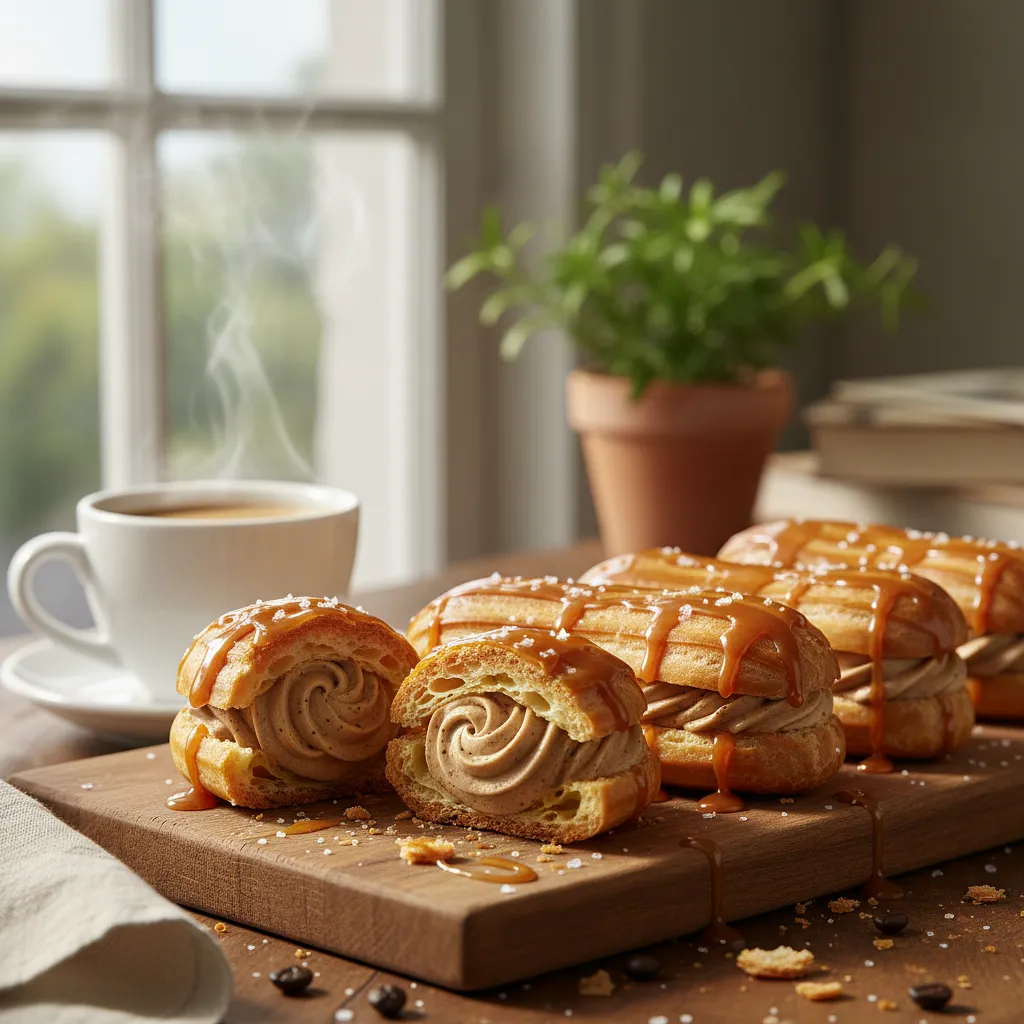
Caramel Eclairs with Coffee Cream

Desserts Cakes and Bakes Dishes for Special Occasions 150 min Medium 17 wyświetleń ~43.08 PLN - (0)
Rate:
(0)
Start Cooking

Description

Here’s a recipe that will transport you straight to a Parisian patisserie without leaving your own kitchen. Caramel éclairs with coffee cream are a sophisticated variation on the classic French dessert. The base is perfectly baked, hollow choux pastry (pâte à choux), which is crispy on the outside and delicate on the inside. The interior is filled with a velvety, intensely coffee-flavored pastry cream (crème pâtissière), which perfectly balances the sweetness of the glaze. The finishing touch is a shiny, thin layer of hard, amber caramel that cracks with a characteristic snap with every bite. This dessert is multi-dimensional – it combines different textures and flavors: the bitterness of coffee, the deep sweetness of caramel, and the buttery note of the pastry. They pair perfectly with an afternoon cup of espresso, making an elegant dessert for special occasions that will delight both in appearance and taste.

Ingredients (12)

Servings:
6
  • Water 125 ml
  • Milk 3.2% 375 ml
  • Masło 82% 125 g
  • White sugar 265 g
  • Wheat flour type 450 150 g
  • Eggs 4 szt.
  • Żółtka jaj 3 szt.
  • Cornstarch 30 g
  • Espresso coffee 50 g
  • Vanilla extract 5 g
  • 🌿 Przyprawy
  • Salt 0.1 szczypt
  • ✨ Opcjonalne
  • Hazelnuts 30 g
💰 Szacowany koszt dania: ~43.08 PLN (7.18 PLN/porcję)

💡 Kliknij na składnik aby oznaczyć jako użyty

Preparation steps

Choux Pastry (Pâte à Choux)

1

In a medium-sized pot with a thick bottom, place 125 ml of water, 125 ml of milk, 100 g of diced butter, 5 g (1 teaspoon) of sugar, and 1 pinch of salt. Heat over medium heat, stirring occasionally, until the butter is completely melted and the liquid begins to boil. The goal is to bring the mixture to a vigorous boil.

Ingredients: Water, Milk 3.2%, Masło 82%, White sugar, Salt
Use a heavy-bottomed pot to prevent burning. It is important that the butter is completely melted before the liquid starts to boil; otherwise, some of the water will evaporate, changing the proportions of the ingredients.
2

When the liquid comes to a strong boil, remove the pot from the heat. In one motion, add all the sifted flour (150 g) and immediately start mixing vigorously with a wooden spoon. Stir until a thick, uniform mass forms. Place the pot back on low heat and continue mixing and 'cooking' the dough for about 2-3 minutes. The finished dough should be smooth, shiny, and pull away from the sides of the pot, forming a single ball. A thin, white layer should appear at the bottom of the pot.

Ingredients: Wheat flour type 450
This is a key moment, known as 'brewing' the dough. It evaporates excess moisture and activates the starch in the flour. Use a sturdy wooden spoon, as the dough will be very thick. Do not skip this step; it is essential for the proper rising of the éclairs.
3

Transfer the hot dough to the mixing bowl (or another large bowl). Break it up with a spoon into smaller pieces to cool it down faster. Set aside for 10-15 minutes until the dough is slightly warm but not hot (it should be around 60°C). You can also mix it on low speed for 2-3 minutes using a flat beater to speed up the cooling process.

The cake must cool down! If you add eggs to hot cake, they will curdle and you'll end up with scrambled eggs, and the cake will not turn out. Touch the cake with your finger – if it is pleasantly warm, you can proceed.
4

To the cooled dough, add the eggs (a total of 240 g, which is about 4 pieces), one at a time, mixing on medium speed after each addition. Make sure that each egg is fully absorbed by the dough before adding the next one. The finished dough should be smooth, thick, and very shiny. Its consistency is correct when lifted on the mixer, it falls, forming a characteristic triangle or the letter 'V'.

Ingredients: Eggs
Use a mixer with a flat beater (spatula). If the dough seems too thick after adding all the eggs, you can add a little bit of another beaten egg. Do this very carefully, adding by the teaspoon, because once the dough is too runny, it cannot be saved.
5

Preheat the oven to 200°C (fan) or 220°C (top-bottom). Transfer the dough to a piping bag fitted with a large, star-shaped tip (e.g., 1-1.5 cm in diameter). Pipe éclairs about 10-12 cm long onto a baking sheet lined with parchment paper, leaving 3-4 cm of space between them, as they will expand during baking.

The serrated tip helps the éclairs rise evenly and prevents them from cracking. If you don't have a piping bag, you can use two teaspoons to shape the dough. Maintaining spacing is key; otherwise, the éclairs will stick together.
6

Place the tray in the preheated oven. Bake for 15 minutes at 200°C, then reduce the temperature to 180°C and bake for another 15-20 minutes, until the éclairs are well risen, golden brown, and dry to the touch. After baking, turn off the oven, slightly crack the door, and leave the éclairs inside for 10 minutes to cool. Then remove them to a wire rack and let them cool completely.

THE MOST IMPORTANT RULE: Under no circumstances open the oven during the first 20-25 minutes of baking! A sudden drop in temperature will cause the cake to collapse and result in a soggy bottom. Cooling in a slightly open oven prevents sudden sinking.

Coffee Cream (Crème Pâtissière au Café)

7

In a small saucepan, heat 250 ml of milk. Meanwhile, in a medium bowl, whisk the egg yolks (60 g, about 3 pieces) with 60 g of sugar until light and fluffy. Add the cornstarch (30 g) and mix again until you achieve a smooth paste without lumps.

Ingredients: Milk 3.2%, Żółtka jaj, White sugar, Cornstarch
Whisking the egg yolks with sugar until a light color is achieved is an aeration process that gives the cream lightness. Use a manual whisk, you don't need a mixer.
8

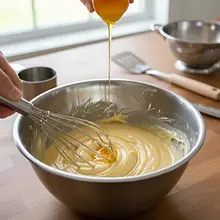
When the milk is hot (but not boiling), remove it from the heat. Slowly, in a thin stream, pour the hot milk into the egg yolk mixture, constantly whisking vigorously. This process is called tempering and prevents the egg yolks from curdling. Then, pour the entire mixture back into the pot, add freshly brewed espresso (50 ml), and place it over medium heat.

Ingredients: Espresso coffee
Tempering is key! If you pour in the hot milk too quickly, the yolks will turn into scrambled eggs. Stir continuously to ensure the process goes smoothly.
9

Cook the cream over medium heat, stirring constantly with a whisk, especially at the bottom, to prevent it from burning. After about 3-5 minutes, the cream will start to thicken. Cook it for another minute from the moment the first bubbles appear, until it is very thick, like pudding. Remove from heat, add 25 g of butter and vanilla extract (5 ml), and stir until the butter melts and combines with the cream.

Ingredients: Masło 82%, Vanilla extract
Don't leave the pot! The cream can burn very quickly. Use a whisk, it will reach all the nooks and crannies of the pot better than a spoon. Cooking for a minute after boiling is important to get rid of the raw starch taste.
10

Pour the hot cream into a clean, flat bowl. Cover it with plastic wrap so that the wrap touches the surface of the cream directly. This will prevent a skin from forming. Set aside to cool completely, first at room temperature, and then in the refrigerator for at least 2 hours.

Direct contact of the foil with the surface of the cream is very important. If a skin forms, lumps will appear in the cream after mixing. The cream must be completely cold before filling the éclairs.

Caramel Glaze

11

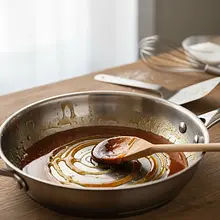
In a dry, clean skillet with a thick bottom or in a saucepan, evenly spread 200 g of sugar. Heat over medium heat, without stirring, until the sugar at the edges begins to melt and takes on an amber color. Then you can gently move the skillet to allow the liquid caramel to coat the dry sugar crystals. Cook until all the sugar has dissolved and achieves a beautiful amber color.

Ingredients: White sugar
Use a pan with a light bottom to better control the color of the caramel. Be very careful, caramel is extremely hot! Do not stir it with a spoon until most of it has melted, as it may crystallize. Be careful not to burn it - burnt caramel is bitter and irreparable.

Assembling the Cream Puffs

12

Transfer the cold coffee cream to a bowl and briefly mix or vigorously whisk it to make it smooth and creamy again. Transfer it to a piping bag fitted with a small, round, long nozzle for filling. Make 2-3 small holes in the bottom of each éclair using the nozzle tip or a knife. Insert the tip inside and fill the éclair with cream until you feel it becoming heavy.

Filling from the bottom is aesthetically pleasing because the holes are not visible. Alternatively, you can cut the éclairs in half lengthwise and spoon in the cream or pipe it from a bag, then cover with the other half.
13

Work quickly while the caramel is liquid. Grab each filled éclair by the sides and dip the top into the hot caramel. Pull it out quickly and let the excess caramel drip back into the pan. Turn the éclair over and place it on a rack or parchment paper to let the caramel set.

If the caramel starts to thicken, you can gently heat it on a very low flame. Be careful not to burn yourself! You can wear protective gloves. Work quickly, as caramel hardens fast.
14

If you are using nuts, sprinkle them on top of the eclairs immediately after dipping them in caramel, before it has a chance to set. Leave the eclairs at room temperature for about 30 minutes, until the coating has completely hardened. Serve as soon as possible after preparation.

Ingredients: Hazelnuts
Additionally, you can sprinkle the éclairs with chopped hazelnuts to enhance the texture and flavor. The caramel absorbs moisture, so éclairs with this topping taste best on the day they are made.

Fun Fact

💡

Choux pastry, or pâte à choux, is one of the few pastries that is not leavened chemically (with baking powder) or biologically (with yeast). The entire rising process is due to steam, which rapidly expands inside the pastry during baking at high temperatures, creating the characteristic empty spaces.

Best for

Tips

🍽️ Serving

Serve the éclairs on a long platter or individual dessert plates. They look beautiful arranged side by side in a row. They pair perfectly with strong black coffee or espresso, which will enhance their flavor. You can also decorate them with a sprig of fresh mint for a color contrast.

🥡 Storage

Eclairs with caramel glaze taste best on the day they are made, as the caramel can soften and become sticky over time. If you need to store them, place them in an airtight container in the refrigerator for up to 1 day. Unfilled, baked shells can be stored in an airtight container at room temperature for 2 days or frozen for up to a month.

📸 Ugotowane przez społeczność

Zaloguj się, aby dodać zdjęcie
Dodaj zdjęcie gotowej potrawy

Po zatwierdzeniu przez moderatora otrzymasz 10 punktów doświadczenia.

🍲

Nikt jeszcze nie dodał zdjęcia. Bądź pierwszy!

Comments (0)

Be the first to comment on this recipe!

Add a comment

You might also like

Recipe Categories

Desserts
Desserts in: New Year's Eve

A sweet ending to the New Year's Eve dinner is a must-have that will put everyone in a joyful mood for the new year.

See all recipes in this category

Homemade cakes and pastries are the heart of Polish culinary tradition - sweet memories from childhood. In our collection, you will find recipes for classic yeast cakes, shortcrust, sponge, and cheesecake. Apple pie, poppy seed cake, gingerbread, Easter babka, chocolate cake, and New York cheesec...

See all recipes in this category

Dishes for special occasions are culinary masterpieces for birthdays, anniversaries, and holidays. Grilled beef steak with herb butter - restaurant quality at home. Beef Wellington - beef in puff pastry with duxelles. Roast duck with apples - a holiday tradition in a new edition. Pink salmon with...

See all recipes in this category

European cuisine is a mosaic of culinary traditions from the Old Continent - from Spain to Scandinavia. Valencian paella and tapas from Spain - sunshine on a plate. Boeuf bourguignon and ratatouille from France - elegance and finesse. Wiener schnitzel and strudel from Austria - Central European c...

See all recipes in this category
Reklama