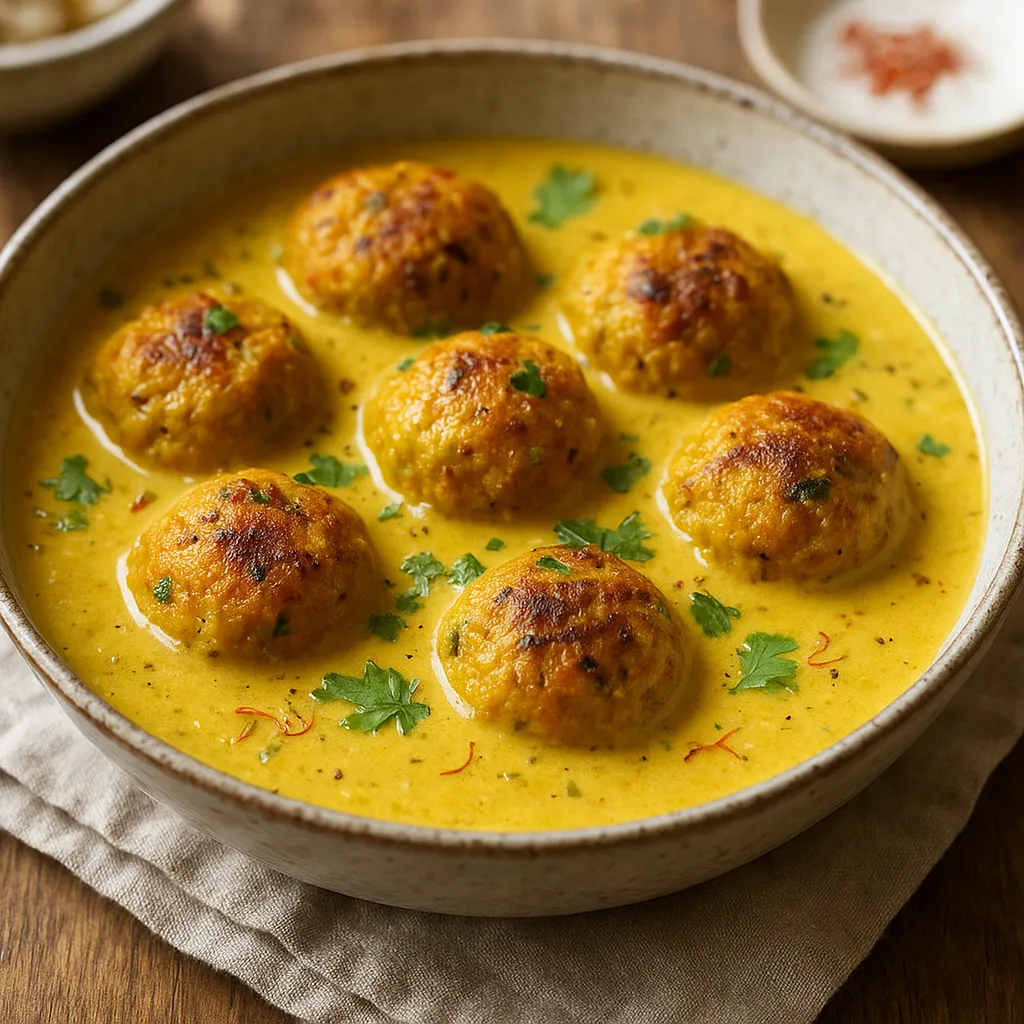
Pumpkin and Chickpea Kofta in Creamy Saffron-Cardamom Sauce

Pikantne Indian Cuisine Vegetarian Dishes Main Dishes 90 min Medium 7 wyświetleń ~35.29 PLN - (0)
Rate:
(0)
Start Cooking

Description

This is a unique dish inspired by the richness of Northern Indian cuisine, particularly the tradition of the Mughals, who were known for their refined, creamy, and aromatic dishes. Kofta, which are delicate, fried or baked meatballs, in this version are made with seasonal Hokkaido pumpkin and protein-rich chickpeas. Their natural sweetness pairs perfectly with a blend of Indian spices. The whole dish is immersed in a velvety, luxurious sauce made from coconut milk and cashews. Its unique character is highlighted by the noblest spices in the world: saffron, which gives a beautiful golden color and subtle aroma, and green cardamom, which adds a citrusy-spicy note. The dish is not only a feast for the palate but also for the eyes – the orange koftas in a light golden sauce, decorated with ruby pomegranate seeds and fresh coriander, look incredibly appetizing. Serve them with basmati rice or warm naan bread to fully enjoy the flavor of the sauce.

Ingredients (21)

Servings:
4
  • Hokkaido pumpkin 500 g
  • Ciecierzyca gotowana (z puszki) 240 g
  • Chickpea flour (besan) 3.3 łyżki
  • Onion 1.5 szt.
  • Garlic 5 ząbków
  • Fresh ginger 30 g
  • Cashews 50 g
  • Full-fat coconut milk 400 ml
  • Vegetable oil for frying 530 ml
  • Fresh cilantro 25 g
  • Ground coriander 2 g
  • sugar 5 g
  • 🌿 Przyprawy
  • Garam masala 4 g
  • ground cumin 0.4 łyżeczek
  • Turmeric 2 g
  • Salt 8 g
  • Saffron threads 0.1 szczypt
  • Green cardamom 2 szt.
  • Bay leaf 3.3 szt.
  • ✨ Opcjonalne
  • Pestki granatu 30 g
  • Almond flakes 15 g
💰 Szacowany koszt dania: ~35.29 PLN (8.82 PLN/porcję)

💡 Kliknij na składnik aby oznaczyć jako użyty

Preparation steps

Preparing pumpkin puree

1

Preheat the oven to 200°C (fan). Wash the Hokkaido pumpkin, cut it in half, and use a spoon to remove the seeds and fibrous flesh. Cut the pumpkin into smaller pieces (quarters or eighths) and place them on a baking sheet lined with parchment paper, skin side down. Bake for 25-30 minutes, until the flesh is very soft – a fork should go into it without any resistance. Remove from the oven and set aside to cool slightly. When the pumpkin is cool enough to touch, separate the flesh from the skin using a spoon and transfer it to a large bowl. Mash the flesh thoroughly with a fork or potato masher until smooth.

Ingredients: Hokkaido pumpkin
For baking, use a standard baking tray from your oven's equipment. You do not need to peel Hokkaido pumpkin before baking; its skin is edible, but for the puree, we need just the flesh, which easily separates after baking. Make sure the puree is as thick as possible - if the pumpkin is watery, drain the excess liquid using a sieve.
Preparation of the mixture for koftas

2

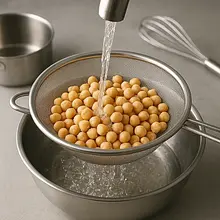
Drain the canned chickpeas thoroughly in a sieve and rinse under cold running water. Transfer them to a separate bowl and mash with a potato masher or fork into a coarse paste. It doesn't need to be perfectly smooth; small pieces of chickpeas will add texture. Finely chop half of the onion (about 75g) into very small cubes. Peel the garlic (2 cloves) and ginger (about 15g) and grate them on a fine grater or press through a garlic press. In the bowl with the pumpkin puree, combine the mashed chickpeas, chopped onion, garlic, ginger, chickpea flour, garam masala (1 teaspoon), cumin, ground coriander, turmeric (1/2 teaspoon), and salt (about 1 teaspoon). Finely chop 15g of fresh coriander and add it to the mixture as well. Mix everything thoroughly with your hand or a large spoon until a uniform, compact mass forms.

Ingredients: Ciecierzyca gotowana (z puszki), Onion, Garlic, Fresh ginger, Chickpea flour (besan), Garam masala, ground cumin, Ground coriander, Turmeric, Salt, Fresh cilantro
Use a large, stable bowl so the ingredients don't spill out. The mixture should be thick enough to form balls. If it is too wet (which depends on the juiciness of the pumpkin), gradually add another 1-2 tablespoons of chickpea flour. If it is too dry, add a tablespoon of water.

Shaping and frying the koftas

3

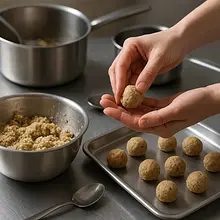
From the prepared mixture, form small balls in your hands the size of a walnut (about 3-4 cm in diameter). Try to make them all similar in size, so they cook evenly. You should get about 16-20 koftas. In a wide pot or deep pan, heat vegetable oil (about 500 ml) over medium heat. The oil should be at a temperature of about 170-180°C. If you don't have a thermometer, drop a small piece of the mixture in – if it immediately floats to the surface and starts to sizzle, surrounded by bubbles, the oil is ready. Carefully place the koftas in batches (4-5 at a time) to avoid lowering the oil temperature too much. Fry for 3-4 minutes, gently turning them halfway through frying, until they are evenly golden brown. Remove the fried koftas with a slotted spoon and place them on a plate lined with paper towels to drain excess fat.

Ingredients: Vegetable oil for frying
The most common mistake is too low oil temperature, which causes the koftas to absorb fat and may lead to them falling apart. The second trap is overcrowding the pot - fry in batches! Alternatively, for a healthier version, you can bake the koftas. Arrange them on a baking sheet lined with parchment paper, spray with oil, and bake at 200°C for 20-25 minutes, turning halfway through.

Preparation of saffron-cardamom sauce

4

Soak the cashews in boiling water and set aside for 15 minutes. Place the saffron threads in a small bowl and pour in 2 tablespoons of hot water or milk to release their color and aroma. Chop the remaining onion (about 150g), garlic (3 cloves), and ginger (about 15g) and blend into a smooth paste with a little water. In a large skillet or pot, heat 2 tablespoons of oil. Add the cardamom pods (lightly crushed with the back of a knife) and bay leaf, and sauté for 30 seconds until fragrant. Add the onion-ginger-garlic paste and cook over medium heat for 5-7 minutes, stirring frequently, until the paste thickens and begins to brown.

Ingredients: Cashews, Saffron threads, Onion, Garlic, Fresh ginger, Vegetable oil for frying, Green cardamom, Bay leaf
Use a blender or immersion blender to prepare a paste of onion, garlic, and ginger - this will ensure a smooth consistency of the sauce. Crushing the cardamom is key for its aroma to infuse into the oil. Be careful not to burn the paste, as it will make the sauce bitter.
5

Drain the soaked cashews and blend them with 50 ml of fresh water until you have a perfectly smooth, creamy paste. Add the cashew paste, the remaining turmeric (1/2 teaspoon), and the rest of the garam masala (1 teaspoon) to the sautéed onion paste in the pan. Cook together for a minute, stirring constantly. Then pour in the coconut milk, the saffron water, add sugar and salt to taste. Mix everything thoroughly, bring to a gentle boil, then reduce the heat and simmer for 8-10 minutes, until the sauce thickens slightly. Stir occasionally to prevent the sauce from sticking to the bottom.

Ingredients: Full-fat coconut milk, sugar, Salt, Turmeric, Garam masala
Blending the cashews until smooth is key for a velvety sauce texture. If you don't have a powerful blender, soak them longer (even for an hour). After adding the coconut milk, do not cook the sauce over high heat, as it may curdle. The consistency of the sauce should resemble thin cream.

Final combination and serving

6

When the sauce is ready, taste it and adjust with salt or sugar if needed. Remove the bay leaf. Very gently transfer the fried koftas to the hot sauce. Cook them together on the lowest heat for just 2-3 minutes, just to warm them up and soak them in the sauce. Do not stir too vigorously to avoid damaging them. Remove from heat. Transfer the dish to a deep bowl. Garnish with chopped fresh coriander leaves. Additionally, to enhance the flavor and appearance, you can sprinkle the dish with pomegranate seeds and toasted almond flakes. Serve immediately with hot basmati rice or naan bread.

Ingredients: Fresh cilantro, Pestki granatu, Almond flakes
Do not cook the kofta in the sauce for too long, as they will become too soft and may fall apart. It is best to add them just before serving. Optional additions like pomegranate and almonds really enhance the flavor and visual appeal of the dish, adding crunch and freshness.

Fun Fact

💡

Kofta has its roots in ancient Persia, and the word 'kofta' comes from the Persian 'kūfta', which means 'mashed' or 'ground'. This dish spread throughout the Middle East and India thanks to the Mughal Empire, which refined it by adding rich, creamy sauces and aromatic spices such as saffron and cardamom.

Best for

Tips

🍽️ Serving

Serve the dish in a deep bowl so that the sauce envelops the koftas. Next to it, place a bowl of fluffy basmati rice, cooked with a bit of turmeric for color. On a separate plate, serve warm naan bread brushed with garlic butter. A simple cucumber and onion salad or a cooling yogurt dip raita would be a great accompaniment to balance the richness of the flavors.

🥡 Storage

It is best to store koftas and sauce separately in airtight containers in the refrigerator for up to 3 days. This way, the koftas won't become soggy. To reheat, first warm the sauce over low heat, then add the koftas and heat together for a few minutes until hot. Freezing the finished dish is not recommended, as the coconut and cashew-based sauce may change consistency.

📸 Ugotowane przez społeczność

Zaloguj się, aby dodać zdjęcie
Dodaj zdjęcie gotowej potrawy

Po zatwierdzeniu przez moderatora otrzymasz 10 punktów doświadczenia.

🍲

Nikt jeszcze nie dodał zdjęcia. Bądź pierwszy!

Comments (0)

Be the first to comment on this recipe!

Add a comment

You might also like

Recipe Categories

Indian cuisine is a fascinating journey through a continent of spices - from mild to fiery. Curry in a hundred variations: tikka masala, butter chicken, korma, vindaloo, and madras. Biryani, pulao, and dal - rice and lentil dishes full of aroma. Naan, chapati, and paratha - Indian breads baked in...

See all recipes in this category

Vegetarian cuisine is a wealth of flavors without meat - healthy, colorful, and filling. Plant-based proteins: lentils, chickpeas, beans, peas, and soy take center stage. Cheeses and dairy: feta, halloumi, ricotta, and mascarpone in main dishes. Eggs in various forms: omelets, frittata, shakshuka...

See all recipes in this category
Main Dishes
Main Dishes in: Christmas Eve Dinner

Main courses are the heart of every meal - hearty, delicious, and full of nutrients. Meats: beef, pork, poultry, and lamb in various versions. Fish and seafood: baked, fried, grilled, and stewed. Vegetarian dishes: tofu, tempeh, legumes as the main protein. Casseroles: pasta, potato, vegetable wi...

See all recipes in this category

Dishes for special occasions are culinary masterpieces for birthdays, anniversaries, and holidays. Grilled beef steak with herb butter - restaurant quality at home. Beef Wellington - beef in puff pastry with duxelles. Roast duck with apples - a holiday tradition in a new edition. Pink salmon with...

See all recipes in this category
Reklama