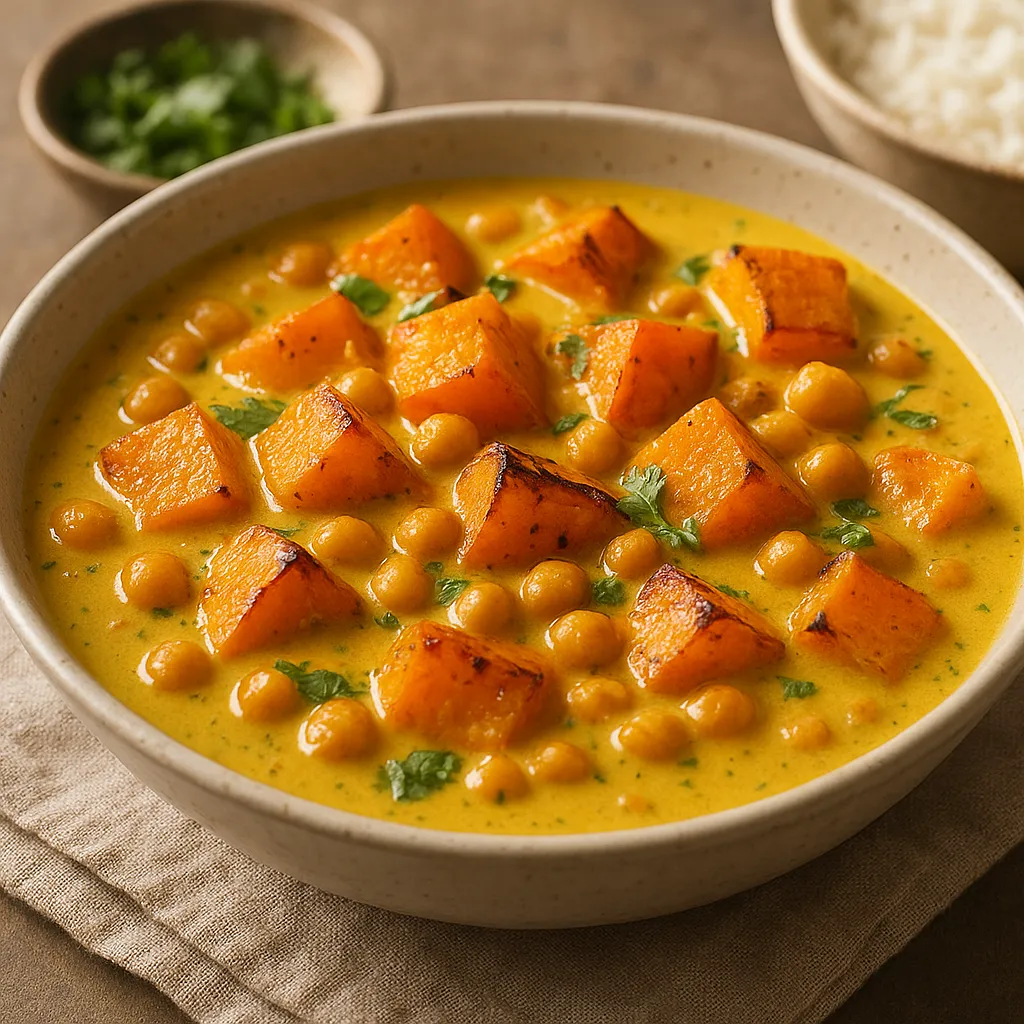
Creamy Curry with Roasted Pumpkin and Chickpeas

Pikantne Indian Cuisine Vegetarian Dishes Lunches 90 min Medium 12 wyświetleń ~26.71 PLN - (0)
Rate:
(0)
Start Cooking

Description

This aromatic and warming dish, inspired by the richness of northern Indian cuisine, is the perfect choice for cooler days. At its heart is roasted Hokkaido pumpkin, which, thanks to caramelization in the oven, gains an extraordinary depth of flavor and sweetness, perfectly balancing the spicy notes of the spices. The velvety, creamy sauce made from coconut milk and tomatoes envelops each piece of pumpkin and chickpeas, which add valuable plant-based protein and a pleasant texture to the dish. The composition of traditional Indian spices, such as garam masala, turmeric, and cumin, creates an incredibly rich and complex bouquet of flavors. The dish looks incredibly appetizing thanks to the intense orange color of the sauce, contrasting with the green of fresh coriander. Served with fluffy basmati rice or warm naan bread, it constitutes a wholesome, filling, and extremely satisfying vegetarian meal that can easily be transformed into a vegan version.

Ingredients (17)

Servings:
4
  • Hokkaido pumpkin 800 g
  • Ciecierzyca konserwowa 240 g
  • Full-fat coconut milk 400 ml
  • Canned diced tomatoes 400 g
  • Onion 1.3 szt.
  • Garlic 4 ząbki
  • Fresh ginger 25 g
  • Rapeseed oil 30 g
  • Ground coriander 2 g
  • Ground hot pepper 1 g
  • 🌿 Przyprawy
  • Garam masala 4 g
  • Ground turmeric 0.4 łyżeczek
  • ground cumin 0.4 łyżeczek
  • Salt 0.2 szczypt
  • ✨ Opcjonalne
  • Fresh cilantro 30 g
  • Lime juice 20 ml
  • Almond flakes 20 g
💰 Szacowany koszt dania: ~26.71 PLN (6.68 PLN/porcję)

💡 Kliknij na składnik aby oznaczyć jako użyty

Preparation steps

Roasting pumpkin

1

Start by preheating the oven to 200°C with the convection function (or 220°C top and bottom). In the meantime, wash the pumpkin thoroughly under running water. Place it on a stable cutting board and carefully, using a large, sharp knife, cut it in half. Use a metal spoon to scoop out the seeds and fibrous flesh from the center. Then, cut the pumpkin halves into cubes with a side of about 2-3 cm. Remember that the skin of Hokkaido pumpkin is edible and becomes soft after baking, so you don't need to peel it.

Ingredients: Hokkaido pumpkin
Use a large, heavy cutting board to prevent the pumpkin from slipping. If cutting raw pumpkin is difficult, you can place it in a hot oven for 10-15 minutes to soften it slightly.

2

Transfer the diced pumpkin to a large bowl. Drizzle it with half of the oil (1 tablespoon, or 15 ml) and sprinkle with half of the salt (about 1/2 teaspoon). Mix everything thoroughly with your hands, ensuring that each piece of pumpkin is evenly coated with a thin layer of oil and seasoning. This will ensure even roasting and caramelization.

Ingredients: Hokkaido pumpkin, Rapeseed oil, Salt
Mixing by hand is the most effective. You can wear disposable gloves if you don't want to get your hands dirty. Make sure the spices reach all the nooks and crannies.
3

Line a large baking tray with parchment paper. Spread the prepared pumpkin on it, trying to keep the pieces in a single layer and not overlapping. This will give them space to roast rather than steam. Place the tray in the preheated oven and bake for 25-30 minutes. The pumpkin is ready when a fork easily pierces it, and its edges are nicely browned and slightly caramelized.

Ingredients: Hokkaido pumpkin
Using parchment paper will prevent the pumpkin from sticking to the baking sheet and make cleanup easier. Halfway through baking, you can toss the pumpkin on the sheet to ensure it browns evenly.

Preparing the curry

4

While the pumpkin is baking, prepare the remaining ingredients. Peel the onion and chop it into small cubes. Peel the garlic cloves and crush them with a press or chop them very finely. Peel a piece of ginger (the easiest way to do this is with the edge of a small spoon) and grate it on a fine grater.

Ingredients: Onion, Garlic, Fresh ginger
Preparing all the ingredients before starting to fry (the so-called mise en place) will make the cooking process smooth and help you avoid burning anything.
5

In a large, wide pot or deep skillet with a thick bottom, heat the remaining tablespoon of oil (15 ml) over medium heat. When the oil is hot (starts to shimmer slightly on the surface), add the chopped onion. Sauté for 5-7 minutes, stirring occasionally with a wooden spoon, until the onion becomes soft and translucent (glassy).

Ingredients: Rapeseed oil, Onion
Use a heavy-bottomed pot that distributes heat evenly and prevents burning. Don't rush this step – well-caramelized onion is a sweet base for the entire dish.
6

Add the minced garlic and grated ginger to the sautéed onion. Fry everything together for about 1 minute, stirring constantly. This step is crucial for releasing the full aroma of the garlic and ginger. Be careful not to burn them, as they will become bitter.

Ingredients: Garlic, Fresh ginger
Stir vigorously, as garlic and ginger tend to stick to the bottom of the pot quickly. When you smell an intense, pleasant aroma, it's a sign that you can move on to the next step.
7

Reduce the burner to the lowest setting. Add all the dry spices to the pot: garam masala, turmeric, cumin, ground coriander, and hot paprika. Stir constantly for about 30-60 seconds. This is called 'toasting the spices', which activates the essential oils contained in them and makes their flavor deeper and more intense. Be careful not to burn them.

Ingredients: Garam masala, Ground turmeric, ground cumin, Ground coriander, Ground hot pepper
If the pan is too dry, you can add a little more oil. Properly toasted spices will fill the kitchen with an amazing aroma.
8

Immediately after toasting the spices, pour the entire can of diced tomatoes along with the juice into the pot. Increase the burner to medium heat. Use a wooden spoon to scrape up any bits of spices stuck to the bottom of the pot so they combine with the sauce. Bring to a boil, then reduce the heat and simmer for about 5 minutes, until the sauce thickens slightly.

Ingredients: Canned diced tomatoes
Adding tomatoes halts the process of toasting the spices, preventing them from burning. This step allows the flavors to meld together and creates a uniform sauce base.
9

Pour the entire contents of the can of coconut milk into a pot. Mix thoroughly until the sauce achieves a smooth, creamy consistency and a beautiful orange color. Bring it back to a gentle boil (small bubbles should appear on the surface), then immediately reduce the heat so that the sauce just lightly 'flickers'.

Ingredients: Full-fat coconut milk
Do not bring the coconut milk to a strong, rapid boil, as it may curdle and lose its smooth texture. Gentle heating is the key to success.
10

In the meantime, drain the chickpeas in a sieve and rinse them thoroughly under cold running water to remove excess salt and brine. Once the pumpkin is roasted, carefully remove it from the oven. Add the rinsed chickpeas and hot pieces of roasted pumpkin to the pot with the curry sauce. Gently mix everything, being careful not to crush the soft pieces of pumpkin.

Ingredients: Ciecierzyca konserwowa, Hokkaido pumpkin
Rinsing canned chickpeas improves their flavor and reduces the sodium content in the finished dish. Add the pumpkin to the sauce carefully to avoid splattering hot liquid.
11

Cook everything together over low heat for another 5-10 minutes, uncovered. This will allow the flavors to meld and the pumpkin and chickpeas to absorb the sauce's aroma. Finally, taste the curry and season with the remaining salt to your liking. You can also add more chili if you prefer spicier dishes.

Ingredients: Salt
If the sauce is too thick, you can add a few tablespoons of hot water or vegetable broth. If it is too thin, cook it a little longer to evaporate the excess liquid.
12

Remove the pot from the heat. If you are using optional ingredients, now is the right time. Squeeze in fresh lime juice, which will brighten and balance the flavors. Sprinkle the dish with chopped fresh cilantro leaves and toasted almond flakes. Serve immediately, hot.

Ingredients: Fresh cilantro, Lime juice, Almond flakes
Always add fresh herbs and lime juice at the very end, after cooking is finished. High temperatures would destroy their delicate aroma.

Fun Fact

💡

Garam Masala, a key spice in this dish, literally translates from Hindi as 'hot mixture'. However, this name does not refer to spiciness, but to the Ayurvedic concept of 'warming' the body, which makes dishes with its addition perfect for cool autumn and winter days.

Best for

Tips

🍽️ Serving

Curry tastes best served with hot, fluffy basmati or jasmine rice that will absorb the aromatic sauce. Indian breads, such as buttery naan or whole grain roti, are also a perfect addition for dipping into the sauce. To mellow the flavor and add freshness, a dollop of thick natural yogurt (or a vegan alternative, such as coconut yogurt) can be placed on top of each serving.

🥡 Storage

Prepared curry can be stored in an airtight container in the refrigerator for 2-3 days. Interestingly, its flavor often becomes even deeper and richer the next day, as all the aromas meld together. Reheat on low heat in a pot, possibly adding a little water if the sauce has thickened too much. The dish is also great for freezing (up to 3 months).

📸 Ugotowane przez społeczność

Zaloguj się, aby dodać zdjęcie
Dodaj zdjęcie gotowej potrawy

Po zatwierdzeniu przez moderatora otrzymasz 10 punktów doświadczenia.

🍲

Nikt jeszcze nie dodał zdjęcia. Bądź pierwszy!

Comments (0)

Be the first to comment on this recipe!

Add a comment

You might also like

Recipe Categories

Indian cuisine is a fascinating journey through a continent of spices - from mild to fiery. Curry in a hundred variations: tikka masala, butter chicken, korma, vindaloo, and madras. Biryani, pulao, and dal - rice and lentil dishes full of aroma. Naan, chapati, and paratha - Indian breads baked in...

See all recipes in this category

Vegetarian cuisine is a wealth of flavors without meat - healthy, colorful, and filling. Plant-based proteins: lentils, chickpeas, beans, peas, and soy take center stage. Cheeses and dairy: feta, halloumi, ricotta, and mascarpone in main dishes. Eggs in various forms: omelets, frittata, shakshuka...

See all recipes in this category

Lunches are the main meal of the day - filling, balanced, and full of flavor. Traditional two-course lunches: soup and a main dish in Polish tradition. Pork chop with potatoes and cabbage - a classic of Polish lunches. Dumplings with meat, cheese, and fruit - hand-formed delicacies. Beef goulash,...

See all recipes in this category
Main Dishes
Main Dishes in: Christmas Eve Dinner

Main courses are the heart of every meal - hearty, delicious, and full of nutrients. Meats: beef, pork, poultry, and lamb in various versions. Fish and seafood: baked, fried, grilled, and stewed. Vegetarian dishes: tofu, tempeh, legumes as the main protein. Casseroles: pasta, potato, vegetable wi...

See all recipes in this category

Vegan cuisine features delicious dishes without animal products - healthy, ethical, and environmentally friendly. Plant-based protein: tofu, tempeh, soy, lentils, chickpeas, and beans take center stage. Vegan dairy substitutes: plant milks, cashew cheese, and vegan yogurts. Recipes for vegan burg...

See all recipes in this category
Reklama