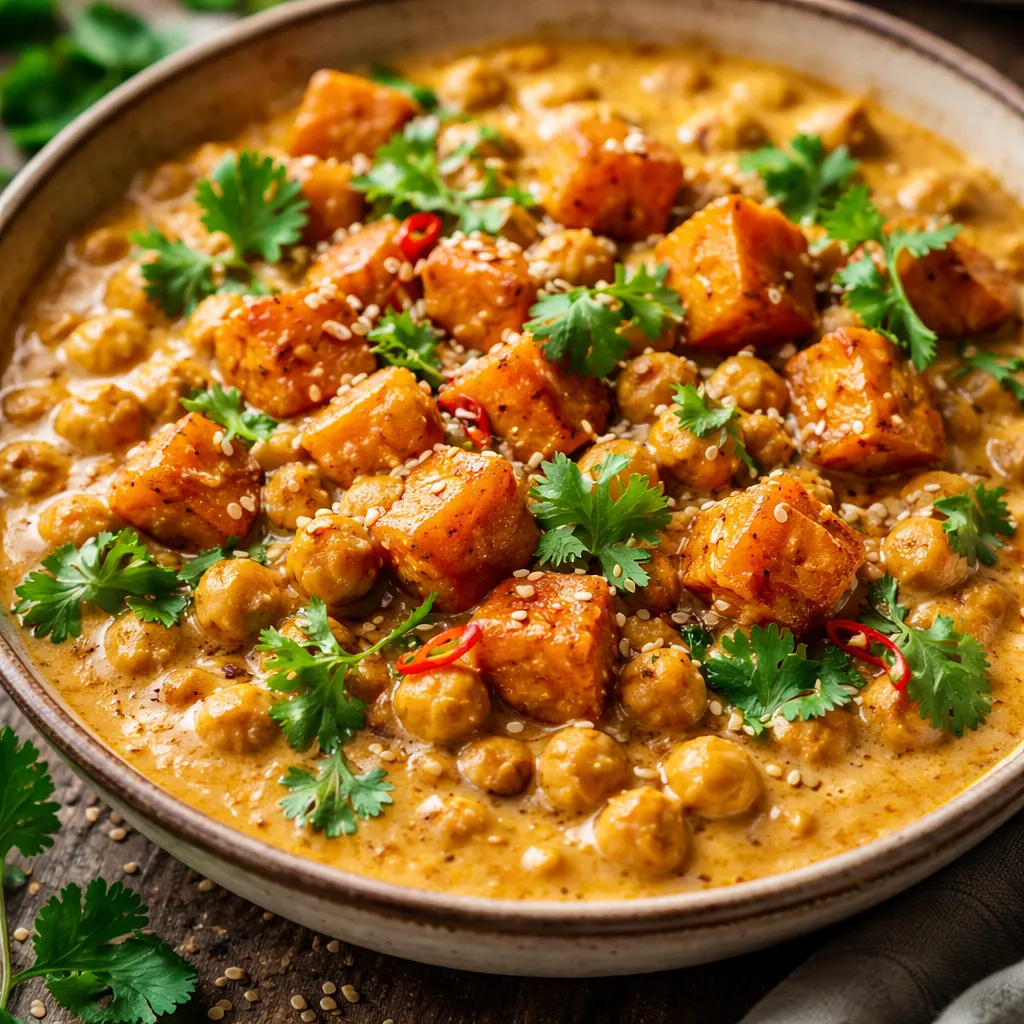
Creamy Curry with Roasted Pumpkin and Chickpeas in Korma Sauce

Pikantne Indian Cuisine Vegetarian Dishes Main Dishes 75 min Medium 17 wyświetleń ~27.61 PLN - (0)
Rate:
(0)
Start Cooking

Description

This unique vegetarian curry is the essence of Indian cuisine in its creamiest and mildest form. Korma sauce, originating from Mughal cuisine, is characterized by its velvety texture achieved through a paste of cashews and coconut milk. The sweetness of roasted Hokkaido pumpkin, whose skin becomes edible and tender after roasting, perfectly balances the richness of aromatic spices. The addition of chickpeas not only enriches the dish with plant-based protein and fiber but also gives it a satisfying texture. Visually, the dish delights with its deep orange color, complemented by the green of fresh coriander. It is the perfect option for a fall or winter meal that warms and satisfies. Serve it with fluffy basmati rice and warm naan bread to fully enjoy every bite of this aromatic dish.

Ingredients (18)

Servings:
4
  • Hokkaido pumpkin 600 g
  • Ciecierzyca konserwowa 240 g
  • Full-fat coconut milk 400 ml
  • Onion 1.3 szt.
  • Cashews 60 g
  • Thick natural yogurt 100 g
  • Rapeseed oil 30 g
  • Fresh ginger 20 g
  • Garlic 4 ząbki
  • Tomato paste 25 g
  • Ground coriander 2 g
  • 🌿 Przyprawy
  • Garam masala 8 g
  • Ground turmeric 0.6 łyżeczka
  • ground cumin 0.6 łyżeczka
  • Salt 0.2 szczypt
  • Freshly ground black pepper 2 szczypty
  • ✨ Opcjonalne
  • Fresh cilantro 15 g
  • Almond flakes 10 g
💰 Szacowany koszt dania: ~27.61 PLN (6.90 PLN/porcję)

💡 Kliknij na składnik aby oznaczyć jako użyty

Preparation steps

Preparing the pumpkin

1

Preheat the oven to 200°C (fan). Rinse the Hokkaido pumpkin thoroughly under running water. You don't need to peel it; the skin will be soft and edible after baking. Cut the pumpkin in half, then use a spoon to remove the seeds and fibrous flesh from the center. Cut the pumpkin halves into cubes about 2-3 cm on each side.

Ingredients: Hokkaido pumpkin
Use a sharp, large chef's knife to safely cut the hard pumpkin. Place a damp cloth under the cutting board to prevent it from sliding.

2

Transfer the chopped pumpkin to a large bowl. Add half of the oil (about 1 tablespoon), season with salt and pepper. Mix thoroughly with your hands, ensuring each piece of pumpkin is evenly coated with oil and spices. Spread the pumpkin in a single layer on a baking sheet lined with parchment paper. Bake for 25-30 minutes, until the pumpkin is tender and slightly caramelized at the edges. Halfway through baking, you can stir the pieces of pumpkin to ensure they cook evenly.

Ingredients: Hokkaido pumpkin, Rapeseed oil, Salt, Freshly ground black pepper
Do not place the pieces of pumpkin too tightly on the baking sheet, as they will steam instead of roasting. If you have a lot of pumpkin, use two baking sheets.

Preparation of Korma paste

3

While the pumpkin is baking, prepare the paste. Place the raw cashews in a small bowl and cover them with boiling water. Let them sit for at least 15 minutes. This step is crucial for softening the nuts, which will allow you to achieve a perfectly smooth and creamy paste without lumps.

Ingredients: Cashews
If you don't have time to soak, you can cook the nuts in water for 10 minutes. Use a high-power blender for the best paste consistency.
4

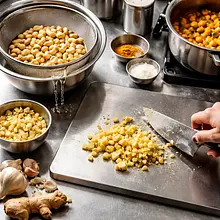
Drain the soaked cashews. Peel the garlic and ginger, then roughly chop them. Place the drained cashews, chopped garlic, ginger, tomato paste, and about 50 ml of coconut milk (leave the rest for later) in the blender jar. Blend on high speed for 1-2 minutes until a perfectly smooth, thick paste forms. If necessary, scrape the mixture from the sides of the blender and blend for a little longer.

Ingredients: Cashews, Garlic, Fresh ginger, Tomato paste, Full-fat coconut milk
If the paste is too thick and the blender has trouble mixing it, add another 1-2 tablespoons of coconut milk. The goal is to achieve the consistency of thick cream.

Cooking Curry

5

In a large, wide pot or deep skillet, heat the remaining tablespoon of oil over medium heat. Peel the onion and chop it into small cubes. Add the onion to the heated oil and sauté, stirring occasionally, for about 5-7 minutes, until it becomes soft, translucent, and slightly golden. Do not burn it; it should be sweet and tender.

Ingredients: Onion, Rapeseed oil
Use a heavy-bottomed pot that distributes heat evenly and prevents burning. Patient, slow frying of the onion is the foundation of good curry flavor.
6

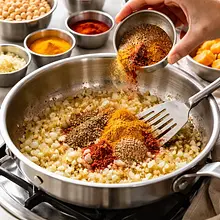
Reduce the heat. Add all the dry spices to the sautéed onion: garam masala, turmeric, cumin, and ground coriander. Sauté everything together, stirring constantly, for about 1 minute. This process, known as 'blooming' or 'tempering' the spices, releases their essential oils and deepens the aroma of the entire dish. Be careful not to burn the spices, as they will become bitter.

Ingredients: Garam masala, Ground turmeric, ground cumin, Ground coriander
Your kitchen should now be filled with an intense, wonderful aroma of spices. That's a sign you're doing it right. If the mixture becomes too dry, you can add a little water.
7

Add the prepared cashew paste to the pot with the onion and spices. Mix thoroughly and cook on low heat for 2-3 minutes, stirring constantly to prevent the paste from burning. The paste should thicken slightly and start to smell intense.

Use a silicone spatula to scrape out all the paste from the blender – it's a shame to waste even a bit of this creamy treasure.
8

Gradually pour the remaining coconut milk into the pot, constantly stirring with a whisk to combine it with the paste into a smooth, uniform sauce. Then add the natural yogurt and mix again. Bring the sauce to a very gentle boil (only small bubbles should appear on the surface), and then immediately reduce the heat to the minimum.

Ingredients: Full-fat coconut milk, Thick natural yogurt
Do not bring the sauce to a strong boil after adding the yogurt, as it may curdle. Gentle heating is key.
9

Add the roasted pumpkin to the creamy sauce. Drain the canned chickpeas in a sieve and rinse thoroughly under cold running water, then add them to the pot as well. Gently mix everything so that all the ingredients are coated in the sauce. Cook on the lowest heat, covered, for 10-15 minutes to allow the flavors to meld. Do not stir too vigorously to avoid mashing the soft pieces of pumpkin.

Ingredients: Hokkaido pumpkin, Ciecierzyca konserwowa
Rinsing canned chickpeas removes excess salt and the metallic taste of the brine, which significantly improves the flavor of the dish.
10

After 10-15 minutes, remove the pot from the heat. Taste the curry and season with salt and freshly ground black pepper to your liking. If the curry seems too thick, you can add a bit of hot water or vegetable broth to achieve the desired consistency. If you wish, add chopped fresh cilantro (optional) and gently stir.

Ingredients: Salt, Freshly ground black pepper, Fresh cilantro
Always taste the dish before serving. Sometimes a pinch of salt or a little lime juice (for acidity) can completely change the flavor of the dish.

Serving

11

Transfer the hot curry to deep bowls. Serve immediately, garnished with additional fresh coriander leaves and sprinkled with toasted almond flakes (optional) for added crunch. The dish pairs perfectly with fluffy basmati rice and warm naan or roti breads.

Ingredients: Fresh cilantro, Almond flakes
To toast almond flakes, heat a dry skillet over medium heat and toast the flakes for 1-2 minutes, stirring frequently, until they become golden and fragrant.

Fun Fact

💡

Korma is a type of curry that originates from the royal cuisine of the Mughal Empire in India. The word 'korma' means 'to braise' and refers to the technique of slow-cooking meat or vegetables in a sauce based on yogurt, cream, or nut paste. Unlike many other Indian curries, Korma is traditionally very mild and aromatic, rather than spicy.

Best for

Tips

🍽️ Serving

Serve hot, sprinkled with fresh cilantro and toasted almond flakes for a contrast of textures. It pairs perfectly with fluffy basmati rice, which will soak up the creamy sauce, and with warm naan or roti, ideal for dipping in the curry. You can also serve a small bowl of raita yogurt on the side for a refreshing touch.

🥡 Storage

Store curry in an airtight container in the refrigerator for up to 3 days. It tastes even better the next day when the flavors have melded. Reheat over low heat in a pot, adding a little water or coconut milk if necessary to restore the ideal creamy consistency. Freezing is not recommended due to the yogurt content, which may alter the sauce's texture.

📸 Ugotowane przez społeczność

Zaloguj się, aby dodać zdjęcie
Dodaj zdjęcie gotowej potrawy

Po zatwierdzeniu przez moderatora otrzymasz 10 punktów doświadczenia.

🍲

Nikt jeszcze nie dodał zdjęcia. Bądź pierwszy!

Comments (0)

Be the first to comment on this recipe!

Add a comment

You might also like

Recipe Categories

Indian cuisine is a fascinating journey through a continent of spices - from mild to fiery. Curry in a hundred variations: tikka masala, butter chicken, korma, vindaloo, and madras. Biryani, pulao, and dal - rice and lentil dishes full of aroma. Naan, chapati, and paratha - Indian breads baked in...

See all recipes in this category

Vegetarian cuisine is a wealth of flavors without meat - healthy, colorful, and filling. Plant-based proteins: lentils, chickpeas, beans, peas, and soy take center stage. Cheeses and dairy: feta, halloumi, ricotta, and mascarpone in main dishes. Eggs in various forms: omelets, frittata, shakshuka...

See all recipes in this category
Main Dishes
Main Dishes in: Christmas Eve Dinner

Main courses are the heart of every meal - hearty, delicious, and full of nutrients. Meats: beef, pork, poultry, and lamb in various versions. Fish and seafood: baked, fried, grilled, and stewed. Vegetarian dishes: tofu, tempeh, legumes as the main protein. Casseroles: pasta, potato, vegetable wi...

See all recipes in this category

Lunches are the main meal of the day - filling, balanced, and full of flavor. Traditional two-course lunches: soup and a main dish in Polish tradition. Pork chop with potatoes and cabbage - a classic of Polish lunches. Dumplings with meat, cheese, and fruit - hand-formed delicacies. Beef goulash,...

See all recipes in this category
Reklama