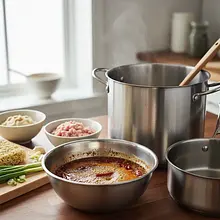
Start by preparing the eggs, which need time to cool down. In a small pot, bring water to a boil. Gently, using a spoon, place the eggs (at room temperature) into the boiling water. Cook them for exactly 7 minutes to keep the yolk runny. After this time, immediately transfer the eggs to a bowl of ice-cold water for at least 5 minutes to stop the cooking process. Carefully peel them under cold water and set aside. Finely chop the chives. Cut the pak choi in half or quarters lengthwise.
Description
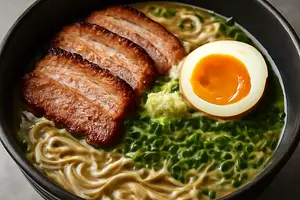
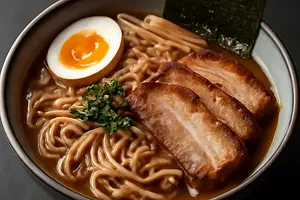
Here’s a recipe for ramen that will transport you straight to the vibrant, nighttime Tokyo. This is not just an ordinary soup – it’s a complete, multi-dimensional dish that combines the best of Japanese and Chinese cuisine. The inspiration comes from Tantanmen, a Japanese adaptation of the Sichuan dish Dan Dan. Our version features a creamy, rich broth based on miso paste and sesame tahini, which envelops every bite of noodles. The heart of the dish is spicy, juicy pork (Niku Miso) stir-fried with fermented bean paste, which adds a fiery character and incredible umami depth to the dish. It is complemented by homemade, aromatic chili oil (Ra-yu) and a perfectly cooked egg with a runny yolk. The dish is visually stunning – the contrasting colors of the intense broth, green bok choy, and bright yolk create a small work of art in a bowl. Serve it as a hearty lunch or an impressive dinner that will warm and satisfy even the biggest appetite.
Ingredients (17)
- Chicken or vegetable broth 1500 ml
- Ramen noodles 400 g
- Ground pork 400 g
- Eggs 4 szt.
- White miso paste (shiro miso) 80 g
- Pasta tahini 60 g
- Soy sauce 45 ml
- Mirin 30 ml
- Garlic 5 ząbków
- Fresh ginger 20 g
- Bok choy 400 g
- Sesame oil 15 ml
- Neutral vegetable oil 120 ml
- 🌿 Przyprawy
- Spicy broad bean paste (doubanjiang) 2 łyżki
- Chives 0.3 pęczków
- Chili flakes (gochugaru) 20 g
- ✨ Opcjonalne
- White sesame 2 łyżeczki
💡 Kliknij na składnik aby oznaczyć jako użyty
Preparation steps
Preparation of eggs and toppings
Homemade chili oil (Ra-yu)
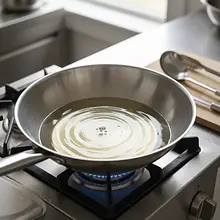
Prepare the aromatic oil. In a small, heatproof dish (e.g., a glass bowl), place the chili flakes. Peel and slice 2 cloves of garlic into thin slices. In a small saucepan, heat 100 ml of neutral vegetable oil. When the oil is hot (but not smoking - it should gently sizzle around a wooden stick), add the garlic slices and fry for about 30-45 seconds until they become golden and crispy. Immediately remove from heat and carefully pour the hot oil along with the garlic into the bowl with the chili flakes. The oil will bubble vigorously - this is normal. Stir and set aside to cool. The aroma will be amazing!
Spicy Pork (Niku Miso)
In a large skillet or wok, heat 20 ml (about 1.5 tablespoons) of vegetable oil over medium-high heat. Add the ground meat. Use a wooden spoon to break it into smaller pieces. Cook for 5-7 minutes, until the meat loses its pink color and starts to brown. Meanwhile, finely chop 3 cloves of garlic and the whole ginger. When the meat is ready, push it to the side of the pan, and in the empty space, add the chopped garlic and ginger. Sauté for 1 minute, until fragrant. Then add the doubanjiang paste and stir everything together for another minute. Finally, add 15 ml (1 tablespoon) of soy sauce and 15 ml (1 tablespoon) of mirin. Mix well and cook for another 2 minutes, until the sauce thickens slightly. Remove from heat and set aside.
Flavor Base (Tare) and Broth
In a large bowl, combine the 'tare' ingredients. Place the miso paste and tahini paste in it. Add 30 ml (2 tablespoons) of soy sauce, 15 ml (1 tablespoon) of mirin, and 15 ml (1 tablespoon) of sesame oil. Using a whisk or fork, mix vigorously until you achieve a smooth, uniform paste without lumps. In a large pot, heat the chicken broth until it is very hot, almost boiling. However, do not let it boil vigorously.
Cooking the pasta and assembling the dish
In a large pot, bring plenty of salted water to a boil. Add the ramen noodles and cook according to the package instructions, usually 2-4 minutes. The noodles should be 'al dente' (slightly firm in the center), as they will continue to cook in the hot broth. In the last minute of cooking the noodles, add the prepared bok choy to the same water to blanch it. Drain the noodles and bok choy in a colander.
Final Assembly of Ramen
This is the most important moment! Prepare 4 deep bowls. In each bowl, place an equal portion of the prepared 'tare' paste (about 1/4 of the total). Then, pour about 350-400 ml of hot broth into each bowl. Whisk vigorously until the 'tare' completely dissolves in the broth, creating a creamy, opaque soup. Into this prepared base, add a portion of freshly cooked noodles. On top, arrange a portion of spicy pork, halved or quartered pak choi, and a halved egg. Drizzle everything with a teaspoon of the prepared chili oil. Generously sprinkle with chopped chives and optionally toasted sesame seeds. Serve immediately!
Fun Fact
Tantanmen, the inspiration for this recipe, is a Japanese version of the Chinese dish 'Dan Dan Mian'. The name 'Dan Dan' refers to the bamboo poles ('dan') that street vendors in Sichuan used to carry their portable kitchens, consisting of two baskets: one with noodles and the other with sauce.
Best for
Tips
Serve ramen in deep, large bowls that will keep it warm. Use chopsticks to pick up the noodles and toppings, and a deep ceramic spoon (renge) to sip the broth. Arrange each element in the bowl separately to create an aesthetic composition – meat on one side, pak choi on the other, and the egg in the center.
If you have leftovers, store each ingredient separately in airtight containers in the fridge for up to 2 days. Broth, meat, pasta, and toppings must be kept separately. When reheating, first warm the broth with the meat, and in the meantime, pour boiling water over the pasta to refresh it. Then combine everything in a bowl as you did the first time.
📸 Ugotowane przez społeczność
Zaloguj się, aby dodać zdjęcieDodaj zdjęcie gotowej potrawy
Po zatwierdzeniu przez moderatora otrzymasz 10 punktów doświadczenia.
Nikt jeszcze nie dodał zdjęcia. Bądź pierwszy!
Comments (0)
Be the first to comment on this recipe!
Add a comment