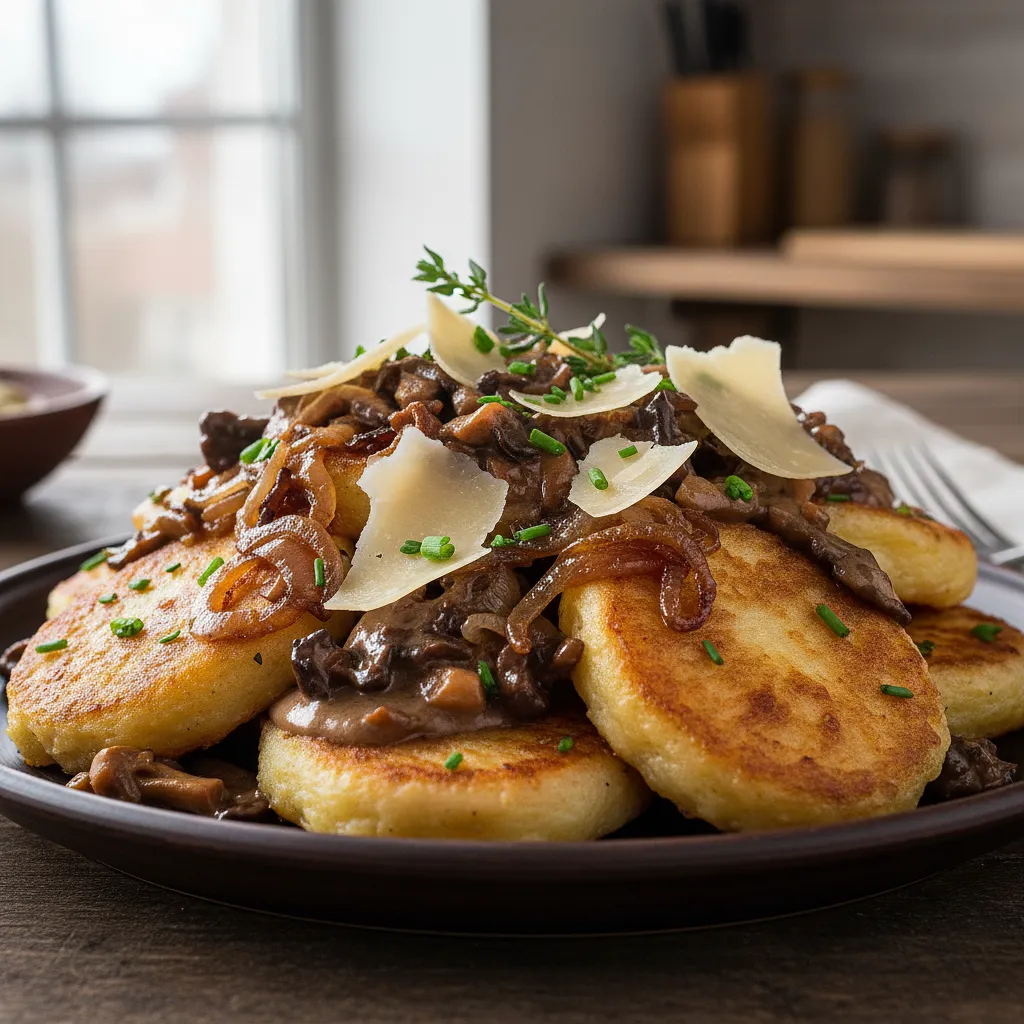
Łódź Prażoki with Caramelized Onions, Smoked Cheese, and Mushroom Sauce with Porter Beer

Pikantne Main Dishes European cuisine Vegetarian Dishes 90 min Medium 8 wyświetleń ~38.68 PLN - (0)
Rate:
(0)
Start Cooking

Description

This dish is a culinary tribute to Łódź, a city with a dual soul – working-class and industrial. Simple, hearty potato dumplings, known as prażoki or iron dumplings, form the heart of the dish, referencing the humble cuisine of Łódź's textile workers. However, they are surrounded by flavors worthy of factory tables: a deep, aromatic sauce made from forest mushrooms, stewed in dark, sweet Porter beer, which once delighted the palates of the elite. The whole is complemented by the sweetness of slowly caramelized onions and the bold, smoky accent of smoked cheese. The dish is incredibly rich in flavors – the earthy note of mushrooms combines with the sweetness of onions and beer, the smoky cheese adds character, and the delicate prażoki perfectly absorb the velvety sauce. It is an ideal proposal for a chilly evening, a hearty meal that warms you up and transports you to the vibrant, 19th-century Łódź.

Ingredients (16)

Servings:
4
  • Potatoes 6.7 szt.
  • Potato flour 200 g
  • Dried forest mushrooms 30 g
  • Gorąca woda 500 ml
  • Butter 60 g
  • Onion 3 szt.
  • Garlic 2 ząbki
  • Baltic porter beer 250 ml
  • 30% cream 100 ml
  • Soy sauce 15 ml
  • sugar 5 g
  • Smoked cottage cheese 200 g
  • Fresh chives 0.5 pęczek
  • 🌿 Przyprawy
  • Salt 10 g
  • Ground black pepper 2 szczypty
  • ✨ Opcjonalne
  • Smoked bacon 150 g
💰 Szacowany koszt dania: ~38.68 PLN (9.67 PLN/porcję)

💡 Kliknij na składnik aby oznaczyć jako użyty

Preparation steps

Mushroom Sauce with Porter Beer

1

Start by preparing the mushrooms, which are the base of the sauce's flavor. Place 30g of dried mushrooms in a medium-sized bowl. Pour 500 ml of hot, but not boiling, water over them. Cover the bowl with a plate and set aside for at least 30 minutes to allow the mushrooms to soften and release their flavor into the water. After this time, the water will become dark brown and very aromatic.

Ingredients: Dried forest mushrooms, Gorąca woda
Use a glass or ceramic bowl. It’s important not to pour out the water after soaking the mushrooms - it’s the essence of flavor that you will add to the sauce! Sometimes sand from the mushrooms can settle at the bottom of the bowl, so drain them carefully.
2

Prepare the vegetable base for the sauce. Peel one onion (about 150g) and chop it into small cubes. Peel two cloves of garlic and crush them with a press or chop them very finely. In a saucepan or deep skillet with a thick bottom, melt 30g of butter over medium heat. When the butter starts to foam, add the chopped onion. Sauté for 5-7 minutes, stirring frequently, until the onion becomes translucent and soft, but not browned. Then add the garlic and sauté for another minute until it releases its aroma.

Ingredients: Onion, Garlic, Butter
Use a wooden spoon for stirring. Be careful not to burn the garlic, as it will become bitter. Frying it for just a minute at the end will prevent burning.
3

Remove the soaked mushrooms from the water, gently squeezing them. Save the water! Chop the mushrooms into smaller pieces. Add the chopped mushrooms to the sautéed onion in the pot. Increase the heat and fry everything together for about 3-4 minutes, stirring to lightly brown the mushrooms and release even more aroma.

Ingredients: Dried forest mushrooms
When draining the mushrooms, pour the mushroom water through a fine sieve or cheesecloth into another bowl to remove any sand. Sautéing the mushrooms before adding liquids intensifies their flavor.
4

Now it's time for the star of the sauce - beer. Pour 250 ml of Porter beer into the saucepan. Use a wooden spoon to scrape up any browned bits from the bottom (this is called deglazing, which adds flavor). Increase the heat and cook the sauce for about 5-7 minutes, until the beer reduces in volume by half. The sauce will noticeably thicken, and the smell of alcohol will evaporate, leaving a rich, malty aroma.

Ingredients: Baltic porter beer
Don't worry about the strong smell of beer at the beginning - it will mellow during cooking. Reducing the liquid is key to concentrating the flavor of the sauce.
5

Pour the reserved mushroom soaking water into the reduced beer (be careful to do this gently, leaving the sediment at the bottom of the bowl). Add 15 ml (one tablespoon) of soy sauce and 2 pinches of freshly ground black pepper. Reduce the heat to low, cover the saucepan, and simmer the sauce for 15-20 minutes. During this time, the flavors will meld, and the sauce will deepen.

Ingredients: Gorąca woda, Soy sauce, Ground black pepper
Simmering on low heat with a lid prevents excessive evaporation of liquid and allows the flavors to meld together. Soy sauce may seem like an unusual addition, but it works wonders, enhancing the umami flavor of the mushrooms.
6

Finally, finish the sauce. Remove the saucepan from the heat for a moment and slowly pour in 100 ml of 30% cream, constantly whisking to prevent it from curdling. Place the saucepan back on low heat and warm it, without boiling, for about 2 minutes, until the sauce thickens. Taste and season with salt and pepper if needed. The sauce is ready. Cover it and set aside to keep warm.

Ingredients: 30% cream, Salt
It is crucial not to bring the sauce to a boil after adding the cream, as it may curdle. Removing the pot from the heat before adding the cream minimizes this risk.

Prażoki (Iron Dumplings)

7

While the sauce is simmering, prepare the dumplings. Peel 1000g of potatoes and cut them into even cubes (about 2-3 cm). Place them in a large pot, cover with cold water so that it covers the potatoes, and add one teaspoon of salt (5g). Cook until completely soft, about 20-25 minutes. Check with a fork – it should go into the potato with no resistance.

Ingredients: Potatoes, Salt
Use a large pot so the potatoes have enough space. Cutting the potatoes evenly will ensure they cook at the same time. Overcooking them is an advantage in this case!
8

Drain the cooked potatoes very thoroughly in a colander. Leave them in the colander for 2-3 minutes to let the excess water evaporate completely. This is a crucial moment! Then transfer the hot potatoes back to a dry pot and mash them very well into a smooth mixture without lumps, using a potato masher. You can also press them through a ricer.

Ingredients: Potatoes
The most common mistake is not draining the potatoes thoroughly, which makes the dough too runny and sticky. Steaming in a colander is the secret to the perfect consistency. Do not use a blender or food processor for the potatoes - it will turn them into glue!
9

To the hot, smooth potato mass, add 200g of potato flour and one teaspoon of salt (5g). Mix everything vigorously with a sturdy wooden spoon until the ingredients are combined, and the dough becomes thick, cohesive, and starts to pull away from the sides of the pot. This process is called 'cooking' the flour. The dough will have a characteristic, slightly sticky, but uniform consistency.

Ingredients: Potato flour, Salt
Mix vigorously and quickly while the potatoes are hot. The heat activates the starch, which is crucial for the structure of the dumplings. The dough doesn't need to be perfectly smooth like for pierogi, but it should be free of visible flour lumps.
10

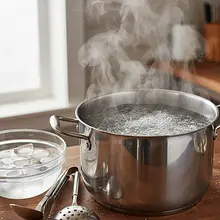
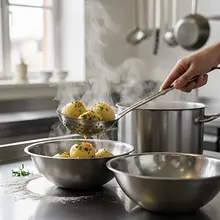
In a large pot, bring salted water to a boil. Prepare a bowl of cold water. Dip two tablespoons into it. Use one spoon to scoop a portion of potato dough, and with the other, help shape it into an oval, elongated dumpling by transferring the dough from spoon to spoon. Drop the smoothed dumpling directly into the boiling water. Repeat the process, dipping the spoons in cold water every few dumplings to prevent the dough from sticking.

This technique requires a bit of practice. Don't worry if the first dumplings aren't perfect. The key is to regularly soak the spoons in water. Don't drop too many dumplings at once; cook them in batches so they have space and don't stick together.
11

Cook the dumplings for about 3-5 minutes from the moment they float to the surface. This means they are ready. Remove them with a slotted spoon onto a plate. The finished dumplings are elastic and tender.

Do not cook the dumplings too long after they float to the surface, as they may fall apart. A slotted spoon is the best tool for removing them, as it immediately drains excess water.

Additions and Serving

12

While the dumplings are cooking, prepare the toppings. Peel and slice the two remaining onions (about 300g) into thin feathers. In a large skillet, heat the remaining 30g of butter. Add the onion, sprinkle with 5g (one teaspoon) of sugar and a pinch of salt. Sauté over low heat for 15-20 minutes, stirring often, until the onion becomes soft, sweet, and takes on a deep golden-brown color.

Ingredients: Onion, Butter, sugar
The secret to perfectly caramelized onions is patience and low heat. Don't rush. Sugar speeds up the process and enhances the natural sweetness of the onions.
13

If you are using bacon, cut 150g into small cubes. In a cold, dry pan, place the bacon and fry over medium heat until the fat renders and the cracklings become crispy and golden. Remove the cracklings with a slotted spoon to a paper towel, leaving the rendered fat in the pan (you can use it to drizzle over the dumplings for extra flavor).

Ingredients: Smoked bacon
Starting to fry the bacon in a cold pan allows for the slow rendering of fat, resulting in perfectly crispy cracklings that are not burnt on the outside and raw on the inside.
14

Crumble 200g of smoked cottage cheese with your fingers into smaller pieces. Finely chop a small bunch of chives (about 15g).

Ingredients: Smoked cottage cheese, Fresh chives
Prepare these ingredients just before serving, so the chives are fresh and aromatic.
15

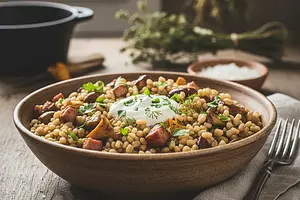
Time to serve! Place a portion of hot potato dumplings on deep plates or in bowls. Generously drizzle with warm mushroom sauce. Top with a large portion of caramelized onions. Sprinkle everything with crumbled smoked cheese, crispy bacon bits (optional), and fresh chives. Serve immediately.

Ingredients: Smoked cottage cheese, Fresh chives, Smoked bacon
The dish tastes best when hot. A deeper dish will allow the sauce to envelop each dumpling. Don't skimp on the toppings - they create the richness of flavor in this dish.

Fun Fact

💡

The name 'iron dumplings' comes from the fact that after cooling, they become very hard, like iron. It was a typical dish for Łódź workers – cheap, filling, and simple to prepare. They were often served fried the next day, which restored their softness.

Best for

Tips

🍽️ Serving

Serve the dish in deep bowls so that the sauce can freely surround the dumplings. An ideal complement would be a glass of the same Porter beer used in the sauce – its flavor will perfectly complement the dish. For added freshness, you can serve a simple salad of pickled cucumber with onion on the side.

🥡 Storage

If you have leftover ingredients, store them separately in the fridge in airtight containers. The dumplings can be stored for up to 2 days – it's best to sauté them in butter or rendered bacon fat until golden and crispy. The sauce can be stored for up to 3 days and reheated over low heat, optionally adding a bit of water or milk if it thickens too much.

📸 Ugotowane przez społeczność

Zaloguj się, aby dodać zdjęcie
Dodaj zdjęcie gotowej potrawy

Po zatwierdzeniu przez moderatora otrzymasz 10 punktów doświadczenia.

🍲

Nikt jeszcze nie dodał zdjęcia. Bądź pierwszy!

Comments (0)

Be the first to comment on this recipe!

Add a comment

You might also like

Recipe Categories

Main Dishes
Main Dishes in: Christmas Eve Dinner

Main courses are the heart of every meal - hearty, delicious, and full of nutrients. Meats: beef, pork, poultry, and lamb in various versions. Fish and seafood: baked, fried, grilled, and stewed. Vegetarian dishes: tofu, tempeh, legumes as the main protein. Casseroles: pasta, potato, vegetable wi...

See all recipes in this category

European cuisine is a mosaic of culinary traditions from the Old Continent - from Spain to Scandinavia. Valencian paella and tapas from Spain - sunshine on a plate. Boeuf bourguignon and ratatouille from France - elegance and finesse. Wiener schnitzel and strudel from Austria - Central European c...

See all recipes in this category

Vegetarian cuisine is a wealth of flavors without meat - healthy, colorful, and filling. Plant-based proteins: lentils, chickpeas, beans, peas, and soy take center stage. Cheeses and dairy: feta, halloumi, ricotta, and mascarpone in main dishes. Eggs in various forms: omelets, frittata, shakshuka...

See all recipes in this category

Lunches are the main meal of the day - filling, balanced, and full of flavor. Traditional two-course lunches: soup and a main dish in Polish tradition. Pork chop with potatoes and cabbage - a classic of Polish lunches. Dumplings with meat, cheese, and fruit - hand-formed delicacies. Beef goulash,...

See all recipes in this category
Reklama