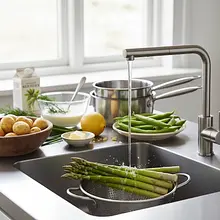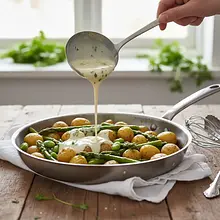
Start by preparing the potatoes. Place them in a large bowl or sink and cover with cold water. Using a rough sponge or vegetable brush, scrub the skin of each potato thoroughly, removing any dirt and grime. Young potatoes do not need to be peeled – their skin is thin, delicate, and full of flavor. After scrubbing, rinse them again under running water.
Description
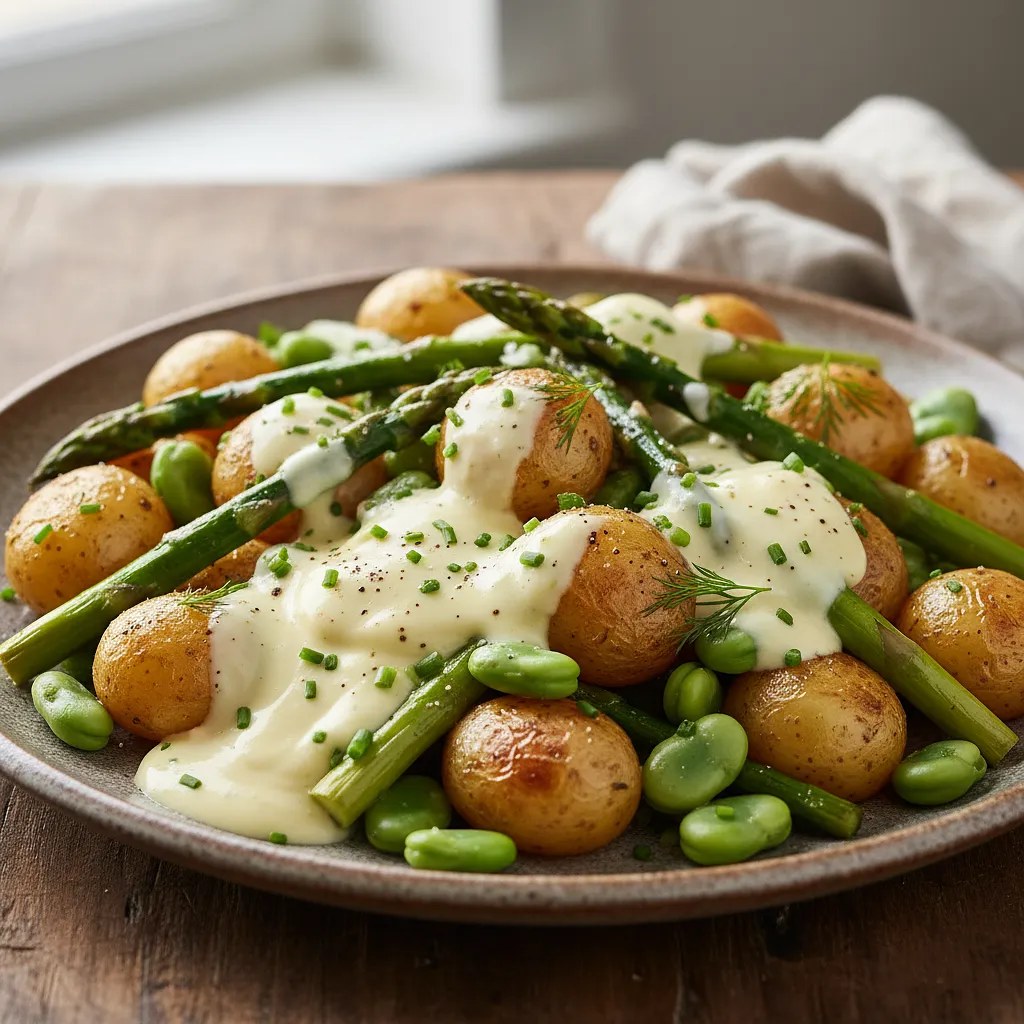
This dish is the essence of late spring and early summer, captured on one plate. Inspired by the Slow Food philosophy, it celebrates seasonality and the simplicity of the best local ingredients. Tender, new potatoes cooked in their skins, enveloped in butter and fresh dill, create the perfect base for slightly crunchy, roasted asparagus with a nutty aroma. Added to this are sweet, buttery broad beans, which provide the dish with a protein boost and beautiful color. The whole is brought together by a velvety, refreshing buttermilk sauce with the addition of hard-boiled eggs and chives, giving the dish a creamy texture and a slightly tangy finish. It is an incredibly fresh, light yet satisfying dish. It works perfectly as a vegetarian main course for lunch or an elegant dinner, as well as a gourmet side to grilled fish or meats. Visually, the dish delights with a palette of greens, whites, and yellows, evoking the image of a pastoral, rural garden in full bloom.
Ingredients (14)
- Młode ziemniaki 1000 g
- Green asparagus 1 pęczek
- Fresh fava beans (shelled) 250 g
- Free-range chicken eggs 2 szt.
- Buttermilk 200 ml
- Extra butter 82% 50 g
- Extra virgin olive oil 0.2 łyżek
- Fresh dill 1 pęczek
- Fresh chives 0.7 pęczek
- White sugar 2 g
- 🌿 Przyprawy
- Sól morska drobnoziarnista 2 łyżeczki
- Pieprz czarny świeżo mielony 5 szczypt
- ✨ Opcjonalne
- Radishes 100 g
- Edible flowers (e.g. pansies, nasturtiums) 5 g
💡 Kliknij na składnik aby oznaczyć jako użyty
Preparation steps
Preparing the vegetables
Scrubbed potatoes should be placed in a large pot. Cover them with cold water so that they are completely submerged (about 2-3 cm above the level of the potatoes). Add one heaping teaspoon of salt. Cover the pot and place it over high heat. When the water starts to boil, reduce the heat to medium and cook for about 15-20 minutes. To check if they are ready, pierce the largest potato with a fork or skewer – it should go in smoothly, without resistance. Drain the potatoes in a colander.
While the potatoes are cooking, prepare the asparagus. Wash them thoroughly under cold running water. To remove the woody ends, hold each asparagus with both hands – one at the base and the other about halfway down. Gently bend it. The asparagus will break at the right spot, separating the tough, fibrous part from the tender, edible part.
Preheat the oven to 200°C (fan). Line a large baking sheet with parchment paper. Arrange the prepared asparagus on the sheet in a single layer. Drizzle with olive oil, sprinkle with salt and freshly ground pepper. Gently shake the sheet or toss the asparagus with your hands to evenly coat them with oil and seasonings. Place in the preheated oven and bake for 10-15 minutes. The asparagus are ready when they become slightly wrinkled and lightly browned, but still remain firm and crunchy.
In a small pot, bring water to a boil with one teaspoon of salt and two pinches of sugar. Add the shelled broad beans to the boiling water. Cook over medium heat for 5-7 minutes, until the beans are tender but not overcooked. Drain them in a colander and immediately rinse with cold water to stop the cooking process and preserve the vibrant green color. For a more delicate texture, you can peel the broad beans from their skins after cooking – just gently press the bean, and the inside will pop out on its own.
Egg sauce with buttermilk
Prepare hard-boiled eggs. Place them in a small saucepan and cover with cold water, ensuring they are completely submerged. Put on the heat and bring to a boil. Once the water is boiling, cook the eggs for 8-9 minutes. After this time, remove the saucepan from the heat, drain the hot water, and immediately cover the eggs with very cold water. Leave them in the cold water for a few minutes, then gently tap the shell and peel.
Peel the eggs and cut them in half. Gently remove the yolks and transfer them to a medium-sized bowl. Using a fork, mash the yolks thoroughly into a smooth, crumbly mixture. Set the egg whites aside on a cutting board and chop them into small cubes (about 0.5 cm x 0.5 cm).
Into the bowl with the crushed yolks, gradually pour in the buttermilk, constantly mixing with a whisk to combine the ingredients and avoid lumps. Once you achieve a smooth emulsion, add the chopped egg whites, finely chopped chives, and salt and pepper to taste. Gently mix everything with a spoon. Taste and adjust seasoning if necessary.
Dish composition
Hot, drained potatoes return to the pot in which they were cooked. Add butter and wait a moment for it to melt from the heat. Then add generously chopped fresh dill. Gently but thoroughly mix everything, shaking the pot so that each potato is coated with butter and dill.
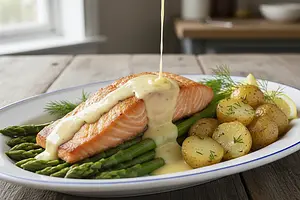
On a large platter or on individual plates, arrange a portion of warm potatoes with butter and dill. Place the roasted asparagus on top of the potatoes, trying to make them well visible. Between the potatoes and asparagus, sprinkle the cooked broad beans, creating colorful accents.
Drizzle the entire dish generously with the prepared egg sauce on buttermilk, allowing it to flow over the vegetables. If you are using optional ingredients, sprinkle the dish with thin slices of radish for crunch and color. Finally, garnish everything with edible flowers. Serve immediately while the vegetables are warm.
Fun Fact
Asparagus has been cultivated for over 2000 years by the ancient Romans and Greeks, who valued it not only for its taste but also for its medicinal properties. Emperor Augustus was such a great lover of asparagus that he created a special 'asparagus fleet' for its transport.
Best for
Tips
The dish tastes best served warm, immediately after preparation. Serve it on large, flat plates or on a shared platter, which encourages sharing. It pairs perfectly with a glass of chilled, refreshing white wine, such as Sauvignon Blanc or Polish Solaris.
It is best to eat the dish on the day it is prepared. If there are leftovers, store them in the refrigerator in a tightly sealed container for up to 2 days. They can be eaten cold as a salad. The sauce may slightly separate; just mix it before serving.
📸 Ugotowane przez społeczność
Zaloguj się, aby dodać zdjęcieDodaj zdjęcie gotowej potrawy
Po zatwierdzeniu przez moderatora otrzymasz 10 punktów doświadczenia.
Nikt jeszcze nie dodał zdjęcia. Bądź pierwszy!
Comments (0)
Be the first to comment on this recipe!
Add a comment