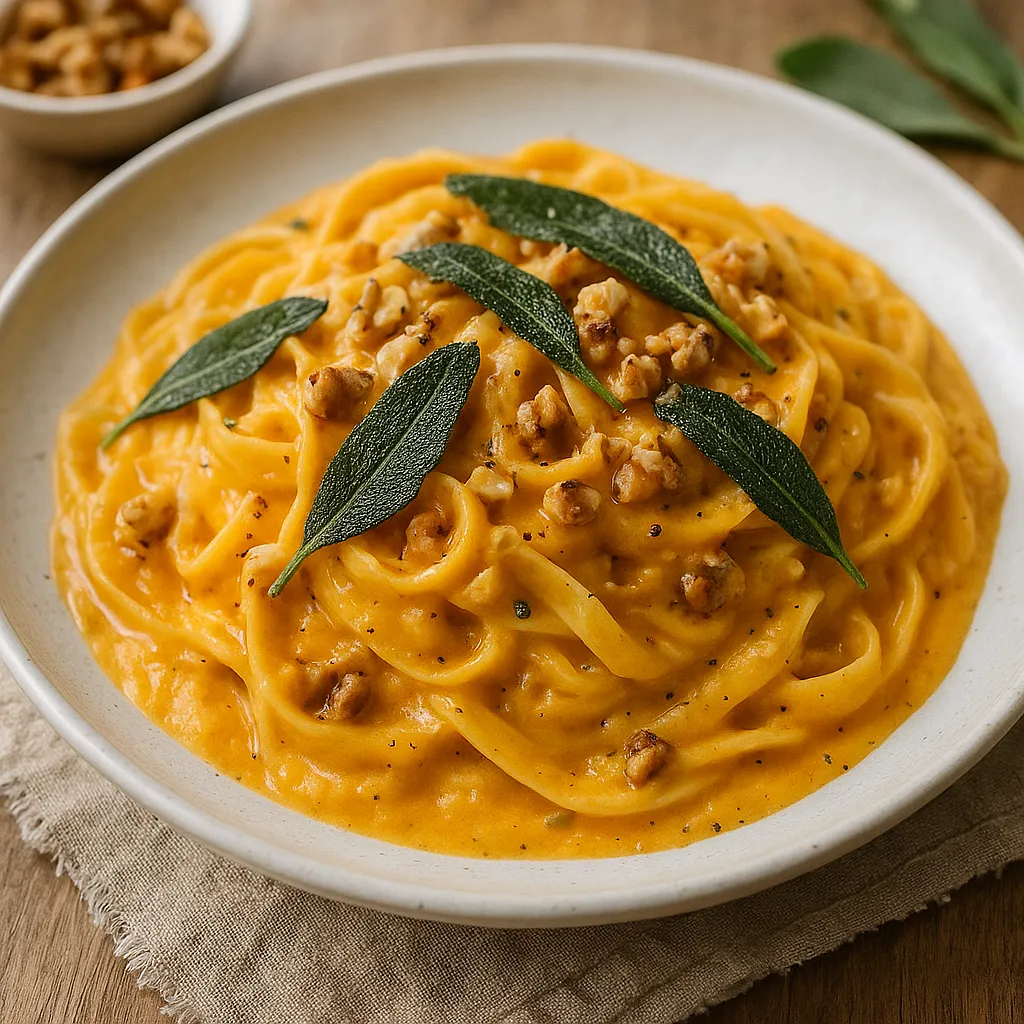
This dish is the essence of autumn on a plate. A velvety, smooth, and naturally sweet sauce made from roasted butternut squash envelops each strand of tagliatelle, creating an incredibly comforting and hearty meal. Its deep orange color beautifully contrasts with the crispy, dark green sage leaves, which, when sautéed in butter, take on an intense herbal aroma and nutty flavor. The dish is completed with toasted walnuts, adding a pleasant crunch, and salty, bold Parmesan, which perfectly balances the sweetness of the squash. This elegant yet simple dish comes from the tradition of Northern Italian cuisine, where pumpkin (zucca) is a popular ingredient in autumn dishes. It is perfect for a festive lunch, a romantic candlelit dinner, or simply as a way to lift your spirits on a chilly evening. Serve it hot, immediately after preparation, to fully enjoy the richness of flavors and textures.
Preheat the oven to 200°C with the convection function (or 220°C without convection). Prepare a large baking tray and line it with parchment paper. This will prevent the pumpkin from sticking and make cleanup easier.
Setting the oven to the right temperature before placing the pumpkin in is key for even baking. Parchment paper is your best friend in the kitchen!
2
Thoroughly wash the butternut squash under running water. Place it on a stable cutting board. Using a large, sharp chef's knife, cut off the ends of the squash (about 1 cm from each side). Then, stand the squash upright on one of the flat surfaces and carefully cut it in half lengthwise. Use a spoon to scoop out the seeds and fibrous flesh from the center of each half.
Ingredients:
butternut squash
Be very careful when cutting the pumpkin, its skin is tough. Make sure the cutting board doesn't slip (you can place a damp cloth underneath it). Pumpkin seeds can be washed, dried, and roasted - they make a delicious snack.
3
Place the pumpkin halves on the prepared baking sheet with the flesh side up. Using a kitchen brush or your hand, rub the flesh with olive oil. Then generously sprinkle with salt and freshly ground black pepper.
Don't skimp on the oil and spices - they will give the pumpkin depth of flavor during roasting. Thoroughly coating the entire surface of the flesh will ensure even caramelization.
4
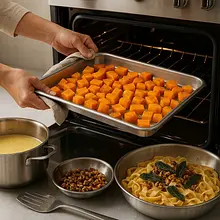
Place the baking tray with the pumpkin in the preheated oven. Bake for about 40-50 minutes. The pumpkin is ready when its flesh is very soft (a fork goes in without any resistance), and the edges start to caramelize and brown slightly. After baking, remove the tray from the oven and set the pumpkin aside to cool slightly (for about 10 minutes) so it can be safely handled.
Ingredients:
butternut squash
Baking time may vary depending on the size of the pumpkin and the power of the oven. Start checking for softness with a fork after 35 minutes. Do not turn off the oven if you plan to warm the plates in it before serving.
Preparing the sauce
5
While the pumpkin is baking, prepare the sauce base. Peel the shallots and garlic. Finely chop the shallots and slice the garlic thinly. In a large, deep skillet or saucepan, heat one tablespoon of olive oil over medium heat. Add the chopped shallots and sauté, stirring occasionally, for about 3-4 minutes, until they become translucent and soft. Then add the garlic and sauté for another minute, until it releases its aroma. Be careful not to burn the garlic, as it will become bitter.
Ingredients:
Shallot onion, Garlic, Extra virgin olive oil
Use a large diameter pan (about 28 cm) with a thick bottom, which will later hold all the sauce and pasta. 'Translucent' onion means it becomes semi-transparent. This is a sign that its sugars have started to caramelize.
6
When the baked pumpkin has cooled slightly, use a large spoon to scoop out all the soft flesh, separating it from the skin. Discard the skin. Transfer the pumpkin flesh to the jar of a standing blender or to a tall container if you are using an immersion blender.
Ingredients:
butternut squash
Make sure you have scooped out all the flesh. The more pumpkin you use, the more intense and creamy the sauce will be. If you don't have a blender, you can try mashing the pumpkin with a potato masher, but the sauce won't be perfectly smooth.
7
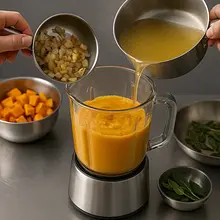
Add the sautéed shallot with garlic, warm vegetable broth, and cream to the blender with the pumpkin flesh. Blend everything on high speed for 1-2 minutes until you achieve a perfectly smooth, velvety purée without any lumps.
If you are using a jug blender, remember to prioritize safety when blending hot ingredients. Remove the small plug from the lid and cover the opening with a folded kitchen towel. This will allow steam to escape and prevent pressure from building up. Start blending at a low speed, gradually increasing it.
8
Pour the smooth sauce back into the pan where the shallot was sautéed. Heat over low heat, stirring gently. Grate the Parmesan cheese on a fine grater and add most of it (about 60g) to the sauce, leaving the rest for sprinkling on top. Stir until the cheese melts. Season the sauce to taste with salt, pepper, and optionally freshly grated nutmeg and chili flakes. Keep the sauce on the lowest heat to keep it warm.
The sauce should have the consistency of thick cream. If it is too thick, you can add a little more broth or later some pasta cooking water. Do not bring the sauce to a boil after adding the cheese to prevent it from curdling.
Crispy toppings
9
In a small, dry skillet (without oil), toast the walnuts over medium heat for 2-3 minutes, shaking the skillet frequently. When they start to smell intensely and golden spots appear on them, remove them from the skillet and coarsely chop with a knife. Set aside.
Ingredients:
Walnuts
Toasting nuts brings out their depth of flavor and makes them crunchier. Be careful not to burn them, as they will become bitter. This process takes very little time!
10
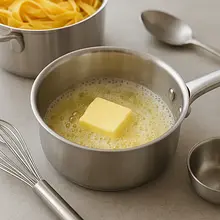
In the same small skillet, melt the butter over medium heat. When the butter starts to foam, arrange a single layer of sage leaves on it. Fry for about 1-2 minutes on each side, until the leaves become dark green, firm, and crispy. Be careful not to burn them. Using tongs, remove the crispy leaves to a plate lined with paper towels. Keep the remaining sage-infused butter in the skillet.
Ingredients:
Butter, Fresh sage
The sage leaves are ready when they stop sizzling. They will be very delicate. The butter in which they were fried will take on a wonderful aroma - do not pour it out, you can drizzle it over the finished dish.
Cooking the pasta and finishing touches
11
In a large pot, bring at least 4 liters of water to a boil. When the water is boiling vigorously, add a generous handful of salt (about 1-2 tablespoons). The water should be as salty as the sea. Add the tagliatelle pasta and cook according to the package instructions, but for 1-2 minutes less, so that it is 'al dente' (slightly firm and springy when bitten).
Ingredients:
Tagliatelle pasta, Salt
A large amount of salted water is key to preventing the pasta from sticking together and ensuring it has good flavor. Cooking 'al dente' is important because the pasta will continue to cook for a bit in the hot sauce.
12
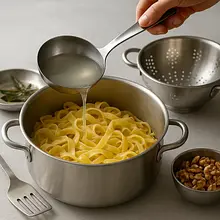
Before draining the pasta, use a cup or ladle to scoop out about 250 ml (one cup) of the cooking water. It is full of starch and perfect for thinning the sauce. Drain the pasta in a colander and immediately transfer it to the pan with the warm pumpkin sauce. Mix thoroughly, tossing to coat each strand of pasta with the sauce. If the sauce is too thick, gradually add a few tablespoons of the reserved pasta water until you achieve the desired creamy consistency.
Ingredients:
Tagliatelle pasta
Never rinse pasta after draining! The starch on its surface helps the sauce adhere better. This step - combining the pasta with the sauce and water in the pan - is the secret of Italian chefs for a perfectly creamy dish.
13
Immediately divide the pasta onto four warmed plates. Top each portion with a few leaves of crispy sage, sprinkle with coarsely chopped walnuts and the remaining grated Parmesan. Optionally, drizzle each portion with a bit of aromatic sage butter left in the pan. Serve immediately.
Ingredients:
Walnuts, Fresh sage, Parmesan cheese
Serving the dish on heated plates will help it maintain the perfect temperature for longer. An aesthetically arranged garnish will make the dish look like it came from a restaurant.
Fun Fact
💡
Legend has it that tagliatelle pasta was created in 1487 by a court chef in honor of Lucrezia Borgia's long blonde hair, on the occasion of her wedding to the Duke of Ferrara. Its width (about 7mm when cooked) was even officially defined and is kept in the Chamber of Commerce in Bologna.
Serve the dish immediately after preparation, on deep, warmed plates. For added freshness, sprinkle with freshly ground black pepper. It pairs perfectly with a light, white wine with good acidity, such as Pinot Grigio or Sauvignon Blanc, which will balance the creaminess and sweetness of the sauce.
🥡Storage
It's best to eat immediately. If there are leftovers, store them in an airtight container in the fridge for up to 2 days. The crispy sage will lose its texture. To reheat, place the pasta in a pan with a little milk, cream, or water to restore the sauce's creamy consistency. Heat over low heat, stirring gently.
Pizza and pasta are the perfect duet - Italian flavors that have conquered the whole world. Neapolitan pizza: thin crust, tomato sauce, mozzarella, and fresh basil. Roman pizza with a crispy edge and abundant toppings. Pizza dough: yeast-based with a long rising time for the best flavor. Pasta fr...
Vegetarian cuisine is a wealth of flavors without meat - healthy, colorful, and filling. Plant-based proteins: lentils, chickpeas, beans, peas, and soy take center stage. Cheeses and dairy: feta, halloumi, ricotta, and mascarpone in main dishes. Eggs in various forms: omelets, frittata, shakshuka...
Lunches are the main meal of the day - filling, balanced, and full of flavor. Traditional two-course lunches: soup and a main dish in Polish tradition. Pork chop with potatoes and cabbage - a classic of Polish lunches. Dumplings with meat, cheese, and fruit - hand-formed delicacies. Beef goulash,...
Dishes for special occasions are culinary masterpieces for birthdays, anniversaries, and holidays. Grilled beef steak with herb butter - restaurant quality at home. Beef Wellington - beef in puff pastry with duxelles. Roast duck with apples - a holiday tradition in a new edition. Pink salmon with...





Comments (0)
Be the first to comment on this recipe!
Add a comment