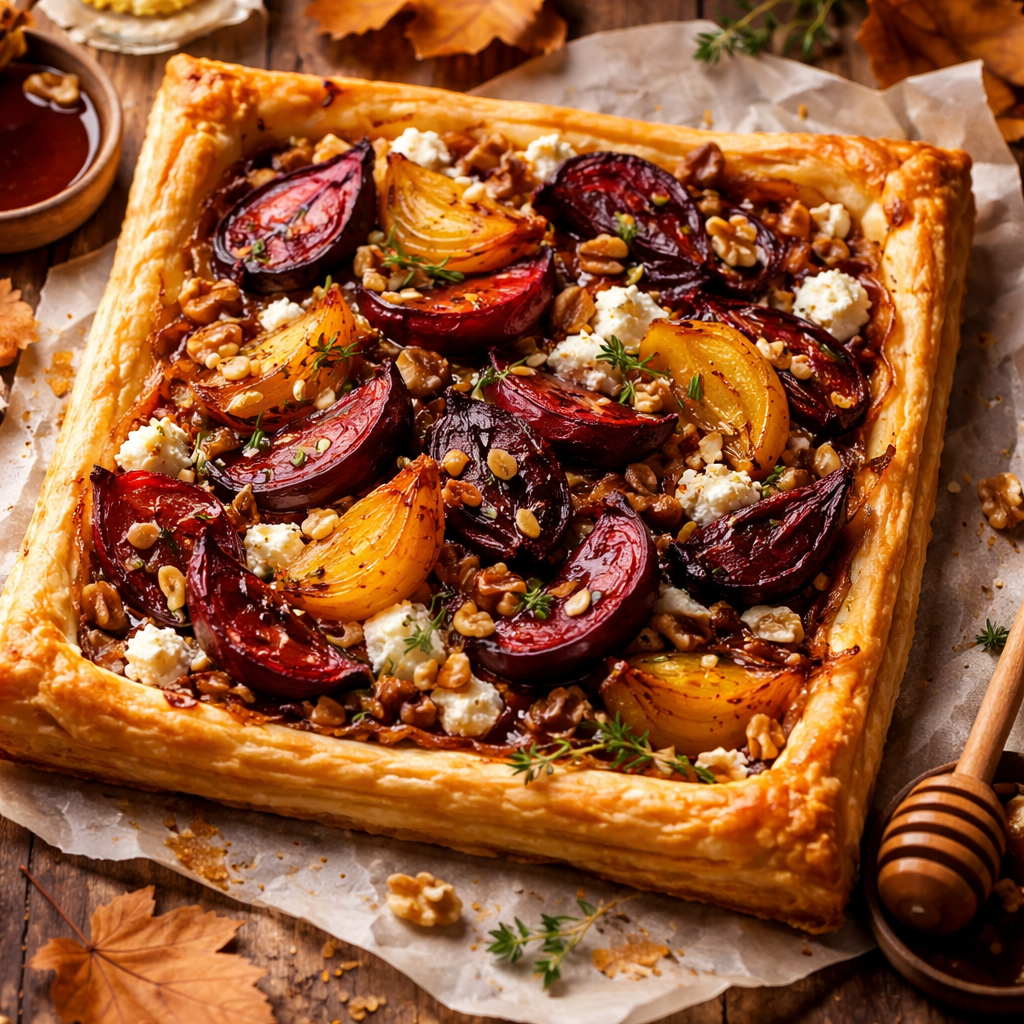
A colorful, seasonal tart that combines sweet, roasted beets with creamy goat cheese and a sweet-salty touch of caramelized red onion. The shortcrust pastry made from wheat flour provides a distinct, golden base, while the additions of kale sautéed with garlic and slices of walnuts (optional) add crunch and freshness. This dish comes from contemporary cuisine, inspired by Mediterranean and seasonal cooking; perfect as a main course for a family lunch or an elegant vegetarian appetizer. The tart looks stunning — the deep purple of the beets contrasts with the white slices of goat cheese, the green of the kale, and the golden, glossy onion. Serve with a light salad and a drizzle of honey or balsamic glaze for added sweetness.
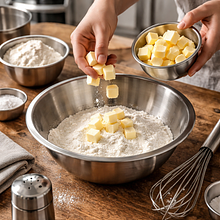
Prepare the shortcrust pastry: place 200 g of sifted flour in a large bowl. Add 5 g of salt and 100 g of cold butter, diced. Using a knife or two kitchen knives, chop the butter into the flour until pea-sized crumbs form (quick movements to keep the butter cold).
Ingredients:
Wheat flour, Butter, Salt
Use a large bowl and a chef's knife or pastry cutter. Alternatively, you can use a food processor — blend briefly to avoid warming the butter. Typical shape: a springform pan or tart pan with a diameter of 24 cm.
2
Add 60 ml of ice-cold water one tablespoon at a time and mix with a fork or your fingers until the ingredients start to come together. Quickly form a ball of dough — do not over-knead. If the dough is too dry, add a maximum of 1-2 more tablespoons of water.
Ingredients:
Cold water
Use a wooden spoon or your hands. The dough should just come together, be smooth on the surface after gently kneading, and not stick to your hands. Over-kneading will result in tough dough.
3
Flatten the ball of dough into a disk, wrap it in plastic wrap, and place it in the refrigerator for at least 30 minutes (you can leave it for up to 2 hours) — this will cool the butter and prevent the dough from shrinking during baking.
Use foil and a plate. Chilling is key; do not skip this step.
Filling - roasting beets
4
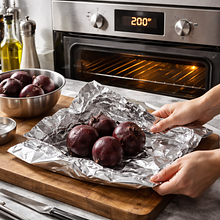
Preheat the oven to 200°C with the top and bottom heat function. Wash 600 g of beets, wrap each one in aluminum foil or place them in a covered baking dish. Bake for 45–60 minutes depending on their size: the beets are ready when a fork goes into the center smoothly and without resistance.
Ingredients:
Beets (raw)
Use a large baking sheet or a baking dish. After removing from the oven, let the beets cool for 10–15 minutes so they can be peeled by hand (the skin will come off more easily).
Filling - preparing the beets
5
Once cooled, peel the beets (use gloves or a separate cutting board, as they stain hands). Cut into thin slices about 3–4 mm thick. Drizzle with 15 g of olive oil and gently mix, seasoning with 2 g of pepper and 2–3 g of salt.
Ingredients:
Beets (raw), Olive oil, Black pepper, Salt
Using a chef's knife or a mandoline, slice into even pieces. Even slices will ensure a nice appearance when arranged on the tart.
Filling - caramelized onion
6
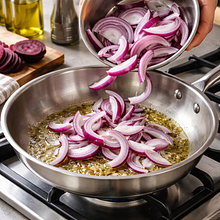
Peel and slice 200 g of red onion into thin wedges. Heat 15 g of olive oil in a 24–28 cm skillet over medium heat. Add the onion and 20 g of brown sugar, sauté over medium heat for 12–15 minutes, stirring every 2–3 minutes, until the onion becomes soft, translucent, and golden. At the end, add the leaves from 6 g of fresh thyme.
Ingredients:
Red onion, Brown sugar, Fresh thyme, Olive oil
Use a heavy-bottomed pan so the onion doesn't burn. If the onion starts to stick to the bottom, lower the heat and add 1–2 tablespoons of water. The finished onion should be soft, sweet, and slightly translucent.
Filling - kale
7
In the same pan (after caramelizing the onion), add the remaining 15 g of oil and 100 g of chopped kale. Sauté for 2–3 minutes over medium heat until the leaves wilt, then sprinkle with a little salt (1 g) and freshly ground pepper.
Ingredients:
Kale, Olive oil, Salt, Black pepper
Remove the tough stems from the kale before frying. Do not fry for too long — it should remain intensely green and slightly firm.
Balsamic sauce and reduction
8
Prepare the balsamic reduction: in a small saucepan, place 30 g of balsamic vinegar and heat over low heat for 6–8 minutes, stirring, until the volume is reduced by half and it becomes a thick, syrupy liquid. Be careful not to burn it.
Ingredients:
Balsamic vinegar
Use a small saucepan with a thick bottom. The reduction should cover the spoon with a thin layer — it will thicken even more as it cools.
Assembling the tart
9
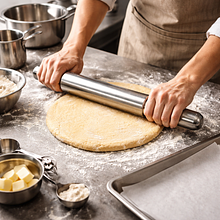
Remove the chilled dough from the refrigerator. On a lightly floured surface, roll out the dough into a circle with a diameter of about 28–30 cm and a thickness of about 3–4 mm. Gently transfer it to a 24 cm diameter tart pan, pressing it against the sides and leveling the edges. Trim any excess dough and create a decorative edge with your fingers or a fork.
Ingredients:
Wheat flour, Butter
Use a pastry board and rolling pin; if the dough cracks, pinch it together with your finger and chill for 10 minutes. The mold should be greased or lined with baking paper.
10
Spread a layer of sautéed kale on the bottom of the pie crust (evenly), then evenly distribute the caramelized onions. On top, arrange slices of roasted beets in slightly overlapping rows, creating an aesthetic pattern. Crumble or slice 150 g of goat cheese and distribute it evenly.
Ingredients:
Kale, Red onion, Beets (raw), Goat cheese (soft), Walnuts
Arrange the beets so that the color contrast is clear. Additionally, you can add 50 g of chopped roasted walnuts for crunch (optional).
Filling - preparation
11
In a bowl, whisk 120 g of eggs with 200 ml of 18% cream, 2 g of freshly ground pepper, and 2 g of salt. Gently pour the mixture over the tart, filling the spaces between the slices of beetroot and cheese.
Ingredients:
Egg, 18% cream, Black pepper, Salt
Use a hand whisk or a fork. The mixture should be smooth and slightly flow over the surface of the tart, but not overflow excessively.
Baking
12
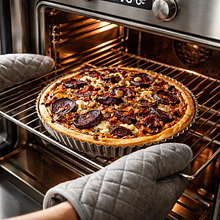
Bake the tart in a preheated oven at 190°C for 30–35 minutes on the middle rack, until the filling is set and the edges of the crust are golden. If the top starts to brown too much, loosely cover it with aluminum foil.
Ingredients:
Wheat flour, Butter, Egg, 18% cream
Use the top and bottom heating function. Check with a toothpick: if the mixture does not stick to the toothpick, the tart is ready. After removing, wait 10–15 minutes before cutting to allow the filling to set slightly.
Finishing and serving
13
After slightly cooling, drizzle the tart with the balsamic reduction prepared earlier. If you are using honey (optional), dissolve 30 g of honey in 10 g of warm water and lightly brush it over the top for shine. Sprinkle with 50 g of chopped toasted walnuts (optional) and fresh thyme leaves.
Use a silicone brush to spread the honey and a teaspoon to drizzle the glaze. Additionally, you can serve lemon wedges on the side for guests to add a bit of acidity.
Serving
14
Cut the tart into 6–8 pieces (depending on appetite). Serve warm or at room temperature, preferably with a light arugula salad drizzled with oil and a splash of balsamic vinegar.
Ingredients:
Kale, Olive oil, Balsamic vinegar
Use a sharp knife and wait 10 minutes after removing it so the portions cut nicely and do not fall apart. For an aesthetic presentation, use a white plate to make the colors of the tart more vibrant.
Fun Fact
💡
Beets were valued in ancient times – they were originally cultivated for their leaves, while the focus on the root came later. The combination of beetroot and goat cheese is popular in Mediterranean cuisines, where the sweetness of the vegetable nicely contrasts with the tanginess of the cheese.
Serve the tart slightly warm or at room temperature. It pairs well with a nut salad, a glass of low-acidity white wine, or herbal tea. For a decorative effect, add a few tiny sprigs of fresh thyme and gently drizzle with honey for shine.
🥡Storage
Store in the refrigerator covered with plastic wrap for up to 2 days. To reheat, place a piece of the tart in an oven preheated to 160°C for 8–10 minutes — this will help the crust regain its crispness. Freezing tarts with creamy fillings is not recommended (loss of structure).
Vegetarian cuisine is a wealth of flavors without meat - healthy, colorful, and filling. Plant-based proteins: lentils, chickpeas, beans, peas, and soy take center stage. Cheeses and dairy: feta, halloumi, ricotta, and mascarpone in main dishes. Eggs in various forms: omelets, frittata, shakshuka...
Comments (0)
Be the first to comment on this recipe!
Add a comment