Preheat the oven to 200°C (fan). Thoroughly wash the Hokkaido pumpkin. You don't need to peel it; the skin becomes soft and edible after baking. Cut the pumpkin in half and use a spoon to remove the seeds and fibrous flesh from the inside. Cut the halves into smaller pieces (about 4-5 cm). Arrange them on a baking sheet lined with parchment paper and bake for 25-30 minutes, until the flesh is very soft (you can check this by inserting a fork - it should go in easily).
Description
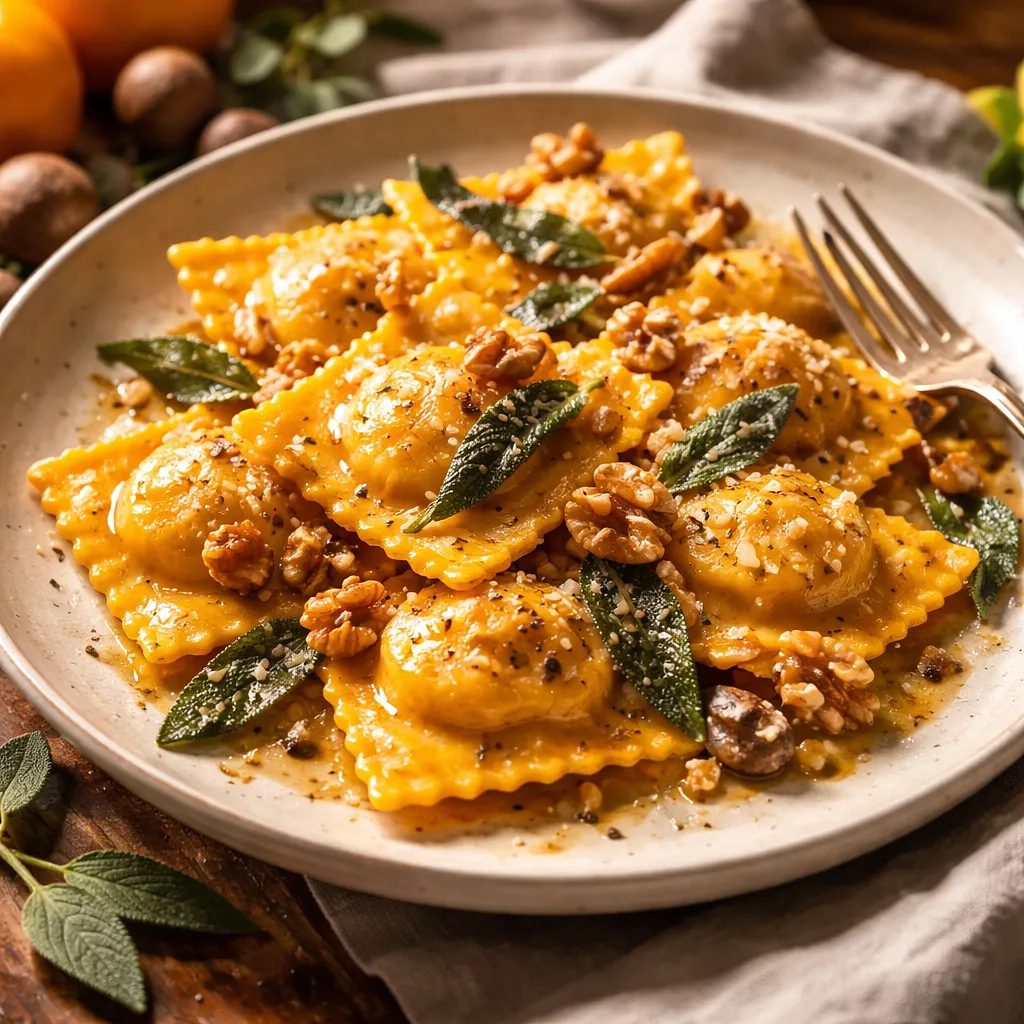
This is the essence of autumn on a plate. Delicate, handmade ravioli filled with a velvety, sweet filling of roasted Hokkaido pumpkin, creamy ricotta cheese, and aromatic Parmesan, seasoned with a pinch of nutmeg. Each bite is a perfect balance of flavors. The dish is enveloped in a simple yet incredibly elegant sauce of browned butter (burro e salvia), which takes on a nutty aroma, along with crispy, fragrant sage leaves. The addition of toasted walnuts brings a pleasant crunch and completes the composition. The dish is not only delicious but also beautifully presented on the plate, combining the golden hues of autumn. Perfect for a special dinner, a romantic evening, or a festive family lunch. Serve with a glass of light white wine, such as Pinot Grigio, to fully appreciate the richness of flavors.
Ingredients (13)
- Type 00 wheat flour 300 g
- Eggs 3 szt.
- Hokkaido pumpkin 600 g
- Ricotta cheese 250 g
- Parmesan cheese 50 g
- Butter 100 g
- Fresh sage 0.7 pęczek
- Walnuts 50 g
- Extra virgin olive oil 0.1 łyżek
- 🌿 Przyprawy
- Salt 0.1 szczypt
- Pieprz czarny świeżo mielony 2 szczypty
- Nutmeg 2 szczypty
- ✨ Opcjonalne
- Parmesan for sprinkling 30 g
💡 Kliknij na składnik aby oznaczyć jako użyty
Preparation steps
Preparation of pumpkin puree
Pasta dough
On a clean kitchen countertop or in a large bowl, make a mound of flour. Create a large well in the center, forming a 'volcano'. Crack the eggs into the well, add olive oil and 2 pinches of salt. Using a fork, gently beat the eggs, gradually incorporating the flour from the inner walls of the 'volcano'. Continue mixing until a thick, lumpy mass forms.
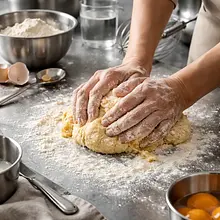
When most of the flour has combined with the eggs, start kneading the dough by hand. Knead it vigorously for about 10 minutes, pushing the dough away from you with the base of your palm, then folding it in half and turning it 90 degrees. Repeat this motion. The dough is ready when it becomes smooth, elastic, and springy. When pressed with a finger, it should slowly return to its shape.
Form a smooth ball from the dough, wrap it tightly in plastic wrap or cover it with a damp cloth. Set the dough aside on the countertop for at least 30 minutes. This time is essential for the gluten in the flour to relax, which will make the dough more elastic and easier to roll out.
Filling
When the baked pumpkin has cooled slightly, separate the flesh from the skin using a spoon (if you are using a pumpkin other than Hokkaido) and transfer it to a bowl. Mash it thoroughly with a fork or an immersion blender until smooth. To the puree, add ricotta cheese, grated Parmesan cheese, a pinch of nutmeg, 2 pinches of salt, and 2 pinches of freshly ground pepper. Mix everything well until the ingredients are combined. Taste and adjust seasoning if necessary. The filling should be thick and compact.
Shaping Ravioli
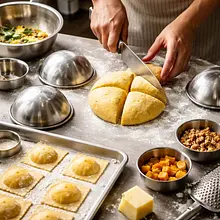
Divide the resting dough into 4 parts. Keep three of them covered so they don't dry out. Take the first part and lightly flatten it with your hand, then start rolling it out into a thin, long sheet. If you are using a pasta machine, pass the dough through the settings from the thickest to almost the thinnest (usually the second to last setting). If you are rolling by hand, sprinkle the countertop with a little flour and roll evenly until the dough is about 1-2 mm thick (you should be able to see the outline of your hand through it).
On one of the rolled-out sheets of dough, place small portions of filling (about 1 teaspoon) at regular intervals, leaving about 4-5 cm of space between them. It's best to do this in two rows.
Moisten the edges of the dough around the filling gently with water using a brush or your finger. Cover everything with a second, identical sheet of dough. Gently press the dough with your fingers around each portion of filling, trying to remove as much air as possible. Finally, using a pastry wheel or knife, cut the dough into square dumplings. Place the finished ravioli on a tray sprinkled with cornmeal or semolina to prevent sticking.
Cooking and preparing the sauce
In a large pot, bring a large amount of salted water to a boil (about 1 tablespoon of salt for 3 liters of water). When the water is boiling vigorously, gently add the ravioli in batches. Do not add them all at once to avoid drastically lowering the water temperature. Cook for 3-4 minutes from the moment they float to the surface. The dumplings are ready when they are soft but still slightly al dente.
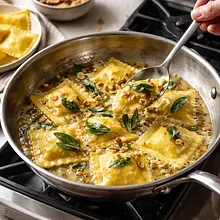
While the ravioli are cooking, prepare the sauce. In a large skillet (large enough to hold the entire portion of ravioli) over medium heat, melt the butter. When it starts to foam, add the whole sage leaves. Heat, stirring occasionally, until the butter begins to brown and releases a nutty aroma, and the sage leaves become crispy. This takes about 3-4 minutes. Be careful not to burn the butter.
In a separate, dry skillet, toast the walnuts over low heat for 2-3 minutes, until they start to smell fragrant. Then remove them from the skillet and chop them coarsely with a knife.
Drain the cooked ravioli using a slotted spoon, reserving about half a cup of the cooking water. Transfer the dumplings directly to the pan with the butter-sage sauce. Gently toss, shaking the pan to coat each ravioli with the sauce. If the sauce is too thick, add 1-2 tablespoons of the reserved pasta cooking water. Its starch will help create a creamy emulsion.
Transfer the ravioli to plates. Sprinkle the top with toasted and chopped walnuts. Optionally, to enhance the flavor, you can sprinkle the dish with freshly grated Parmesan. Serve immediately while hot.
Fun Fact
Ravioli are one of the oldest types of stuffed pasta, with mentions of them dating back to 14th-century Italy. The combination of pumpkin (zucca) and sage is a classic of Northern Italian cuisine, especially from the regions of Lombardy and Emilia-Romagna, where these ingredients are abundant in the fall.
Best for
Tips
Serve on heated, deep plates to keep the dish warm for longer. Garnish each portion with crispy sage leaves from the pan. A light, dry white wine with good acidity, such as Italian Pinot Grigio or Soave, pairs perfectly with the buttery richness of the sauce.
Raw, uncooked ravioli can be stored in the refrigerator on a floured tray for up to 24 hours. They can also be frozen - first on a tray to prevent sticking, and then transferred to a ziplock bag. Frozen ravioli are cooked without thawing, for an additional 1-2 minutes. The cooked dish is best eaten immediately, as reheating causes it to lose its texture.
📸 Ugotowane przez społeczność
Zaloguj się, aby dodać zdjęcieDodaj zdjęcie gotowej potrawy
Po zatwierdzeniu przez moderatora otrzymasz 10 punktów doświadczenia.
Nikt jeszcze nie dodał zdjęcia. Bądź pierwszy!
Comments (0)
Be the first to comment on this recipe!
Add a comment