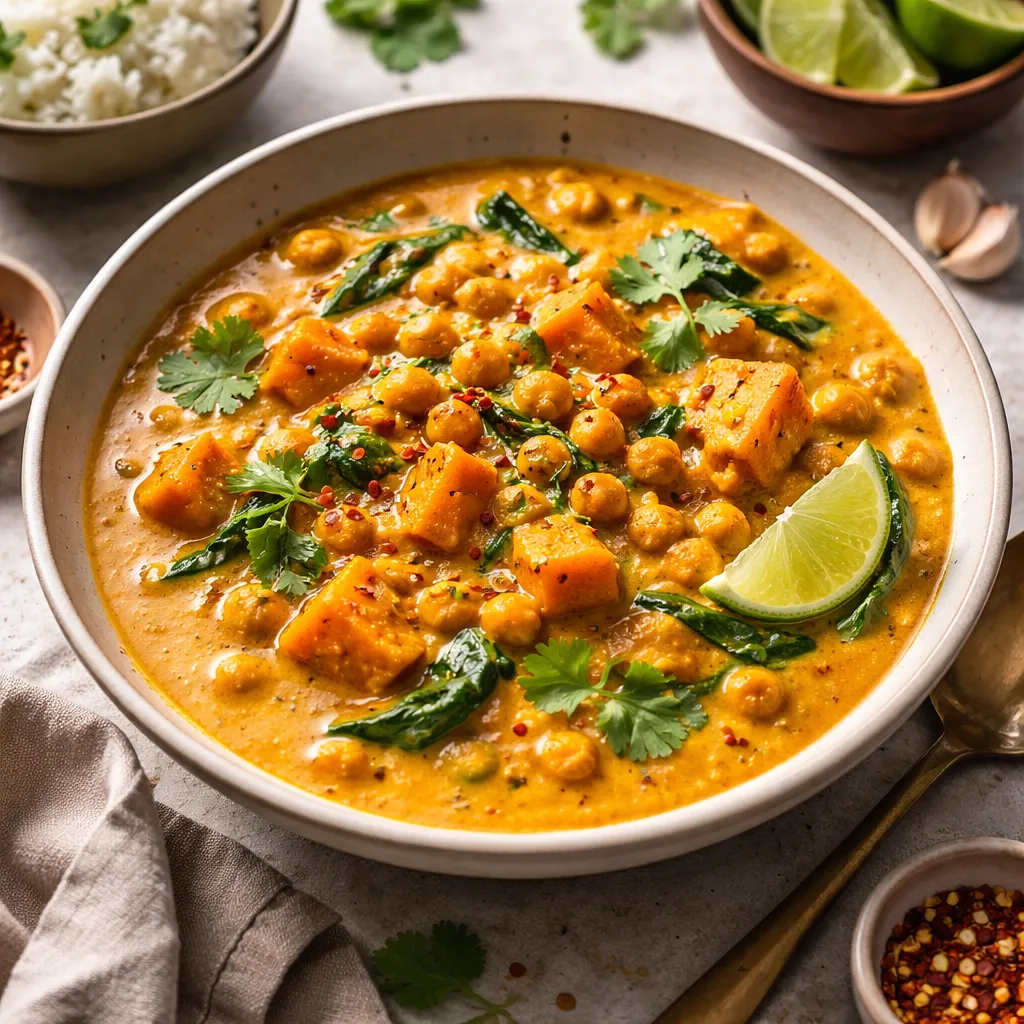
Creamy Pumpkin and Chickpea Curry (Kaddū aur Chane kā Sālan)

Pikantne Indian Cuisine Vegetarian Dishes Vegan dishes 60 min Easy 12 wyświetleń ~25.32 PLN - (0)
Rate:
(0)
Start Cooking

Description

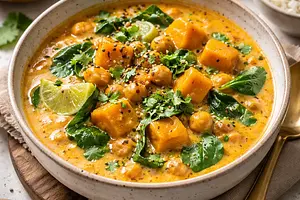
This is an aromatic and deeply satisfying dish that will transport you straight to the bustling streets of northern India. Creamy pumpkin and chickpea curry, known in Hindi as 'Kaddū aur Chane kā Sālan', is the essence of comfort food. Its base is sweet, velvety Hokkaido pumpkin, which pairs perfectly with the earthy flavor of chickpeas. The whole dish is enveloped in a rich, creamy sauce made from coconut milk and tomatoes, seasoned with a warming blend of Indian spices such as cumin, coriander, and turmeric. The dish has a beautiful, intensely orange color that delights the eye even before the first bite. It is a naturally vegetarian and vegan dish, full of plant-based protein and fiber. Serve it hot with fluffy basmati rice or warm naan bread to scoop up every drop of the delicious sauce. Perfect for chilly autumn and winter evenings when you need something to warm both body and soul.

Ingredients (16)

Servings:
4
  • Hokkaido pumpkin 600 g
  • Ciecierzyca gotowana (z puszki) 240 g
  • Full-fat coconut milk 400 ml
  • Canned diced tomatoes 400 g
  • Onion 1.3 szt.
  • Garlic 4 ząbki
  • Fresh ginger 20 g
  • Rapeseed oil 30 g
  • Ground coriander 4 g
  • 🌿 Przyprawy
  • Kmin rzymski (kumin) mielony 2 łyżeczki
  • Ground turmeric 0.4 łyżeczek
  • Garam masala 2 g
  • Chili powder 0.5 łyżeczka
  • Salt 0.2 szczypt
  • ✨ Opcjonalne
  • Fresh cilantro 30 g
  • Lime juice 15 ml
💰 Szacowany koszt dania: ~25.32 PLN (6.33 PLN/porcję)

💡 Kliknij na składnik aby oznaczyć jako użyty

Preparation steps

Preparation of ingredients

1

Thoroughly wash the Hokkaido pumpkin under running water. Place it on a stable cutting board and, using a large, sharp knife, cut it in half. Use a metal spoon to scoop out the seeds and fibrous flesh from the center. Cut each half of the pumpkin into slices about 2 cm thick, and then cut each slice into cubes with sides of about 2-3 cm. There is no need to peel the skin; it will soften during cooking.

Ingredients: Hokkaido pumpkin
Be careful when cutting hard pumpkin - the knife must be very sharp to avoid slipping. If the pumpkin is unstable, cut a small piece from the bottom to create a flat base.
2

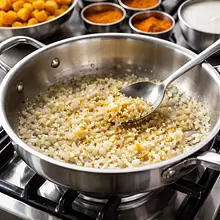
Peel the onion from the outer, dry skins, cut off the ends, and chop it into small cubes. Peel the garlic cloves and press them through a garlic press or chop them very finely. Peel a piece of ginger using a small spoon (scraping it) and grate it on a fine grater.

Ingredients: Onion, Garlic, Fresh ginger
To avoid crying while cutting onions, you can chill them in the fridge for 30 minutes beforehand. Preparing garlic and ginger in the form of a paste (you can grate or blend them together) will ensure an even distribution of flavor.
3

Open the can of chickpeas, transfer the contents to a sieve, and rinse thoroughly under cold running water until the foam disappears. Set aside to drain. In a small bowl, mix all the dry spices: cumin, ground coriander, turmeric, and chili powder. This way, you can add them to the pan at the same time and none will burn.

Ingredients: Ciecierzyca gotowana (z puszki), Kmin rzymski (kumin) mielony, Ground coriander, Ground turmeric, Chili powder
Rinsing canned chickpeas is important as it removes excess salt and starch, which improves flavor and digestion. Preparing the spice mix in advance is a 'mise en place' technique that makes cooking much easier and faster.

Cooking curry

4

In a large pot or deep skillet with a thick bottom, heat the oil over medium heat. When the oil is hot (it should shimmer slightly), add the chopped onion. Sauté for about 5-7 minutes, stirring occasionally with a wooden spoon, until the onion becomes soft and translucent (it will become glassy).

Ingredients: Rapeseed oil, Onion
Use a pot with a capacity of at least 3-4 liters so that all the ingredients fit comfortably. Don't rush the frying of the onions - their slow caramelization builds a deep flavor base for the entire dish.
5

Add grated ginger and garlic to the sautéed onion. Fry everything together for about 1 minute, stirring constantly, until they release an intense aroma. Be careful not to burn them, as they will become bitter. Then reduce the heat, add the prepared spice mix (cumin, coriander, turmeric, chili) and fry for 30-60 seconds, stirring all the time. This process, called 'blooming' or 'tadka', activates the essential oils in the spices and brings out their full flavor.

Ingredients: Garlic, Fresh ginger, Kmin rzymski (kumin) mielony, Ground coriander, Ground turmeric, Chili powder
This is a key moment in preparing the curry. Stir vigorously to coat the onion with the spices and prevent burning. If the pan is too dry, you can add a little more oil. Properly executing this step will fill your kitchen with an amazing aroma.
6

Add the canned tomatoes with their juice to the pot with the aromatic paste. Mix everything thoroughly, mashing larger pieces of tomatoes with a spoon. Increase the heat slightly and cook for 3-4 minutes, until the sauce thickens slightly and the oil starts to separate at the edges.

Ingredients: Canned diced tomatoes
Cooking tomatoes helps to reduce their acidity and blend the flavors with the spices, creating a cohesive sauce base.
7

Now add the diced pumpkin to the pot and pour in the entire contents of the can of coconut milk. Also add about 100 ml of water (you can use it to 'rinse' the can after the coconut milk, so nothing goes to waste). Season with salt. Mix everything well so that the pumpkin is coated with the sauce.

Ingredients: Hokkaido pumpkin, Full-fat coconut milk, Salt
The amount of water can be adjusted depending on how thick you like your curry. Start with 100 ml, and you can always add more at the end of cooking.
8

Bring the curry to a boil over medium heat, then immediately reduce the heat to low so that the sauce is just gently simmering. Cover the pot with a lid and cook for about 20-25 minutes. After this time, check if the pumpkin is soft by piercing one of the pieces with a fork or the tip of a knife - it should go in easily.

Do not cook the curry over too high heat, as the coconut milk may curdle and the pumpkin may stick to the bottom. A regular, gentle simmer is ideal.

Finishing and serving

9

When the pumpkin is soft, add the drained chickpeas and garam masala to the pot. Gently stir to avoid mashing the pumpkin, and cook uncovered for another 5 minutes to allow the flavors to meld and the chickpeas to heat through.

Ingredients: Ciecierzyca gotowana (z puszki), Garam masala
Garam masala is added at the end of cooking because it contains volatile, delicate aromas that would quickly evaporate during long cooking.
10

Remove the pot from the heat. Taste the curry and season with salt if needed. If you are using optional ingredients, now is the time to squeeze the juice of half a lime, which will beautifully balance and brighten the flavors. Stir. Coarsely chop fresh cilantro (both leaves and tender stems).

Ingredients: Lime juice, Fresh cilantro
Tasting and seasoning at the end is the secret of chefs. Your taste sensations are the most important! Lime juice really makes a difference, don't skip this step if you have it.
11

Spoon the hot curry into bowls. Generously sprinkle each serving with freshly chopped cilantro. Serve immediately with cooked basmati rice or warm naan bread, which is perfect for dipping in the delicious sauce.

Ingredients: Fresh cilantro
For added texture, you can sprinkle the dish with toasted almond flakes or pumpkin seeds. A dollop of natural (or vegan) yogurt will also be a great addition.

Fun Fact

💡

In Indian cuisine, a key technique is 'tadka' (or 'tarka'), which is the tempering of spices. It involves briefly frying whole or ground spices in hot oil or ghee, which releases their deep aroma. This aromatic mixture is then poured into the dish at the end of cooking. Step 5 in this recipe is a simplified version of this technique that builds the flavor foundation of the entire curry.

Best for

Tips

🍽️ Serving

Serve the curry very hot, in deep bowls. Next to it, place a dish with fluffy, perfectly cooked basmati rice and a basket of warm naan or roti. To mellow the spiciness and add creaminess, you can offer guests a bowl of thick natural yogurt (or its vegan equivalent, such as coconut yogurt) and lime wedges for an extra drizzle over the dish.

🥡 Storage

Curry tastes delicious, and even better the next day when the flavors meld together. Store it in an airtight container in the refrigerator for up to 3-4 days. Reheat over low heat in a pot, adding a little water or coconut milk if the sauce has thickened too much. It can also be frozen in portions for up to 3 months.

📸 Ugotowane przez społeczność

Zaloguj się, aby dodać zdjęcie
Dodaj zdjęcie gotowej potrawy

Po zatwierdzeniu przez moderatora otrzymasz 10 punktów doświadczenia.

🍲

Nikt jeszcze nie dodał zdjęcia. Bądź pierwszy!

Comments (0)

Be the first to comment on this recipe!

Add a comment

You might also like

Recipe Categories

Indian cuisine is a fascinating journey through a continent of spices - from mild to fiery. Curry in a hundred variations: tikka masala, butter chicken, korma, vindaloo, and madras. Biryani, pulao, and dal - rice and lentil dishes full of aroma. Naan, chapati, and paratha - Indian breads baked in...

See all recipes in this category

Vegetarian cuisine is a wealth of flavors without meat - healthy, colorful, and filling. Plant-based proteins: lentils, chickpeas, beans, peas, and soy take center stage. Cheeses and dairy: feta, halloumi, ricotta, and mascarpone in main dishes. Eggs in various forms: omelets, frittata, shakshuka...

See all recipes in this category

Vegan cuisine features delicious dishes without animal products - healthy, ethical, and environmentally friendly. Plant-based protein: tofu, tempeh, soy, lentils, chickpeas, and beans take center stage. Vegan dairy substitutes: plant milks, cashew cheese, and vegan yogurts. Recipes for vegan burg...

See all recipes in this category

Lunches are the main meal of the day - filling, balanced, and full of flavor. Traditional two-course lunches: soup and a main dish in Polish tradition. Pork chop with potatoes and cabbage - a classic of Polish lunches. Dumplings with meat, cheese, and fruit - hand-formed delicacies. Beef goulash,...

See all recipes in this category
Reklama