Thoroughly wash the hokkaido pumpkin under running water. Place it on a stable cutting board and using a large, sharp knife, cut it in half. Use a metal spoon to scoop out the seeds and fibrous flesh from the inside. Then, cut the halves of the pumpkin into thick slices, and then into cubes with sides of about 2-3 cm. Remember, hokkaido pumpkin does not need to be peeled.
Description
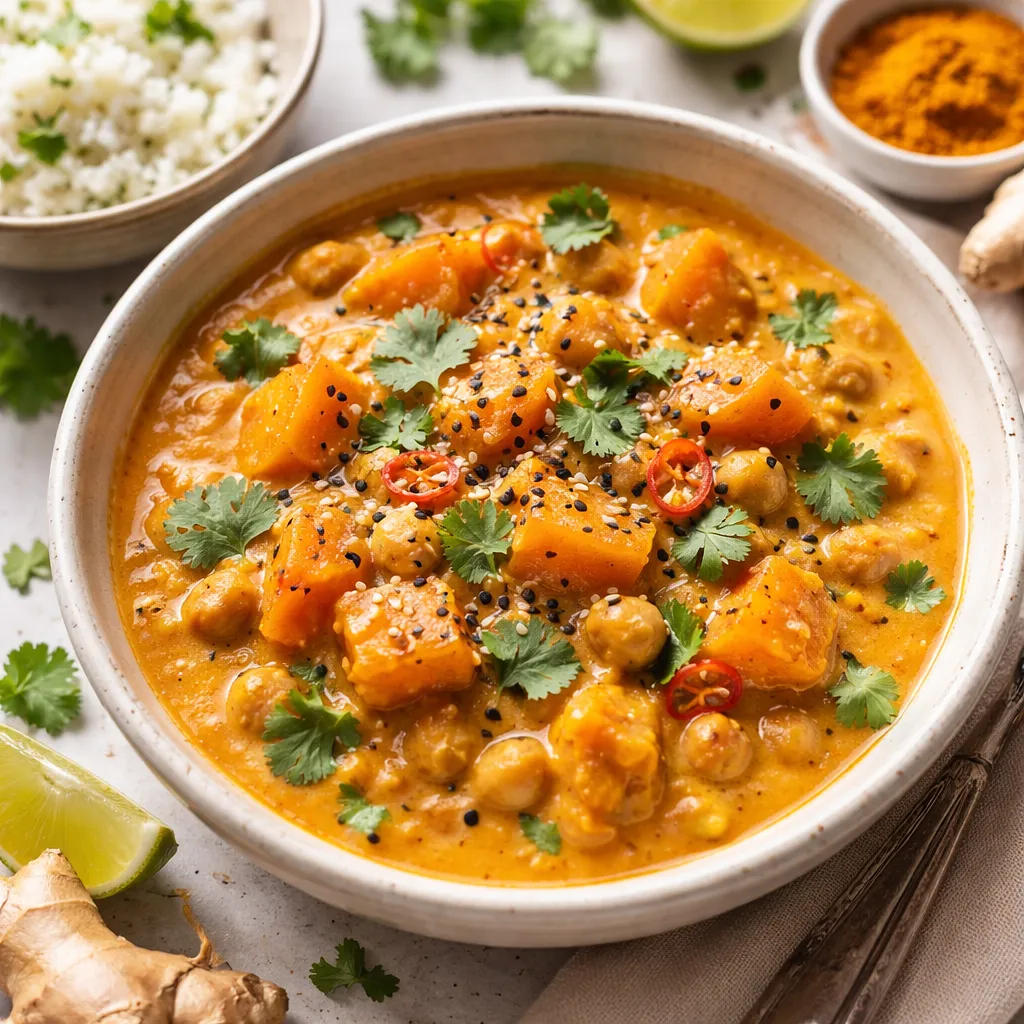
This aromatic and warming dish, inspired by the richness of South Indian cuisine, is the perfect choice for cooler days. At its heart is sweet, velvety hokkaido pumpkin, which pairs wonderfully with creamy coconut milk and nutritious chickpeas. The deep, complex flavor of the curry comes from a carefully selected blend of spices: turmeric giving a beautiful golden color, earthy cumin, citrusy coriander, and warming ginger and garlic. The whole is perfectly balanced – the mild sweetness of the pumpkin is complemented by a hint of spiciness and the freshness of lime juice. Visually, the dish delights with its intense orange color, which beautifully contrasts with the green of fresh coriander. Served with fluffy basmati rice and naan bread, it makes a wholesome, filling, and incredibly appetizing meal that is entirely vegan and gluten-free.
Ingredients (18)
- Hokkaido pumpkin 600 g
- Ciecierzyca gotowana (z puszki lub słoika) 240 g
- Full-fat coconut milk (min. 17% fat) 400 ml
- Onion 1 szt.
- Garlic 3 ząbki
- Fresh ginger 20 g
- Olej kokosowy nierafinowany 2 łyżki
- Vegetable broth 250 ml
- Ground coriander 2 g
- 🌿 Przyprawy
- Ground turmeric 0.8 łyżeczka
- Ground cumin (cumin) 0.8 łyżeczka
- Garam masala 2 g
- Hot paprika or chili powder 0.5 łyżeczka
- Salt 0.1 szczypt
- Pieprz czarny świeżo mielony 1 szczypta
- ✨ Opcjonalne
- Fresh cilantro 15 g
- Lime juice 15 ml
- Almond flakes 20 g
💡 Kliknij na składnik aby oznaczyć jako użyty
Preparation steps
Preparation of ingredients
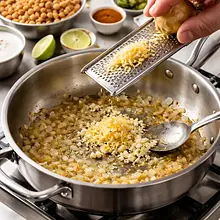
Prepare the aromatic base. Peel the onion from the outer, dry skins, cut it in half, and chop it into small cubes. Peel the garlic cloves and crush them with a press or chop them very finely. Peel a piece of ginger (the easiest way to do this is with the edge of a small spoon) and grate it on a fine grater.
Open the can of chickpeas and transfer its contents to a sieve. Rinse the chickpeas thoroughly under cold running water until the water runs clear. Set aside to drain. In a small bowl, mix all the dry spices (except for garam masala): turmeric, cumin, ground coriander, and chili powder. This way, you can add them to the pot at the same time, and none will burn.
Cooking Curry
In a large pot or deep skillet with a thick bottom, heat coconut oil over medium heat. When the oil melts and starts to gently shimmer, add the chopped onion. Sauté for about 5-7 minutes, stirring occasionally with a wooden spoon, until the onion becomes soft and translucent (it will turn glassy). Do not let it brown.
Add grated ginger and chopped garlic to the sautéed onion. Fry everything together for about 1 minute, stirring constantly, until they release an intense aroma. Then reduce the heat to the minimum, add the prepared spice mix (turmeric, cumin, coriander, chili) and fry for 30 seconds, stirring vigorously. This is a key moment when the spices release their essential oils and full flavor.
Add the diced pumpkin to the pot with the aromatic spice paste. Mix everything thoroughly with a wooden spoon so that each piece of pumpkin is coated with the spices. Then pour in the vegetable broth and the entire contents of the can of coconut milk. Stir to combine all the ingredients.
Increase the burner to medium-high and bring the contents of the pot to a boil. When the curry starts to bubble, immediately reduce the heat to the minimum, cover the pot with a lid, and simmer for about 20-25 minutes. Stir occasionally (every 5-7 minutes) to prevent anything from sticking to the bottom. The pumpkin is ready when it becomes very soft and can be easily pierced with a fork.
When the pumpkin is soft, add the drained chickpeas and garam masala to the pot. Gently mix, trying not to mash the pumpkin pieces. Cook uncovered for another 5 minutes to heat the chickpeas and allow the flavors to meld. During this time, the sauce should thicken slightly.
Remove the pot from the heat. Taste the curry and season with salt and freshly ground black pepper to your liking. If you are using optional ingredients, now is the time to add the freshly squeezed lime juice. Stir one last time. The lime juice will brighten and balance the rich flavors of the curry.
Serving
Transfer the hot curry to deep bowls. Optionally, sprinkle the top with chopped fresh coriander leaves for added freshness and toasted almond flakes for crunch. Serve immediately with cooked basmati rice or Indian naan bread.
Fun Fact
Curry is not a single spice, but a blend of many different ones, the composition of which varies depending on the region of India. The word 'curry' comes from the Tamil language and means 'sauce'. Pumpkin, although popular in India today, was brought there from America by the Portuguese in the 16th century.
Best for
Tips
Curry tastes best served hot with fluffy basmati rice that will absorb the aromatic sauce. Indian breads, such as naan or roti, are also a perfect addition, ideal for dipping in the sauce. You can top it with a dollop of natural or vegan yogurt (e.g., coconut) to soften the spiciness and add freshness.
Curry can be stored in an airtight container in the refrigerator for up to 3 days. It tastes even better the next day when the flavors have melded. It can also be frozen for up to 3 months. Reheat on low heat in a pot, adding a little water or broth if needed to restore the proper consistency.
📸 Ugotowane przez społeczność
Zaloguj się, aby dodać zdjęcieDodaj zdjęcie gotowej potrawy
Po zatwierdzeniu przez moderatora otrzymasz 10 punktów doświadczenia.
Nikt jeszcze nie dodał zdjęcia. Bądź pierwszy!
Comments (0)
Be the first to comment on this recipe!
Add a comment