Creamy Tagliatelle with Roasted Pumpkin, Crispy Sage, and Walnuts

Pikantne Pizza and Pasta Vegetarian Dishes Dishes for Special Occasions 70 min Medium 10 wyświetleń ~28.20 PLN - (0)
Rate:
(0)
Start Cooking

Description

This dish is the essence of autumn captured on a plate. A velvety, deep-flavored sauce made from roasted Hokkaido pumpkin envelops each ribbon of tagliatelle pasta, creating an incredibly creamy and satisfying composition. Its natural sweetness is balanced by the intense, herbal aroma of crispy sage leaves, perfectly sautéed in butter. The dish is completed with toasted walnuts, which add a pleasant crunch and nutty depth. Not only is it delicious, but it also looks beautiful on the plate, thanks to the intense orange color of the sauce contrasting with the green of the sage. It is the perfect option for an elegant yet simple dinner that will warm you on chilly days and impress your guests. Serve it as a main course, preferably with freshly grated Parmesan and a glass of white wine.

Ingredients (13)

Servings:
4
  • Tagliatelle pasta 400 g
  • Hokkaido pumpkin 600 g
  • Onion 1 szt.
  • Garlic 3 ząbki
  • Extra virgin olive oil 0.3 łyżek
  • 30% cream 150 ml
  • Parmesan 70 g
  • Fresh sage 20 g
  • Walnuts 50 g
  • 🌿 Przyprawy
  • Salt 10 g
  • Pieprz czarny świeżo mielony 2 szczypty
  • Nutmeg 2 szczypty
  • ✨ Opcjonalne
  • Chili flakes 2 szczypty
💰 Szacowany koszt dania: ~28.20 PLN (7.05 PLN/porcję)

💡 Kliknij na składnik aby oznaczyć jako użyty

Preparation steps

Preparing the pumpkin

1

Preheat the oven to 200°C with the convection function (or 220°C top-bottom). Thoroughly wash the Hokkaido pumpkin under running water. Place it on a stable cutting board and using a large, sharp knife, cut it in half. Then, using a spoon, scoop out the seed cavity along with the fibrous flesh. Cut each half into thick slices about 2-3 cm wide.

Ingredients: Hokkaido pumpkin
Hokkaido pumpkin is hard, so use a sharp chef's knife and be careful. To stabilize the pumpkin before cutting, you can cut off a small piece from the bottom to create a flat base. Do not peel the skin – it will be soft and edible after roasting.
2

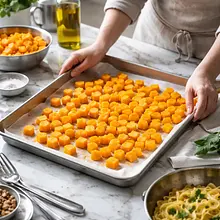
Line a large baking sheet with parchment paper. Spread the chopped pumpkin in a single layer on it. Drizzle with 2 tablespoons of olive oil, and sprinkle with salt and pepper. Toss thoroughly with your hands so that each piece of pumpkin is coated with oil and seasonings. Place the baking sheet in the preheated oven and bake for 25-30 minutes, until the pumpkin is tender (a fork should easily pierce it) and slightly caramelized at the edges.

Ingredients: Hokkaido pumpkin, Extra virgin olive oil, Salt, Pieprz czarny świeżo mielony
Do not overcrowd the baking tray. If the pieces of pumpkin overlap, they will start to steam instead of bake, which will affect the flavor. If you have too much pumpkin, use two trays.

Preparation of toppings

3

While the pumpkin is baking, prepare the toppings. In a dry, small skillet (without fat), place the walnuts. Heat over medium heat, shaking the skillet frequently, for about 3-4 minutes. Be careful, as the nuts can easily burn. They will be ready when they start to smell intense and lightly brown. Remove them from the skillet and set aside to cool, then chop coarsely with a knife.

Ingredients: Walnuts
Toasting nuts releases their essential oils and makes them crunchier and more aromatic. Do not leave the pan while toasting, as this process takes very little time.
4

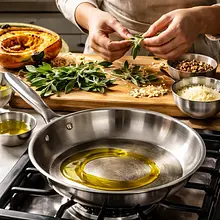
In the same pan, heat the remaining 2 tablespoons of oil. Remove the sage leaves from the stems. When the oil is hot (but not smoking), carefully place the sage leaves in a single layer. Fry for about 30-60 seconds on each side, until they become dark green, stiff, and crispy. Remove them with a slotted spoon to a plate lined with paper towels to drain excess fat. Reserve the aromatic frying oil.

Ingredients: Fresh sage, Extra virgin olive oil
Be careful, hot oil can splatter when you add fresh herbs to it. The leaves should 'sizzle'. The finished sage is as crispy as chips. Don't fry it too long, or it will become bitter.

Cooking pasta and sauce

5

In a large pot, bring at least 4 liters of water to a boil. Once it starts boiling, add a generous handful of salt (about 1-2 tablespoons). The water should be as salty as the sea. Add the tagliatelle pasta and cook according to the package instructions, but for 1-2 minutes less, so it is 'al dente' (slightly firm in the center). Before draining the pasta, reserve about 2 cups (400 ml) of the cooking water – it is crucial for the sauce.

Ingredients: Tagliatelle pasta, Salt
Don't break the pasta! Place it in the pot, and after a moment, it will soften and submerge in the water. Retaining the water from cooking the pasta is the secret to the perfect sauce – the starch in it helps emulsify the sauce, making it creamy and perfectly cling to the pasta.
6

While the pasta is cooking, heat the oil left over from frying the sage in a large, deep skillet. Add the finely chopped onion and sauté over medium heat for 5-7 minutes until it becomes soft and translucent, but not brown. Add the garlic, either pressed through a garlic press or finely chopped, and sauté for another minute until it releases its aroma.

Ingredients: Onion, Garlic
Use a pan that will later hold all the pasta and sauce. Watch the garlic closely, as it burns very quickly, which gives the dish a bitter taste. One minute of frying is more than enough.
7

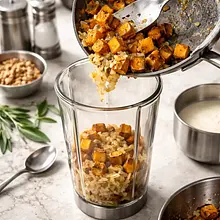
Transfer the baked pumpkin to a blender jar or a tall container. Add the sautéed onion with garlic, 30% cream, and about 1/2 cup (100 ml) of the reserved pasta cooking water. Blend everything until you achieve a perfectly smooth, velvety cream. If the sauce is too thick, add more pasta water, one tablespoon at a time, until you reach the desired consistency.

Ingredients: Hokkaido pumpkin, Onion, Garlic, 30% cream
The best tool for this task will be a high-power jug blender, which will ensure a perfectly smooth texture. If you are using an immersion blender (hand blender), make sure the container is tall enough to avoid splattering.

Final combination

8

Pour the smooth pumpkin sauce back into a large skillet. Heat over low heat. Season with salt, freshly ground pepper, and a pinch of freshly grated nutmeg. Add 50g of grated Parmesan and stir until the cheese completely melts and combines with the sauce.

Ingredients: Parmesan, Salt, Pieprz czarny świeżo mielony, Nutmeg
Do not bring the sauce to a boil after adding the parmesan, as it may curdle. Heat it gently, just until the cheese melts.
9

Drain the hot pasta and transfer it directly to the pan with the sauce. Gently but thoroughly mix with kitchen tongs to coat each strand of pasta with the sauce. If the mixture is too thick, add a little of the reserved pasta water and mix again. Cook together for about a minute to let the flavors combine.

Ingredients: Tagliatelle pasta
This is a key moment – combining the pasta with the sauce in the pan, rather than on the plate, makes the dish cohesive and incredibly tasty. Use tongs to gently toss the pasta in the sauce, which will help with even distribution.

Serving

10

Immediately arrange the pasta on four warmed plates, creating neat 'nests' in the center. Sprinkle each portion with chopped, toasted walnuts, crumbled crispy sage leaves, and the remaining grated Parmesan. Optionally, for added spice, sprinkle the whole dish with a pinch of chili flakes. Serve immediately.

Ingredients: Walnuts, Fresh sage, Parmesan, Chili flakes
To create an elegant 'nest', grab a portion of pasta with tongs, rest it on a large spoon and twist, then gently slide it onto the center of the plate. Warming the plates will help the dish maintain its temperature longer.

Fun Fact

💡

Pumpkin in Italian cuisine is not a novelty! In the Lombardy region, specifically in the city of Mantua, 'tortelli di zucca' have been popular since the Renaissance – dumplings filled with a mixture of pumpkin, amaretti cookies, fruit mustard (mostarda), and parmesan. This is proof of how versatile and valued pumpkin is in Italy.

Best for

Tips

🍽️ Serving

Serve the dish immediately after preparation, on deep, warmed plates. It pairs perfectly with a glass of chilled, dry white wine, such as Pinot Grigio or Sauvignon Blanc, whose acidity balances the creaminess of the sauce. You can drizzle the dish with a few drops of sage oil left over from frying.

🥡 Storage

Pasta with creamy sauces tastes best fresh after preparation. However, if you have leftovers, store them in an airtight container in the fridge for up to 2 days. To reheat, transfer the pasta to a pan, add a little water or milk, and heat over low heat, gently stirring until hot. Add crunchy toppings (sage, nuts) only after reheating.

📸 Ugotowane przez społeczność

Zaloguj się, aby dodać zdjęcie
Dodaj zdjęcie gotowej potrawy

Po zatwierdzeniu przez moderatora otrzymasz 10 punktów doświadczenia.

🍲

Nikt jeszcze nie dodał zdjęcia. Bądź pierwszy!

Comments (0)

Be the first to comment on this recipe!

Add a comment

You might also like

Recipe Categories

Pizza and pasta are the perfect duet - Italian flavors that have conquered the whole world. Neapolitan pizza: thin crust, tomato sauce, mozzarella, and fresh basil. Roman pizza with a crispy edge and abundant toppings. Pizza dough: yeast-based with a long rising time for the best flavor. Pasta fr...

See all recipes in this category

Vegetarian cuisine is a wealth of flavors without meat - healthy, colorful, and filling. Plant-based proteins: lentils, chickpeas, beans, peas, and soy take center stage. Cheeses and dairy: feta, halloumi, ricotta, and mascarpone in main dishes. Eggs in various forms: omelets, frittata, shakshuka...

See all recipes in this category

Dishes for special occasions are culinary masterpieces for birthdays, anniversaries, and holidays. Grilled beef steak with herb butter - restaurant quality at home. Beef Wellington - beef in puff pastry with duxelles. Roast duck with apples - a holiday tradition in a new edition. Pink salmon with...

See all recipes in this category

Lunches are the main meal of the day - filling, balanced, and full of flavor. Traditional two-course lunches: soup and a main dish in Polish tradition. Pork chop with potatoes and cabbage - a classic of Polish lunches. Dumplings with meat, cheese, and fruit - hand-formed delicacies. Beef goulash,...

See all recipes in this category
Reklama