Preheat the oven to 180°C (top and bottom). Prepare a baking tray lined with parchment paper. In the bowl of a mixer (or a large bowl if mixing by hand), place cold butter cut into cubes (80 g) and powdered sugar (60 g). Use the mixing attachment (a hook is not needed) or a wooden spoon and blend the butter with the sugar into a smooth, compact mass — the mixture should be silky and slightly light in color (about 1–2 minutes on medium speed with the mixer).
Description
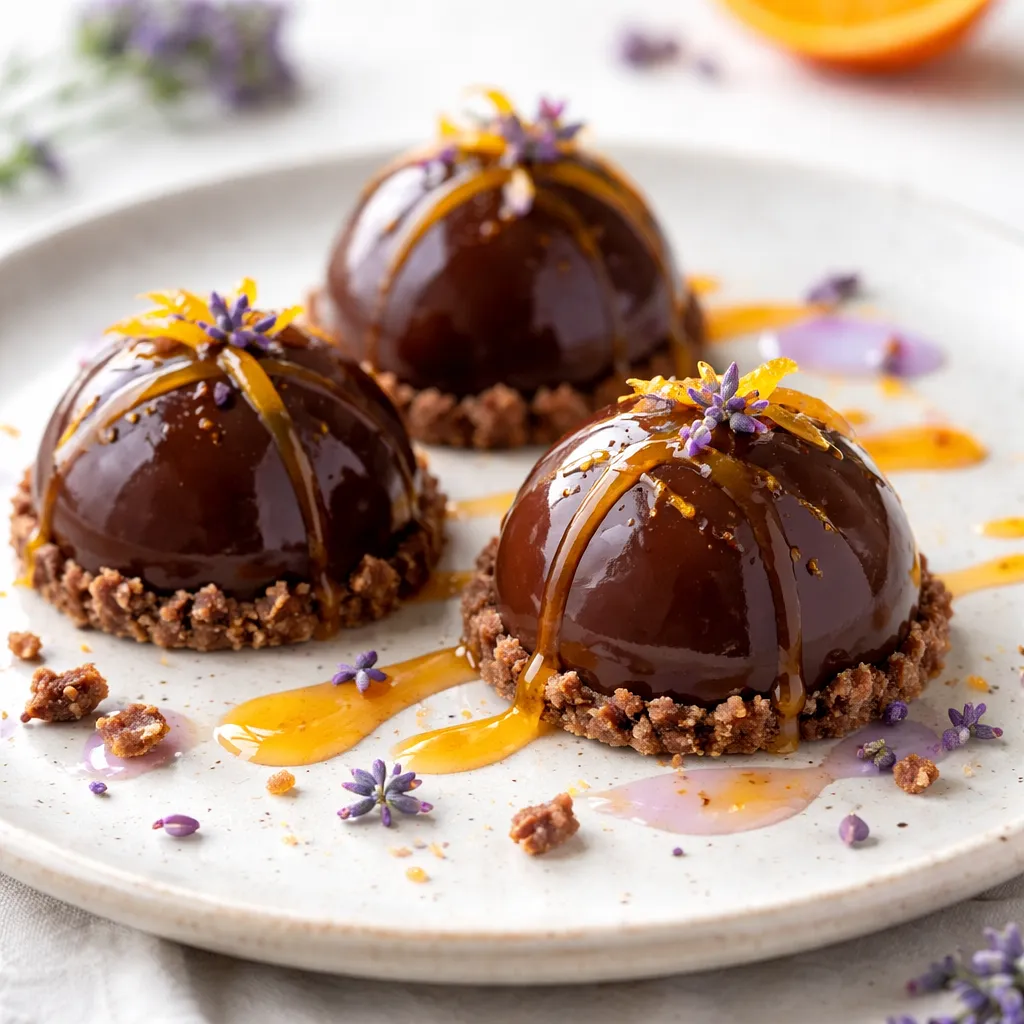
An elegant, seasonal dessert combining creamy chestnut puree with intense, slightly bitter chocolate and a fresh hint of orange, drizzled with delicate lavender syrup. The dish has a modern form: a crunchy almond-butter base, soft chestnut cream stabilized with agar-agar, shiny dark chocolate hemispheres, and a decoration of roasted chestnut pieces and candied orange peel (optionally with edible gold). The striking contrast of textures (crunchy, creamy, slightly chewy) and flavors (sweetness of chestnuts, bitter chocolate, tangy orange, floral lavender) makes the dessert both delicious and visually appealing. Perfect as an exquisite ending to a winter meal or for serving at an intimate event.
Ingredients Used
Ingredients (19)
- Butter 80 g
- Powdered sugar 60 g
- Wheat flour 120 g
- Ground almonds 80 g
- Egg 1 szt.
- Chestnut puree 300 g
- 30% cream 200 ml
- Agar-agar 4 g
- Granulated sugar 80 g
- Water 80 ml
- Dark chocolate 70% 150 g
- Roasted chestnut pieces 80 g
- Fresh orange juice 60 ml
- Vegetable oil 15 ml
- Orange zest 6 g
- 🌿 Przyprawy
- Salt 0.0 szczypt
- Dried lavender 5 g
- ✨ Opcjonalne
- Candied orange peel 40 g
- Edible gold flakes 0.5 g
💡 Kliknij na składnik aby oznaczyć jako użyty
Preparation steps
Base
Add the flour (120 g), ground almonds (80 g), egg (60 g), and a pinch of salt (1 g) to the butter and sugar. Mix briefly just until the ingredients are combined — the consistency should resemble a compact, slightly crumbly piece of dough that holds its shape. If the dough is too dry, add a drop of cold water, about 2–3 g, until it becomes pliable.
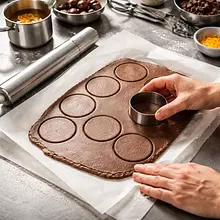
Roll out the dough between sheets of parchment paper to a thickness of about 5 mm. Cut out circles with a diameter of about 7–8 cm (fitting to the mold or template), and arrange them on the baking sheet with 2–3 cm spacing. Bake in a preheated oven for 12–15 minutes, until the edges are lightly golden. After baking, set aside to cool completely on a rack — the cookies will harden and become crispy.
Chestnut cream
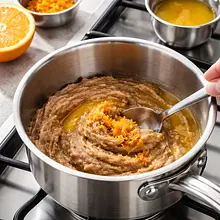
In a saucepan, heat the chestnut puree (300 g) together with the orange juice (60 ml) and grated zest (6 g) over very low heat, stirring with a wooden spoon until the mixture becomes fluid and smooth (about 3–5 minutes). The mixture should not boil vigorously — a gentle bubbling on the surface is sufficient.
Pour agar-agar (4 g) into a small bowl. Boil 30 ml of water (measured from the water for the syrup), pour it over the agar, and mix. Immediately pour the gelling mixture into the heated chestnut puree, stirring vigorously for 1 minute to ensure the agar dissolves completely. Gently cook the mixture for 1–2 minutes to activate the agar (the mixture should be slightly boiling).
Set the mixture aside to cool for 10 minutes, then whip the chilled 30% cream (200 ml) until stiff (about 2–3 minutes with a mixer on medium speed). Gently combine 1/3 of the whipped cream with the cooled puree to loosen the mixture, then gently fold in the rest using a spatula with folding motions until the cream is uniform and smooth.
Using a piping bag with a round tip, fill the silicone half-spheres (diameter approx. 6–7 cm) with chestnut cream up to 3/4 of their height. Smooth the surface. Place in the refrigerator for at least 45–60 minutes until the cream sets due to the agar.
Lavender syrup
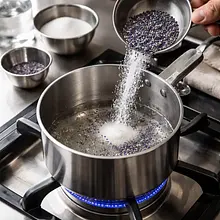
In a small saucepan, combine sugar (80 g), water (80 ml), and dried lavender (5 g). Heat over medium heat until the sugar is completely dissolved, but do not allow it to boil vigorously — let the syrup gently bubble for 2–3 minutes. Remove from heat and let steep for 15–20 minutes to allow the lavender to release its aroma. Strain the syrup through a fine sieve to remove the flowers.
Chocolate half-spheres
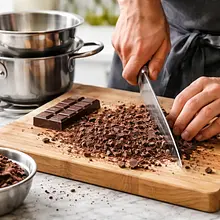
Chop the dark chocolate 70% (150 g) into small pieces. Prepare a bowl over a water bath: place a bowl over a pot with a small amount of boiling water (without touching the water). Place 2/3 of the chocolate in the bowl and heat, stirring with a spatula, until it melts to a temperature of about 45–48°C. Remove the bowl and add the remaining chopped chocolate (1/3) and stir until the temperature drops to about 30–31°C — this is the tempering method by adding tabler.
Add a teaspoon of oil (15 g) to the melted chocolate to enhance the shine. Pour a thin layer of tempered chocolate into a silicone hemisphere mold (diameter 7 cm). Rotate the mold so that the chocolate coats the sides, and pour the excess back into the bowl. Place the mold in the refrigerator for 5–8 minutes until it slightly hardens. Apply a second thin layer of chocolate for a stronger "shell" and chill again. Gently remove the hemispheres from the mold.
Assembly and decoration
Gently remove the chilled creamy chestnut half-spheres from the silicone molds. On a flat plate, place the baked almond base disc. Put the chestnut cream on top of it. Carefully place the chocolate half-sphere on the cream — you can cut the bottom of the chocolate with a knife so it lies flat. Decorate with roasted chestnut pieces (80 g) around it and drizzle with a thin thread of lavender syrup. Additionally, you can add candied orange peel (optional) and individual edible gold flakes for a premium effect.
Finishing
Before serving — optionally — sprinkle very lightly with sea salt flakes (a few crystals) on the chocolate hemisphere to enhance the flavor contrast. Serve immediately after assembling to maintain the crispness of the base and the shine of the chocolate.
Fun Fact
Edible chestnuts were an important source of food in the mountainous regions of Europe and often replaced grains during difficult seasons. The combination of chestnuts and chocolate has a long tradition in French and Italian winter desserts.
Best for
Tips
Serve on a slightly warmed plate (max. 30°C) or at room temperature. A cup of strong espresso coffee or a glass of sweet late harvest wine pairs well with the dessert. For contrast, serve with a bit of sour fruit, such as cherry compote.
Store separately: chocolate hemispheres and cream in the refrigerator for up to 48 hours in airtight containers. Assembling is best done 1–2 hours before serving. Do not freeze the finished dessert (it changes the texture of the cream and chocolate). Lavender syrup can be stored in the refrigerator for up to 2 weeks in a sealed jar.
📸 Ugotowane przez społeczność
Zaloguj się, aby dodać zdjęcieDodaj zdjęcie gotowej potrawy
Po zatwierdzeniu przez moderatora otrzymasz 10 punktów doświadczenia.
Nikt jeszcze nie dodał zdjęcia. Bądź pierwszy!
Comments (0)
Be the first to comment on this recipe!
Add a comment