Prepare all the ingredients: measure out the cream and broth, take the duck breasts out of the fridge for 15-20 minutes to reach room temperature. Peel the celeriac - first cut off the ends, peel with a knife or peeler, and trim any tough spots. Cut the celeriac into even cubes about 2 cm to ensure even cooking. Wash and dry the baby carrots, and remove the tops if they have them.
Description
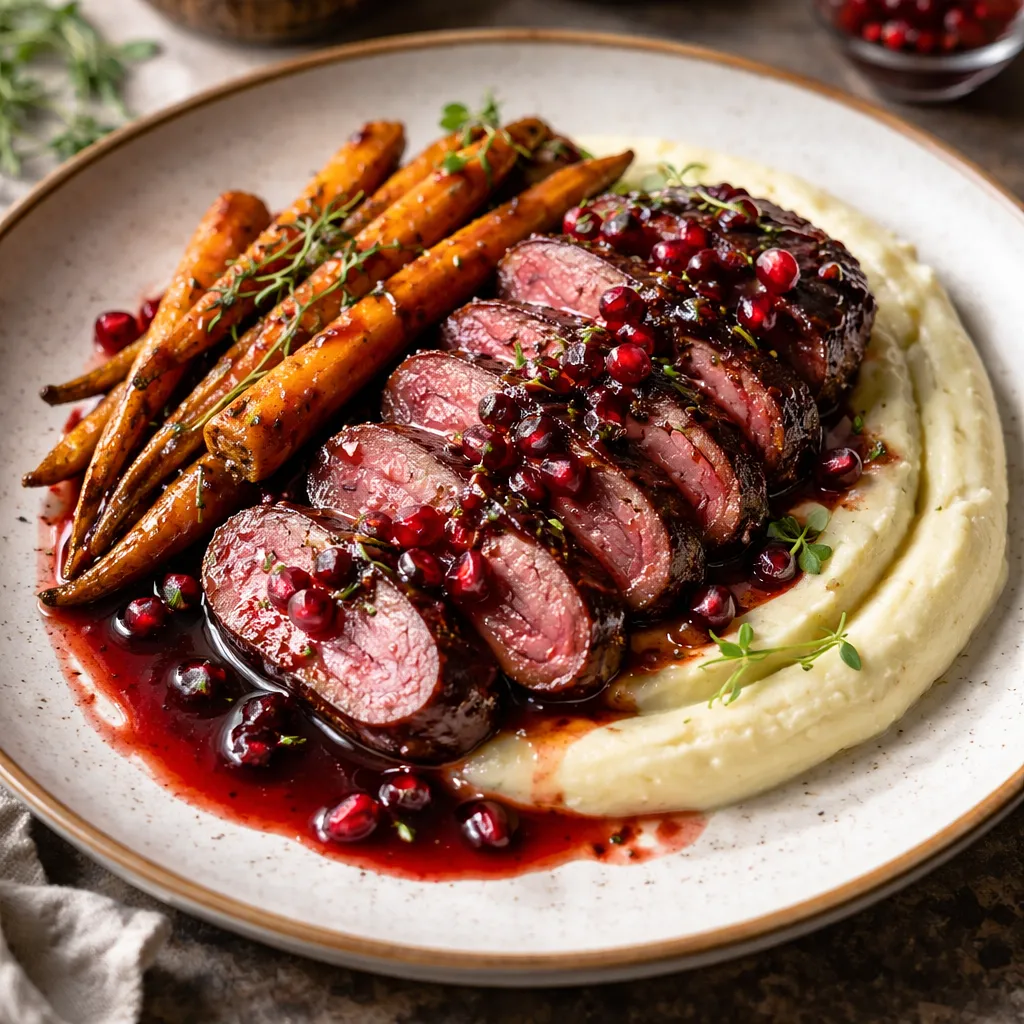
An elegant main dish perfect for special occasions: juicy, pink duck breasts with a crispy, golden skin, served on a silky celery root purée, alongside caramelized mini carrots and an aromatic glaze of red wine and pomegranate juice. The dish combines the winter freshness of root vegetables with the sweet-tart note of pomegranate and the depth of wine, giving it both a refined taste and a stunning, colorful presentation. The dish originates from contemporary European cuisine with Mediterranean and Middle Eastern elements; it is perfect for a holiday dinner, anniversary, or during a gathering where it aims to impress with both flavor and appearance.
Ingredients Used
Ingredients (17)
- Duck breast 4 szt.
- Celeriac 800 g
- Butter 50 g
- 30% cream 100 ml
- Olive oil 30 ml
- Dry red wine 200 ml
- Pomegranate juice 150 ml
- Chicken broth 200 ml
- Shallot 80 g
- Sugar 20 g
- Mini carrot 300 g
- Fresh thyme 0.1 pęczków
- 🌿 Przyprawy
- Salt 6 g
- Black pepper 4 szczypty
- ✨ Opcjonalne
- Pomegranate seeds 100 g
- Pomegranate molasses (optional) 30 g
- Microgreens for decoration (optional) 20 g
💡 Kliknij na składnik aby oznaczyć jako użyty
Preparation steps
Preparation of ingredients
Celeriac purée
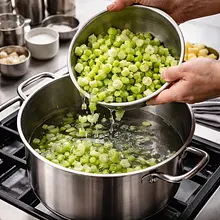
Place the chopped celery in a large pot and cover it with cold water so that the water covers the vegetable by about 2 cm. Add 1 pinch of salt from the specified amount (1 g). Put the pot over high heat, bring to a boil uncovered, reduce the heat to medium, and cook for 20-25 minutes until the pieces are very soft — check with a fork: the fork should go in easily.
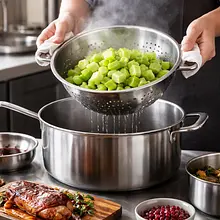
Drain the celery through a colander and set aside for a minute to let excess water evaporate. Transfer the hot pieces to a wide bowl or a blender container, add 30 g of butter and 100 ml of cream. Use a potato masher or an immersion blender, and blend briefly until smooth. If the purée is too thick, add cream a tablespoon at a time. Season to taste with salt (2 g) and a pinch of pepper.
Duck
Prepare the breasts: pat dry with a paper towel. Using a sharp knife, score the skin in a crosshatch pattern with sharp, shallow cuts (do not cut into the meat, just the skin and fat), which will help render the fat and achieve crispy skin. Rub both sides with 1-2 g of salt and 1 g of freshly ground pepper. Set aside for 10-15 minutes at room temperature.
Heat a large, heavy skillet (cast iron or stainless steel) over medium-high heat. Do not add any fat — the duck skin will render enough fat. Place the breasts skin-side down and cook for 8-12 minutes, gently pressing down if any are curling up, until the skin is deeply golden and crispy, and the fat has rendered well. Reduce the heat if the skin is browning too quickly. After rendering some fat, remove the excess oil from the skillet: leave about 1 tablespoon of fat.
Turn the breasts to the meat side and fry for 1-2 minutes just to sear the surface. Transfer the pan to an oven preheated to 180°C or transfer the breasts to a baking tray and bake for 6-8 minutes for medium-rare doneness. Remove and set aside on a board, loosely cover with aluminum foil, and let rest for 8-10 minutes (during this time the internal temperature will equalize).
Glaze
In the same pan, with the remaining fat (if there is too much, remove the excess so that only a thin layer remains), sauté the finely chopped shallots for 2-3 minutes over medium heat. Add 200 ml of red wine and 150 ml of pomegranate juice, sprinkle in 20 g of sugar, and increase the heat to bring the liquid to a boil. Scrape the bottom of the pan to dissolve the browned bits from the duck (deglazing). Cook over medium heat for 8-10 minutes until the sauce reduces by half and becomes syrupy.
To the reduced wine and juice, add 200 ml of chicken broth and cook for 4-6 minutes until the sauce reaches the desired consistency. Remove from heat and incorporate 20 g of butter — whisk vigorously to achieve a glossy emulsion glaze. Season to taste with salt and pepper (remaining from the specified amounts).
Vegetables
Preheat the oven to 200°C (top-bottom). In a bowl, mix the carrots with oil (30 g), 1-2 g of salt, a pinch of pepper, and thyme leaves (5 g). Arrange the carrots in a single layer on a baking sheet lined with parchment paper and bake for 20-25 minutes, until they are tender and slightly caramelized at the ends. Shake the baking sheet every 10 minutes to ensure even roasting.
Finishing (optional)
If you are using pomegranate molasses, add 30 g to the finished sauce and mix, then heat for 30 seconds. Additionally, you can add a few tablespoons of pomegranate seeds just before serving for freshness and color.
Assembly and serving
On a heated plate, spread a portion of celery purée (about 150-200 g per serving) to create a teardrop or circle shape. Slice the duck breasts diagonally into pieces about 1 cm thick (cutting against the grain to keep the meat tender). Arrange the duck slices in a fan shape on the purée, placing 3-4 roasted carrots next to them. Drizzle the duck and carrots with a tablespoon of glaze. Garnish with pomegranate seeds and microgreens if using. Serve immediately — best on a hot plate.
Storage and Reheating
Store the remaining sauce and purée separately in an airtight container in the fridge for up to 2 days. The duck is best eaten fresh; if there are leftovers, keep the slices in the fridge for up to 24 hours. To reheat the purée, warm it slowly over low heat with a little cream or butter, and heat the sauce briefly without bringing it to a boil (to avoid separation). Reheating the breast in the microwave is not recommended - it's better to briefly sauté it on each side in a pan and then finish cooking in the oven for 4-6 minutes.
Fun Fact
Duck in European cuisine has traditionally been a festive and ceremonial dish — the combination of fatty duck with sweet and sour sauces (e.g., fruit-based) has a long history, as the acidity cuts through the fat and enhances the flavors of the meat.
Best for
Tips
Serve the dish hot, with plates preheated in the oven (60°C). A red wine with moderate tannins pairs well with duck: Pinot Noir, Merlot, or semi-dry Zinfandel. Prepare small sticks for wiping fingers at the table — the sauce is sticky.
Store the purée, sauce, and meat separately in airtight containers in the refrigerator: purée and sauce for up to 2 days, meat for up to 24 hours. To reheat the purée, use low heat and add liquid, briefly heat the sauce, and gently reheat the duck in a pan.
📸 Ugotowane przez społeczność
Zaloguj się, aby dodać zdjęcieDodaj zdjęcie gotowej potrawy
Po zatwierdzeniu przez moderatora otrzymasz 10 punktów doświadczenia.
Nikt jeszcze nie dodał zdjęcia. Bądź pierwszy!
Comments (0)
Be the first to comment on this recipe!
Add a comment