Fluffy Yeast Cake 'Grandma Iza's' – Perfect for Buns and Cakes

Cakes and Bakes Desserts European cuisine 135 min Medium 7 wyświetleń ~8.99 PLN - (0)
Rate:
(0)
Start Cooking

Description

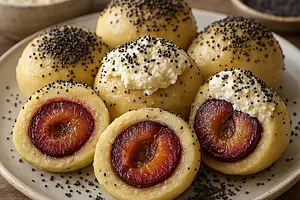
Here is a recipe that is the essence of home warmth and the aroma wafting through the kitchen on a Sunday afternoon. 'Grandma Iza's Fluffy Yeast Cake' is not just a recipe, but a whole philosophy of baking. The cake is incredibly soft, light as a cloud, and elastic, with a buttery-vanilla aroma. Its secret lies in the right proportions, patience during kneading, and allowing it to rise peacefully. This is a universal recipe – a base from which you can create both a traditional crumble cake with fruits, delicious yeast rolls with cheese or poppy seeds, as well as a festive strudel. Served with a cup of warm milk or cocoa, it transports you back to childhood. Visually, the cake delights with its golden, shiny crust and impressive rise. This is a recipe that always works, provided you put a little heart into it.

Ingredients (10)

Servings:
8
  • Luxury wheat flour type 550 500 g
  • Fresh yeast 25 g
  • Milk 3.2% 250 ml
  • Masło 82% 80 g
  • Cukier biały drobny 80 g
  • Egg 1 szt.
  • Żółtka jaj 2 szt.
  • 🌿 Przyprawy
  • Salt 0.1 szczypt
  • ✨ Opcjonalne
  • Vanilla extract 5 g
  • Skórka otarta z cytryny 5 g
💰 Szacowany koszt dania: ~8.99 PLN (1.12 PLN/porcję)

💡 Kliknij na składnik aby oznaczyć jako użyty

Preparation steps

Preparing the starter (levain)

1

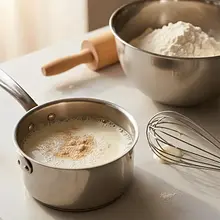
Start by preparing the starter, or 'activating' the yeast. In a small saucepan, heat 250 ml of milk. It should be slightly warm, at a temperature of about 37°C – like body temperature. Check by dropping a drop on the inside of your wrist; it should feel pleasantly warm, but not hot. Crumble 25 g of fresh yeast into a bowl, add 1 tablespoon of sugar (from the measured portion of 80 g), 1 tablespoon of flour (from the measured portion of 500 g), and pour in half of the warm milk. Gently mix with a fork, just to combine the ingredients. Cover with a cloth and set aside in a warm, draft-free place for 10-15 minutes. The starter is ready when it has significantly increased in volume and is covered with a thick foam.

Ingredients: Fresh yeast, Milk 3.2%, Cukier biały drobny, Luxury wheat flour type 550
The most common mistake is using milk that is too hot, which kills the yeast. If after 15 minutes the starter hasn't 'risen' (there's no foam), it means the yeast is inactive and you need to start over. A warm place can be near a radiator or a slightly warmed (and turned off!) oven.
Kneading the dough

2

In a large bowl, sift the remaining flour (about 490g). Sifting aerates the flour, making the dough lighter. Add the remaining sugar and salt. Mix the dry ingredients with a whisk or spoon to distribute them evenly.

Ingredients: Luxury wheat flour type 550, Cukier biały drobny, Salt
Use a really large bowl – the dough will double in volume. Don't skip the salt, it's crucial for the flavor and structure of the dough. Mixing the dry ingredients before adding the wet ones prevents lumps from forming.
3

Make a well in the center of the dry ingredients. Crack the whole egg and two yolks into it, pour in the risen starter and the rest of the warm milk. If using, add the vanilla extract and lemon zest now. Using a wooden spoon or spatula, start mixing the ingredients, incorporating the flour from the edges into the center, until a sticky, irregular ball of dough forms.

Ingredients: Egg, Żółtka jaj, Milk 3.2%, Vanilla extract, Skórka otarta z cytryny
At this stage, the dough will be very sticky – this is normal! Do not add more flour than in the recipe, as the dough will become tough. All liquid ingredients should be at room temperature.
4

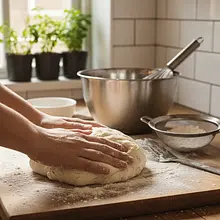
Transfer the dough to a lightly floured surface and start kneading. Knead it vigorously for about 10-15 minutes. The technique involves pushing the dough away from you with the heel of your hand, folding it in half, and turning it 90 degrees. Repeat this motion rhythmically. Alternatively, use a stand mixer with a dough hook and knead on medium speed for about 8-10 minutes. The dough is ready when it becomes smooth, elastic, and stops sticking heavily to your hands and the surface.

This is the most important step that develops the gluten network. Don't be discouraged by the initial stickiness. If the dough is extremely sticky, you can sprinkle a little flour, but do it sparingly. Well-kneaded dough should slowly return to its shape when pressed with a finger.
5

When the dough is smooth, start adding the soft butter, one tablespoon at a time. Incorporate each piece into the dough before adding the next. Initially, the dough will become slippery and will separate – this is normal. Continue kneading for another 5-7 minutes, until all the butter is absorbed and the dough is smooth, shiny, and silky to the touch.

Ingredients: Masło 82%
Adding butter at the end of the kneading process makes the dough exceptionally delicate and buttery. Be patient, the dough will eventually 'absorb' all the fat. Using a mixer at this stage makes the work much easier.

First rising

6

Form a smooth ball from the dough by tucking the edges underneath. Grease the bowl where you mixed the ingredients with a thin layer of oil or butter. Place the ball of dough in it and turn it so that it is coated in fat. Cover the bowl with plastic wrap or a damp cloth and set it in a warm place for about 60-90 minutes. The dough should at least double in volume.

Greasing the bowl and the dough with fat prevents drying out and the formation of a hard crust on the surface. To check if the dough is ready, press your finger into it to a depth of 1 cm. If the indentation remains, the dough is ready for further work.

Shaping and second rising

7

While the dough is rising, prepare the pan. Grease a standard rectangular baking tray measuring about 25x35 cm with butter and dust it with breadcrumbs or line it with baking paper. Take the risen dough out onto the countertop and gently punch it down to release the gas. Roll it out or flatten it with your hands into a rectangle the size of the pan and transfer it into the pan, smoothing the surface.

Degassing the dough is important to remove large air bubbles and achieve a uniform texture. Do not roll it out too thin; the dough should be about 1.5-2 cm thick.
8

Cover the cake pan with a clean cloth and set aside for the second rising (also known as proofing) for about 30-40 minutes in a warm place. The dough should rise noticeably again and become very fluffy. In the meantime, preheat the oven to 180°C (top and bottom heat, no fan).

The second rising is key to the final fluffiness of the baked good. Don't skip this step! The dough is ready for baking when it slowly springs back into place after a light press with your finger.

Baking

9

In a small bowl, whisk the egg with a tablespoon of milk. Using a pastry brush, gently brush the top of the risen dough. If you like, you can now sprinkle it with fruit and crumble. Place the cake in the preheated oven on the middle rack.

Ingredients: Egg
Brushing with egg will give the dough a beautiful, golden color and shine. Do this very gently to avoid destroying the air bubbles and causing the dough to collapse.
10

Bake the cake for about 25-35 minutes, until it reaches a deep golden brown color. To check if it's done, insert a wooden skewer into the thickest part. If it comes out dry, the cake is baked. If there is raw batter on it, bake for another 5-10 minutes.

Every oven bakes differently, so keep an eye on the cake. If the top browns too quickly while the center is still raw, loosely cover it with aluminum foil and continue baking.
11

Remove the dough from the oven and leave it in the pan for 10 minutes. Then carefully transfer it to a metal rack to cool completely. Cutting hot yeast dough can cause it to become soggy.

Cooling on a rack is very important because it allows air circulation from the bottom, which prevents the bottom of the cake from steaming and becoming soggy.

Fun Fact

💡

Yeast cake, known in Poland as 'drożdżówka' or 'placek', has deep roots in culinary tradition. It was considered a symbol of hospitality and abundance. In the old days, it was believed that one should not argue or get upset while kneading the dough, as negative energy could prevent the dough from rising.

Best for

Tips

🍽️ Serving

It tastes best when still slightly warm, spread with butter or homemade jam. It pairs perfectly with a cup of milk, cocoa, or white coffee. You can also drizzle it with lemon glaze (powdered sugar mixed with lemon juice) or sprinkle it with powdered sugar.

🥡 Storage

To maintain freshness, store the cake wrapped in aluminum foil or in a bread box at room temperature for up to 3 days. It can also be frozen – after completely cooling, wrap it tightly in plastic wrap and freeze. To thaw, leave it at room temperature for a few hours.

📸 Ugotowane przez społeczność

Zaloguj się, aby dodać zdjęcie
Dodaj zdjęcie gotowej potrawy

Po zatwierdzeniu przez moderatora otrzymasz 10 punktów doświadczenia.

🍲

Nikt jeszcze nie dodał zdjęcia. Bądź pierwszy!

Comments (0)

Be the first to comment on this recipe!

Add a comment

You might also like

Recipe Categories

Homemade cakes and pastries are the heart of Polish culinary tradition - sweet memories from childhood. In our collection, you will find recipes for classic yeast cakes, shortcrust, sponge, and cheesecake. Apple pie, poppy seed cake, gingerbread, Easter babka, chocolate cake, and New York cheesec...

See all recipes in this category
Desserts
Desserts in: New Year's Eve

A sweet ending to the New Year's Eve dinner is a must-have that will put everyone in a joyful mood for the new year.

See all recipes in this category

European cuisine is a mosaic of culinary traditions from the Old Continent - from Spain to Scandinavia. Valencian paella and tapas from Spain - sunshine on a plate. Boeuf bourguignon and ratatouille from France - elegance and finesse. Wiener schnitzel and strudel from Austria - Central European c...

See all recipes in this category

Dishes for special occasions are culinary masterpieces for birthdays, anniversaries, and holidays. Grilled beef steak with herb butter - restaurant quality at home. Beef Wellington - beef in puff pastry with duxelles. Roast duck with apples - a holiday tradition in a new edition. Pink salmon with...

See all recipes in this category
Reklama