Tagliatelle in a velvety roasted pumpkin sauce with sage butter and toasted hazelnuts

Wegetariańskie Pikantne Pizza and Pasta Vegetarian Dishes Lunches 75 min Medium 11 wyświetleń ~34.92 PLN - (0)
Rate:
(0)
Start Cooking

Description

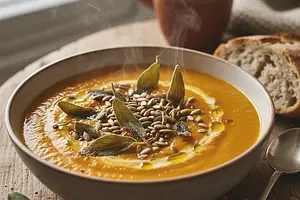
This dish is the essence of autumn captured on a plate. The velvety, naturally sweet, and intensely orange sauce made from roasted hokkaido pumpkin perfectly envelops each ribbon of tagliatelle pasta. The deep, nutty aroma of browned butter, infused with the herbal note of crispy sage, creates an extraordinary bouquet of flavors. The crunch of toasted hazelnuts provides a perfect contrast to the creamy consistency of the sauce, while the bold, salty taste of freshly grated parmesan completes the dish, adding elegance. This dish comes from modern Italian cuisine, drawing inspiration from seasonal, local ingredients. It is an ideal option for a vegetarian main course that will delight both during a casual meal and a festive dinner. It looks incredibly appetizing, and its preparation, although requiring a few steps, is a satisfying culinary experience.

Ingredients (14)

Servings:
4
  • Dried tagliatelle pasta 400 g
  • Hokkaido pumpkin 800 g
  • Garlic 3 ząbki
  • Extra virgin olive oil 0.2 łyżek
  • Vegetable broth 200 ml
  • 30% heavy cream 100 ml
  • Butter 50 g
  • Fresh sage 0.3 pęczków
  • Hazelnuts 50 g
  • Ser parmezan (parmigiano reggiano) 40 g
  • 🌿 Przyprawy
  • Sól morska drobnoziarnista 0.8 łyżeczka
  • Pieprz czarny świeżo mielony 2 szczypty
  • Nutmeg 2 szczypty
  • ✨ Opcjonalne
  • Chili flakes 1 szczypta
💰 Szacowany koszt dania: ~34.92 PLN (8.73 PLN/porcję)

💡 Kliknij na składnik aby oznaczyć jako użyty

Preparation steps

Preparing the pumpkin

1

Start by preheating the oven. Set it to 200°C with the top and bottom heating function. In the meantime, prepare a large baking tray by lining it with a sheet of baking paper. This will prevent the pumpkin from sticking and make cleanup easier.

The oven needs about 10-15 minutes to reach the set temperature. Turning it on at the beginning will save time. Use a standard, large baking tray from the oven's equipment.
2

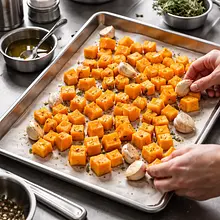
Thoroughly wash the hokkaido pumpkin under running water. Place it on a stable cutting board and using a large, sharp chef's knife, cut it in half. Use a metal spoon to scoop out the seeds and fibrous flesh from the inside. Then, cut the pumpkin halves into smaller, even pieces about 2-3 cm on each side. There is no need to peel the skin – it will become soft and edible after baking. Peel the garlic cloves but leave them whole.

Ingredients: Hokkaido pumpkin, Garlic
Be careful when cutting the pumpkin, its skin is tough. A stable board and a sharp knife are essential for safety. Even pieces will ensure even baking. The garlic will roast whole, becoming sweet and creamy.
3

Spread the chopped pumpkin and whole garlic cloves on the prepared baking sheet, trying to arrange them in a single layer. Drizzle everything evenly with olive oil, then sprinkle with salt and freshly ground black pepper. Gently toss everything on the sheet with your hands to ensure each piece is coated with oil and seasonings. Place the sheet in the preheated oven and bake for 30-35 minutes. The pumpkin is ready when a fork easily pierces it and its edges begin to caramelize slightly.

Ingredients: Hokkaido pumpkin, Garlic, Extra virgin olive oil, Sól morska drobnoziarnista, Pieprz czarny świeżo mielony
Do not overcrowd the baking tray. If the vegetables are stacked on top of each other, they will start to steam instead of roast. It's better to use two trays. Checking for tenderness with a fork is the most reliable way to assess if the pumpkin is ready.

Preparation of toppings

4

While the pumpkin is baking, prepare the nuts. Heat a small, dry skillet (without any fat) over medium heat. Add the hazelnuts and toast them for 5-7 minutes, stirring or shaking the skillet frequently to prevent burning. The nuts are ready when their skins start to crack and an intense, nutty aroma fills the kitchen. Transfer the hot nuts to a clean kitchen towel, wrap it up, and rub vigorously to remove most of the dark skins. Once cooled, chop them roughly with a knife.

Ingredients: Hazelnuts
Watch the nuts carefully, as they can burn very easily. Removing the skins is not necessary, but it improves the flavor (they are slightly bitter) and the appearance of the dish. Chop the nuts into larger pieces so they are noticeable in the dish.
5

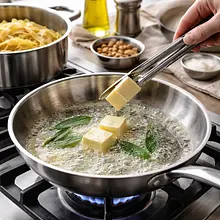
In the same small skillet (or in a small saucepan), melt the butter over medium heat. As soon as it melts and starts to foam, add the whole sage leaves. Fry for 2-3 minutes, stirring gently. Watch the butter – when it stops foaming, and brown specks appear at the bottom, and the aroma becomes intensely nutty, remove the skillet from the heat. The sage leaves should turn dark green and crispy. Set aside.

Ingredients: Butter, Fresh sage
The key is to achieve 'beurre noisette', or browned butter. Take your time and don't set the heat too high, as the butter will burn and become bitter. Crispy sage leaves make a delicious garnish.

Cooking pasta and sauce

6

In a large pot (minimum 4-5 liters), bring a large amount of water to a boil (about 1 liter for 100g of pasta). When the water starts to boil vigorously, add a generous pinch of salt (about 10g per liter). Add the tagliatelle pasta and cook according to the package instructions, but reduce the time by 1-2 minutes so that it is 'al dente' (slightly firm in the center). Before draining the pasta, reserve a cup (about 250 ml) of the cooking water – it is rich in starch and will help create the perfect sauce.

Ingredients: Dried tagliatelle pasta, Sól morska drobnoziarnista
The pasta will 'finish cooking' in the pan with the sauce, so it's important not to overcook it. Salty water is key for the flavor of the pasta. Don't forget to save some of the cooking water – it's the secret to the perfect sauce consistency!
7

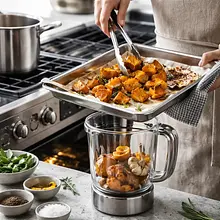
Remove the roasted pumpkin from the oven. Transfer the soft pieces of pumpkin and the roasted garlic to the jar of a standing blender or use an immersion blender in a tall container. Add about 150 ml of warm vegetable broth. Blend on high speed for 1-2 minutes until you achieve a perfectly smooth, velvety purée without any lumps. If the purée is too thick, add a little more broth.

Ingredients: Hokkaido pumpkin, Garlic, Vegetable broth
Use a high-power blender to make the sauce really smooth. If you are using an immersion blender, make sure the container is tall enough to avoid splattering hot purée. The consistency should resemble thick cream.
8

Pour the smooth pumpkin purée into a large, deep skillet or a wide saucepan. Place it over low heat. Add the heavy cream and a pinch of freshly grated nutmeg. Gently mix everything together using a whisk or wooden spoon. Heat the sauce for 2-3 minutes until hot, but do not let it boil. Taste and season with salt and pepper if needed.

Ingredients: 30% heavy cream, Nutmeg, Sól morska drobnoziarnista, Pieprz czarny świeżo mielony
Use a pan that will later fit all the cooked pasta. Heat the sauce slowly – boiling the cream can cause it to curdle. Nutmeg wonderfully enhances the flavor of the pumpkin.

Final combination and serving

9

Drain the hot pasta and transfer it directly to the pan with the hot pumpkin sauce. Using tongs, vigorously toss and mix the pasta to ensure each strand is thoroughly coated with the sauce. If the sauce is too thick, gradually add a few tablespoons of the reserved pasta cooking water, mixing until you achieve the desired creamy consistency that clings perfectly to the pasta. Cook everything for about a minute.

Ingredients: Dried tagliatelle pasta
This is the key moment when the dish takes its final shape. Do not pour the sauce over the pasta in the bowl – combining them in the hot pan allows the flavors to meld perfectly. The pasta water emulsifies the sauce, making it even creamier.
10

Immediately arrange the portions of pasta on warmed, deep plates, forming neat 'nests'. Drizzle each portion with a bit of the prepared sage butter, decorate with a few crispy sage leaves, and generously sprinkle with toasted, chopped hazelnuts. Finally, grate fresh parmesan on top. If you like, add a pinch of chili flakes for a slight heat.

Ingredients: Ser parmezan (parmigiano reggiano), Hazelnuts, Butter, Fresh sage, Chili flakes
Serving on warm plates will help the dish maintain its temperature longer. Don't skimp on the toppings – they create a richness of flavors and textures. Grate the cheese directly onto the plate just before serving for the best aroma.

Fun Fact

💡

Legend has it that tagliatelle pasta was created in 1487 by Master Zefirano, a chef from Bologna, in honor of the wedding of Lucrezia Borgia. The long, golden ribbons of pasta were said to be inspired by her beautiful blonde hair.

Best for

Tips

🍽️ Serving

Serve immediately after preparation, on warmed deep plates, which will help maintain the dish's temperature. A chilled, light white wine with good acidity, such as Pinot Grigio or Sauvignon Blanc, pairs perfectly with the dish, balancing the creaminess of the sauce. Garnish each portion with crispy sage leaves from the butter for added texture and aroma.

🥡 Storage

The dish tastes best fresh, right after preparation. If there are leftovers, store them in an airtight container in the refrigerator for up to 2 days. To reheat, transfer the pasta to a pan, add a little water or milk, and heat over low heat, gently stirring until the sauce regains its creamy consistency. Freezing is not recommended.

📸 Ugotowane przez społeczność

Zaloguj się, aby dodać zdjęcie
Dodaj zdjęcie gotowej potrawy

Po zatwierdzeniu przez moderatora otrzymasz 10 punktów doświadczenia.

🍲

Nikt jeszcze nie dodał zdjęcia. Bądź pierwszy!

Comments (0)

Be the first to comment on this recipe!

Add a comment

You might also like

Recipe Categories

Pizza and pasta are the perfect duet - Italian flavors that have conquered the whole world. Neapolitan pizza: thin crust, tomato sauce, mozzarella, and fresh basil. Roman pizza with a crispy edge and abundant toppings. Pizza dough: yeast-based with a long rising time for the best flavor. Pasta fr...

See all recipes in this category

Vegetarian cuisine is a wealth of flavors without meat - healthy, colorful, and filling. Plant-based proteins: lentils, chickpeas, beans, peas, and soy take center stage. Cheeses and dairy: feta, halloumi, ricotta, and mascarpone in main dishes. Eggs in various forms: omelets, frittata, shakshuka...

See all recipes in this category

Lunches are the main meal of the day - filling, balanced, and full of flavor. Traditional two-course lunches: soup and a main dish in Polish tradition. Pork chop with potatoes and cabbage - a classic of Polish lunches. Dumplings with meat, cheese, and fruit - hand-formed delicacies. Beef goulash,...

See all recipes in this category

Italian cuisine is love at first bite - pasta, pizza, and amore on the plate. Pasta in all shapes: spaghetti, penne, rigatoni, tagliatelle, and lasagna with homemade sauces. Italian sauces: bolognese, carbonara, pomodoro, pesto, and aglio e olio - classics. Neapolitan pizza with a crispy crust an...

See all recipes in this category
Reklama