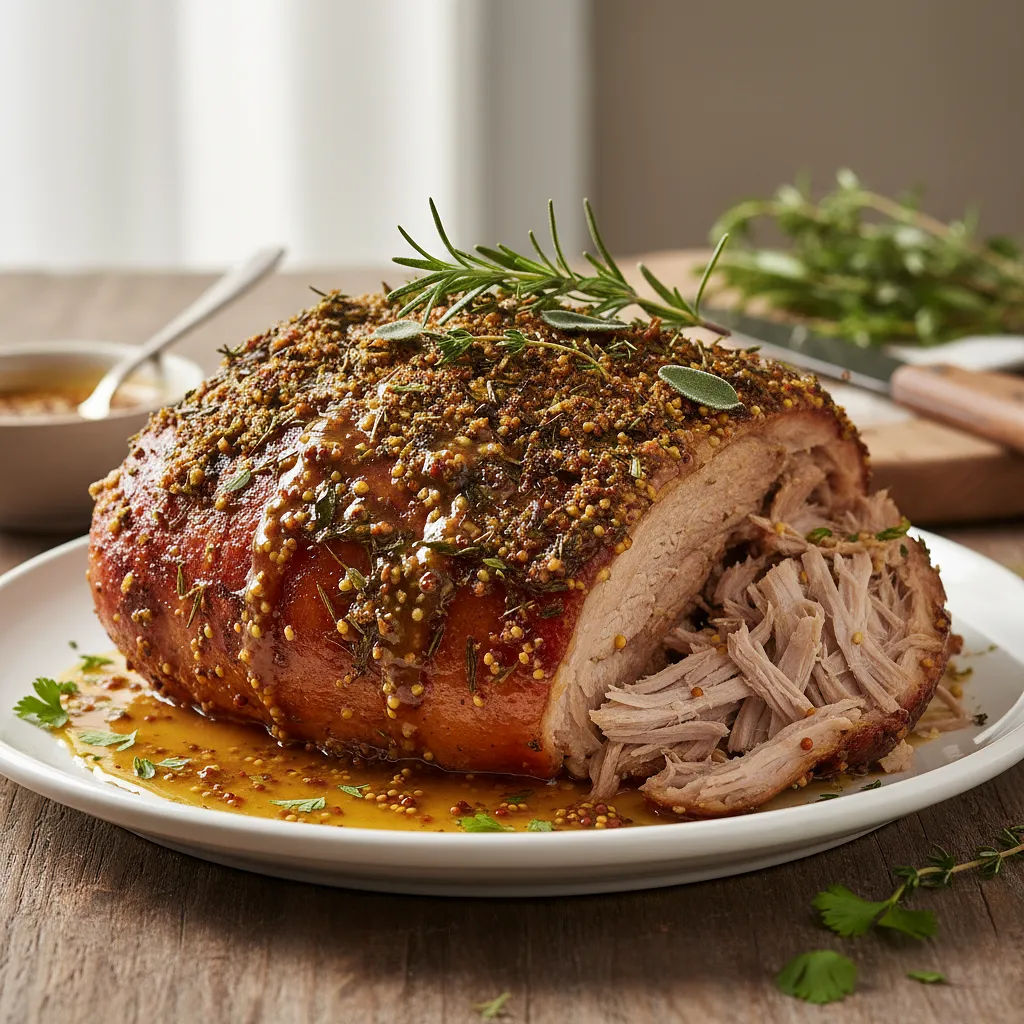
Slow-Roasted Pork Neck with Herbs and Mustard-Honey Sauce

Pikantne Main Dishes Dishes for Special Occasions European cuisine 330 min Medium 16 wyświetleń ~44.18 PLN - (0)
Rate:
(0)
Start Cooking

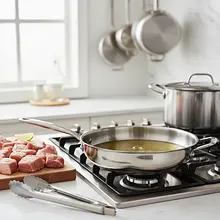
Description

The secret of this dish is the magic of low temperature and patience. Slow-roasted pork neck is the essence of home warmth and culinary celebration, where a simple piece of meat transforms into a work of art. Thanks to hours of roasting at a low temperature (about 130°C), the tough collagen fibers in the meat slowly dissolve, turning it into delicate gelatin. The result? Meat that literally falls apart under the pressure of a fork, incredibly juicy and infused with the aroma of herbs, garlic, and a deep, sweet-salty marinade. This dish comes from the tradition of European 'slow food' cuisine, where time is a key ingredient. Serve it with creamy mashed potatoes that will soak up every drop of the velvety sauce made from the roasting juices, or with Silesian dumplings and red cabbage for a classic Silesian touch. It’s the perfect choice for a Sunday dinner, festive table, or a special occasion dinner that will impress guests without spending hours on last-minute active cooking.

Ingredients (14)

Servings:
6
  • Boneless pork neck 1500 g
  • Onion 2.7 szt.
  • Garlic 5 ząbków
  • Extra virgin olive oil 0.3 łyżek
  • wildflower honey 45 g
  • Dijon mustard 30 g
  • Dark soy sauce 2 łyżki
  • Fresh rosemary 0.1 pęczków
  • Fresh thyme 0.1 pęczków
  • Beef broth 250 ml
  • 🌿 Przyprawy
  • Papryka słodka wędzona 4 łyżeczki
  • Coarse sea salt 10 g
  • Pieprz czarny świeżo mielony 5 szczypt
  • ✨ Opcjonalne
  • Dry red wine 150 ml
💰 Szacowany koszt dania: ~44.18 PLN (7.36 PLN/porcję)

💡 Kliknij na składnik aby oznaczyć jako użyty

Preparation steps

Marinating the meat (the day before)

1

Remove the pork neck from the packaging and dry it thoroughly on all sides using paper towels. This is a key step that will allow the marinade to penetrate the meat better and later achieve a perfectly browned crust. Place the dried meat on a large cutting board.

Ingredients: Boneless pork neck
Use a few paper towel sheets to ensure the surface of the meat is completely dry. Do not skip this step; wet meat will 'boil' in the pan instead of frying.
2

Prepare the marinade. In a medium-sized bowl, combine all the marinade ingredients: crushed garlic or very finely chopped garlic, olive oil, honey, Dijon mustard, soy sauce, smoked paprika, salt, and pepper. Remove the leaves/needles from the sprigs of fresh rosemary and thyme, roughly chop them, and add to the bowl. Mix everything vigorously with a spoon until a thick, uniform paste with an intense aroma forms.

Ingredients: Garlic, Extra virgin olive oil, wildflower honey, Dijon mustard, Dark soy sauce, Fresh rosemary, Fresh thyme, Papryka słodka wędzona, Coarse sea salt, Pieprz czarny świeżo mielony
Use a small whisk to mix the marinade – this will help emulsify the oil with the other ingredients, creating a smooth emulsion. If you don't have fresh herbs, you can use one teaspoon of dried herbs instead.
3

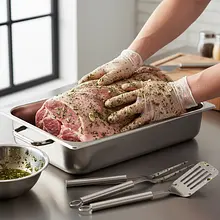
Thoroughly rub the meat with the prepared marinade. Use your hands (preferably with gloves) to work the paste into every nook and cranny of the meat. Make sure the entire surface is evenly coated. Transfer the pork neck to a large container (e.g., glass) or a sturdy ziplock bag. Cover the container with plastic wrap or seal the bag and place it in the refrigerator for at least 12 hours, preferably 24 hours. The longer the meat marinates, the more flavorful and tender it will be.

Ingredients: Boneless pork neck
Using a ziplock bag is very convenient – it allows for easy turning of the meat halfway through marinating and ensures better contact of the marinade with the surface. Remember to place the bag on a plate in case of leaks.

Preparation for baking

4

On the day of baking, take the marinated meat out of the fridge about 1-2 hours before the planned frying. It must reach room temperature. This way, the meat will not experience thermal shock when placed on the hot pan and will cook more evenly. In the meantime, preheat the oven to 130°C (top and bottom heat, no convection).

Ingredients: Boneless pork neck
A common mistake is frying meat straight from the fridge. This causes a sudden drop in the pan's temperature, which makes the meat release juices and steam instead of forming a delicious crust.
5

In a large, heavy skillet (preferably cast iron), heat 2 tablespoons of oil over medium-high heat. When the fat is hot (it starts to shimmer slightly in the pan), carefully place the pork neck. Sear it on each side for about 3-4 minutes, until it achieves a deep, brown-golden color. Use tongs to turn the meat to avoid piercing it and causing juice to leak out. The goal is to create a flavorful crust (the so-called Maillard reaction), not to cook the meat through.

Ingredients: Boneless pork neck, Extra virgin olive oil
Use a pan that retains heat well. If you don't have a large pan, you can do this directly in the cast iron pot (roasting pan) in which you will be baking the meat. Don't overcrowd the pan, fry in batches if necessary.
6

Remove the browned meat from the pan and transfer it to a plate. In the same pan, without washing it, add the sliced onions cut into thick wedges. Reduce the heat to medium and sauté the onions for about 5-7 minutes, stirring often with a wooden spoon. Scrape up all the tasty browned bits that are left at the bottom of the pan from cooking the meat – that's pure flavor! The onions should become soft and slightly translucent.

Ingredients: Onion
The process of scraping delicious remnants from the bottom of the pan is called 'deglazing'. The onion will release juices that will help you do this. It's one of the most important secrets to building the flavor of the sauce.

Slow baking

7

Transfer the sautéed onion to the bottom of a heatproof dish or a heavy-bottomed roasting pan with a lid. On the layer of onion, place the browned pork neck. In the pan where the onion was sautéed, pour in the broth and optionally red wine. Bring to a boil, stirring and scraping the flavor remnants from the bottom. Cook for 1-2 minutes, then pour the liquid over the meat in the dish. Cover the dish tightly with a lid.

Ingredients: Boneless pork neck, Onion, Beef broth, Dry red wine
If you don't have a covered dish, you can use a deep baking tray and cover it very tightly with a double layer of aluminum foil. The key is to keep the steam inside the dish.
8

Place the dish in an oven preheated to 130°C. Bake for about 4-5 hours. The baking time depends on the thickness and shape of the meat. After 4 hours, you can check the tenderness – insert a fork into the thickest part. If it goes in with no resistance and the meat easily pulls apart, it is ready. If it resists, continue baking, checking every 30 minutes.

The biggest mistake is rushing and opening the oven too often. Every time you open the door, the temperature drops and the baking time increases. Trust the process!

Resting and sauce

9

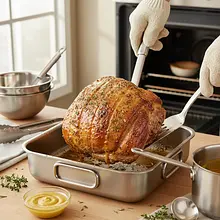
Remove the roasted meat from the oven. Very carefully, using wide spatulas, transfer the pork neck to a cutting board. Loosely cover it with a piece of aluminum foil and set aside for 15-20 minutes. This is an absolutely crucial step! During this time, the juices that have accumulated in the center of the meat while roasting will distribute evenly throughout the roast, making it incredibly juicy.

Ingredients: Boneless pork neck
Do not wrap the meat in foil too tightly, as the steam will make the crispy skin soft. Just place the foil on top. Never cut the meat immediately after taking it out of the oven – most of the delicious juices will run out onto the board.
10

While the meat rests, prepare the sauce. Pour the entire contents of the dish (liquid with onion) through a fine sieve into a saucepan, pressing all the sauce out of the onion with a spoon. Skim off any excess fat from the surface of the sauce. Place the saucepan over medium heat and cook the sauce for about 5-10 minutes, until it thickens slightly (reduces). Taste and season with salt and pepper if needed.

If you want to achieve a perfectly smooth sauce, you can blend it together with the overcooked onion before straining it. If the sauce is too thin, you can thicken it with 1 teaspoon of potato starch mixed in 2 tablespoons of cold water.

Serving

11

Slice the rested pork neck into thick slices (about 1.5-2 cm) with a sharp knife, across the grain of the meat. You can also simply divide it into portions using two forks, 'pulling' the meat apart. Arrange the slices on a platter and generously drizzle with the prepared hot sauce. Serve the remaining sauce in a gravy boat.

Cutting across the fibers shortens them, which makes the meat feel even more tender. With such tender meat, 'pulling' is just as good and impressive a serving method.

Fun Fact

💡

Baking at low temperatures, known as 'low-and-slow', is a technique derived from traditional methods of preserving and cooking meat, such as American barbecue. The key is the transformation of collagen – a tough protein in connective tissue – into soft and delicious gelatin. This process begins slowly at around 70°C, which is why long baking at 130°C is ideal for fully achieving this process without drying out the meat.

Best for

Tips

🍽️ Serving

Serve the pork neck on a warm platter, decorated with fresh sprigs of rosemary. It pairs perfectly with creamy mashed potatoes, Silesian dumplings, buckwheat, or roasted sweet potatoes. As a vegetable side, sautéed cabbage, warm beets, or a simple arugula salad with vinaigrette, which will balance the richness of the dish, are excellent choices.

🥡 Storage

Store the remaining roast along with the sauce in the refrigerator in an airtight container for up to 3 days. The meat becomes even tastier after cooling. To reheat, place slices of meat in a saucepan with a little sauce and heat over low heat covered, until hot. Avoid the microwave, which can dry out the meat. You can also freeze portions of meat in sauce for up to 3 months.

📸 Ugotowane przez społeczność

Zaloguj się, aby dodać zdjęcie
Dodaj zdjęcie gotowej potrawy

Po zatwierdzeniu przez moderatora otrzymasz 10 punktów doświadczenia.

🍲

Nikt jeszcze nie dodał zdjęcia. Bądź pierwszy!

Comments (0)

Be the first to comment on this recipe!

Add a comment

You might also like

Recipe Categories

Main Dishes
Main Dishes in: Christmas Eve Dinner

Main courses are the heart of every meal - hearty, delicious, and full of nutrients. Meats: beef, pork, poultry, and lamb in various versions. Fish and seafood: baked, fried, grilled, and stewed. Vegetarian dishes: tofu, tempeh, legumes as the main protein. Casseroles: pasta, potato, vegetable wi...

See all recipes in this category

Dishes for special occasions are culinary masterpieces for birthdays, anniversaries, and holidays. Grilled beef steak with herb butter - restaurant quality at home. Beef Wellington - beef in puff pastry with duxelles. Roast duck with apples - a holiday tradition in a new edition. Pink salmon with...

See all recipes in this category

European cuisine is a mosaic of culinary traditions from the Old Continent - from Spain to Scandinavia. Valencian paella and tapas from Spain - sunshine on a plate. Boeuf bourguignon and ratatouille from France - elegance and finesse. Wiener schnitzel and strudel from Austria - Central European c...

See all recipes in this category

Lunches are the main meal of the day - filling, balanced, and full of flavor. Traditional two-course lunches: soup and a main dish in Polish tradition. Pork chop with potatoes and cabbage - a classic of Polish lunches. Dumplings with meat, cheese, and fruit - hand-formed delicacies. Beef goulash,...

See all recipes in this category
Reklama