Start by preparing the base for the creamy sauce. Place the raw cashews in a small bowl. Pour boiling water over them so that the water completely covers them. Set aside for at least 30 minutes. This step is crucial because soaked cashews become soft and, when blended, create a perfectly smooth, velvety paste without lumps.
Description
This is a unique dish inspired by the richness of Indian cuisine, perfect for cool autumn evenings. Korma is a type of mild, creamy curry with roots in Mughal cuisine, known for its refined flavors. In this version, seasonal hokkaido pumpkin takes center stage, its natural sweetness perfectly complementing the nutty sauce base made from cashews. The addition of chickpeas enriches the dish with protein and gives it a hearty character. The whole is completed by aromatic saffron pulao rice. This is a variation on the classic Indian rice dish, where fluffy basmati grains intertwine with tart dried cranberries and crunchy pistachios. The dish is not only a feast for the palate but also for the eyes – the deep orange of the korma beautifully contrasts with the yellow of the rice and the green of the pistachios. Serve it as a main dish at a festive vegetarian dinner or as a comforting, hearty lunch for the whole family.
Ingredients (26)
- Hokkaido pumpkin 600 g
- Ciecierzyca gotowana (z puszki) 240 g
- Cashews 80 g
- Full-fat coconut milk 400 ml
- Onion 1.3 szt.
- Garlic 4 ząbki
- Fresh ginger 20 g
- Vegetable broth 200 ml
- Rapeseed oil 30 g
- Basmati rice 300 g
- Clarified butter (ghee) 30 g
- Dried cranberries 50 g
- Shelled, unsalted pistachios 40 g
- Ground coriander 5 g
- Milk 3.2% 30 ml
- 🌿 Przyprawy
- Ground turmeric 0.6 łyżeczka
- ground cumin 0.6 łyżeczka
- Garam masala 3 g
- Cinnamon stick 1.5 szt.
- Cardamom pods 3 szt.
- Saffron 0.1 g
- Bay leaf 3.3 szt.
- Cloves 1 g
- Salt 10 g
- ✨ Opcjonalne
- Fresh cilantro 30 g
- Natural yogurt 100 g
💡 Kliknij na składnik aby oznaczyć jako użyty
Preparation steps
Preparation of cashew paste
After the soaking time, drain the nuts in a sieve and rinse them briefly under cold water. Transfer them to the blender jar. Add about 60 ml (4 tablespoons) of fresh water or some coconut milk from the recipe. Blend on high speed for 1-2 minutes until you achieve a completely smooth, thick, and creamy paste with a peanut butter-like consistency. If necessary, stop the blender and scrape down the mixture from the sides with a silicone spatula.
Preparation of Pulao Rice
Pour basmati rice into a large bowl. Cover it with cold water and stir with your hand for about 30 seconds – the water will become cloudy. Carefully drain the water. Repeat this process 3-4 times until the water after stirring the rice is almost clear. Then, drain the rice in a fine sieve and let it drain for 10 minutes.
In a small bowl, place the saffron threads. Heat 2 tablespoons of milk until warm, but not hot. Pour the warm milk over the saffron and set aside. The milk will take on an intense yellow-orange color and a beautiful aroma within a few minutes.
In a medium-sized pot with a thick bottom and a fitting lid, heat clarified butter (ghee) or oil over medium heat. When the fat is hot, add the bay leaf and cloves. Sauté for about 30 seconds, stirring, until the spices begin to smell fragrant.
Add the drained rice to the pot with aromatic fat. Gently stir for about 1 minute to coat each grain with fat. Then pour in 450 ml of cold water, add a teaspoon of salt, and the previously prepared saffron milk. Stir once to evenly distribute the ingredients. Increase the heat and bring everything to a boil. As soon as the water starts to bubble vigorously, immediately reduce the heat to the absolute minimum, cover the pot tightly with a lid, and cook for 12-15 minutes.
After the cooking time is up, remove the pot from the heat, but do not remove the lid. Let the rice 'rest' for another 10 minutes. The steam will finish the cooking process. After this time, remove the lid, add the dried cranberries and coarsely chopped pistachios. Using a fork, gently fluff the rice, mixing it with the additions. This will keep the grains whole and fluffy.
Preparation of Korma
While the rice is resting, prepare the vegetables for the korma. Wash the hokkaido pumpkin thoroughly, cut it in half, and remove the seeds with a spoon. You don't need to peel it. Cut the pumpkin into cubes about 2-3 cm on each side. Peel the onion and chop it into small cubes. Peel the garlic and ginger, then grate them on a fine grater or chop them very finely to create an aromatic paste.
In a large, deep saucepan or a heavy-bottomed skillet, heat the oil over medium heat. Add the cinnamon stick and lightly crushed cardamom pods. Sauté for about 30-40 seconds until they release their aroma. Then add the chopped onion and sauté, stirring regularly, for 6-8 minutes until it becomes soft, golden, and translucent.
Add the garlic and ginger paste to the sautéed onion. Cook everything together for about 1 minute, stirring constantly, until the paste loses its raw smell and becomes very aromatic. Stir vigorously to prevent the garlic from burning.
Reduce the heat to the minimum. Add the ground spices to the pan: turmeric, cumin, and coriander. Stir constantly and fry for about 30 seconds. This process is called 'toasting the spices' and is key to bringing out their full flavor and aroma.
Immediately after sautéing the spices, add the diced pumpkin to the pan. Increase the heat to medium and mix thoroughly so that each piece of pumpkin is coated with the aromatic spice mixture. Sauté for about 5 minutes, stirring occasionally. The pumpkin should start to lightly caramelize at the edges.
Pour the hot vegetable broth into the sautéed pumpkin and add the entire can of coconut milk. Mix thoroughly, scraping up all the tasty browned bits from the bottom of the pan. Bring the sauce to a boil, then reduce the heat, cover the pan, and simmer for 15-20 minutes. After this time, the pumpkin should be soft – check by piercing a piece with a fork. It should go in easily.
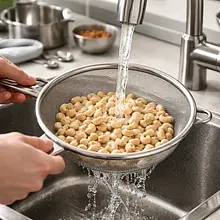
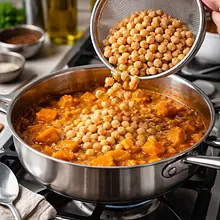
When the pumpkin is soft, add the drained and rinsed chickpeas and the entire prepared cashew paste to the sauce. Gently but thoroughly mix until the paste is completely combined with the sauce, giving it a thick and creamy consistency. Finally, add the garam masala and the remaining salt to taste. Cook everything together for another 5 minutes uncovered, so the flavors meld and the sauce thickens slightly.
Serving
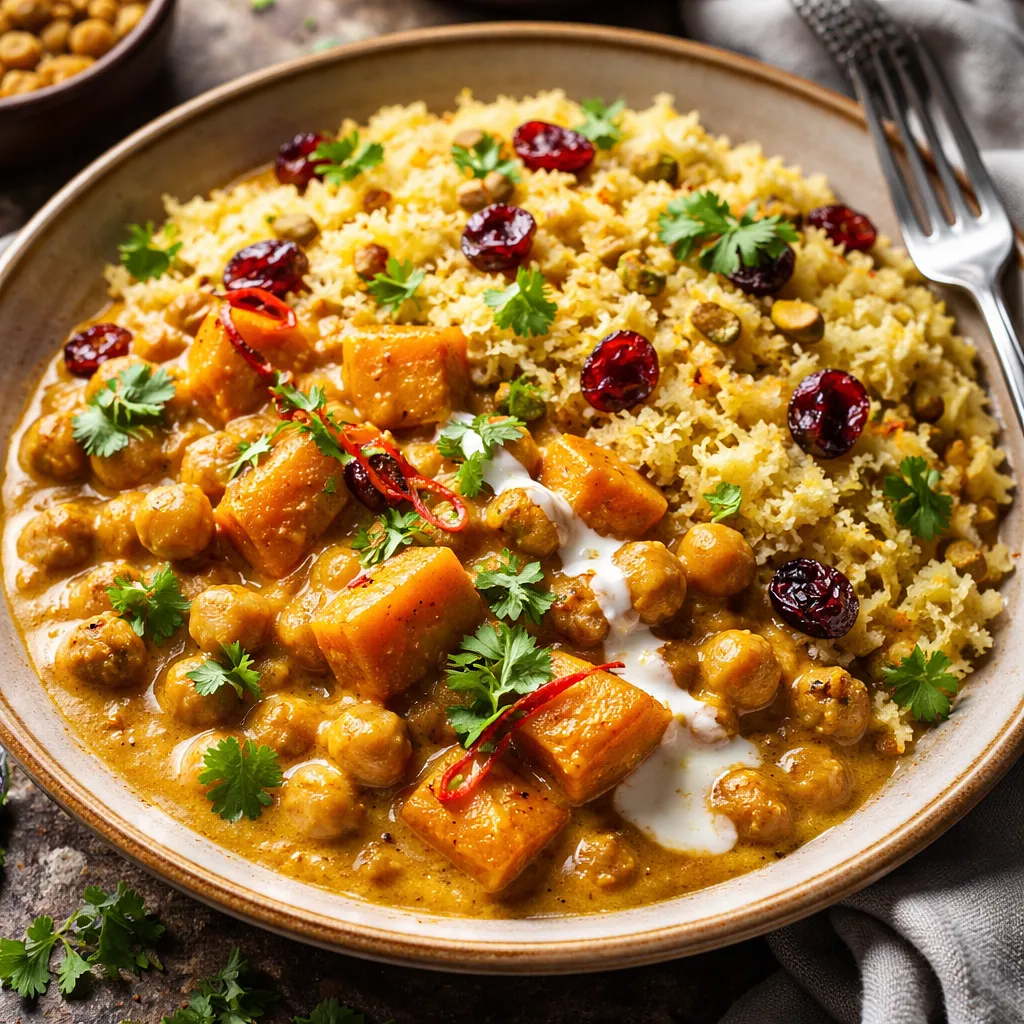
On deep plates or in bowls, serve a portion of hot pulao rice. Next to it, generously add the velvety pumpkin and chickpea korma. Before serving, optionally garnish the dish with chopped fresh coriander leaves for freshness and a dollop of thick natural yogurt to balance the flavors.
Fun Fact
The word 'Korma' comes from the Turkish word 'qawirma', which means 'fried thing'. Korma dishes are characteristic of Mughal cuisine in India, known for their rich, creamy sauces made from nuts, yogurt, and cream. These were dishes served at imperial courts, hence their mild and refined nature.
Best for
Tips
Serve the dish very hot. To enhance the visual and taste experience, sprinkle the finished dish with an extra handful of chopped pistachios and fresh coriander leaves. A dollop of natural yogurt (or a vegan equivalent) on top of the curry not only looks beautiful but also adds a pleasant, cool acidity that balances the richness of the sauce. The dish pairs wonderfully with Indian breads, such as naan or roti, which are perfect for scooping up the delicious sauce from the plate.
Both the korma and rice can be stored in the refrigerator for up to 3 days. It is important to keep them in separate, tightly sealed containers. The korma is best reheated over low heat in a saucepan, adding a bit of water or coconut milk if the sauce has thickened too much. The rice can be quickly reheated in the microwave with a tablespoon of water or in a pan, which will help it regain its fluffiness.
📸 Ugotowane przez społeczność
Zaloguj się, aby dodać zdjęcieDodaj zdjęcie gotowej potrawy
Po zatwierdzeniu przez moderatora otrzymasz 10 punktów doświadczenia.
Nikt jeszcze nie dodał zdjęcia. Bądź pierwszy!
Comments (0)
Be the first to comment on this recipe!
Add a comment