Start by preparing the yeast starter. In a small bowl or cup, place the crumbled fresh yeast. Add a teaspoon of sugar and pour in about 100 ml of lukewarm water (it should be around 35-37°C, meaning it feels pleasant to the touch but not hot). Mix thoroughly with a fork until the yeast and sugar are completely dissolved. Set the bowl in a warm, draft-free place for about 10-15 minutes. After this time, a thick, frothy 'foam' should appear on the surface. This is a sign that the yeast is active and ready to work.
Description
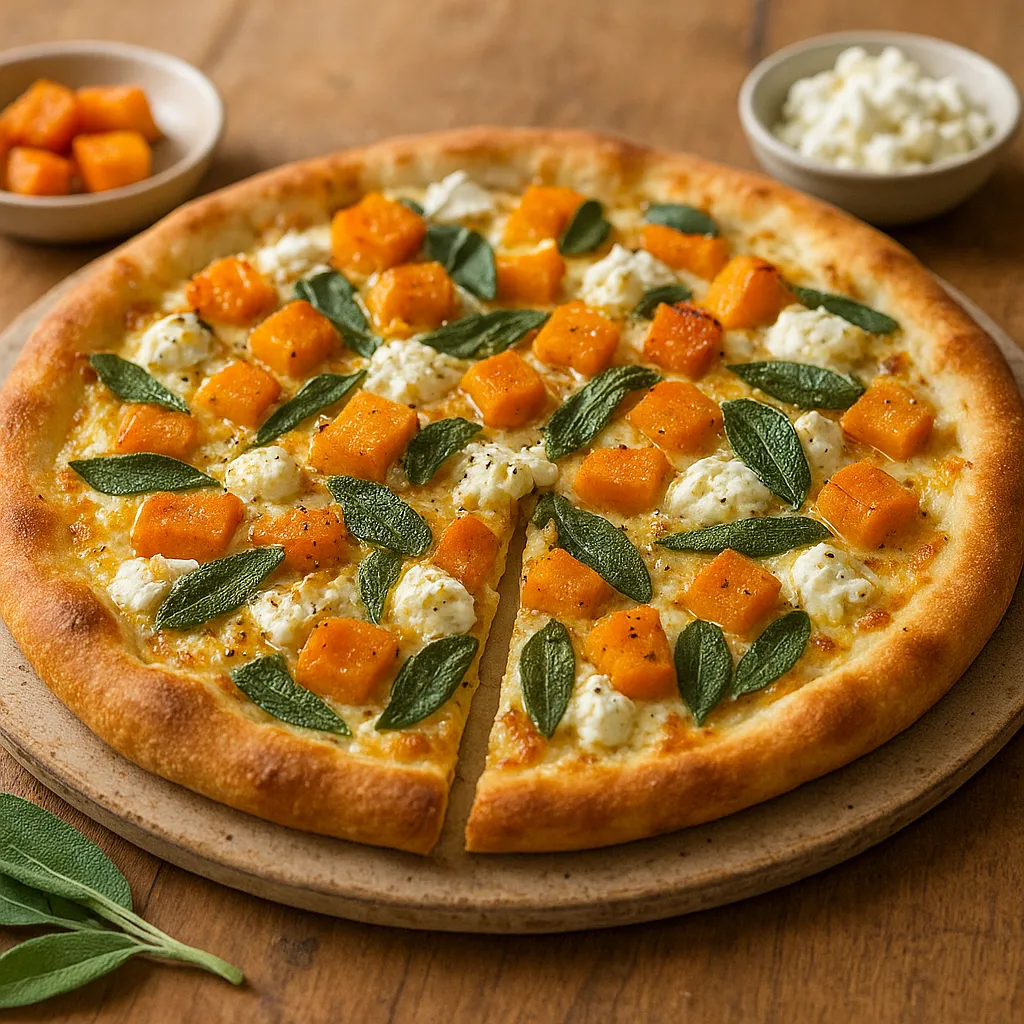
This pizza is the essence of autumn enclosed in a crispy, homemade crust. Instead of traditional tomato sauce, the base here is a delicate olive oil that perfectly enhances the flavors of the other ingredients. The star of the show is roasted hokkaido pumpkin – its natural sweetness pairs wonderfully with the slightly spicy, creamy goat cheese. Fresh sage adds a herbal, slightly earthy aroma that transports us straight to an autumn forest. Red onion brings a touch of sharpness and crunch, while optional toasted walnuts and a drizzle of honey or maple syrup create an incredibly complex and satisfying flavor composition. Visually, the pizza is stunning: the intense orange of the pumpkin, the white of the cheese, and the green of the sage create an appetizing mosaic of colors. This dish is perfect for a special dinner for two or a gathering with friends over a glass of white wine.
Ingredients (14)
- Type 00 wheat flour 500 g
- Water 300 ml
- Fresh yeast 25 g
- Extra virgin olive oil 0.2 łyżek
- White sugar 5 g
- Hokkaido pumpkin 400 g
- Goat cheese (roll) 150 g
- Mozzarella cheese (shredded) 200 g
- Red onion 100 g
- Fresh sage 15 g
- 🌿 Przyprawy
- Sól morska drobnoziarnista 2 łyżeczki
- Pieprz czarny świeżo mielony 2 szczypty
- ✨ Opcjonalne
- Walnuts 50 g
- Honey or maple syrup 1 łyżka
💡 Kliknij na składnik aby oznaczyć jako użyty
Preparation steps
Pizza dough
In a large bowl, sift the wheat flour. Sifting will aerate the flour, making the dough lighter and fluffier. Add salt and mix it thoroughly with the flour using a spoon or whisk. Make a well in the center of the flour, resembling a volcano crater.
Pour the risen yeast starter into the well in the flour, add the rest of the warm water (200 ml) and one tablespoon of olive oil. Start gently mixing the ingredients using a fork or wooden spoon, scooping the flour from the edges into the center. Mix until the ingredients roughly combine and a sticky, irregular ball of dough forms.
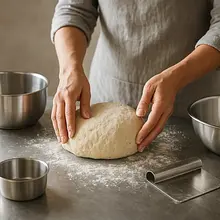
Transfer the dough to a lightly floured kitchen counter or pastry board. Start kneading. Fold the dough from the bottom, fold it in half, and press it down with the palm of your hand, pushing it away from you. Turn the dough 90 degrees and repeat the process. Knead the dough vigorously for about 10-12 minutes. The finished dough should be smooth, elastic, and springy. When you press it with your finger, the indentation should slowly return to its original shape. The dough should no longer stick to your hands.
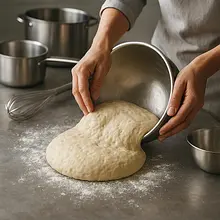
Form a smooth ball from the kneaded dough. Grease the bowl in which you mixed the ingredients with a little olive oil. Place the ball of dough in it and turn it a few times so that it is coated with a thin layer of fat. Cover the bowl with a clean kitchen towel or plastic wrap and set it in a warm place for about 60-90 minutes. The dough should double in size during this time.
Preparation of toppings
While the dough is rising, prepare the toppings. Wash the hokkaido pumpkin thoroughly under running water and dry it. You do not need to peel it. Cut it in half and use a spoon to remove the seed cavity along with the fibrous flesh. Then, slice the pumpkin into very thin slices, about 2-3 mm thick. Peel the red onion and cut it into thin feathers. From the bunch of sage, pluck a dozen of the nicest leaves.
In a large skillet, heat one tablespoon of olive oil over medium heat. Add the chopped pumpkin and a few sage leaves. Season with salt and freshly ground pepper. Sauté for about 5-7 minutes, stirring occasionally, until the pumpkin is slightly softened and lightly browned. It should not be completely soft, as it will continue to cook in the oven. Remove from the skillet and set aside to cool slightly.
Shaping and baking the pizza
Preheat the oven to the highest temperature it offers (usually 240-250°C), using the top and bottom heat function. If you have a pizza stone, place it on the middle rack and heat it along with the oven. If not, you can heat an empty baking sheet by turning it upside down.
Remove the risen dough from the bowl onto a lightly floured surface. Gently deflate it by kneading a few times. Divide the dough into two equal parts. Shape each part into a ball. Take one ball and start shaping it. Place it on the surface and gently flatten it with your hand. Then, using your fingertips, begin to press the dough, starting from the center and moving towards the edges, leaving about 1-2 cm of an untouched rim. Lift the dough and gently stretch it on the knuckles of your hands, rotating until you achieve a circle with a diameter of about 30 cm with a clearly thicker edge.
Transfer the shaped pizza base onto a piece of parchment paper or onto a pizza peel dusted with semolina/flour. Brush the entire surface of the dough (except for the edges) with the remaining tablespoon of olive oil. Evenly distribute half of the grated mozzarella. Then, arrange half of the sautéed pumpkin and half of the red onion slices. Finally, crumble half of the goat cheese roll on top.
Carefully slide the pizza (along with the baking paper) onto the preheated stone or baking sheet in the oven. Bake for about 10-14 minutes, until the edges of the crust are nicely risen and golden-brown, and the cheese is appetizingly melted and slightly browned. Baking time depends on the power of the oven, so keep an eye on the pizza towards the end.
Carefully remove the finished pizza from the oven. Immediately decorate it with fresh sage leaves. If you are using optional ingredients, sprinkle the pizza with coarsely chopped, toasted walnuts and drizzle lightly with honey or maple syrup. Let it rest on the board for a minute, then cut into pieces and serve immediately. Repeat steps 9-12 with the second batch of dough and toppings.
Fun Fact
Pizza Bianca, or 'white pizza', without tomato sauce, has its roots in ancient Rome. Originally, it was a simple form of focaccia, drizzled with oil, salt, and herbs, baked by bakers to check the oven temperature before placing bread inside. Over time, other ingredients such as cheeses and vegetables began to be added to it.
Best for
Tips
Serve the pizza immediately after taking it out of the oven, cut into 6 or 8 pieces using a sharp pizza cutter. It pairs perfectly with a light, crisp white wine, such as Pinot Grigio or Sauvignon Blanc, which will enhance the freshness of the ingredients. You can also serve it with arugula salad with vinaigrette dressing to balance the richness of the flavors.
If you have leftover pizza slices, wait until they cool completely. Then wrap them tightly in aluminum foil or transfer them to an airtight container and store in the fridge for up to 2 days. To reheat, place the slices on a dry, heated skillet and warm them covered for a few minutes until the bottom becomes crispy and the cheese melts again. Avoid reheating in the microwave, as it will make the crust chewy.
📸 Ugotowane przez społeczność
Zaloguj się, aby dodać zdjęcieDodaj zdjęcie gotowej potrawy
Po zatwierdzeniu przez moderatora otrzymasz 10 punktów doświadczenia.
Nikt jeszcze nie dodał zdjęcia. Bądź pierwszy!
Comments (0)
Be the first to comment on this recipe!
Add a comment