Start by preparing the meat. Rinse each chicken breast under cold running water, then dry thoroughly with paper towels. This is a crucial step - a dry surface will better absorb the marinade and brown nicely during baking. Trim any membranes or excess fat from the breasts.
Description
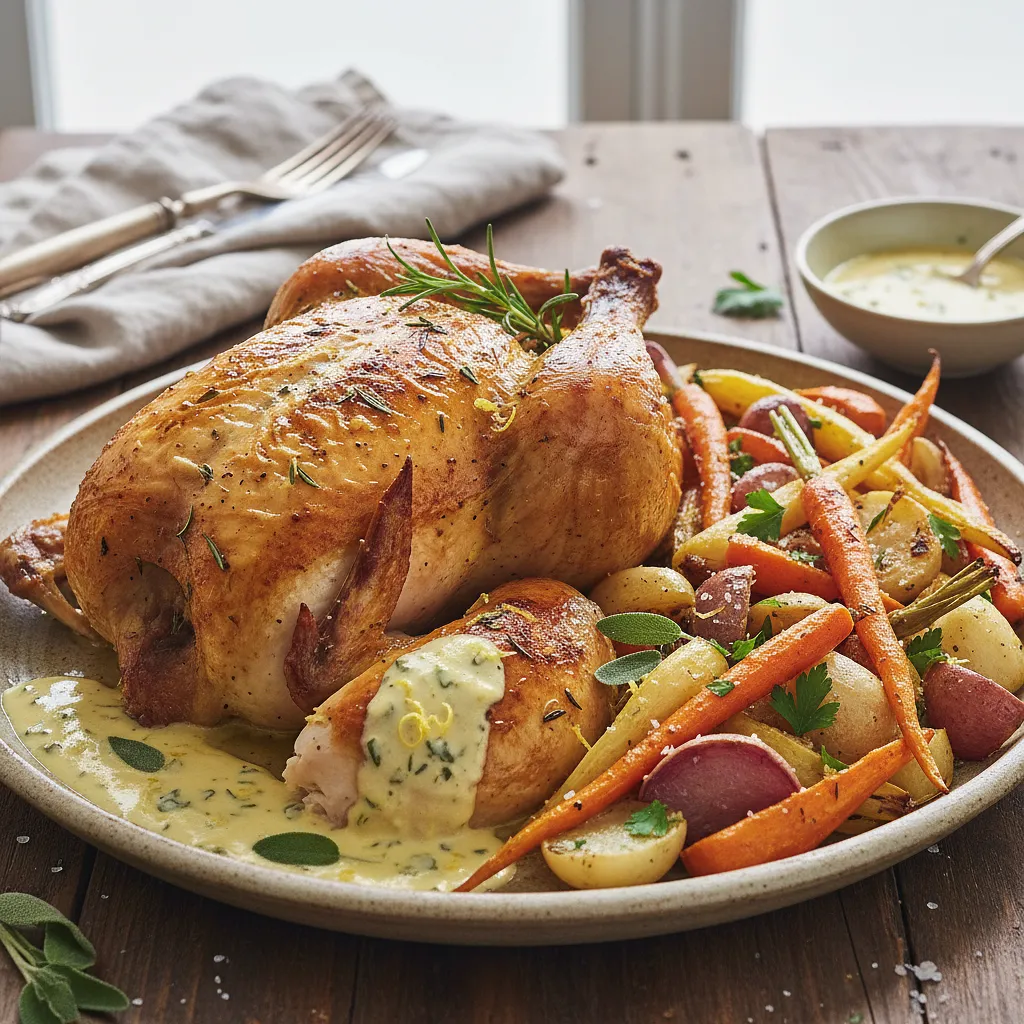
This dish is a true ode to herbs, celebrating their extraordinary power to transform flavor and their health benefits. We tackle the myth that fresh herbs are always better than dried ones, showing how to wisely use both forms. Chicken, marinated in an intense mixture of dried thyme and rosemary, becomes incredibly aromatic and juicy after roasting. Its deep, herbal flavor perfectly balances the sweetness of roasted root vegetables – carrots, parsnips, and potatoes. The dish is completed with a velvety, buttery sauce based on fresh sage and refreshing lemon, which adds lightness and elegance. 'Herb Pharmacy' is not only a delicious and hearty meal but also a culinary journey through the world of aromas, proving that simple ingredients can create a dish worthy of the finest restaurant. Serve it on special occasions or when you want to treat yourself and your loved ones to a true, healthy delight.
Ingredients (19)
- Chicken breast 800 g
- Extra virgin olive oil 0.4 łyżek
- Garlic 6 ząbków
- Carrot 5 szt.
- Parsnip 300 g
- Potatoes 4 szt.
- Red onion 150 g
- Butter 30 g
- Chicken or vegetable broth 200 ml
- Lemon 0.7 szt.
- Wheat flour type 500 15 g
- 🌿 Przyprawy
- Dried thyme 2 łyżeczki
- Dried rosemary 2 łyżeczki
- Sól morska drobnoziarnista 1 łyżeczka
- Pieprz czarny świeżo mielony 4 szczypty
- Świeże liście szałwii 30 g
- Pieprz biały mielony 1 szczypta
- ✨ Opcjonalne
- Fresh parsley 0.5 pęczek
- Chili flakes 1 szczypta
💡 Kliknij na składnik aby oznaczyć jako użyty
Preparation steps
Preparation of the marinade and chicken
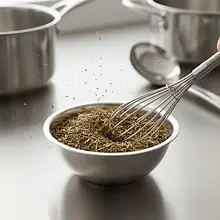
In a small bowl, prepare the marinade. Add dried thyme and dried rosemary. Gently crush them with your fingers to release the essential oils. Add 3 tablespoons of olive oil, 2 pinches of salt, and 2 pinches of freshly ground black pepper. Peel the garlic (4 cloves) and either press it through a garlic press or chop it very finely, then add it to the bowl. Mix everything thoroughly with a small spoon until an aromatic paste forms. We use dried herbs here because their concentrated flavor penetrates the meat structure perfectly during marinating and does not burn as easily at high temperatures as fresh herbs do.
Thoroughly rub each chicken breast with the prepared marinade on all sides. Use your hands to massage the herbs into the meat. Place the marinated breasts in a dish (e.g., a glass container or a deep plate), cover with plastic wrap, and set aside for at least 30 minutes at room temperature. If you have more time, you can put them in the fridge for up to 2-3 hours - the flavor will be even deeper.
Preparation and baking of vegetables
While the chicken is marinating, prepare the vegetables. Preheat the oven to 200°C (conventional mode, no fan). Prepare a large baking tray and line it with parchment paper to prevent the vegetables from sticking and to make cleanup easier.
Wash the carrot, parsnip, and potatoes thoroughly and peel them using a vegetable peeler. Cut them into pieces of similar size - for example, into thick sticks or cubes with a side of about 2-3 cm. Peel the red onion and cut it into wedges. Ensuring uniform size of the pieces is key so that all the vegetables roast at the same time.
Place all the chopped vegetables in a large bowl. Drizzle with 2 tablespoons of olive oil, sprinkle with 2 pinches of salt and 2 pinches of pepper. Mix thoroughly by hand, ensuring each piece of vegetable is coated with a thin layer of oil and seasoning. Then spread the vegetables evenly in a single layer on the prepared baking sheet.
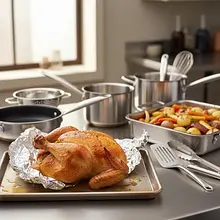
Place the tray with vegetables in the preheated oven and bake for 20 minutes. After this time, carefully pull out the tray, move the vegetables to one side, and place the marinated chicken breasts in the empty space. Put the tray back in the oven and bake everything together for another 20-25 minutes. The cooking time for the chicken depends on its thickness.
Preparation of sage-lemon sauce
While the chicken and vegetables are baking, prepare the sauce. In a medium-sized skillet or small saucepan, melt 2 tablespoons of butter over medium heat. Wait until the butter stops foaming and begins to release a nutty aroma.
In the heated butter, add the washed and dried leaves of fresh sage. Fry them for about 1-2 minutes until they become crispy and dark green. We use fresh sage here because its delicate aroma pairs perfectly with the butter, and frying gives the leaves a fantastic texture. Carefully remove the crispy leaves with a slotted spoon and place them on a plate lined with paper towels. Leave the aromatic butter in the pan.
Reduce the heat under the pan. Add 2 finely chopped cloves of garlic to the sage butter and sauté for about 30-60 seconds, stirring constantly, until the garlic releases its aroma. Be careful not to burn it, as the sauce will become bitter.
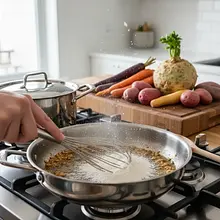
In a pan with garlic, add a tablespoon of wheat flour. Whisk vigorously for about a minute to create a smooth paste called a roux. This is the base that will thicken the sauce. Then, while continuously stirring with the whisk, slowly start pouring in the broth. Initially, pour in just a little and mix to break up any lumps, then add the rest in a thin stream. Cook on low heat, stirring, until the sauce thickens, which will take about 2-3 minutes.
Remove the sauce from the heat. Squeeze the juice from half a lemon and grate the zest from the whole lemon, being careful to only grate the yellow part (the white part is bitter). Add the juice and zest to the sauce. Season to taste with a pinch of salt and white pepper. Mix thoroughly. Taste the sauce and add more lemon juice or salt if needed.
Final preparation and serving
Remove the baking tray from the oven. Check if the chicken is cooked through and the vegetables are soft and slightly browned. Transfer the chicken breasts to a cutting board.
Loosely cover the chicken with a piece of aluminum foil and let it rest for 5-10 minutes. This is an incredibly important step! It allows the juices inside the meat to distribute evenly, making the chicken incredibly juicy. Do not skip this stage!
On each plate, arrange a portion of roasted vegetables. Slice the rested chicken into thick diagonal pieces and place them on the vegetables. Drizzle generously with warm sage-lemon sauce. Garnish with crispy sage leaves that you fried earlier. Additionally, for freshness and color, you can sprinkle the dish with chopped parsley and, if you like, a pinch of chili flakes. Serve immediately.
Fun Fact
The name of sage, 'Salvia', comes from the Latin word 'salvere', which means 'to save' or 'to heal'. In ancient Rome, it was considered a sacred herb, and its harvests were celebrated with special rituals. It was believed to ensure longevity and protect against evil.
Best for
Tips
The dish is complete, but it can be served with a light arugula salad with vinaigrette for added freshness. It pairs perfectly with a dry white wine, such as Sauvignon Blanc or Pinot Grigio, which will enhance the citrus notes of the sauce.
Store leftover chicken and vegetables in an airtight container in the fridge for up to 3 days. Keep the sauce separate. To reheat, place the chicken and vegetables on a baking sheet and warm in the oven at 180°C for 10-15 minutes. Gently heat the sauce in a saucepan, adding a little water or broth if needed to restore its proper consistency.
📸 Ugotowane przez społeczność
Zaloguj się, aby dodać zdjęcieDodaj zdjęcie gotowej potrawy
Po zatwierdzeniu przez moderatora otrzymasz 10 punktów doświadczenia.
Nikt jeszcze nie dodał zdjęcia. Bądź pierwszy!
Comments (0)
Be the first to comment on this recipe!
Add a comment