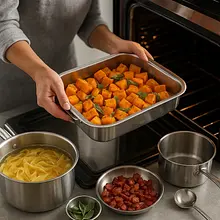
Preheat the oven to 200°C with the convection function (or 220°C top-bottom). Rinse the hokkaido pumpkin thoroughly under running water. You don't need to peel it; the skin becomes soft and edible after baking. Cut the pumpkin in half and use a large spoon to scoop out the seeds and fibrous flesh from the center. Then, cut the pumpkin halves into smaller pieces about 2-3 cm thick.
Description
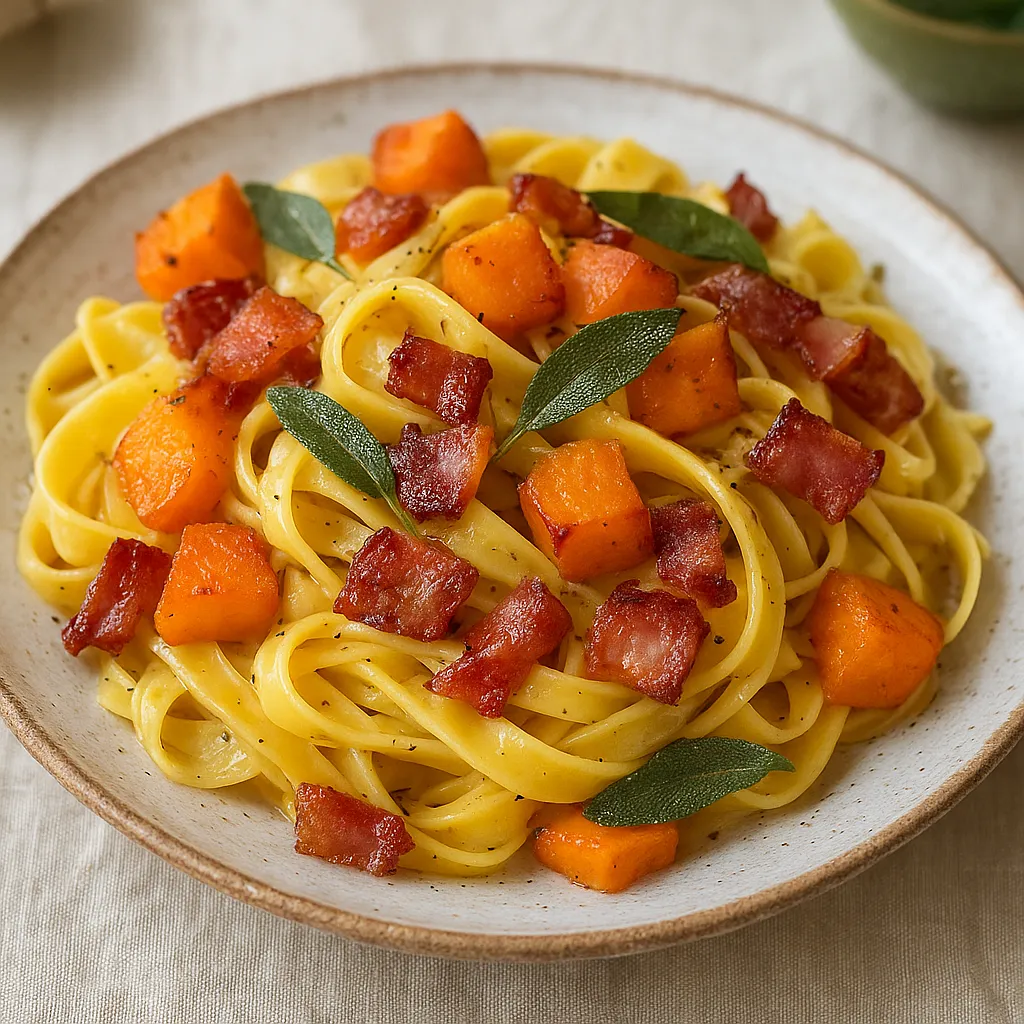
This dish is the essence of autumn captured on a plate, inspired by the classic cuisine of Northern Italy. The velvety, sweet sauce made from roasted hokkaido pumpkin perfectly envelops the wide ribbons of tagliatelle pasta. The deep, earthy aroma of fresh sage sautéed in butter creates an extraordinary bouquet of scents, while the crispy, salty pieces of pancetta add character and fantastic texture to the dish. The whole is complemented by creamy cream and grated parmesan, which melts and brings all the flavors together into a cohesive, rich composition. Visually, the dish delights with the warm, orange hue of the sauce, contrasting with the green of the sage and the pink of the pancetta. It is an incredibly hearty and warming dish, perfect for cooler days. It can be served as an elegant main course for a special occasion or as a comforting, luxurious meal in the middle of the week.
Ingredients (14)
- Tagliatelle pasta 400 g
- Hokkaido pumpkin 800 g
- Pancetta bacon 100 g
- Shallot 80 g
- Garlic 2 ząbki
- Fresh sage 20 g
- Butter 30 g
- Extra virgin olive oil 0.2 łyżek
- 30% cream 150 ml
- Parmezan (parmigiano reggiano) 80 g
- 🌿 Przyprawy
- Salt 0.2 szczypt
- Pieprz czarny świeżo mielony 2 szczypty
- ✨ Opcjonalne
- Walnuts 50 g
- Chili flakes 1 szczypta
💡 Kliknij na składnik aby oznaczyć jako użyty
Preparation steps
Preparing the pumpkin
Transfer the chopped pumpkin to a large bowl. Drizzle it with olive oil, add two pinches of salt and one pinch of freshly ground black pepper. Mix thoroughly with your hands so that each piece of pumpkin is evenly coated with oil and spices. Spread the pumpkin in a single layer on a large baking sheet lined with parchment paper.
Place the baking tray with the pumpkin in the preheated oven. Bake for about 25-30 minutes. The pumpkin is ready when it becomes very soft (a fork should go in without any resistance) and starts to gently caramelize at the edges. After baking, remove the tray from the oven and set aside.
Preparing the sauce
While the pumpkin is roasting, prepare the rest of the ingredients. Cut the slices of pancetta into small strips. In a large, deep skillet (one that will later hold all the pasta), heat one tablespoon of olive oil over medium heat. Add the chopped pancetta and fry, stirring occasionally, for 5-7 minutes, until it becomes golden and crispy. Using a slotted spoon, remove the crispy pancetta and transfer it to a plate lined with paper towels to drain excess fat. Leave the fat rendered from the pancetta in the skillet.
Peel and finely chop the shallot and garlic. Reduce the heat under the pan to low/medium. In the fat left from the pancetta, melt the butter. Add the chopped shallot and sauté for 3-4 minutes until it becomes translucent and soft. Then add the garlic and sauté for another minute, stirring continuously until it releases its aroma. Be careful not to burn the garlic, as it will become bitter.
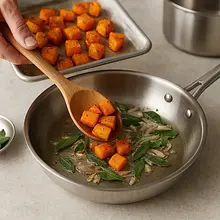
Tear the sage leaves from the stems. Set aside a few of the prettiest leaves for decoration. Chop the remaining leaves coarsely. Add the chopped sage to the pan and sauté for about 30-40 seconds, until the leaves become darker and very aromatic.
Transfer the roasted pieces of pumpkin to the pan with shallots and herbs. Using a wooden spoon or a potato masher, mash the pumpkin directly in the pan, creating a kind of rustic purée. It doesn't need to be perfectly smooth; small pieces of pumpkin will add texture.
Increase the heat to medium. Pour in the heavy cream, add 50g of freshly grated Parmesan (save the rest for serving), two pinches of salt, and a pinch of pepper. Mix thoroughly until the cheese melts and the sauce becomes smooth and creamy. Cook on low heat for 2-3 minutes to let the flavors meld. Taste and season with salt and pepper if needed.
Cooking the pasta and finishing touches
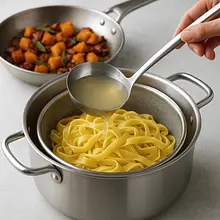
Meanwhile, while the sauce is cooking, bring salted water to a boil in a large pot (minimum 4-5 liters). For every liter of water, add about 10g of salt (about 1 tablespoon). The water should be as salty as the sea. When the water boils, add the tagliatelle and cook according to the package instructions, but for 1-2 minutes less, so that it is 'al dente' (slightly firm in the center).
Before draining the pasta, use a ladle or cup to scoop out about 250 ml (one cup) of the cooking water. It is full of starch and will help perfectly combine the sauce with the pasta. Drain the pasta and immediately transfer it to the pan with the hot pumpkin sauce.
Add about half of the reserved pasta cooking water to the pan along with most of the crispy pancetta (leave some for garnish). Toss and stir the pasta in the pan vigorously for about 1-2 minutes over medium heat. The starch from the water will combine with the sauce, creating the perfect creamy emulsion that will coat every strand of pasta. If the sauce is too thick, add more cooking water.
Immediately divide the pasta among four deep plates. Sprinkle each portion with the remaining crispy pancetta, freshly grated Parmesan, and reserved sage leaves. Optionally, you can top the dish with coarsely chopped, toasted walnuts for extra crunch and a pinch of chili flakes for heat. Serve right away while hot.
Fun Fact
Legend has it that tagliatelle pasta was created in 1487 by Master Zefirano, the personal chef of Giovanni II Bentivoglio, the ruler of Bologna. The inspiration for the shape of the wide, golden ribbons was the long, blonde hair of Lucrezia Borgia, who was passing through the city on her way to her wedding with Alfonso d'Este.
Best for
Tips
Serve in deep, warmed pasta plates. Before serving, drizzle each portion with a little good quality olive oil. A chilled, dry white wine, such as Italian Pinot Grigio or Soave, pairs perfectly with the dish, balancing the richness and creaminess of the sauce.
The dish tastes best right after preparation. If there are leftovers, store them in an airtight container in the refrigerator for up to 2 days. Reheat in a pan over low heat, adding a little milk or water to restore the sauce's creamy consistency. Reheating in the microwave is not recommended, as the pasta may become rubbery.
📸 Ugotowane przez społeczność
Zaloguj się, aby dodać zdjęcieDodaj zdjęcie gotowej potrawy
Po zatwierdzeniu przez moderatora otrzymasz 10 punktów doświadczenia.
Nikt jeszcze nie dodał zdjęcia. Bądź pierwszy!
Comments (0)
Be the first to comment on this recipe!
Add a comment