Remove the duck from the packaging. Check if there are any giblets inside (liver, heart, gizzard) - if there are, take them out and save them for another dish, such as broth. Rinse the duck thoroughly under cold running water, both outside and inside. Then dry it very carefully with paper towels. A dry skin is the key to crispiness after roasting.
Description
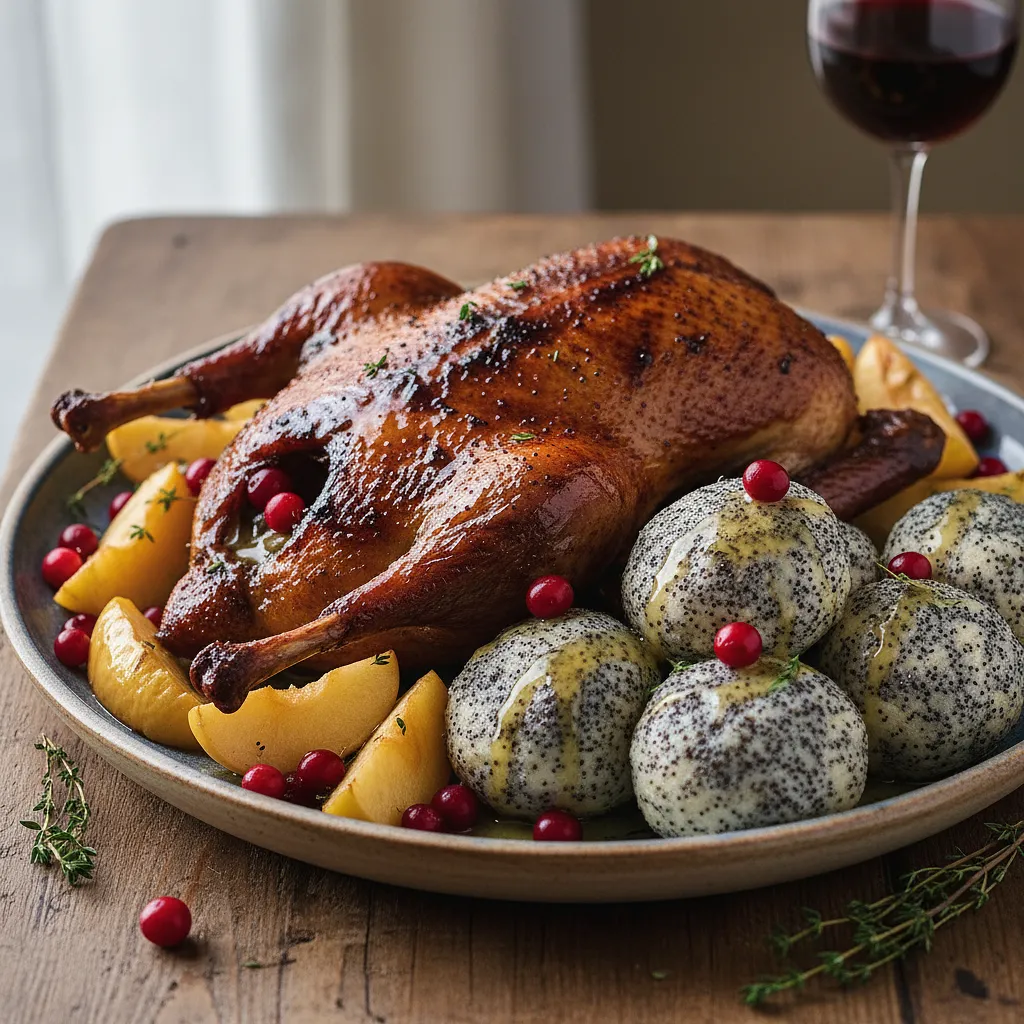
This dish is the essence of the Slow Food philosophy in a festive edition. It celebrates slowness, conscious cooking, and local, seasonal ingredients. Duck, roasted for many hours at a low temperature, becomes incredibly tender and juicy, with its meat literally falling off the bone. The skin, glazed with honey, is perfectly crispy and golden. The stuffing made from Polish Szara Reneta apples, tart cranberries, and marjoram creates the perfect balance of sweetness and acidity that permeates the entire dish. We serve it with handmade Silesian dumplings, which in this version are enriched with crunchy poppy seeds – a symbol of abundance in Polish Christmas tradition. The whole dish is drizzled with a rich gravy made from the fat and juices of the duck. This dish is not just a meal; it is a ritual that requires time and attention, but the result rewards every minute spent in the kitchen, creating unforgettable memories and deep, homely flavors.
Ingredients (15)
- Whole duck 1 szt.
- Gray Renet apples 3 szt.
- Fresh cranberry 150 g
- Onion 2 szt.
- Garlic 10 ząbków
- wildflower honey 40 g
- Ziemniaki mączyste 1000 g
- Potato flour 250 g
- Egg 1 szt.
- 🌿 Przyprawy
- Dried marjoram 3 łyżeczki
- Sól gruboziarnista 6 łyżeczek
- Pieprz czarny świeżo mielony 5 szczypt
- ✨ Opcjonalne
- Blue poppy seeds 3.3 łyżki
- Masło 82% 30 g
- dry red wine 150 ml
💡 Kliknij na składnik aby oznaczyć jako użyty
Preparation steps
Marinating the Duck (The Day Before)
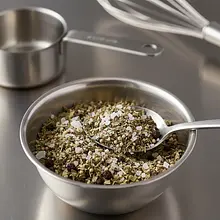
In a small bowl, mix together coarse salt, freshly ground black pepper, and dried marjoram. Rub the duck thoroughly with the spice mixture. Vigorously massage the spices into the skin all over the surface, as well as inside the duck. Be generous - this is the main flavor base.
Place the prepared duck in a large dish or on a tray, do not cover it with foil, and put it in the refrigerator for at least 12 hours, preferably 24 hours. This process, known as 'dry curing', will not only add flavor to the meat but also further dry the skin, ensuring spectacular crispiness.
Roasting Duck
The next day, take the duck out of the fridge about 1-2 hours before roasting to reach room temperature. Preheat the oven to 200°C (fan) or 220°C (top-bottom). Prepare the filling: wash the apples, remove the cores, and cut them into eighths (do not peel the skin). Peel the onion and cut it into thick feathers. In a bowl, mix the apples, onion, and fresh cranberries.
Fill the inside of the duck with the prepared stuffing of apples, onions, and cranberries. Do not pack the stuffing too tightly; leave some room. You can secure the opening with toothpicks or sew it with kitchen twine. Trim only the top part of the garlic (about 0.5 cm) to expose the cloves, but leave it whole. Place the duck in a roasting pan, and put the head of garlic next to it.
Place the roasting pan with the duck in the preheated oven and bake for 30 minutes at a high temperature (200°C with fan). After this time, reduce the temperature to 130°C (fan) and bake for another 3-4 hours. Every 45 minutes, baste the duck with the fat that has rendered from it. This is the key to juicy meat and crispy skin.
15 minutes before the end of baking, prepare the glaze. In a small saucepan, gently heat the honey until it becomes liquid. Using a brush, coat the entire surface of the duck with honey. Return it to the oven and bake for the last 15 minutes, until the glaze beautifully caramelizes and takes on a deep golden-brown color. Be careful not to burn the honey.
Remove the duck from the oven. This is a very important step: carefully transfer it to a cutting board, loosely cover it with aluminum foil, and let it rest for 15-20 minutes. During this time, the juices inside the meat will distribute evenly, making the duck incredibly juicy when sliced. Do not skip this step!
Silesian Dumplings with Poppy Seeds
While the duck is roasting, prepare the dumplings. Peel, wash, and boil the potatoes in salted water until they are completely soft - they should fall apart when touched with a fork. Drain them very thoroughly and immediately, while still hot, pass them through a potato ricer or mash them thoroughly with a masher. The mixture must be perfectly smooth, without any lumps.
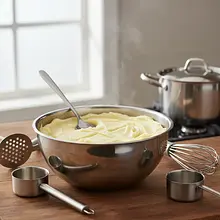
Transfer the hot potato mixture to a large bowl and smooth the surface with a spoon. Divide the mixture into four equal parts by drawing a cross on it. Remove one quarter of the potatoes and set it aside. In the empty space, pour in the potato starch until it fills to the level of the remaining potatoes. Add the reserved potatoes back, crack in an egg, and add a pinch of salt.
Now quickly and efficiently knead all the ingredients by hand, just until they come together into a smooth, elastic dough. Do not knead the dough for too long, as it will become tough and rubbery. The finished dough should be soft and not stick too much to your hands.
Tear off small pieces of the dough and shape them into balls the size of a walnut in your hands. Slightly flatten each ball, then use your thumb to make a characteristic indentation in the center, creating a 'hole'. Place the finished dumplings on a board or countertop lightly dusted with potato starch.
In a large pot, bring a generous amount of salted water to a boil. When the water starts to boil vigorously, reduce the heat so that it only gently 'bubbles'. In batches, add the dumplings to the water, gently stirring with a wooden spoon to prevent them from sticking to the bottom. Cook for about 3-5 minutes from the moment they float to the surface. Remove them with a slotted spoon.
In a pan, melt the butter. When it starts to foam, add the poppy seeds and toast them for about a minute, until they begin to smell intense. Transfer the cooked, hot dumplings to the pan and gently mix them to coat with the butter and poppy seeds. This is an optional step, but highly recommended for enhancing flavor and texture.
Sauce and Serving
While the duck is resting, prepare the sauce. Pour off most of the rendered fat from the roasting pan (save it, it's great for frying potatoes!), leaving only about 2-3 tablespoons and all the browned bits at the bottom. Place the roasting pan on the stove over medium heat. Pour in the red wine (if using) and use a wooden spoon to scrape up all the flavorful bits from the bottom of the pan. Cook until the wine has reduced by half.
Add about 200 ml of hot water or broth to the baking dish and squeeze the soft, roasted flesh from the head of garlic. Mix everything well and simmer on low heat for 5-10 minutes until the sauce thickens slightly. Season to taste with salt and pepper if necessary. Serve the duck cut into portions, with the stuffing, Silesian dumplings, generously drizzled with the prepared sauce.
Fun Fact
The Slow Food philosophy was born in Italy in 1986 as a protest against the opening of a McDonald's restaurant at the famous Spanish Steps in Rome. Its aim is to protect local culinary traditions, biodiversity, and to enjoy food in a conscious and unhurried manner - just like when preparing and eating this duck.
Best for
Tips
Serve the duck on a large, warmed platter. You can cut it into portions (thighs, breasts) or serve it whole for self-serving at the table, which is very impressive. Next to it, arrange the Silesian dumplings and the stuffing removed from the duck. Serve the sauce separately in a gravy boat, so everyone can pour it over the dish as they wish. A warm red cabbage salad and a glass of red wine, such as Pinot Noir, pair perfectly with the dish.
Separate the remaining duck meat from the bones and store it in a closed container in the refrigerator for up to 3 days. It can be used cold for sandwiches or reheated in a pan with a bit of sauce. Also, store the Silesian dumplings in the refrigerator. It is best to reheat them by steaming or briefly placing them in boiling water. They can also be sautéed in butter.
📸 Ugotowane przez społeczność
Zaloguj się, aby dodać zdjęcieDodaj zdjęcie gotowej potrawy
Po zatwierdzeniu przez moderatora otrzymasz 10 punktów doświadczenia.
Nikt jeszcze nie dodał zdjęcia. Bądź pierwszy!
Comments (0)
Be the first to comment on this recipe!
Add a comment