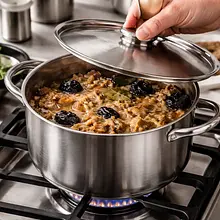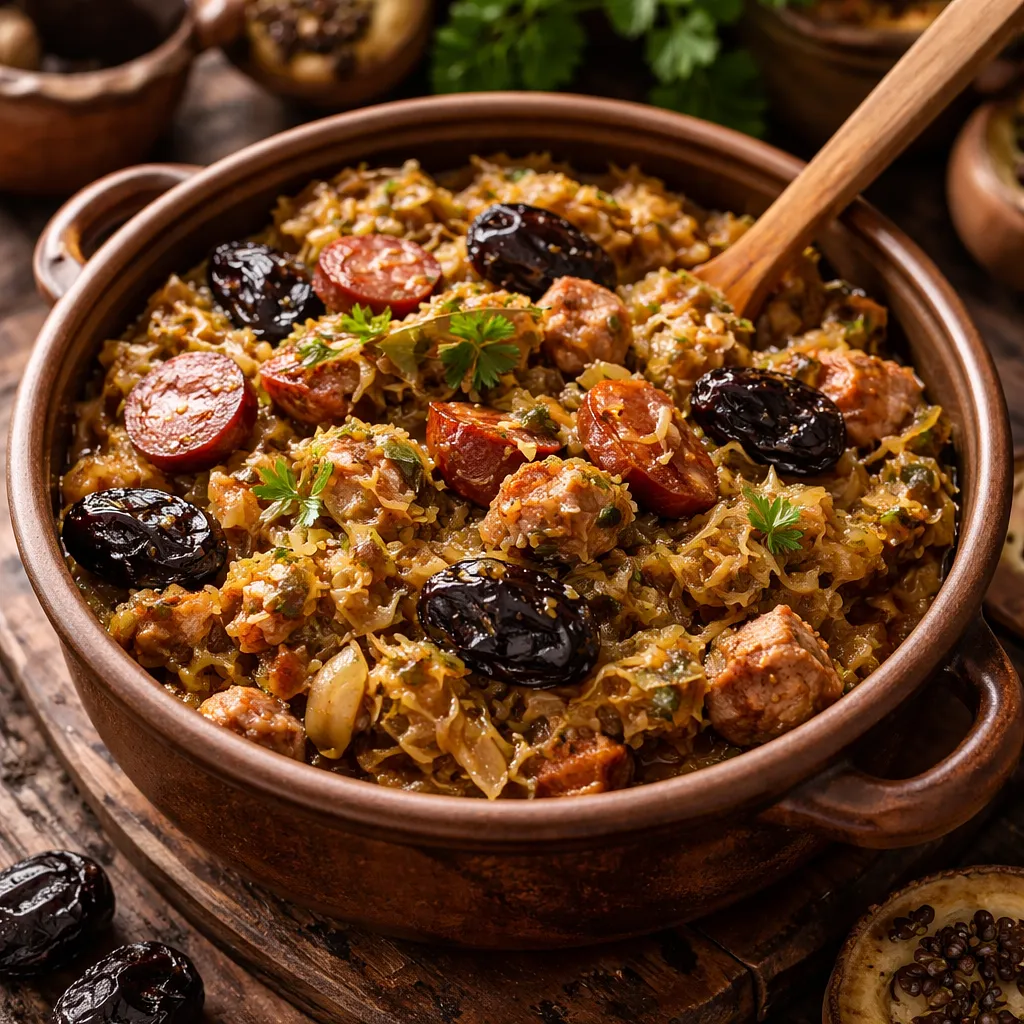
Old Polish Bigos with Plum

Pikantne Main dishes European cuisine 240 min Medium 3 wyświetleń ~29.92 PLN - (0)
Rate:
(0)
Start Cooking

Description

Traditional Polish bigos with prunes is a thick, aromatic one-pot dish made from sauerkraut, fresh cabbage, and a mix of meats, seasoned with dried plums and spicy spices. It comes from Polish cuisine and has evolved over the centuries as a festive and home-cooked dish — the longer it simmers and matures, the richer the aroma. Bigos has a distinct, slightly sour note from the cabbage combined with the sweet and sour prunes and the smoky flavor of smoked bacon and sausage. It is served hot as a main dish, often with whole grain bread, potatoes, or dumplings. It is hearty and works well for family dinners, holidays, and social gatherings.

Ingredients Used

Ingredients (19)

Servings:
4
  • Sauerkraut 700 g
  • White cabbage (fresh) 300 g
  • Pork shoulder 300 g
  • Smoked country sausage 200 g
  • Smoked bacon 100 g
  • Dried plums (pitted) 120 g
  • Onion 1 szt.
  • Garlic 3 ząbki
  • Rapeseed oil 30 g
  • Tomato paste 50 g
  • Broth (water or meat stock) 200 ml
  • 🌿 Przyprawy
  • Bay leaf 6.7 szt.
  • Allspice 3 g
  • Juniper berries (crushed) 5 g
  • Dried marjoram 1 łyżeczka
  • Salt 0.2 szczypt
  • Ground black pepper 2 szczypty
  • ✨ Opcjonalne
  • Red wine (dry) 100 ml
  • sugar 5 g
💰 Szacowany koszt dania: ~29.92 PLN (7.48 PLN/porcję)

💡 Kliknij na składnik aby oznaczyć jako użyty

Preparation steps

Preparation of ingredients

1

Prepare all the ingredients: weigh the sauerkraut (700 g) and chop it if it's in large pieces; drain it slightly in a colander for 10 minutes if it's very watery — you can keep the excess juice as a flavor addition. Shred the fresh cabbage (300 g) thinly with a knife or mandoline. Cut all the meats (pork shoulder 300 g, sausage 200 g, bacon 100 g) into slices or cubes about 1–1.5 cm thick. Check the dried plums (120 g) and if they are very dry, soak them in warm water or wine for 15 minutes, then drain. Peel the onion (150 g) and chop it into small cubes, peel the garlic (3 cloves = 15 g) and finely chop it or press it through a garlic press.

Ingredients: Sauerkraut, White cabbage (fresh), Pork shoulder, Smoked country sausage, Smoked bacon, Dried plums (pitted), Onion, Garlic
Use a large cutting board and a sharp chef's knife. You can use a mandoline or a sharp knife to chop the cabbage. Set aside the excess cabbage juice in a bowl — you can add it later if the stew is too dry.

Frying the meat

2

Heat a large, heavy roasting pan or pot with a capacity of at least 4–5 liters. Pour in canola oil (30 g) and heat over medium-high heat. Add diced bacon (100 g) and fry for 4–6 minutes until the fat renders and the bacon is lightly browned. Add diced pork shoulder (300 g) and fry for 6–8 minutes, stirring occasionally, until the pieces of meat are well browned on the outside (not cooked through). Finally, add slices of sausage (200 g) and fry for 3–4 minutes until the sausage takes on color.

Ingredients: Rapeseed oil, Smoked bacon, Pork shoulder, Smoked country sausage
Use a wide slotted spoon or tongs. A cast iron skillet or a heavy pot (saucepan) with a diameter of about 28 cm is best. Do not throw the meat into fat that is too cold — the meat should sizzle to brown. Stirring too often will hinder browning.

Frying onions and garlic

3

Move the meat to one side of the pot or temporarily remove it to a plate. In the free space, add the chopped onion (150 g). Sauté for 4-6 minutes over medium heat until the onion becomes translucent and starts to lightly brown. Add the garlic (15 g) and sauté together for 30-45 seconds until the garlic releases its aroma — be careful not to burn it, as it will become bitter. Combine the onion with the meat.

Ingredients: Onion, Garlic, Pork shoulder, Smoked country sausage, Smoked bacon
Use a wooden spoon or spatula for stirring. The onion should be soft and translucent; if it browns too quickly, reduce the heat. Add the garlic at the end of the onion frying.

Combining the cabbage

4

Add the drained sauerkraut (700 g) and chopped fresh cabbage (300 g) to the pot. Mix everything thoroughly with a wooden spoon so that the meat and fat evenly coat the cabbage. Fry the mixture for 5–7 minutes over medium heat, stirring every 1–2 minutes, until the cabbage begins to soften slightly.

Ingredients: Sauerkraut, White cabbage (fresh)
A large pot is essential — the cabbage will reduce in volume while braising, but at first, there will be a lot of it. Stir vigorously, but do not crush the cabbage.

Adding plums and concentrate

5

Add the drained dried plums (120 g) and tomato paste (50 g). If the plums were soaked in wine or water, also add that liquid for flavor. Stir to evenly distribute the plums in the pot. Sauté for 2–3 minutes to allow the paste to evaporate slightly and develop a deeper flavor.

Ingredients: Dried plums (pitted), Tomato paste
If you want a more intense plum flavor, you can finely chop some of the plums with a knife. Add the concentrate gradually so it doesn't overpower the taste.

Seasoning

6

Add bay leaves (2 pieces), allspice (3 pieces), crushed juniper berries (5 g), and marjoram (2 g). Season with salt (5 g) and pepper (2 g). If you are using sugar (5 g), add it now to balance the acidity of the cabbage. Mix thoroughly and taste — remember that the spices will develop during the long simmering, so don't over-salt at the beginning.

Ingredients: Bay leaf, Allspice, Juniper berries (crushed), Dried marjoram, Salt, Ground black pepper, sugar
Use a spoon for tasting. If the meat was very salty, reduce the salt. You will remove the leaves and spice balls before serving, so feel free to add them whole.

Deglazing and adding liquids

7

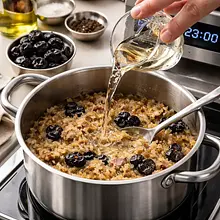
If you are using wine (100 ml), pour it into the pot now and cook for 2–3 minutes over medium heat, scraping the browned bits from the bottom of the pot with a wooden spoon (this deglazing will add flavor). Then pour in the broth or hot water (200 ml). The liquids should reach about halfway up the ingredients; if needed, add more broth or water. Bring to a boil.

Ingredients: Red wine (dry), Broth (water or meat stock)
If you are not using wine (optional ingredient), you can add the broth right away. Deglazing enhances the flavor, so do not skip this step. Use a wooden spoon to scrape the browned bits from the bottom of the pot.

Stewing

8

Reduce the heat to low, partially cover the pot (lid slightly ajar) and simmer on very low heat for at least 90 minutes, preferably 2–3 hours, stirring every 15–20 minutes. Check the consistency and add a little broth if necessary. The bigos should cook slowly, not boil vigorously — it should only gently bubble.

Ingredients: Sauerkraut, White cabbage (fresh), Pork shoulder, Smoked country sausage, Smoked bacon, Dried plums (pitted), Broth (water or meat stock)
The best method is a slow, long braising process; use a small burner. If the bigos starts to burn, lower the heat and stir, or transfer the pot to another burner. The braising time affects the intensity of the flavor — longer braising = deeper flavor.

Reduction and final seasoning

9

After a long simmer, remove the lid and cook for another 10–20 minutes over medium heat to allow excess liquid to evaporate and the bigos to thicken. Taste and season with salt, pepper, or a pinch of sugar (if you haven't added it earlier). Remove the bay leaves and whole allspice berries, as well as any juniper berries, before serving.

Ingredients: Salt, Ground black pepper, sugar
Bigos should be thick, aromatic, and slightly shiny from the fat. If it is too sour, add a small teaspoon of sugar and mix, wait 5 minutes, and taste again.

Resting and Serving

10

Let the bigos rest for at least 30 minutes before serving, so the flavors can meld. Serve the bigos hot in deep plates or bowls, garnishing with a few whole plums on top. It tastes best with dark rye bread, potatoes, or dumplings.

Ingredients: Dried plums (pitted)
Bigos can be prepared a day in advance — the flavors become even deeper. Use a large slotted spoon to serve, to evenly distribute the pieces of meat and plums.

Storage

11

If you are preparing bigos in advance, cool it to room temperature (no longer than 2 hours), transfer it to airtight containers, and store it in the refrigerator for 3–4 days. You can also freeze portions for 2–3 months. After thawing, heat slowly over low heat.

Use glass or plastic containers with a lid. Do not fill the container with hot bigos to the very edge — leave space for expansion when freezing.

Fun Fact

💡

Bigos has a centuries-old tradition in Polish cuisine; historically it was made with various meats (including game) and cabbage, and the longer it stood, the tastier it became. In the past, it was said that bigos "tastes best after at least three days."

Best for

Tips

🍽️ Serving

Serve the bigos hot with dark bread, roasted potatoes, or Silesian dumplings. For a flavor contrast, add a teaspoon of Sarepska mustard or horseradish on the side. You can also serve it with pickled cucumber or beet salad.

🥡 Storage

Store in the refrigerator for 3–4 days in airtight containers. For longer storage, portion and freeze — thaw slowly in the refrigerator, and reheat over low heat, adding a little broth if it is too thick.

📸 Ugotowane przez społeczność

Zaloguj się, aby dodać zdjęcie
Dodaj zdjęcie gotowej potrawy

Po zatwierdzeniu przez moderatora otrzymasz 10 punktów doświadczenia.

🍲

Nikt jeszcze nie dodał zdjęcia. Bądź pierwszy!

Comments (0)

Be the first to comment on this recipe!

Add a comment

You might also like

Recipe Categories

Main courses are the heart of every meal - hearty, nutritious, and full of flavor. In this category, we present a rich selection of recipes for lunches and dinners that will satisfy even the most discerning palates. From classic Polish pork chops to aromatic chicken dishes, to exquisite steaks an...

See all recipes in this category

European cuisine is a mosaic of culinary traditions from the Old Continent - from Spain to Scandinavia. Valencian paella and tapas from Spain - sunshine on a plate. Boeuf bourguignon and ratatouille from France - elegance and finesse. Wiener schnitzel and strudel from Austria - Central European c...

See all recipes in this category
Reklama