Start by preparing the mango. Wash it thoroughly. Using a sharp knife, cut off the two widest 'cheeks' of the mango, running the knife along the flat pit. Then, score the flesh in a grid pattern, being careful not to cut through the skin. Turn the skin inside out, and the mango cubes will pop out on their own - now just cut them off with a knife. Cut the remaining flesh around the pit as well and dice it into cubes about 1-1.5 cm in size.
Description
Here’s a recipe that will forever change your homemade preserves! This quick mango, lime, and chili chutney is proof that canning doesn’t have to mean spending an entire day in the kitchen. Chutney is a thick, sweet-and-sour sauce originating from India, which the British have loved and adapted to their tastes. Our version is incredibly aromatic, full of exotic notes, and has a beautiful sunny color. The balance of flavors is key here: ripe, sweet mango is complemented by the acidity of vinegar and lime juice, the spiciness of ginger and chili, and spices add depth. It pairs perfectly with a cheese board, roasted meats, grilled tofu, or as a topping for sandwiches and burgers. Preparation takes less than an hour, and the result will delight everyone, proving that modern preserves are simple, quick, and incredibly satisfying.
Ingredients (15)
- Pulp from ripe mango 600 g
- Red onion 200 g
- Apple cider vinegar 150 ml
- Unrefined brown sugar 100 g
- Fresh lime juice 60 ml
- Fresh ginger 30 g
- Garlic 4 ząbki
- Chili pepper 1 szt.
- Rapeseed oil 15 g
- Grated lime zest 5 g
- 🌿 Przyprawy
- Salt 0.1 szczypt
- Mustard seeds 1 łyżeczka
- Ground turmeric 0.2 łyżeczek
- ✨ Opcjonalne
- Raisins 30 g
- Fresh cilantro 10 g
💡 Kliknij na składnik aby oznaczyć jako użyty
Preparation steps
Preparation of ingredients
Prepare the aromatic ingredients. Peel the red onion and chop it into small cubes (about 0.5 cm). Peel the garlic cloves and chop them very finely or press them through a garlic press. Peel the ginger (the easiest way is to use the edge of a teaspoon) and grate it on a fine grater. Cut the chili pepper lengthwise, remove the seeds and white membranes (unless you like it very spicy), and then chop it very finely.
Prepare the lime. Wash it thoroughly and pour boiling water over it. Using a fine grater (like a zester), grate the green part of the peel from one lime. Then cut both limes in half and squeeze out the juice, being careful not to let any seeds fall in.
Cooking Chutney
In a heavy-bottomed pot (e.g., cast iron or stainless steel), heat canola oil over medium heat. When the oil is hot (but not smoking), add the mustard seeds. Cover the pot with a lid and wait for the seeds to start popping and jumping – this takes about 30-60 seconds. This is a sign that they have released their aroma.
When the mustard seeds stop popping, immediately reduce the heat to low and add the chopped onion. Sauté, stirring occasionally with a wooden spoon, for about 5-7 minutes, until the onion becomes soft and translucent. Then add the minced garlic, grated ginger, and chili. Sauté everything together for another minute, stirring constantly, until they release an intense aroma.
Add diced mango, apple cider vinegar, brown sugar, lime juice and zest, salt, and turmeric to the pot. If you're using them, now is the time to add the raisins. Mix everything well to combine the ingredients.
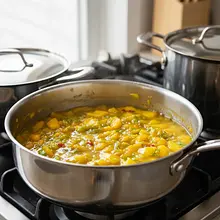
Increase the burner to medium and bring the mixture to a boil. As soon as it starts bubbling, reduce the heat to the minimum so that the chutney just gently simmers. Cook uncovered for 25-35 minutes, stirring every few minutes to prevent sticking to the bottom. The chutney is ready when it thickens noticeably, and the liquid turns into a thick syrup. The mango pieces should be soft but still partially intact.
Pasteurization and Storage (Facts and Myths)
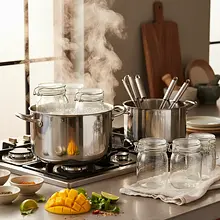
MIT: Just wash the jars. FACT: Sterilization is key for the longevity of preserves. While the chutney is cooking, prepare the jars. Wash them thoroughly in hot water with dish soap, then rinse. Place the jars and lids (separately) in a cold oven, set the temperature to 120°C (without fan), and 'bake' for 15-20 minutes. Remove the hot jars just before adding the chutney.
Carefully transfer the hot chutney to hot, sterilized jars. Fill them, leaving about 1-1.5 cm of headspace from the top edge of the jar. Use a canning funnel to avoid getting the jar rim dirty. However, if anything spills, wipe the rim of the jar thoroughly with a clean paper towel soaked in alcohol or vinegar.
Immediately after filling, tightly screw the jars with sterilized lids. MYTH: Turning them upside down is enough. FACT: This method does not guarantee pasteurization. It is known as 'dry pasteurization', which is effective only for very hot and acidic preserves. After sealing the jars, set them on the counter to cool completely. As they cool, the lids should 'click' and become concave - this is a sign that the jar is tightly sealed.
Fun Fact
The word 'chutney' comes from the Hindi word 'chatni', meaning 'to lick'. Originally, they were fresh, spicy pastes. The British during colonial times added sugar and vinegar to them to be able to transport them to Europe, thus creating the preserves we know today.
Best for
Tips
Serve the chutney at room temperature to fully release its aroma. It is fantastic with mature cheddar, creamy goat cheese, or blue cheese. It pairs wonderfully with roasted chicken, pork chops, and also with vegetarian burgers. You can also mix a tablespoon of chutney with natural yogurt to create a delicious dip.
Store tightly sealed jars in a cool, dark place (e.g., in a pantry) for up to 6 months. Once opened, the jar should be stored in the refrigerator and used within 4 weeks.
📸 Ugotowane przez społeczność
Zaloguj się, aby dodać zdjęcieDodaj zdjęcie gotowej potrawy
Po zatwierdzeniu przez moderatora otrzymasz 10 punktów doświadczenia.
Nikt jeszcze nie dodał zdjęcia. Bądź pierwszy!
Comments (0)
Be the first to comment on this recipe!
Add a comment