Homemade Tonkotsu Ramen with Crispy Chashu Bacon

Pikantne Asian cuisine Soups Main Dishes 240 min Medium 15 wyświetleń ~84.90 PLN - (0)
Rate:
(0)
Start Cooking

Description

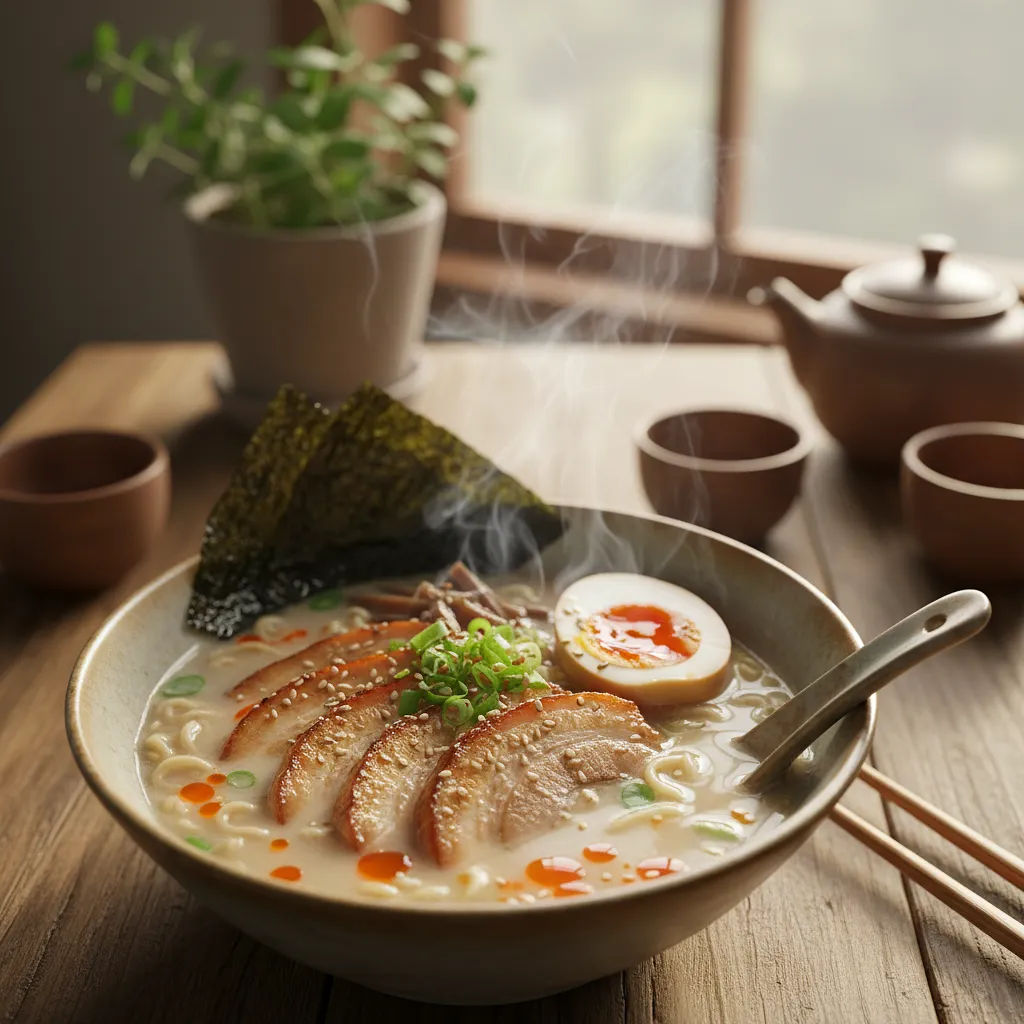
Forget about instant noodles! This recipe is a gateway to the world of authentic Japanese ramen that you can create in your own kitchen. Feel like a master chef in a Tokyo bar as you prepare a deep, milky, and incredibly aromatic pork broth, inspired by classic Tonkotsu. The secret to its flavor is the long, slow cooking of bones that release collagen, creating a velvety, rich base. On top of that, there's melt-in-your-mouth Chashu pork belly, marinated in a sweet-salty brine and then charred for crispiness. The dish is completed with perfectly soft-boiled Ajitama eggs, with a runny yolk and umami flavor, chewy noodles, and fresh toppings. This dish is not just a meal; it's a true ritual and culinary journey that rewards patience with unmatched flavor and satisfaction.

Ingredients (16)

Servings:
2
  • Pork bones 1000 g
  • Raw pork bacon 400 g
  • Chicken eggs 2 szt.
  • Ramen noodles 200 g
  • Garlic 8 ząbków
  • Fresh ginger 50 g
  • Spring onion 1 pęczek
  • Soy sauce 150 ml
  • Mirin 100 ml
  • Sake 50 ml
  • Miso pasta 50 ml
  • Sesame oil 15 ml
  • sugar 15 g
  • Water 2500 ml
  • ✨ Opcjonalne
  • Nori seaweed 5 g
  • Sesame seeds 10 g
💰 Szacowany koszt dania: ~84.90 PLN (42.45 PLN/porcję)

💡 Kliknij na składnik aby oznaczyć jako użyty

Preparation steps

Ajitama Eggs (Marinated Eggs)

1

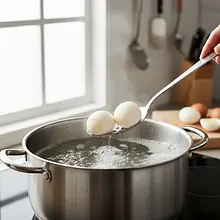
Start by preparing the eggs, preferably the day before. Bring water to a boil in a small pot. When the water is boiling vigorously, gently place the eggs straight from the fridge using a spoon. Cook for exactly 6 minutes and 30 seconds to achieve a perfectly runny yolk. Immediately after cooking, transfer the eggs to a bowl of ice-cold water with ice cubes for 10 minutes. This thermal shock will stop the cooking process and make peeling easier. Peel the eggs very gently under a stream of cold water.

Ingredients: Chicken eggs
Use the timer on your phone for precise cooking time. Cold eggs placed in boiling water are easier to peel. Don't skip the ice bath - it's the key to the perfect consistency and easy peeling.
2

Prepare the marinade. In a small jar or ziplock bag, mix 50 ml of soy sauce, 50 ml of mirin, and 100 ml of water. Stir until the ingredients are combined. Place the peeled eggs in the marinade, ensuring they are completely submerged. If using a bag, remove as much air as possible. Seal and refrigerate for at least 4 hours, preferably overnight.

Ingredients: Soy sauce, Mirin, Water, Chicken eggs
A ziplock bag is ideal because you need less marinade to completely cover the eggs. Every few hours, you can turn the eggs to marinate them evenly.

Chashu Pork Belly (Rolled Pork Belly)

3

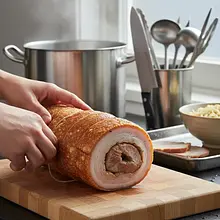
Place the slice of bacon skin-side down on a cutting board. Roll it tightly into a log, starting from the longer side. Use butcher's twine to tightly tie the log at intervals of 2-3 cm. Tie it securely so that the bacon does not unravel during cooking. This will ensure even cooking and a nice, round shape for the slices.

Ingredients: Raw pork bacon
If you don't have butcher's twine, you can use thick cotton thread. Tighten the string firmly, but not so much that it cuts into the meat. This is a key step for the dish's aesthetics.
4

Heat 1 tablespoon of oil in a skillet or heavy-bottomed pot over medium-high heat. Sear the bacon roll on all sides until it is deep golden brown. This will take about 8-10 minutes. This step creates the Maillard reaction, which builds depth of flavor.

Use the pot in which you will cook the bacon to avoid losing flavor. Be careful, the fat may splatter. Use tongs to turn the meat.
5

When the bacon is browned, reduce the heat. Add 100 ml of soy sauce, 50 ml of mirin, 50 ml of sake, sugar, 4 crushed garlic cloves, and 2 cm of sliced ginger to the pot. Pour in enough water to cover the bacon halfway. Bring to a boil, then reduce the heat to low, cover, and cook for 1.5 - 2 hours, turning the bacon every 30 minutes. The bacon is ready when it is very tender (a fork goes in easily).

Ingredients: Raw pork bacon, Soy sauce, Mirin, Sake, sugar, Garlic, Fresh ginger, Water
Do not pour out the liquid after cooking the bacon! This is your flavor base 'tare' for the ramen. After cooking, remove the bacon and keep the liquid.

Broth (inspired by Tonkotsu)

6

In a large pot, place the pork bones and cover them completely with cold water. Bring to a boil over high heat. Once the water boils, cook for 5 minutes. Gray scum will appear on the surface. Drain the bones in a colander and rinse them thoroughly under cold running water to remove all impurities. Also, wash the pot. This process (blanching) is crucial for achieving a clean flavor and clarity in the broth.

Ingredients: Pork bones, Water
Do not skip this step! Removing impurities from the bones will ensure that the broth does not have an unpleasant aftertaste and will have a nicer, brighter color.
7

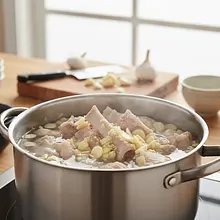
In a washed pot, place the blanched bones. Add the remaining 4 cloves of garlic (slightly crushed with a knife), the remaining ginger cut into thick slices, and the white parts of the spring onions. Pour in about 2 liters of fresh, cold water. Bring to a boil, then reduce the heat to the absolute minimum, so that the broth only gently 'flickers'. Cook partially covered for at least 3 hours. The longer, the better. The goal is for the broth to become cloudy and milky from the dissolved collagen.

Ingredients: Pork bones, Garlic, Fresh ginger, Spring onion, Water
Use the largest pot you have. The broth should not boil vigorously, but rather simmer gently. Intense boiling will make it cloudy, but not creamy. If necessary, replenish the evaporated water.
8

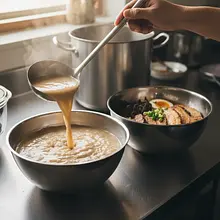
After a minimum of 3 hours of cooking, turn off the heat. Using a fine sieve or cheesecloth, strain the broth into a clean container to remove the bones and vegetables. You should obtain about 1-1.2 liters of cloudy, aromatic liquid. This is the base of your ramen.

Strain carefully, the broth is very hot. You can use a ladle to pour smaller portions. Thorough straining will ensure a smooth consistency of the soup.

Assembly of the Ramen

9

Prepare the flavor base 'tare'. In a small bowl, mix the miso paste with a few tablespoons of hot broth until it dissolves and there are no lumps. Then pour this mixture into the liquid left after cooking the bacon. Add sesame oil and mix well. This is the flavor concentrate that you will add to the bowls.

Ingredients: Miso pasta, Sesame oil
Dissolving miso in a small amount of liquid before adding it to the rest prevents lumps from forming. Try 'tare' - it should be very intense and salty.
10

Cook the ramen noodles according to the instructions on the package. Usually, they are cooked very briefly, for 2-4 minutes. It is important not to overcook them - they should remain slightly firm (al dente), as they will continue to cook in the hot broth. Drain them thoroughly.

Ingredients: Ramen noodles
Cook the pasta in a large amount of salted water. Drain it just before serving to prevent it from sticking.
11

In the meantime, slice the cooled Chashu pork into pieces about 0.5 cm thick. You can serve it cold or sear it with a kitchen torch on each side until the fat becomes crispy. Alternatively, fry the slices in a dry, hot pan. Remove the eggs from the marinade and carefully cut them in half. Chop the green parts of the scallions.

Ingredients: Raw pork bacon, Chicken eggs, Spring onion
Using a torch gives an amazing visual and flavor effect. If you don't have one, a hot pan works great too. Cutting cold bacon is much easier.
12

It's time for the grand finale! Prepare two large, deep bowls. Pour 3-4 tablespoons of the prepared 'tare' into each. Then, evenly pour in hot broth (about 400-500 ml per serving) and vigorously mix with the 'tare' using chopsticks or a fork. Place a portion of drained noodles in each bowl. Artfully arrange 2-3 slices of bacon on top, half of an Ajitama egg, and generously sprinkle with chopped green onions. Optionally, add a piece of nori seaweed and sprinkle with toasted sesame seeds. Serve immediately!

Ingredients: Ramen noodles, Raw pork bacon, Chicken eggs, Spring onion, Nori seaweed, Sesame seeds
Order matters: first 'tare', then hot broth, and finally noodles and toppings. This way, the flavors will mix well, and the toppings won't get soggy. Eat while it's hot!

Fun Fact

💡

Tonkotsu (豚骨) literally means 'pork bones'. This style of ramen comes from Fukuoka Prefecture on the island of Kyushu in Japan and is known for its incredibly rich, creamy broth, which can take up to several hours to prepare in traditional ramen shops!

Best for

Tips

🍽️ Serving

Serve ramen in deep, heated bowls to keep it warm for as long as possible. Use chopsticks to pick up solid ingredients and a deep ceramic spoon (renge) to drink the broth. Encourage guests to slurp - in Japan, it's a sign that the dish is delicious!

🥡 Storage

Ramen tastes best when freshly prepared. If you have leftover ingredients, store them separately in the fridge: broth in an airtight container (up to 3 days), bacon wrapped in foil (up to 3 days), and eggs in marinade (up to 2 days). Always cook the noodles fresh just before serving.

📸 Ugotowane przez społeczność

Zaloguj się, aby dodać zdjęcie
Dodaj zdjęcie gotowej potrawy

Po zatwierdzeniu przez moderatora otrzymasz 10 punktów doświadczenia.

🍲

Nikt jeszcze nie dodał zdjęcia. Bądź pierwszy!

Comments (0)

Be the first to comment on this recipe!

Add a comment

You might also like

Recipe Categories

Asian cuisine is a variety of flavors from Japan to Thailand - umami, sweet-sour, and spicy. Sushi, ramen, pad thai, pho, and dim sum - iconic dishes from restaurants at home. Wok cooking: stir-fry with vegetables, tofu, and meat in just a few minutes. Asian sauces: soy, fish, oyster, and hoisin ...

See all recipes in this category
Soups
Soups in: New Year's Eve

Soups for New Year's Eve can be both warming and light, perfect to serve before the main course.

See all recipes in this category
Main Dishes
Main Dishes in: Christmas Eve Dinner

Main courses are the heart of every meal - hearty, delicious, and full of nutrients. Meats: beef, pork, poultry, and lamb in various versions. Fish and seafood: baked, fried, grilled, and stewed. Vegetarian dishes: tofu, tempeh, legumes as the main protein. Casseroles: pasta, potato, vegetable wi...

See all recipes in this category

Dishes for special occasions are culinary masterpieces for birthdays, anniversaries, and holidays. Grilled beef steak with herb butter - restaurant quality at home. Beef Wellington - beef in puff pastry with duxelles. Roast duck with apples - a holiday tradition in a new edition. Pink salmon with...

See all recipes in this category
Reklama