Weigh and prepare all the ingredients. Gently wash the basil leaves under cool water and spread them on a clean towel to dry (do not rub, just gently pat dry). Grate the parmesan on a fine grater. Peel the garlic and lightly crush it with the flat side of a knife. Measure the olive oil and lemon juice. Cut the cherry tomatoes in half (if using). Pat the chicken breast dry with a paper towel and slice it lengthwise into two thinner fillets (or into slices about 2 cm thick) so that frying is quicker and more even. Season the meat with salt and pepper on both sides and set aside for 8-10 minutes to allow the spices to absorb.
Description
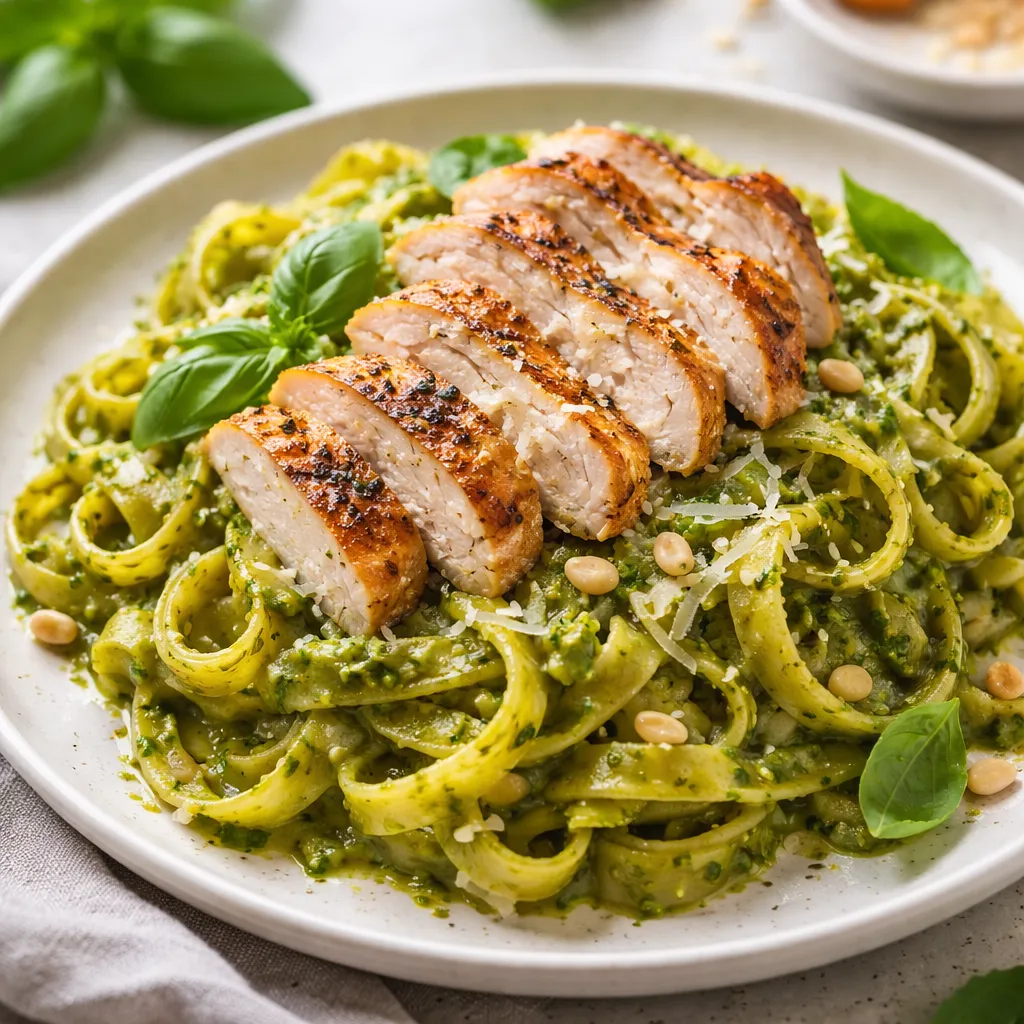
Delicate pasta with homemade pesto sauce and juicy chicken breast is an elegant yet simple dish perfect for a romantic Valentine's dinner. Pesto comes from Liguria (Italy) and combines fresh basil, pine nuts, garlic, olive oil, and parmesan — it gives an intense green color, aroma, and creamy texture. The combination with tender chicken and pasta creates a harmonious composition of flavors: the freshness of herbs, the nutty sweetness of pine nuts, the saltiness of parmesan, and the smoothness of olive oil. Serve hot, garnished with an additional portion of parmesan, basil leaves, and (optionally) arugula and halved cherry tomatoes. The dish looks impressive — the green sauce envelops the yellow pasta, and the slices of chicken create an elegant arrangement on the plate.
Ingredients (13)
- Dried tagliatelle pasta 200 g
- Chicken breast 300 g
- Pine nuts 40 g
- Parmesan (parmigiano reggiano), grated 60 g
- Garlic 2 ząbki
- Extra virgin olive oil 0.5 łyżek
- Lemon juice 20 ml
- Butter (for frying) 10 g
- 🌿 Przyprawy
- Fresh basil 2 pęczki
- Salt 18 g
- Ground black pepper 2 szczypty
- ✨ Opcjonalne
- Cherry tomatoes 150 g
- Arugula (optional) 30 g
💡 Kliknij na składnik aby oznaczyć jako użyty
Preparation steps
Preparation of ingredients
Pesto sauce
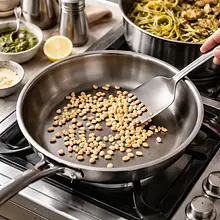
Toast the pine nuts: heat a dry, non-stick skillet over medium heat. Add the nuts and stir with a wooden spoon for 2-3 minutes, until they start to brown slightly and release their aroma. Be careful, as they can burn quickly — remove from heat and transfer to a bowl to cool. In a blender or mortar, place the basil leaves (without large stems), cooled pine nuts, grated Parmesan, and garlic. Start blending/pounding briefly, gradually pouring in the olive oil in a thin stream (about 60 ml from the prepared 95 ml) and adding lemon juice. Blend for 30-60 seconds until you achieve a smooth but still slightly grainy emulsion. Season with 1-2 grams of salt and a pinch of pepper (to taste). If the pesto is too thick, add 1-2 tablespoons (15-30 ml) of pasta cooking water later to thin it out.
Chicken
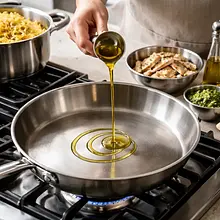
Heat a large skillet (preferably 26-28 cm) over medium-high heat. Add 15 ml of olive oil and 10 g of butter — wait for the butter to melt and start to sizzle lightly, but do not let it burn. Place the chicken fillets in the skillet and fry for 3-4 minutes without moving them, until a golden-brown crust forms on one side. Flip the fillets and fry for another 3-4 minutes. Check the internal temperature: it should reach 74°C, or cut into the thickest part — the meat must be white, with no pink inside, and the juices should be clear. After frying, set the chicken aside on a cutting board and let it rest for 4-5 minutes — the juices will redistribute evenly.
Pasta
Pour about 2.5 liters of water into a large pot and place it over high heat. Once it comes to a boil, add 15 g of salt (about 1 tablespoon). Add the tagliatelle and stir for the first 30 seconds to prevent the strands from sticking together. Cook according to the package instructions: usually 7-9 minutes for al dente; start checking for tenderness after 6-7 minutes. When the pasta is al dente (soft on the outside, slightly firm in the center), reserve 120 ml of the cooking water in a cup (it will be useful for thinning the pesto), and drain the rest.
Assembly and finishing
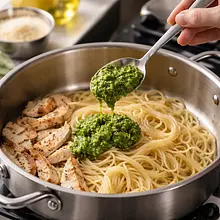
In a large, clean skillet (or in a pot after draining), place 3-4 tablespoons (45-60 g) of the prepared pesto. Add 2-3 tablespoons (30-45 ml) of the reserved hot pasta cooking water and mix vigorously — a smooth, glossy sauce will form. Toss in the drained pasta and mix thoroughly with tongs or two spoons, ensuring the pasta is evenly coated with the sauce. Taste and adjust with an extra pinch of salt and pepper if needed. Slice the rested chicken fillets into thin pieces and arrange them on top of the pasta. If using, add the halved cherry tomatoes and arugula; gently mix with the pasta just before serving.
Serving
On warm plates, place a portion of pasta in the shape of a small mound (use tongs). Top with slices of chicken. Drizzle with a bit of raw olive oil (a few ml) for shine. Sprinkle with a teaspoon of grated Parmesan and a few toasted pine nuts. Garnish with a few fresh basil leaves and (optionally) arugula and halved cherry tomatoes.
Cleaning and Storage
Store leftover pesto in a jar: pour in the pesto, smooth the surface with a spoon, and cover with a thin layer of olive oil (about 5-10 mm) — this will prevent oxidation and darkening. Close the jar and store in the refrigerator for up to 3 days or freeze in portions for up to 3 months. Cooked pasta with chicken can be stored in an airtight container in the refrigerator for up to 48 hours.
Fun Fact
Pesto alla genovese comes from the Liguria region of Italy — it was originally prepared in a mortar, grinding basil with salt, garlic, cheeses, and nuts. The name 'pesto' comes from the Italian 'pestare' – to grind, to crush.
Best for
Tips
Serve hot, with an extra portion of freshly grated Parmesan on the side. It pairs wonderfully with a light white wine (Pinot Grigio, Sauvignon Blanc) or prosecco. As a side, serve a simple arugula salad with a lemon dressing or lightly toasted garlic croutons.
Pesto: in the fridge for up to 3 days in an airtight jar with a layer of oil on top; in the freezer for up to 3 months (in portions). Prepared dish: in an airtight container in the fridge for up to 48 hours. To reheat — use a pan over low heat and add 1-2 tablespoons of cooking water or oil to restore creaminess; avoid the microwave, which can dry out the chicken.
📸 Ugotowane przez społeczność
Zaloguj się, aby dodać zdjęcieDodaj zdjęcie gotowej potrawy
Po zatwierdzeniu przez moderatora otrzymasz 10 punktów doświadczenia.
Nikt jeszcze nie dodał zdjęcia. Bądź pierwszy!
Comments (0)
Be the first to comment on this recipe!
Add a comment