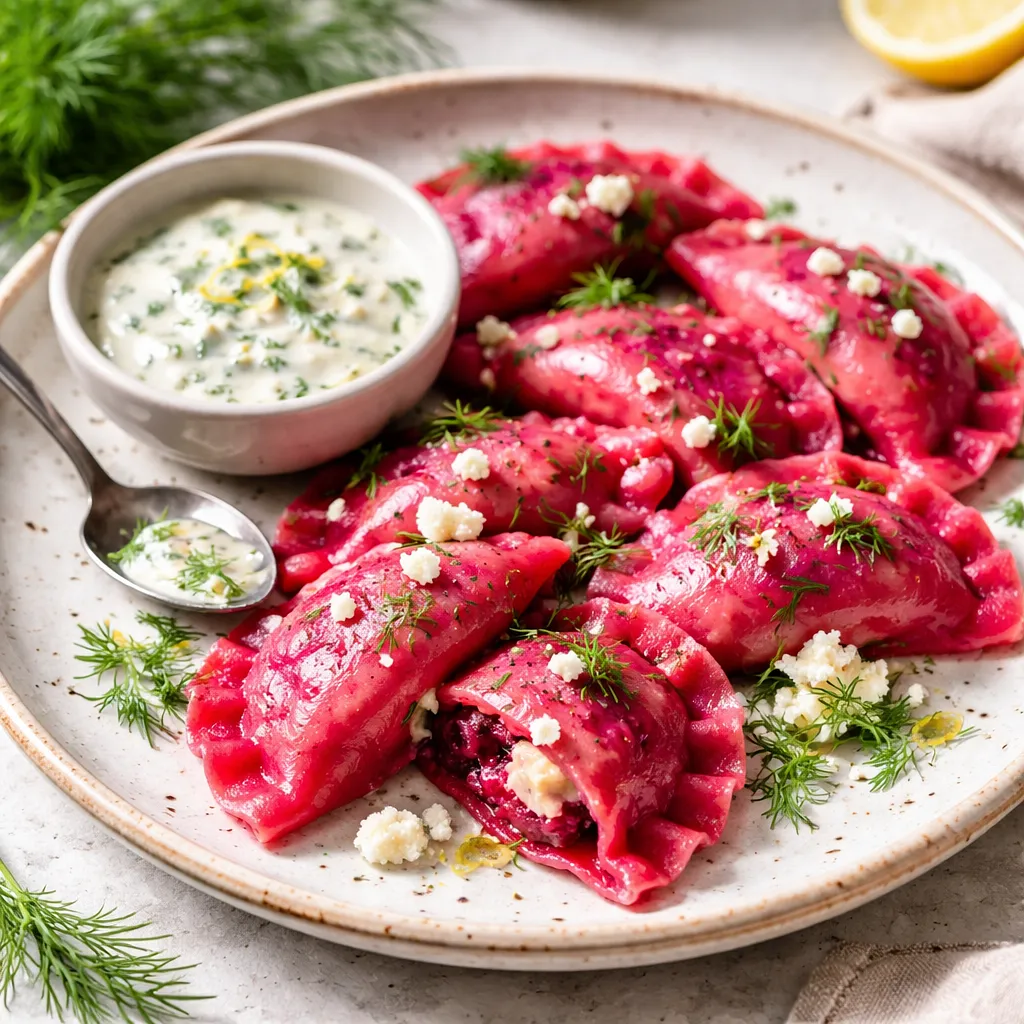
Ruby pierogi with roasted beetroot and cottage cheese with dill sauce

Pikantne Regional Cuisine of Poland Vegetarian Dishes 120 min Medium 7 wyświetleń ~22.25 PLN - (0)
Rate:
(0)
Start Cooking

Description

Seasonal, vegetarian dumplings inspired by the regional cuisine of Poland — intensely red filling made from roasted beets and creamy twaróg, served with an aromatic dill sauce. The dish combines the sweet-earthy flavor of beetroot with the delicacy of white cheese and the freshness of dill. It looks very impressive: ruby dumplings contrast with the light sauce and green garnishes. Perfect for a family dinner, holiday meal, or as an appetizer at a party. Serve with toasted walnuts and arugula for texture and flavor contrast.

Ingredients Used

Ingredients (15)

Servings:
4
  • Wheat flour 500 g
  • Egg 2 szt.
  • Water 200 ml
  • Fresh beets 600 g
  • Onion 1 szt.
  • Garlic 2 ząbki
  • Semi-fat cottage cheese 250 g
  • 18% cream 200 ml
  • Butter 40 g
  • Lemon juice 30 ml
  • 🌿 Przyprawy
  • Salt 8 g
  • Black pepper 4 szczypty
  • Dill 1.5 pęczki
  • ✨ Opcjonalne
  • Roasted walnuts 50 g
  • Arugula 40 g
💰 Szacowany koszt dania: ~22.25 PLN (5.56 PLN/porcję)

💡 Kliknij na składnik aby oznaczyć jako użyty

Preparation steps

Filling

1

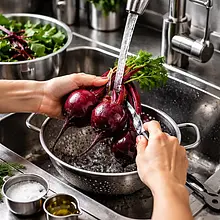
Preheat the oven to 200°C (top-bottom). Wash the beets under running water, remove any roots, and gently dry them. Wrap each beet individually in aluminum foil (to prevent excessive drying) and place them on a baking sheet. Bake for 45–60 minutes depending on size (smaller ones for 45 min, larger ones for 60 min). Check with a fork: the beet should be soft inside and the fork should go in easily - then they are ready.

Ingredients: Fresh beets
Use a rimmed baking sheet and oven mitts to remove; do not peel the beets immediately after taking them out (hot), set aside to cool so they don't burn you.
2

After cooling (about 10–20 minutes), unwrap the beets and use a paper towel to wipe off the skin — it should come off easily. Grate the beets on a coarse grater or chop them into small cubes (about 6–8 mm) depending on your preference: grated will be more uniform, while cubed will provide a noticeable texture.

Ingredients: Fresh beets
Use a large grater or a knife and cutting board. If the beets stain your hands significantly, use disposable gloves or grease your hands with oil.
3

Finely chop the onion (about 3–4 mm dice). In a medium-sized skillet (24–28 cm), heat 20 g of butter over medium heat. Add the onion and sauté for 4–6 minutes until it becomes translucent and lightly golden. Add the minced garlic (10 g) and sauté for 30 seconds (be careful not to burn it). Add the grated/chopped beets, 4 g of salt, and 1 g of pepper, along with 15 ml of lemon juice; mix and sauté for 5–7 minutes until some of the moisture evaporates and the flavors meld together.

Ingredients: Onion, Garlic, Butter, Fresh beets, Salt, Black pepper, Lemon juice
Use a wooden spoon for stirring. A common mistake is too high a temperature — then the onion will burn, and the beets will be hard. Keep the heat medium.
4

Transfer the drained beets from the pan to a large bowl and set aside to cool for 10–15 minutes (the filling should be warm, not hot). Add the semi-fat cottage cheese (250 g) and gently mix with a wooden spoon or spatula — stir just enough to combine the ingredients, but do not completely break down the structure of the cheese. Taste and season with additional salt/pepper if needed.

Ingredients: Fresh beets, Semi-fat cottage cheese, Salt, Black pepper
If the filling is too wet, partially drain it in a fine sieve or add a bit of breadcrumbs (this is not an ingredient in the recipe). The filling should be firm but not dry.

Cake

5

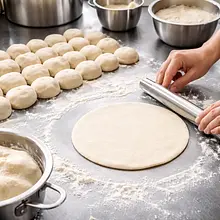
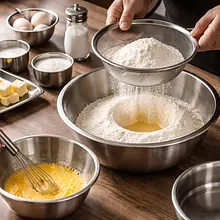
In a large bowl, sift the flour (500 g). Make a well in the flour. In a separate bowl, whisk the eggs (120 g) with 8 g of salt and add lukewarm water (200 ml). Gradually pour the liquid into the well and mix with a fork, starting from the center and gradually incorporating the flour from the sides, until a sticky mass forms. Transfer to a work surface and knead by hand for about 8–10 minutes until the dough is smooth, elastic, and no longer sticky to the hands. If it is very sticky, sprinkle with a small amount of flour (10 g at a time).

Ingredients: Wheat flour, Egg, Water, Salt
Use a wooden spoon for initial mixing, then your hands. If you have a mixer with a dough hook, knead for 4–5 minutes on medium speed. Do not knead for too long (over 12 minutes) — the dough may become tough.
6

Form a ball from the dough, wrap it in plastic wrap or cover it with a bowl, and let it rest for 30 minutes at room temperature. This will allow the gluten to relax and make rolling easier.

Ingredients: Wheat flour
Use a large bowl or lightly grease the foil to prevent the dough from sticking. Do not shorten the resting time — the dough will tear when rolling.

Shaping the dumplings

7

Divide the dough into 3–4 parts, roll one part out on a floured surface to a thickness of 2–3 mm. Use a round cutter with a diameter of 8 cm (a glass can also work). Arrange the circles in sequence. Place 28–35 g of filling (about 1 tablespoon) in the center of each circle — try not to overfill so that the edges can be sealed tightly. Moisten the edges of the circle with water using your finger, fold it in half and press the sides together firmly with your fingers, then press with a fork for a decorative pattern and stronger sealing.

Ingredients: Wheat flour, Semi-fat cottage cheese, Fresh beets
Work on a floured surface and transfer the finished dumplings to a tray dusted with flour. If the dough tears, let it rest for an additional 10 minutes. Too much filling is the most common mistake — the dumplings will fall apart while cooking.

Cooking

8

In a large pot, bring 2,000 ml of water to a boil with 8 g of salt. Add the dumplings in batches (no more than 8–10 at a time, depending on the size of the pot), gently stirring after 30 seconds to prevent them from sticking to the bottom. Once the dumplings float to the surface, cook them for an additional 3–4 minutes — during this time, the dough should be cooked (try one dumpling: the dough should not be raw inside). Remove with a slotted spoon.

Ingredients: Water, Salt
Use a large pot and a slotted spoon. If you add too many at once, the water temperature will drop and the dumplings will fall apart or be undercooked.

Frying (optional)

9

If you want to achieve a golden crust, heat the remaining 20 g of butter in a pan over medium heat. Add the drained dumplings and fry for 2–3 minutes on each side until golden and crispy. Gently turn them with a spatula to avoid breaking the seams.

Ingredients: Butter
The best pan is a non-stick one with a diameter of 24–28 cm. If you use clarified butter, you have a lower risk of burning.

Sauce

10

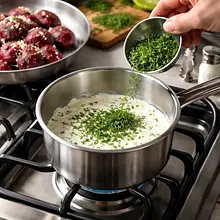
In a small saucepan over very low heat, warm the 18% cream (200 g). Add finely chopped dill (a whole bunch, 30 g) and gently cook for 3–4 minutes on minimal heat — stir to prevent the cream from burning and boiling vigorously. Add 2 g of pepper, 3 g of salt, and the remaining 15 ml of lemon juice, and stir. The sauce should be smooth, creamy, and slightly aromatic from the dill.

Ingredients: 18% cream, Dill, Black pepper, Salt, Lemon juice
Use a wooden spoon and low heat. Do not let it boil, as the cream may curdle; if you want, you can thicken the sauce with a bit of flour dissolved in cold water (but this is not necessary).

Assembly and serving

11

On a plate, place 4–6 pierogi (depending on your appetite), spread or drizzle with warm dill sauce. Sprinkle with finely chopped, toasted walnuts (optional, 50 g) and arrange a few arugula leaves (40 g) for a fresh contrast and decoration. Serve immediately to keep the pierogi warm and crispy on the outside (if they were fried).

Ingredients: Roasted walnuts, Arugula, 18% cream
For decoration, use a light-colored plate to make the red color of the pierogi stand out nicely. Additionally, you can drizzle a bit of melted butter for shine.

Fun Fact

💡

Beets have been known since ancient times, but in Polish cuisine, they gained immense popularity thanks to borscht and folk dishes. The combination of beetroot and cottage cheese is a classic theme in rural cuisine — colorful dumplings are a modern variation of this tradition.

Best for

Tips

🍽️ Serving

Serve the dumplings hot, preferably on light plates to highlight their color. For a contrast in textures, opt for the partially fried version (boiled, then sautéed) and garnish with toasted nuts. A dried fruit compote or lightly carbonated water with a slice of lemon pairs well to drink.

🥡 Storage

Cooked dumplings can be stored in the refrigerator in an airtight container for up to 48 hours; before serving, reheat in a pan with butter or in the oven at 180°C for 8–10 minutes to regain crispiness. Raw dumplings (spread out on a tray) can be frozen flat (first for 1–2 hours), and then transferred to bags and stored for up to 3 months. Cook without thawing, adding 1–2 minutes to the cooking time.

📸 Ugotowane przez społeczność

Zaloguj się, aby dodać zdjęcie
Dodaj zdjęcie gotowej potrawy

Po zatwierdzeniu przez moderatora otrzymasz 10 punktów doświadczenia.

🍲

Nikt jeszcze nie dodał zdjęcia. Bądź pierwszy!

Comments (0)

Be the first to comment on this recipe!

Add a comment

You might also like

Recipe Categories

Traditional recipes from various regions of Poland that showcase the richness of local flavors and ingredients.

See all recipes in this category

Vegetarian cuisine is a wealth of flavors without meat - healthy, colorful, and filling. Plant-based proteins: lentils, chickpeas, beans, peas, and soy take center stage. Cheeses and dairy: feta, halloumi, ricotta, and mascarpone in main dishes. Eggs in various forms: omelets, frittata, shakshuka...

See all recipes in this category
Reklama