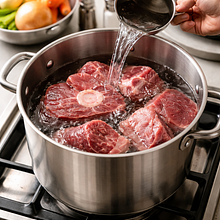
Check the meat: rinse the beef and the whole chicken under cold running water, removing excess blood and small remnants (tendons, loose pieces). If you are using a whole chicken, you can remove excess fat from the inside. Pat the pieces dry with a paper towel.
Description
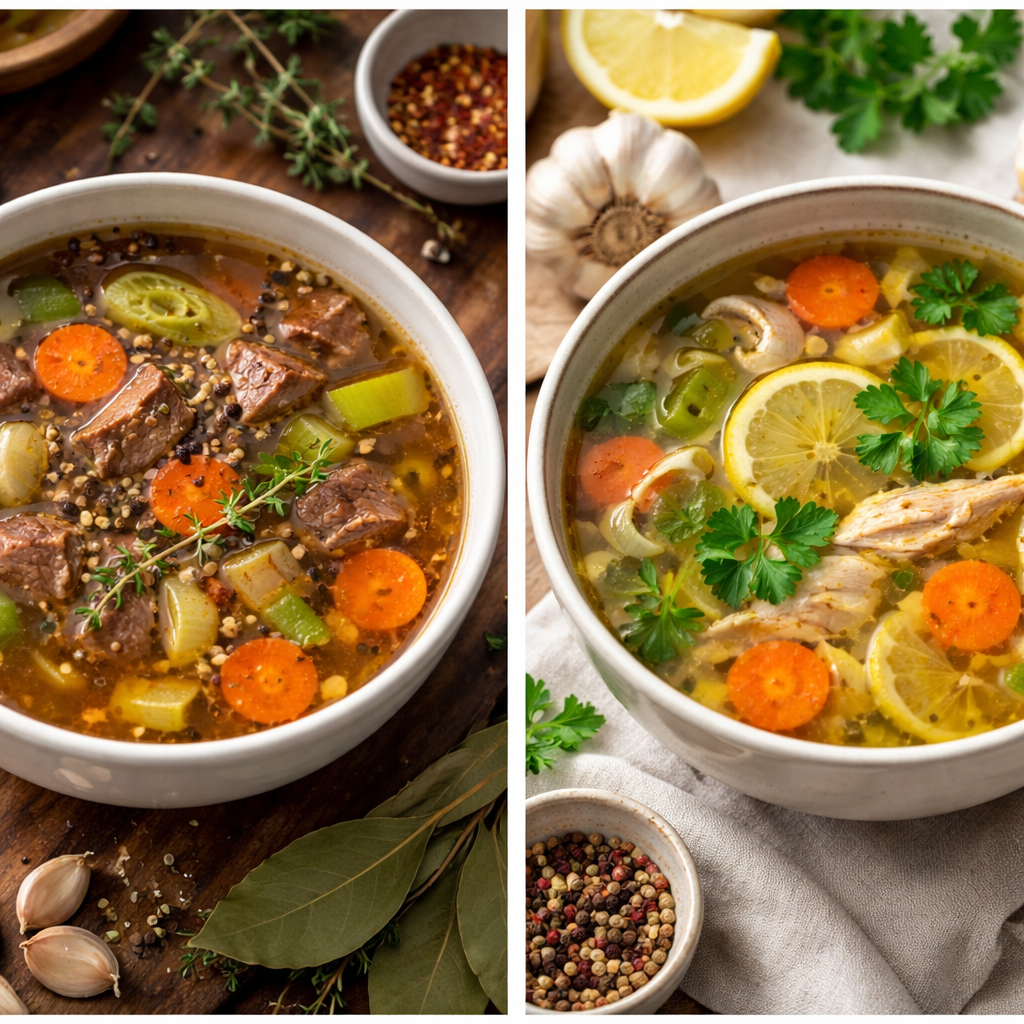
Classic beef and poultry broth is a clear, aromatic soup made from a mixture of beef and poultry stock along with several vegetables and spices. It has a rich beef flavor complemented by the delicacy of poultry broth, a golden color, and a clean, slightly sweet aroma of root vegetables. The broth is traditionally served with thin noodles or egg noodles, but it can also be served with dumplings or used as a base for other soups. It is a versatile dish: perfect for a family dinner, for a Sunday table, and also as a "remedy" for a cold — easily digestible, warming, and soothing. The stock is also an excellent base for sauces and risotto.
Ingredients (14)
- Beef for broth (brisket/ribs with meat) 600 g
- Whole chicken (thawed, preferably organic) 1200 g
- Water 2500 ml
- Carrot root 2 szt.
- Parsley root 1 szt.
- Celery root 120 g
- Leek (white part) 1.3 szt.
- Onion 1 szt.
- 🌿 Przyprawy
- Salt 8 g
- Black peppercorns 6 g
- Bay leaf 6.7 szt.
- Allspice (pieces) 3 szt.
- ✨ Opcjonalne
- Garlic 3 ząbki
- Parsley (for serving) 30 g
💡 Kliknij na składnik aby oznaczyć jako użyty
Preparation steps
Meat preparation
First cooking (scalding with boiling water)
In a large pot (minimum capacity 6 l), place the beef and cover it completely with cold water. Set the pot over medium heat and heat until it reaches a boil. When the water starts to boil vigorously and gray impurities/foam appear on the surface, drain the water (pour the contents through a strainer), and rinse the pot and meat under running water to remove excess foam and impurities.
Cooking the broth - start
After draining and rinsing the meat, place it back in a clean pot and cover it with 2500 ml of fresh, cold water. Set it over medium heat and slowly bring it to a boil. This should take 15–20 minutes depending on the burner’s power. Do not cover the pot at this stage.
Removing scum
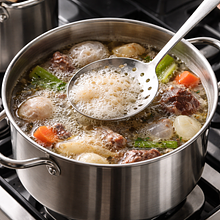
When the water starts to boil, foam (scum) will appear on the surface. Use a slotted spoon or a sieve to regularly (every few minutes for the first 10–15 minutes) collect the foam and impurities until the broth is clearer.
Adding vegetables
Peel the carrot, parsley root, celery, and onion. Cut the carrot and parsley root in half or into 3 pieces lengthwise if they are thick; cut the celery into large pieces; cut the onion in half, you can gently char the cut side of the onion over the flame or in a dry pan for 2-3 minutes until slightly browned — this will deepen the color of the broth. Add the vegetables and the white part of the leek to the pot when the broth starts to simmer gently.
Adding spices
Add bay leaves, allspice, and whole peppercorns to the pot. If you are using garlic (optional), add 3 cloves lightly crushed. Do not add salt in large amounts right away — wait until the broth reduces and the flavors concentrate.
Long, gentle cooking
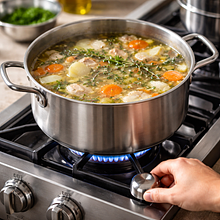
Reduce the heat to very low, so that the broth just gently 'bubbles' (a very gentle simmer, known as 'pyrkanie'). Partially cover the pot with a lid (leaving a small gap). Cook for 1.5–2 hours: beef needs time to release its flavors and collagen; chicken becomes tender after about 1–1.5 hours. Every 20–30 minutes, skim off the fat and any remaining scum with a slotted spoon.
Checking the tenderness of the meat
After 1.5 hours, check the tenderness of the meat: insert a fork into the thickest piece of beef — it should go in easily and the meat should slightly separate. The chicken should be tender and pull away from the bone. If the meat is still firm, cook for another 20–30 minutes.
Seasoning and clarifying
When the meat is tender and the broth has a deep flavor (after 1.5–2 hours), add salt — start with half of the intended amount (e.g. half of 8 g = 4 g), stir, and taste after a few minutes. If you want a clearer broth, remove the pot from the heat and wait 10 minutes — the fat will slightly rise to the surface, then skim off the excess fat with a spoon.
Removing the meat and vegetables, straining
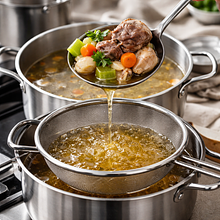
Remove the meat and larger pieces of vegetables from the pot using a slotted spoon. Strain the broth through a fine sieve lined with cheesecloth or a very fine sieve into another pot or bowl to obtain a clear liquid. Gently squeeze the vegetables and bones, but not too hard — we only want the liquid.
Preparing the meat for serving
Separate the meat from the bones: for chicken, remove the skin and bones, cut the meat into smaller pieces or shred it. For beef, cut it into thin slices or cubes. If you plan to serve the broth with noodles, mix a portion of the meat with a bit of hot broth to prevent it from drying out.
Serving
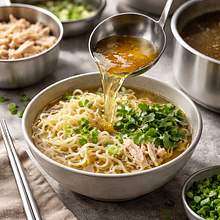
Serve the hot broth: place a portion of pasta (noodles or thin egg noodles) and pieces of meat at the bottom of the plate, then pour hot, clear broth over it. Sprinkle with finely chopped parsley (optional). Serve immediately — the broth tastes best hot.
Fun Fact
In Polish tradition, chicken broth is considered one of the national comfort foods — served for generations at Sunday dinners and as a remedy for colds. The classic recipe requires slow, gentle cooking to achieve a clear, rich flavor.
Best for
Tips
Serve with thin egg noodles or strands. On a separate plate, you can serve the grated vegetables from cooking and sliced meat. For a bolder flavor, add a few drops of lemon juice or a bit of freshly ground black pepper on the plate.
Store the cooled broth in the refrigerator in airtight containers for up to 3 days. If fat has collected on the surface, you can remove it after cooling and before reheating. For freezing, pour the broth into containers (preferably portions of 500–700 ml) and freeze for up to 3 months. For defrosting, it's best to leave it in the refrigerator overnight, and then gently reheat.
📸 Ugotowane przez społeczność
Zaloguj się, aby dodać zdjęcieDodaj zdjęcie gotowej potrawy
Po zatwierdzeniu przez moderatora otrzymasz 10 punktów doświadczenia.
Nikt jeszcze nie dodał zdjęcia. Bądź pierwszy!
Comments (0)
Be the first to comment on this recipe!
Add a comment