Best method (slow): Take the shrimp out of the freezer about 8-12 hours before cooking. Leave them in their original, tightly sealed packaging. Place the package on a deep plate or in a bowl (to prevent water from leaking onto other products) and put it in the refrigerator. Slow thawing at a low temperature is the safest method that ensures the perfect texture of the shrimp.
Description
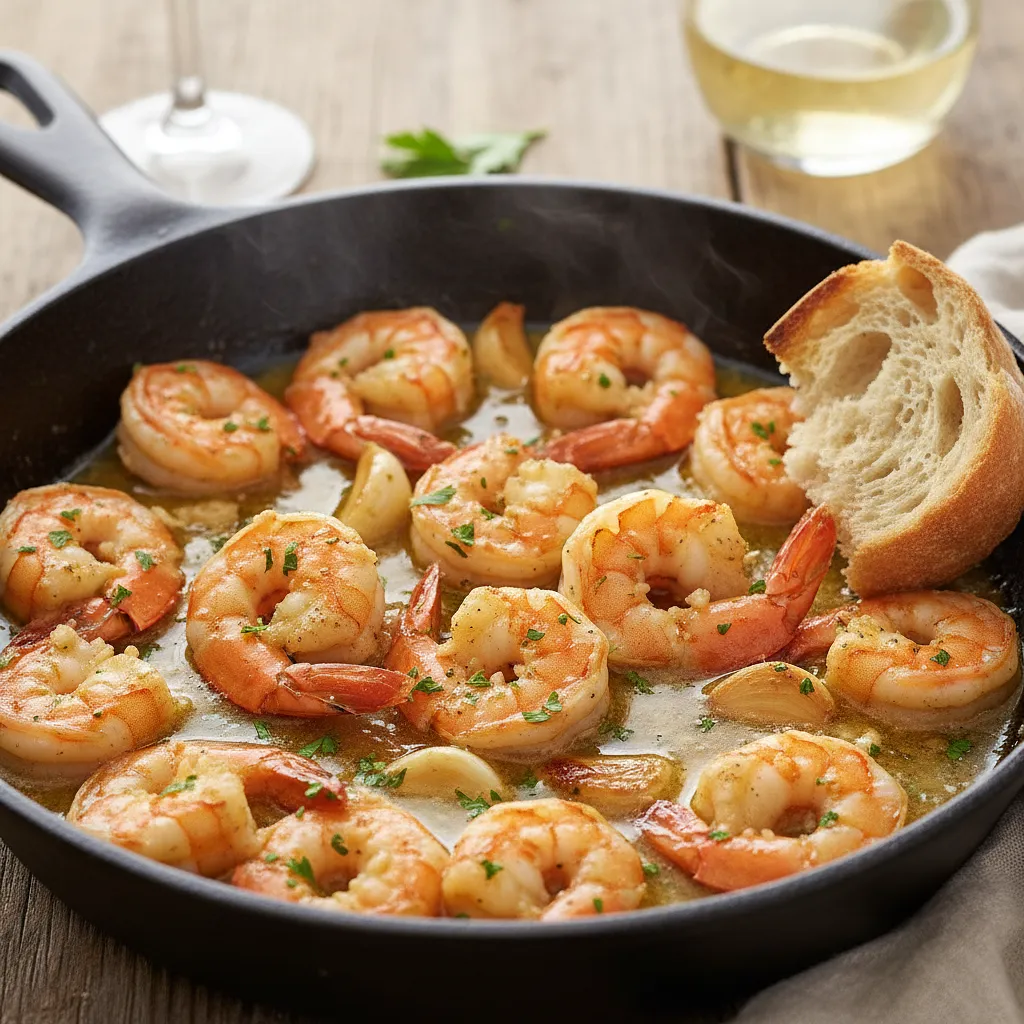
Here is a dish whose secret lies not in exotic spices, but in knowledge and technique. Juicy shrimp in a buttery garlic sauce is the essence of simplicity and elegance, which can become your signature dish. The key to success, however, is what happens long before turning on the burner – the perfect thawing of the shrimp. This recipe is not just a cooking instruction, but above all a lesson on how to treat frozen seafood so that it retains its tenderness, firmness, and flavor. You will learn how to avoid the most common mistake, which is a rubbery texture, and how to create a velvety, perfectly emulsified sauce that will envelop each shrimp. The dish is incredibly quick to prepare, making it an ideal choice for a romantic dinner as well as an impressive yet effortless meal in the middle of the week. Served with fresh pasta or a crispy baguette for dipping in the sauce, it is a true feast for the senses.
Ingredients (10)
- Raw, frozen shrimp 400 g
- Butter 60 g
- Garlic 4 ząbki
- Dry white wine 80 ml
- Lemon juice 15 ml
- Olive oil 15 ml
- 🌿 Przyprawy
- Parsley 0.5 pęczek
- Salt 0.1 szczypt
- Pieprz czarny świeżo mielony 2 szczypty
- ✨ Opcjonalne
- Chili flakes 1 szczypta
💡 Kliknij na składnik aby oznaczyć jako użyty
Preparation steps
Key to Success: Safe Thawing of Shrimp
Alternative method (quick): If you don't have time, place the tightly sealed package of shrimp in a large bowl. Fill it with COLD tap water, ensuring the entire package is submerged. Change the water for fresh, cold water every 30 minutes. Depending on the size of the shrimp, this process should take between 1 to 1.5 hours. The shrimp are ready when they are pliable but still very cold to the touch.
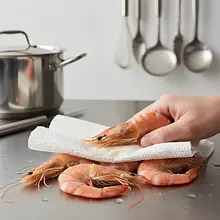
Absolutely crucial: drying! After thawing, regardless of the method, take the shrimp out of the packaging and transfer them to a plate lined with several layers of paper towels. With a second towel, gently pat them dry on the surface, pressing down. The shrimp must be as dry as possible. This step will prevent splattering in the pan and ensure that the shrimp fry rather than cook in their own juices, which is the cause of a rubbery texture.
Preparation of ingredients
Prepare the remaining ingredients. Peel the garlic and chop it very finely or press it through a garlic press. Rinse the parsley, dry it, and chop it finely, separating the stems from the leaves. Cut the lemon in half, preparing it for juicing.
Cooking
In a large skillet (preferably stainless steel or with a thick bottom) over medium heat, heat the olive oil along with half of the butter (about 30g). Wait until the butter melts and starts to gently foam - this is a sign that the fat is ready.
Add chopped garlic to the pan and optionally chili flakes. Sauté for about 30-60 seconds, stirring constantly with a wooden spoon, until the garlic releases an intense aroma, but before it starts to brown. Burnt garlic is bitter and will ruin the entire dish.
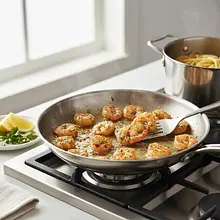
Increase the heat to medium-high. Arrange the dried shrimp in a single layer in the pan. Season with salt and freshly ground pepper. Cook without stirring for about 1-2 minutes on one side, until they turn pink and slightly caramelized. Then flip them to the other side and cook for another 1-2 minutes. The shrimp are ready when they curl into a 'C' shape.
Making the sauce
When the shrimp are pink on both sides, pour white wine into the pan. Cook for about 1 minute, scraping with a wooden spoon all the tasty bits that have stuck to the bottom of the pan. The alcohol will evaporate quickly, leaving the essence of flavor.
Reduce the heat to the minimum. Add the remaining butter (30g) and freshly squeezed lemon juice. Stir vigorously or swirl the pan until the butter is completely melted and combined with the wine, creating a smooth, slightly thick sauce. This process is called emulsifying.
Finishing and serving
Remove the pan from the heat. Add the chopped parsley and gently mix. Taste the sauce and season with more salt or pepper if needed. Serve immediately while hot, preferably with freshly cooked pasta (e.g., linguine) or a crispy baguette to scoop up the delicious sauce.
Fun Fact
The name 'Scampi' in the original Italian recipe refers to langoustines (nephrops), not shrimp. The version with shrimp is an American adaptation that has gained immense popularity worldwide and is now better known than the original.
Best for
Tips
Serve the dish in deep plates or bowls. If serving with pasta, cook it al dente, drain it, and toss it directly into the pan with the prepared sauce and shrimp, stirring vigorously for a moment to coat the pasta with the sauce. Top with an extra sprinkle of fresh parsley and drizzle with a bit of good olive oil. Place a bowl of lemon wedges next to it for guests.
This dish is definitely best right after preparation. Reheated shrimp become tough and rubbery. If you have leftovers, store them in the fridge in an airtight container for up to one day. Eat them cold, for example as an addition to a salad, instead of reheating in the microwave.
📸 Ugotowane przez społeczność
Zaloguj się, aby dodać zdjęcieDodaj zdjęcie gotowej potrawy
Po zatwierdzeniu przez moderatora otrzymasz 10 punktów doświadczenia.
Nikt jeszcze nie dodał zdjęcia. Bądź pierwszy!
Comments (0)
Be the first to comment on this recipe!
Add a comment