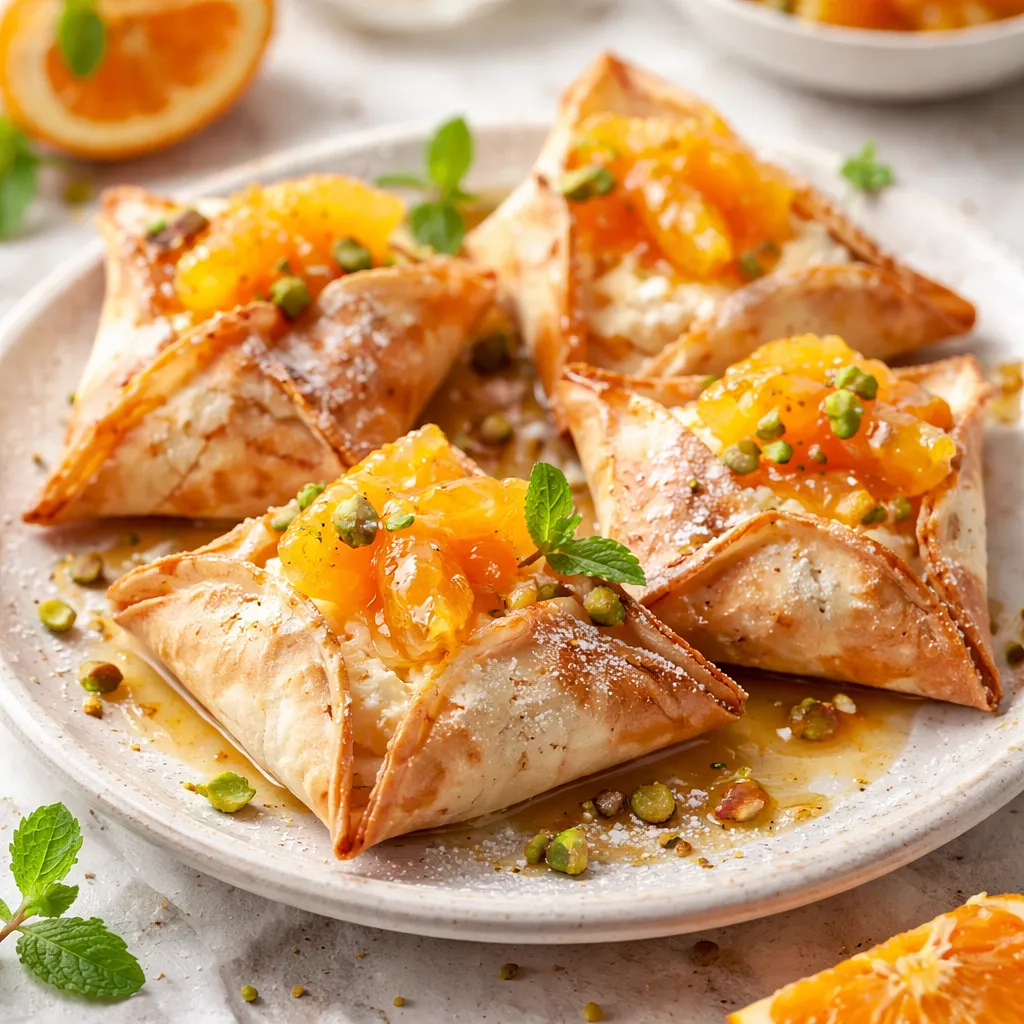
Quick filo pastry envelopes with ricotta cream and glazed oranges

Desserts Breakfasts 40 min Easy 10 wyświetleń ~35.59 PLN - (0)
Rate:
(0)
Start Cooking

Description

Delicate, winter dessert envelopes made of thin layers of filo pastry filled with a creamy ricotta mousse, subtly sweetened and thickened with cornstarch, and fresh, glazed orange slices. This quick, impressive dish combines creamy, slightly tangy ricotta with juicy, shiny pieces of citrus and a crispy, golden filo shell. The dessert is perfect as a light finale to a holiday meal, for afternoon coffee, or as an eye-catching menu highlight with minimal effort. Flavor attributes: the creaminess and delicate sweetness of ricotta balanced by the juicy acidity of oranges, while texturally contrasting with the flaky, buttery filo and toasted pistachios. Visual attributes: golden envelopes, shiny oranges, and green accents of pistachios give the dish elegance and freshness.

Ingredients Used

Ingredients (11)

Servings:
4
  • Ricotta cheese 250 g
  • Egg 1 szt.
  • Butter 30 g
  • Cornstarch 10 g
  • Orange 1.5 szt.
  • Filo pastry 160 g
  • Sugar 60 g
  • 🌿 Przyprawy
  • Salt 0.0 szczypt
  • ✨ Opcjonalne
  • Vanilla extract 5 g
  • Roasted pistachios 40 g
  • Powdered sugar 10 g
💰 Szacowany koszt dania: ~35.59 PLN (8.90 PLN/porcję)

💡 Kliknij na składnik aby oznaczyć jako użyty

Preparation steps

Preparing the oranges

1

Wash and dry the oranges. Using a sharp knife, thinly cut off the ends of the fruit, set the orange on one of the cut ends and slice the skin off from top to bottom, exposing the flesh. Holding the orange over a cutting board, cut the segments between the membranes: slide the knife along the membrane and cut out each segment, collecting the fillets in a bowl. Squeeze the juice from the cut membranes and leftovers into a separate bowl (you should get about 50 ml). From one orange, before filleting, finely grate the zest (only the orange part of the peel) using a fine grater — you will use it for flavor.

Ingredients: Orange
Use a sharp, narrow knife (e.g., a filleting knife) and a stable cutting board. If it's your first time, practice slow, precise cuts — the fillets should be free of the white part (albedo), which gives a nice appearance and prevents bitterness. Collect the juice and fillets separately.
Orange glaze

2

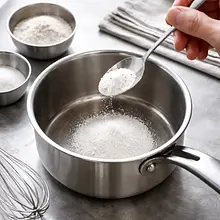
In a small saucepan, mix 30 g of white sugar with 10 g of cornstarch. Add the freshly squeezed orange juice (about 40–60 ml) and whisk vigorously to dissolve the cornstarch without lumps. Place the saucepan over medium heat and heat, stirring constantly, until the mixture begins to gently bubble and thickens — this usually takes about 1–2 minutes. When it is thick and glossy (it should coat the back of a spoon well), remove from heat and add the orange segments and grated zest, gently mixing to coat the fruit with the glaze. Set aside to cool slightly (3–5 minutes).

Ingredients: Sugar, Cornstarch, Orange
Use a small saucepan with a thick bottom (diameter 14–16 cm). Stir constantly, as the starch gels quickly and can burn. The correct consistency is a smooth, slightly translucent glaze that coats the fillets without dissolving their structure.

Ricotta cream

3

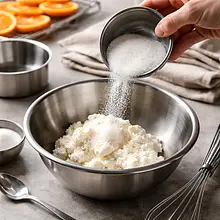
In a medium-sized bowl, place 250 g of ricotta cheese. Add 30 g of sugar (the remaining sugar is reserved for optional decoration and flavor), a pinch of salt, and optionally 5 g of vanilla extract (if using). In a separate small bowl, whisk one egg (60 g), then pour it in a thin stream into the ricotta, whisking vigorously until the mixture becomes smooth and uniform. If the cream is too loose, you can add 1–2 teaspoons (5–10 g) of cornstarch, previously dissolved in 1 tablespoon of cold water, and briefly heat the mixture in a saucepan over low heat for 1 minute, stirring constantly — the mixture should slightly thicken and become creamy. After combining the ingredients, let the cream sit for 5 minutes to allow the flavors to meld.

Ingredients: Ricotta cheese, Egg, Sugar, Salt, Vanilla extract, Cornstarch
Use a bowl with a wider base and a hand whisk or spoon. If you're worried that the egg will curdle while heating, heat it very briefly over low heat and stir vigorously. The proper cream is smooth, soft, not watery, and can be used to fill filo envelopes.

Preparing filo dough

4

Preheat the oven to 200°C (top and bottom heat). Lay out the sheets of filo pastry on a clean, dry surface and cover them with a damp cloth to prevent them from drying out. Melt 30 g of butter in a small saucepan or microwave. Take a single sheet of filo (about 20 g each; if the sheets are larger, cut them into 4 equal rectangles), and gently brush it with the melted butter using a pastry brush (especially the edges). On the shorter side of the sheet, place a portion of ricotta cream (about 60 g), leaving a ~2 cm margin from the edges. Fold the sheet like an envelope: first fold in the edges, then roll it into a rectangle or a folded triangle, creating tight 'envelopes'. Repeat with the remaining sheets and cream. Arrange the envelopes on a baking sheet lined with parchment paper, brushing the tops lightly with butter.

Ingredients: Filo pastry, Butter, Ricotta cheese
It's best to use a silicone brush to spread the butter (it's easier than using a spoon). If you don't have a small knife for dividing the sheets, use kitchen scissors. Don't overload the envelopes with cream — too wet a filling can soak the filo and prevent it from becoming crispy.

Baking

5

Place the baking tray with the envelopes in the preheated oven and bake for 10–12 minutes at 200°C, until the envelopes become golden and crispy. Watch the edges — the right moment is when they are evenly golden with slightly darker, crispy ends. After baking, remove the tray and let the envelopes cool slightly on a rack (2–3 minutes).

Ingredients: Filo pastry
The best option is a non-stick baking tray or parchment paper. Do not bake for too long — filo browns quickly. If your oven has a hot spot, rotate the tray halfway through the baking time.

Assembly and decoration

6

On a plate, place one or two filo envelopes. On top of each envelope, arrange 2–3 glazed orange fillets so they shine. Gently sprinkle with chopped pistachios (if using) and sift a small amount of powdered sugar over for a snowy effect. Serve the dessert slightly warm — the envelopes will be crispy, and the cream will be slightly warm and delicate, which nicely contrasts with the cold oranges.

Ingredients: Roasted pistachios, Powdered sugar, Orange, Ricotta cheese
Use a fine sieve to evenly dust with powdered sugar. Additionally, you can add fresh mint leaves for color. Serve immediately, as the filo quickly loses its crispness due to moisture.

Fun Fact

💡

Filo pastry comes from Middle Eastern and Balkan cuisine; its thin layers provide exceptional crispiness, and combining filo with ricotta is a popular Italian pairing (e.g., in some variations of baklava and ricotta desserts).

Best for

Tips

🍽️ Serving

Serve the envelopes slightly warm, accompanied by a cup of strong coffee or delicate tea. For a temperature contrast, you can serve a portion of chilled Greek yogurt alongside instead of pistachios. Arrange the envelopes asymmetrically and add a few orange fillets for decoration.

🥡 Storage

Best consumed immediately — filo loses its crispness after a few hours. If you need to store it, keep the envelopes in an airtight container at room temperature for up to 12 hours (they will lose their crispness). Store the glazed oranges separately in the refrigerator for up to 24 hours in an airtight container; reheat the envelopes in the oven (5 min at 180°C), then add the oranges just before serving.

📸 Ugotowane przez społeczność

Zaloguj się, aby dodać zdjęcie
Dodaj zdjęcie gotowej potrawy

Po zatwierdzeniu przez moderatora otrzymasz 10 punktów doświadczenia.

🍲

Nikt jeszcze nie dodał zdjęcia. Bądź pierwszy!

Comments (0)

Be the first to comment on this recipe!

Add a comment

You might also like

Recipe Categories

Desserts
Desserts in: New Year's Eve

A sweet ending to the New Year's Eve dinner is a must-have that will put everyone in a joyful mood for the new year.

See all recipes in this category

Breakfast is the most important meal of the day - energy for a good start and a tasty morning. Scrambled eggs, fried eggs, poached eggs, and omelets - protein classics. Oatmeal with fruits, nuts, and honey - a healthy and filling fit breakfast. American pancakes and French crepes - a sweet start ...

See all recipes in this category
Reklama