Deconstructed Tomato Soup with Basil Foam and Parmesan Spheres

Pikantne Appetizers Dishes for Special Occasions Soups 120 min Medium 10 wyświetleń ~38.12 PLN - (0)
Rate:
(0)
Start Cooking

Description

This is not an ordinary soup; it is a culinary experience that transports everyday flavors into the realm of molecular cuisine. Deconstructed tomato soup is an artistic interpretation of a classic dish, where each element plays a leading role. Instead of a thick cream, you get a crystal-clear, intensely flavored tomato broth (consommé) that is the essence of sun-ripened tomatoes. Accompanying it are delicate, bursting spheres that release a deep, salty flavor of parmesan – a result of the spherification technique. The dish is topped with a cloud-like, aromatic foam made from fresh basil, created using soy lecithin. This dish is a journey through various textures and temperatures, surprising and delighting the palate. Perfect as an elegant appetizer for a special occasion, it will surely intrigue and impress your guests, showcasing that modern cooking techniques can be accessible even in a home kitchen.

Ingredients (16)

Servings:
2
  • Raspberry tomatoes 6 szt.
  • Shallot 60 g
  • Garlic 2 ząbki
  • Extra virgin olive oil 0.2 łyżek
  • Vegetable broth 250 ml
  • Fresh basil 1 pęczek
  • Soy lecithin powder 1 łyżeczka
  • Ser parmezan (parmigiano reggiano) 50 g
  • Milk 3.2% 100 ml
  • Sodium alginate 1 łyżeczka
  • Calcium chloride 1 łyżeczka
  • Water 1000 ml
  • sugar 5 g
  • 🌿 Przyprawy
  • Salt 0.1 szczypt
  • ✨ Opcjonalne
  • Cherry tomatoes 100 g
  • Micro-basil 5 g
💰 Szacowany koszt dania: ~38.12 PLN (19.06 PLN/porcję)

💡 Kliknij na składnik aby oznaczyć jako użyty

Preparation steps

Clear Tomato Broth (Consommé)

1

Preheat the oven to 200°C (fan). Wash the tomatoes and cut them in half. Peel the shallots and garlic, and cut the shallots in half. Arrange the vegetables on a baking tray, drizzle generously with olive oil, and season with salt and sugar. Bake for about 30-40 minutes, until the tomatoes start to caramelize at the edges and their skin is slightly charred. This is key to bringing out the deep, sweet flavor.

Ingredients: Raspberry tomatoes, Shallot, Garlic, Extra virgin olive oil, Salt, sugar
Use a baking tray lined with parchment paper, which will make cleaning easier. Don't be afraid of slightly charring the edges of the tomatoes – it will add a smoky aroma to the broth. Keep an eye on the vegetables towards the end of baking to avoid burning them.
2

Transfer the roasted vegetables along with all the juices they released into a pot. Add vegetable broth. Bring to a boil, then reduce the heat and simmer for about 20 minutes to allow the flavors to meld. Stir occasionally.

Ingredients: Vegetable broth
Use a heavy-bottomed pot to prevent sticking. You don't need to peel the tomatoes – everything will be strained later.
3

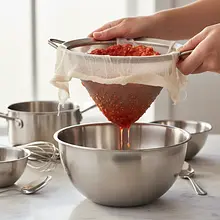
Prepare a large bowl and place a fine sieve lined with a double layer of cheesecloth or a coffee filter on top. Pour the entire contents of the pot into the sieve. Now for the most important moment: allow the liquid to drip freely into the bowl. Do not rush the process, do not squeeze the vegetables, as this will cause the broth to become cloudy. This process may take about 1-2 hours. Patience will be rewarded with a crystal clear, aromatic liquid.

This is the most important step for achieving clarity. You can leave the mixture in the fridge overnight to allow the liquid to filter calmly. The vegetable pulp left in the sieve can be used as a base for pasta sauce.

Parmesan Spheres

4

In a small saucepan, heat the milk. Do not bring to a boil. Remove from heat and add the grated Parmesan. Stir with a whisk until the cheese is completely melted. Set aside for 5 minutes to cool slightly. Then add sodium alginate and blend everything with an immersion blender for about 1 minute, until the mixture is smooth. Set aside for at least 30 minutes to eliminate air bubbles.

Ingredients: Ser parmezan (parmigiano reggiano), Milk 3.2%, Sodium alginate
Blend, keeping the end of the blender submerged in the liquid to avoid incorporating extra air. If the foam still persists, you can gently strain the liquid through a fine sieve.
5

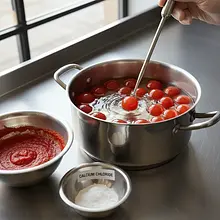
In a large, flat bowl, prepare a calcium bath. Dissolve calcium chloride thoroughly in 500 ml of cold water, stirring with a spoon until the liquid becomes clear. Prepare a second bowl with clean water for rinsing the spheres. Draw the parmesan mixture into a syringe or pipette. Drop the mixture into the calcium bath from a height of about 5-10 cm. The drops will immediately form a gel-like coating upon contact with the water and sink to the bottom as small balls.

Ingredients: Calcium chloride, Water
Work in batches, do not drop too many balls at once to avoid them sticking together. The size of the balls depends on the tool used – a syringe will create larger 'ravioli', while a pipette will make smaller 'caviar'.
6

After about 1-2 minutes, gently remove the spheres from the calcium bath using a slotted spoon. Immediately transfer them to a bowl of clean water to stop the gelling process and wash away the salty taste of calcium chloride. After a few seconds, remove them again and gently dry on a paper towel.

Do not keep the spheres in the calcium bath for too long, as they will become completely gel-like on the inside. The goal is a liquid center and a thin, gel-like shell. Store the finished spheres in a bit of olive oil to prevent them from sticking together, but it's best to use them immediately.

Basil Foam

7

Prepare a bowl of ice-cold water. In a small pot, bring water to a boil. Tear the basil leaves from the stems. Drop the leaves into the boiling water for just 10-15 seconds (blanching process), then immediately scoop them out with a slotted spoon and transfer to the ice-cold water. This will stop the thermal shock and preserve the beautiful, vibrant green color of the basil.

Ingredients: Fresh basil
Blanching is key for the color of the foam. Skip this step, and the foam will have a dull, unappetizing color. Make sure the water is really ice-cold – add ice cubes.
8

Drain the blanched basil thoroughly and place it in a tall container. Add 150 ml of cold water, a pinch of salt, and a pinch of sugar. Blend everything into a smooth, uniform liquid. Strain the liquid through a very fine sieve to remove any leaf remnants. To the clear, green liquid, add soy lecithin.

Ingredients: Soy lecithin powder, Salt, sugar, Water
Use a tall and narrow container, which will make it easier to create the foam. Thoroughly straining the liquid is important for achieving a smooth texture of the foam.
9

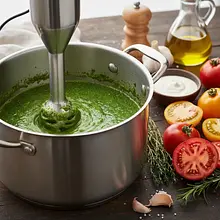
Immerse the hand blender in the green liquid, but keep it just below the surface, slightly tilting the container. Turn on the blender. The goal is for the blender to 'catch' as much air as possible and incorporate it into the liquid. After about 1-2 minutes, a thick, stable foam will form on the surface. Set it aside for a moment to allow the foam to separate from the liquid.

The key is to keep the blender on the surface. If you submerge it too deep, you'll just blend the liquid. The foam is most stable right after preparation, so make it at the very end.

Final Assembly of the Dish

10

Gently heat the clear tomato broth to a temperature of about 60°C – it should be warm, but not hot, so as not to damage the spheres and foam. Pour a portion of the broth into a wide, deep bowl or plate. Using a spoon, gently place 5-7 parmesan spheres into the broth. On top, in the center, place a large spoonful of fluffy basil foam, scooping it from the surface of the dish. Optionally, garnish with halved cherry tomatoes and micro-basil leaves. Serve immediately.

Ingredients: Cherry tomatoes, Micro-basil
Serve in dishes that will showcase the composition – white or glass bowls will work best. Prepare each element just before serving to maintain its perfect texture and temperature. This dish is a spectacle, so it's worth assembling it in front of your guests.

Fun Fact

💡

Molecular cuisine, popularized by chefs like Ferran Adrià, is not about 'chemical' food, but about understanding the physical and chemical processes that occur during cooking. Techniques such as spherification were developed in the 1950s, but it was modern chefs who introduced them to the world of haute cuisine, changing our perception of the texture and form of food.

Best for

Tips

🍽️ Serving

Serve in wide, shallow bowls to beautifully showcase all three elements. Provide a small spoon so guests can simultaneously scoop up the broth, the sphere, and the foam, experiencing a full range of flavors and textures in one bite. The consommé should be warm, but not hot (about 60°C), otherwise the foam will quickly disappear, and the spheres may burst.

🥡 Storage

This dish is meant to be consumed immediately. However, the components can be prepared in advance: the clear tomato broth can be stored in the refrigerator for up to 2 days. The mixture for the parmesan spheres (before adding to the bath) can be kept in the refrigerator for a few hours. The basil liquid can also be stored. However, the spheres and foam should be made just before serving, as they quickly lose their properties.

📸 Ugotowane przez społeczność

Zaloguj się, aby dodać zdjęcie
Dodaj zdjęcie gotowej potrawy

Po zatwierdzeniu przez moderatora otrzymasz 10 punktów doświadczenia.

🍲

Nikt jeszcze nie dodał zdjęcia. Bądź pierwszy!

Comments (0)

Be the first to comment on this recipe!

Add a comment

You might also like

Recipe Categories

Appetizers
Appetizers in: Christmas Eve Dinner

Appetizers open the meal and prepare the palate for the following dishes. In this category, we present elegant and tasty appetizers for every occasion. Our recipes include carpaccio, tartare, bruschetta, antipasti, and skewers. You will find both cold and warm appetizers here. We pay special atte...

See all recipes in this category

Dishes for special occasions are culinary masterpieces for birthdays, anniversaries, and holidays. Grilled beef steak with herb butter - restaurant quality at home. Beef Wellington - beef in puff pastry with duxelles. Roast duck with apples - a holiday tradition in a new edition. Pink salmon with...

See all recipes in this category
Soups
Soups in: New Year's Eve

Soups for New Year's Eve can be both warming and light, perfect to serve before the main course.

See all recipes in this category

European cuisine is a mosaic of culinary traditions from the Old Continent - from Spain to Scandinavia. Valencian paella and tapas from Spain - sunshine on a plate. Boeuf bourguignon and ratatouille from France - elegance and finesse. Wiener schnitzel and strudel from Austria - Central European c...

See all recipes in this category
Reklama