Pumpkin and Paneer Cheese Kofta in Saffron-Cardamom Sauce

Pikantne Indian Cuisine Vegetarian Dishes Dishes for Special Occasions 90 min Medium 8 wyświetleń ~33.21 PLN - (0)
Rate:
(0)
Start Cooking

Description

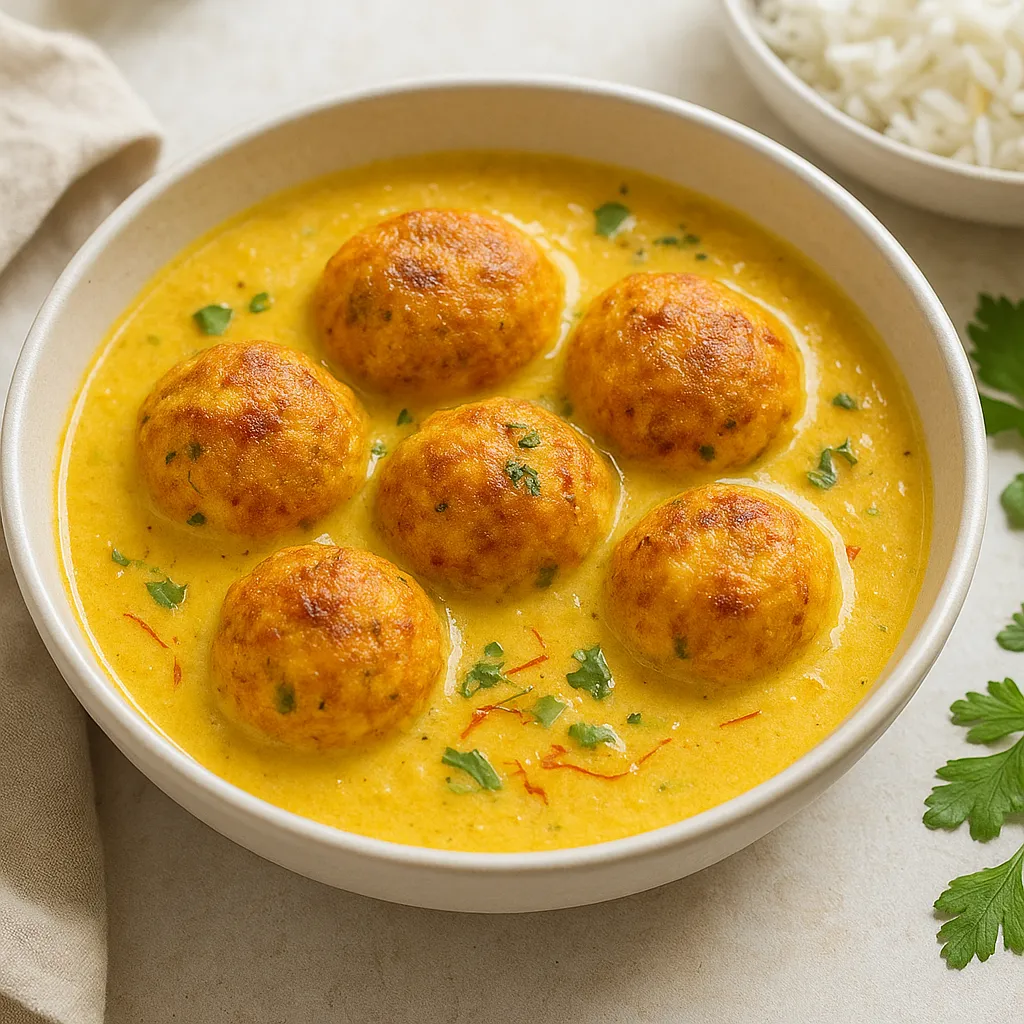
This is a unique dish, a vegetarian answer to classic meatballs, inspired by the rich Mughlai cuisine of northern India. Delicate, melt-in-your-mouth balls (koftas) are made from seasonal, slightly sweet Hokkaido pumpkin, creamy paneer cheese, and potatoes that bind everything together. They are golden and crispy on the outside, yet soft and fluffy on the inside. However, the true star is the velvety, incredibly aromatic sauce. Its deep, creamy flavor comes from cashews, while the finest spices give it a unique character: saffron, which colors the sauce a beautiful golden hue and adds a subtle bitterness, and green cardamom, bringing a refreshing, slightly citrus note. The dish is not only a feast for the palate but also for the eyes – its intense color and elegant presentation make it perfect for special occasions. Serve it with naan bread or basmati rice to fully enjoy every bite of this royal curry.

Ingredients (23)

Servings:
4
  • Hokkaido pumpkin 300 g
  • Paneer cheese 200 g
  • Potato 1 szt.
  • Chickpea flour (besan) 3 łyżki
  • Cashews 70 g
  • Onion 2 szt.
  • Tomatoes 3 szt.
  • Fresh ginger 20 g
  • Garlic 3 ząbki
  • 30% cream 100 ml
  • Vegetable oil for frying 500 ml
  • Ground coriander 2 g
  • sugar 5 g
  • Water 250 ml
  • Warm milk 30 ml
  • 🌿 Przyprawy
  • Saffron 0.2 g
  • Green cardamom 4 szt.
  • Ground turmeric 0.2 łyżeczek
  • ground cumin 0.4 łyżeczek
  • Garam masala 2 g
  • Salt 8 g
  • ✨ Opcjonalne
  • Green chili 1 szt.
  • Fresh cilantro 8 g
💰 Szacowany koszt dania: ~33.21 PLN (8.30 PLN/porcję)

💡 Kliknij na składnik aby oznaczyć jako użyty

Preparation steps

Preparation of Kofta

1

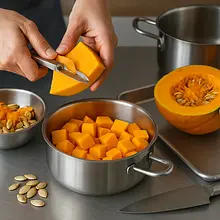
Start by preparing the vegetables. Peel the pumpkin, remove the seeds, and cut the flesh into cubes about 2 cm on each side. Peel the potato and also cut it into cubes. Place both vegetables in a pot, cover with water just to their level, and cook until soft, about 15-20 minutes. Alternatively, you can steam them, which will prevent excess water absorption. After cooking, drain the vegetables very thoroughly in a colander and let them sit for a few minutes to steam off. Transfer to a large bowl and mash with a potato masher until smooth purée.

Ingredients: Hokkaido pumpkin, Potato
This is a key step! If the mixture is too watery, the koftas will fall apart while frying. Steaming is the best method. Make sure the purée is completely cooled before adding the remaining ingredients.
2

To the cooled pumpkin and potato purée, add the crumbled paneer cheese. You can grate it on a coarse grater or crumble it finely with your fingers to avoid large lumps. Then add the chickpea flour, finely grated ginger, garam masala, and salt. If using, add finely chopped green chili. Now mix all the ingredients thoroughly with your hand until a uniform, compact mass is formed that does not stick too much to your hands.

Ingredients: Paneer cheese, Chickpea flour (besan), Fresh ginger, Garam masala, Salt, Green chili
Use a large, wide bowl to comfortably knead the mixture. If the mixture is too sticky, add a little more chickpea flour (half a teaspoon at a time). If it is too dry, you can add a teaspoon of water. The consistency should resemble dumpling dough.
3

Moisten your hands with a little oil to prevent the mixture from sticking. Take portions of the mixture (about 1 heaping tablespoon) and shape them into smooth balls the size of a walnut in your hands. Try to make them all similar in size to ensure even frying. Place the formed koftas on a board or plate lined with baking paper.

Do not make the balls too large, as they may remain raw in the center. A smooth surface without cracks will prevent excessive absorption of fat and falling apart during frying.

Frying Kofta

4

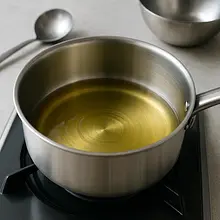
In a deep pot or a wok, heat vegetable oil. You need enough oil for the koftas to float freely (about 4-5 cm deep). The oil is ready when a small piece of the mixture dropped in immediately rises to the surface, sizzling. The optimal temperature is around 170-180°C. Gently place the koftas into the hot oil, a few at a time, to avoid drastically lowering the temperature of the fat.

Ingredients: Vegetable oil for frying
Use a heavy-bottomed pot that distributes heat evenly. Too low oil temperature will cause the koftas to soak up fat, while too high will burn them on the outside, leaving them raw inside. Watch out for splattering oil!
5

Fry the koftas for 3-4 minutes, gently turning them during cooking, until they become evenly golden brown and crispy on all sides. Remove the cooked koftas with a slotted spoon and place them on a plate lined with paper towels to drain excess fat. Repeat the process with the remaining balls.

Do not overcrowd the pan! Frying in small batches ensures the oil temperature remains consistent and results in a crispy outcome. Draining on paper towels is important to prevent the dish from being too greasy.

Preparing the Sauce

6

In a small bowl, pour hot water over 50g of cashews and let them sit for 15-20 minutes to soften. In another small bowl, soak the saffron threads in warm milk and set aside as well. Meanwhile, prepare the remaining sauce ingredients: chop the onion, tomatoes, ginger, and garlic into large cubes.

Ingredients: Cashews, Saffron, Warm milk, Onion, Tomatoes, Fresh ginger, Garlic
Soaking the cashews is key to achieving a perfectly smooth and creamy sauce. Don't skip this step! The softened nuts blend much more easily, leaving no lumps.
7

In a deep skillet or pot, heat 2 tablespoons of oil. Add lightly crushed cardamom pods and sauté for 30 seconds until they release their aroma. Add the chopped onion and cook over medium heat for 5-7 minutes until it becomes soft and translucent. Then add ginger and garlic, and sauté for another minute. Add the chopped tomatoes and drained, soaked cashews. Stir and cook for 5-6 minutes until the tomatoes start to break down.

Ingredients: Vegetable oil for frying, Green cardamom, Onion, Fresh ginger, Garlic, Tomatoes, Cashews
Use a frying pan with a diameter of at least 26 cm and higher edges. Sauté the onion until it becomes translucent, not browned, to bring out its natural sweetness, which is desired in this sauce.
8

Add the powdered spices: turmeric, cumin, coriander, and salt. Mix everything thoroughly and sauté for about 2 minutes, until the spices become very aromatic and the fat starts to separate from the mixture. Remove the pan from the heat and let it sit for 5-10 minutes to cool slightly.

Ingredients: Ground turmeric, ground cumin, Ground coriander, Salt
Toasting spices in fat is key to bringing out their full aroma and flavor. Do not burn them, as they will become bitter. Allowing the mixture to cool before blending is important for safety reasons – hot steam can 'pop' the blender lid.
9

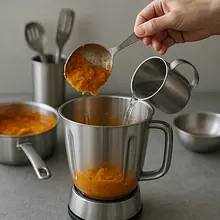
Transfer the cooled mixture to a high-power blender. Add about 100 ml of water and blend until you achieve a perfectly smooth, velvety paste. This may take a few minutes. If the paste is too thick, add a little more water. The sauce should have the consistency of thick cream.

Ingredients: Water
To achieve an absolutely silky consistency, typical of restaurant dishes, you can strain the blended sauce through a fine sieve. Use a countertop blender, as an immersion blender may not achieve the perfect smoothness.
10

Pour the smooth sauce back into a clean pan. Add the remaining water (about 150 ml), saffron milk, and sugar. Bring to a boil, then reduce the heat and simmer for 5-7 minutes to allow the flavors to meld. The sauce should thicken slightly.

Ingredients: Water, sugar, Saffron, Warm milk
Cooking the sauce after blending is important to 'cook' out the raw taste of the spices and allow the flavors to fully develop. Stir occasionally to prevent the sauce from sticking to the bottom.
11

Finally, remove the pan from the heat. Slowly pour in the cream, stirring constantly to combine it with the sauce, creating a smooth, creamy consistency. Taste the sauce and season with salt if needed. Do not cook the sauce after adding the cream to prevent it from curdling.

Ingredients: 30% cream, Salt
Adding cream off the heat is a professional technique that prevents it from curdling due to high temperatures and the acidity of the tomatoes. The sauce will immediately become brighter and even creamier.

Final Presentation

12

There are two ways to serve this dish. The first: just before serving, gently place the fried koftas into the hot sauce and heat together for 1-2 minutes. The second, preferred: arrange the koftas in a deep serving dish and pour hot sauce over them. This way, the koftas will retain their crispiness longer. On top, decorate the dish with a dollop of cream and sprinkle with fresh coriander leaves.

Ingredients: Fresh cilantro, 30% cream
Never cook kofta in the sauce for too long, as they will become soggy and may fall apart. The dish tastes best served immediately after preparation.

Fun Fact

💡

Malai Kofta, on which this recipe is based, is a dish with roots in Mughlai cuisine, known for its rich, creamy, and aromatic dishes. The use of nuts, cream, and saffron is a hallmark of this royal culinary tradition, which combined Persian and Indian cooking styles, creating some of the most refined dishes on the subcontinent.

Best for

Tips

🍽️ Serving

Serve the dish immediately after preparation, hot. It tastes best with warm naan bread or garlic roti for dipping in the velvety sauce. Alternatively, serve with fluffy basmati rice, which will perfectly absorb the richness of flavors. A delicate drizzle of cream and fresh coriander leaves on top will add elegance to the dish. You can also sprinkle the dish with almond flakes for extra crunch.

🥡 Storage

Store the sauce and koftas SEPARATELY in airtight containers in the fridge for up to 2 days. The koftas will lose their crispiness but will still be tasty. To reheat, warm the sauce over low heat until hot. You can gently heat the koftas in the oven (150°C for 5-7 minutes) or place them in the hot sauce for 1-2 minutes just before serving. Do not freeze the finished dish, as the cream in the sauce may curdle, and the koftas will become soggy.

📸 Ugotowane przez społeczność

Zaloguj się, aby dodać zdjęcie
Dodaj zdjęcie gotowej potrawy

Po zatwierdzeniu przez moderatora otrzymasz 10 punktów doświadczenia.

🍲

Nikt jeszcze nie dodał zdjęcia. Bądź pierwszy!

Comments (0)

Be the first to comment on this recipe!

Add a comment

You might also like

Recipe Categories

Indian cuisine is a fascinating journey through a continent of spices - from mild to fiery. Curry in a hundred variations: tikka masala, butter chicken, korma, vindaloo, and madras. Biryani, pulao, and dal - rice and lentil dishes full of aroma. Naan, chapati, and paratha - Indian breads baked in...

See all recipes in this category

Vegetarian cuisine is a wealth of flavors without meat - healthy, colorful, and filling. Plant-based proteins: lentils, chickpeas, beans, peas, and soy take center stage. Cheeses and dairy: feta, halloumi, ricotta, and mascarpone in main dishes. Eggs in various forms: omelets, frittata, shakshuka...

See all recipes in this category

Dishes for special occasions are culinary masterpieces for birthdays, anniversaries, and holidays. Grilled beef steak with herb butter - restaurant quality at home. Beef Wellington - beef in puff pastry with duxelles. Roast duck with apples - a holiday tradition in a new edition. Pink salmon with...

See all recipes in this category
Main Dishes
Main Dishes in: Christmas Eve Dinner

Main courses are the heart of every meal - hearty, delicious, and full of nutrients. Meats: beef, pork, poultry, and lamb in various versions. Fish and seafood: baked, fried, grilled, and stewed. Vegetarian dishes: tofu, tempeh, legumes as the main protein. Casseroles: pasta, potato, vegetable wi...

See all recipes in this category
Reklama