Take the tenderloin out of the fridge 20-30 minutes before cooking to reach room temperature — this will ensure even frying. Place the meat on a cutting board. Use a sharp knife to remove the white membrane (known as 'silverskin' or 'diaphragm') by gently pulling it along the meat, holding the knife at an angle and cutting with thin strokes. Then, slice the tenderloin into medallions about 2-2.5 cm thick (you should get about 8 medallions).
Description
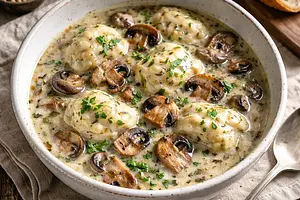
Delicate pork tenderloins in a creamy sauce are an elegant dish perfect for a romantic Valentine's dinner. The tenderloin is the leanest and noblest part of the pork — when properly seared, it remains very juicy and tender. The sauce, made with 30% cream and enhanced with finely sautéed onions, garlic, and a touch of Dijon mustard (optional), is velvety, slightly spicy, and aromatic. The dish pairs wonderfully with mashed potatoes, gnocchi, polenta, or delicate stir-fried vegetables; you can enhance the presentation with fresh herbs and a few drops of oil. Visually - golden meat medallions immersed in a creamy, light beige sauce, decorated with green thyme or parsley leaves - very appealing and just right for a special dinner for two.
Ingredients (12)
- Polędwiczka wieprzowa 600 g
- 30% heavy cream 250 g
- Onion 1 szt.
- Garlic 2 ząbki
- Butter 30 g
- Rapeseed oil 15 g
- Wheat flour 30 g
- 🌿 Przyprawy
- Salt 0.1 szczypt
- Black pepper 4 szczypty
- ✨ Opcjonalne
- Dry white wine 100 ml
- Dijon mustard 20 g
- Fresh thyme 0.1 pęczków
💡 Kliknij na składnik aby oznaczyć jako użyty
Preparation steps
Meat preparation
Prepare a plate with flour. Lightly sprinkle each medallion with salt (about 0.3 g per medallion) and freshly ground pepper. Then, lightly coat each medallion in flour — shake off the excess. The flour will create a thin layer that will turn into a golden crust while frying and slightly thicken the sauce.
Heat a large skillet (preferably cast iron or with a thick bottom) over medium-high heat. Add canola oil and half of the butter (about 15 g). When the fat is shimmering and slightly smoking, place the medallions in the skillet in a single layer, do not crowd — fry in batches if necessary. Fry for 2.5-3 minutes without turning until the bottom is nicely golden, then flip and fry for another 2-3 minutes. The meat is ready when it has a golden crust on the outside and the internal temperature reaches about 62-65°C (you can use a kitchen thermometer).
Resting the meat
After frying, transfer the medallions to a board and loosely cover with aluminum foil or a plate. Let them rest for 5-8 minutes — the juices will distribute evenly in the meat and it will remain juicy.
Cream sauce
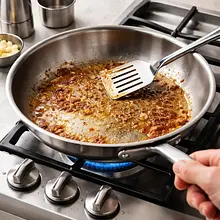
Leave the remnants from frying (the so-called 'fond') in the pan — this is the flavor base. Reduce the heat to medium. If there is a lot of fat in the pan, remove some (drain with a spoon). Add the remaining butter (about 15 g) and finely chopped onion. Fry for 4-5 minutes, stirring occasionally, until the onion is translucent and soft. Do not fry too long to avoid it browning too much.
Add finely chopped garlic and sauté together for 20-30 seconds, stirring — this releases the aroma, but the garlic should not burn. If you are using wine, pour it in now (100 ml) and cook for 60-90 seconds over medium heat, stirring and scraping the brown bits from the bottom of the pan — the wine should evaporate and reduce by half, which will concentrate the flavor.
Pour in the heavy cream (250 ml) and mix well. Reduce the heat to low/medium and cook for 5-7 minutes, stirring frequently, until the sauce thickens slightly and coats the back of a spoon. If you want to add Dijon mustard (optional), stir it in now (20 g) — it will give the sauce a spicy touch and help with the consistency.
Taste the sauce and season with salt and freshly ground pepper (add 1-2 g of salt and 1 g of pepper, then adjust to taste). If the sauce is too thin, mix 10 g of flour with 20 ml of cold water to a smooth paste and pour it in a thin stream into the sauce, stirring vigorously — cook for another 1-2 minutes until it reaches the desired thickness.
Assembly and serving
Add fresh thyme leaves (optional) or finely chopped parsley to the sauce, and mix. Return the medallions to the pan with the sauce for 1-2 minutes to heat through and absorb the flavor of the sauce. Do not cook for too long — the meat should just be warmed, not dried out.
Before serving, arrange the medallions on warmed plates, generously drizzle with sauce, and garnish with fresh thyme leaves. Serve immediately with your choice of side (mashed potatoes, gnocchi, couscous, or tender vegetables). Serve right away while the sauce is still warm and creamy.
Fun Fact
Pork tenderloin is one of the most tender parts of the animal and was once considered a royal delicacy. In European kitchens, it was often served at celebrations as an exquisite meat.
Best for
Tips
Serve the tenderloin with velvety mashed potatoes or delicate polenta, along with light, crunchy vegetables (e.g., green beans, zucchini). To add contrast, drizzle a few drops of lemon juice on the plate or serve a portion of caramelized onions alongside. For an elegant effect, use wide, warmed plates and a sprinkle of fresh herbs as decoration.
Store meat and sauce separately in airtight containers in the refrigerator for up to 2 days. Gently reheat over low heat, stirring to prevent the sauce from curdling; if the sauce thickens, add 1-2 tablespoons of milk or cream. Do not freeze cream-based sauce (it may separate) — if necessary, it's better to freeze the raw meat separately.
📸 Ugotowane przez społeczność
Zaloguj się, aby dodać zdjęcieDodaj zdjęcie gotowej potrawy
Po zatwierdzeniu przez moderatora otrzymasz 10 punktów doświadczenia.
Nikt jeszcze nie dodał zdjęcia. Bądź pierwszy!
Comments (0)
Be the first to comment on this recipe!
Add a comment