Prepare the filling: wash the apples and peel them, remove the cores, and then cut into small pieces (about 1 cm). Cut the dried plums into strips. In a large skillet, heat 15 g of rapeseed oil over medium heat. Add the chopped onion (finely diced) and sauté for 5–7 minutes until it becomes translucent, soft, and slightly golden. Add the minced garlic and sauté for 30 seconds until fragrant. Add the apples and plums, and sauté for another 6–8 minutes until the apples soften but do not break apart — they should be soft while retaining their shape. Finally, add 2 teaspoons of dried marjoram (4 g) and gently mix.
Description
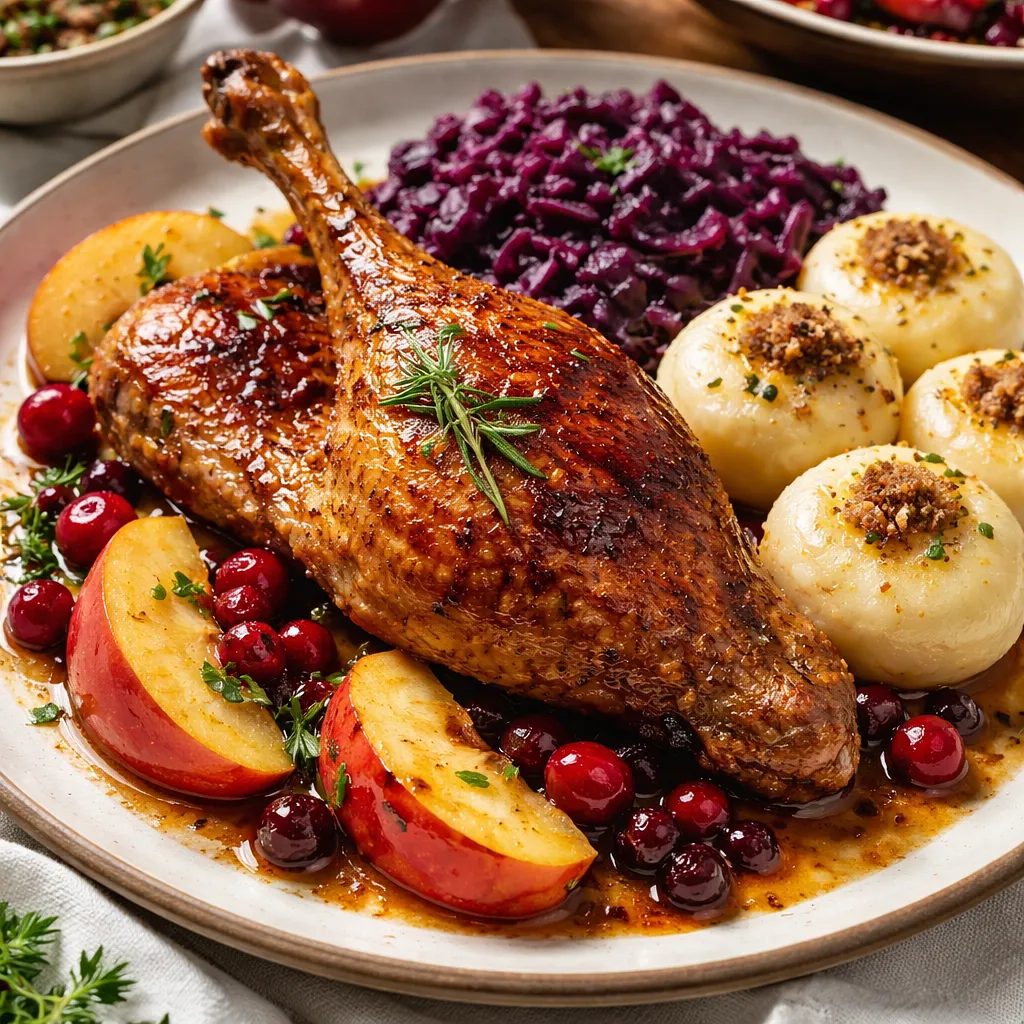
Traditional, seasonal roasted duck inspired by the regional cuisine of Poland — a juicy bird stuffed with a mixture of apples, dried plums, and marjoram, glazed with honey and balsamic vinegar, served alongside braised red cabbage with apples and classic Silesian dumplings. The dish combines the sweetness of fruits and honey with the spicy aroma of marjoram, crispy skin, and the creamy texture of the dumplings. It looks very impressive: the golden skin of the duck, the deep purple of the cabbage, and the white, smooth dumplings create a color contrast perfect for a festive or Sunday dinner. It pairs wonderfully with the roasting sauce and a glass of red wine.
Ingredients Used
Ingredients (18)
- Duck (whole) 1800 g
- Apple 2.5 szt.
- Dried plums 100 g
- Onion 1 szt.
- Garlic 2 ząbki
- Honey 30 ml
- Balsamic vinegar 30 ml
- Rapeseed oil 30 g
- Red cabbage 800 g
- Potatoes 5.3 szt.
- Potato flour (starch) 120 g
- Egg 1 szt.
- Butter 50 g
- 🌿 Przyprawy
- Dried marjoram 2 łyżeczki
- Salt 10 g
- Black pepper 4 szczypty
- ✨ Opcjonalne
- Dried cranberries 60 g
- Walnuts 40 g
💡 Kliknij na składnik aby oznaczyć jako użyty
Preparation steps
Filling
Add 10 g of honey and 15 g of balsamic vinegar (1 tablespoon) to the filling, sauté for 2 minutes to reduce the liquids and allow the ingredients to become sticky. Season with 3 g of salt and freshly ground pepper (about 2 pinches). Transfer the filling to a bowl and set aside to cool to room temperature (about 20–30 minutes).
Preparing the duck
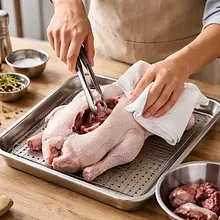
Prepare the duck: remove the innards (if any) and dry the duck inside and out with paper towels. Rub the inside and skin with a mixture of 6 g of salt and a pinch of pepper (about 1 g). Carefully fill the inside of the duck with the prepared stuffing — do not pack it too tightly, the filling should fill the cavity loosely, allowing heat to circulate evenly. Sew or secure the cavity with toothpicks to prevent the stuffing from falling out.
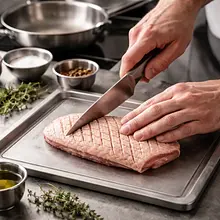
Prepare the skin for crispiness: gently score the skin on the breast in a diamond pattern (do not cut into the meat), making diagonal cuts every 1–1.5 cm. Brush the inside and skin with 15 g of rapeseed oil. Place the duck breast side up on a rack in a roasting pan (if you don't have a rack, place the duck on a layer of onions and apples so it doesn't sit in the fat). Put it in a cold oven and set the temperature to 160°C (fan 150°C).
Baking
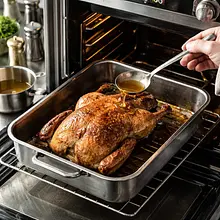
Baking Part I: roast the duck for 90 minutes at 160°C. Every 20–25 minutes, collect the rendered fat into a separate bowl (use a slotted spoon) and baste the duck from the outside, but do not pour directly onto the skin too often — it’s better to baste the meat from the bottom of the roasting pan to keep the skin crispy. After 90 minutes, increase the temperature to 200°C and roast for another 25–35 minutes, until the skin is deep golden and crispy, and a thermometer inserted into the thickest part of the thigh reads 75–78°C.
Baking - glaze
Towards the end of baking (the last 10 minutes), prepare the glaze: mix the remaining honey (20 g), 15 g of balsamic vinegar, and 10 g of the roasting fat. Gently brush the glaze onto the skin of the duck and return it to the oven for 8–10 minutes at 200°C, until the skin becomes shiny and caramelized.
Resting the meat
Remove the duck from the oven and let it rest for 15 minutes loosely covered with aluminum foil. This will allow the juices to distribute evenly in the meat, and cutting it will not result in loss of juiciness.
Silesian dumplings
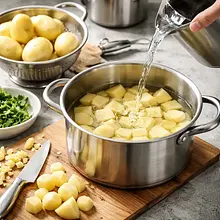
Prepare the dumplings: peel the potatoes and cut them into even pieces. Place them in a pot, cover with cold water (1–2 cm above the potatoes) and add 5 g of salt. Cook over medium heat for 20–25 minutes from the moment of boiling, until the potatoes are soft (check with a fork — they should fall apart easily). Drain and pass through a ricer or mash thoroughly with a potato masher; leave in a warm place to let the steam escape (about 5 minutes). To the hot potatoes, add the sifted potato flour (120 g) and one raw egg (60 g). Quickly mix with a wooden spoon until the dough becomes cohesive and slightly sticky. Shape with your hands (lightly greased with oil or wet) into balls the size of walnuts, making a slight flattening and indentation in the center of each dumpling with your finger. Cook the dumplings in batches in a large amount of salted, boiling water; gently drop them in, and once they float, cook for 2–3 minutes until they are elastic and smooth.
Braised red cabbage
While the duck is roasting, prepare the cabbage: finely shred the red cabbage (strips about 3–5 mm). In a large skillet or saucepan, melt 25 g of butter over medium heat. Add the chopped onion (if there is any leftover from the stuffing — use fresh), and sauté for 4–5 minutes until translucent. Add the shredded cabbage and stir to heat it evenly. Add 100 g of chopped apples, 30 g of dried plums (if there are any left), 15 g of balsamic vinegar, and 15 g of honey. Cover and simmer on low heat for 25–35 minutes, stirring every 8–10 minutes. Season with salt and pepper to taste (about 2–4 g of salt). The cabbage should be soft but retain its structure and have an intense purple color interspersed with pieces of apple.
Finishing and sauce
After the duck has rested, remove the stuffing (if desired) and set aside. Collect the roasting juices from the roasting pan (about 100–150 g) and strain through a sieve into a saucepan. Add 20 g of honey and 10 g of balsamic vinegar, bring to a boil, and reduce for 3–5 minutes until the sauce is slightly syrupy. Taste and season with salt/pepper. If the sauce is too greasy, skim off the fat with a spoon or cool slightly and collect the hardened fat.
Assembly and serving
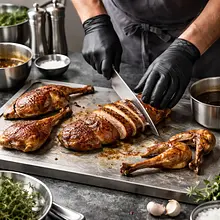
Cut the duck into portions: first separate the thighs, then the wings and breasts. When cutting the breast, slice across the grain to ensure the pieces are short and juicy. On a plate, place a portion of Silesian dumplings (3–4 pieces), a portion of braised cabbage, and a piece of duck with a thick layer of skin. Drizzle the meat with 1–2 tablespoons of gravy. Additionally, sprinkle with a tablespoon of dried cranberries and chopped, lightly toasted walnuts (optional) for contrast in texture and color.
Final tips
Check the temperature of the meat: thighs should reach 85°C inside (for a tender texture), and the breast should be 75–78°C for juiciness. If you want a crispier skin, turn on the grill function for the last 5 minutes of baking (watching closely). Serve with extra tablespoons of sauce and the skin drizzled with sauce.
Fun Fact
In Polish cuisine, stuffing poultry with fruits and dried plums has a long tradition — it combines the practical use of seasonal fruits with the desire to enhance the flavor of fatty meats through sweet and sour additions.
Best for
Tips
Serve the duck immediately after slicing, with the sauce separately in a sauceboat. Make sure the dumplings are hot — you can keep them covered in a warm pot. A dry red wine or apple cider pairs well with the dish.
Store leftovers in the refrigerator in an airtight container for 2–3 days. Reheat in the oven at 150°C for 10–15 minutes to make the crust pleasantly crispy again; dumplings can be briefly boiled or sautéed in butter.
📸 Ugotowane przez społeczność
Zaloguj się, aby dodać zdjęcieDodaj zdjęcie gotowej potrawy
Po zatwierdzeniu przez moderatora otrzymasz 10 punktów doświadczenia.
Nikt jeszcze nie dodał zdjęcia. Bądź pierwszy!
Comments (0)
Be the first to comment on this recipe!
Add a comment