Take the duck breasts out of the refrigerator 30-40 minutes before cooking to reach room temperature — this will ensure even frying. Wash and dry with a paper towel. Wash the oranges and squeeze fresh juice (you need about 200 ml). Peel the celery and cut it into pieces about 3-4 cm; cut the pumpkin into similarly sized pieces (if using Hokkaido, you can leave the skin on). Separate the kale leaves from the tough stems and dry them with a paper towel.
Description
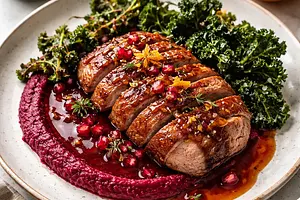
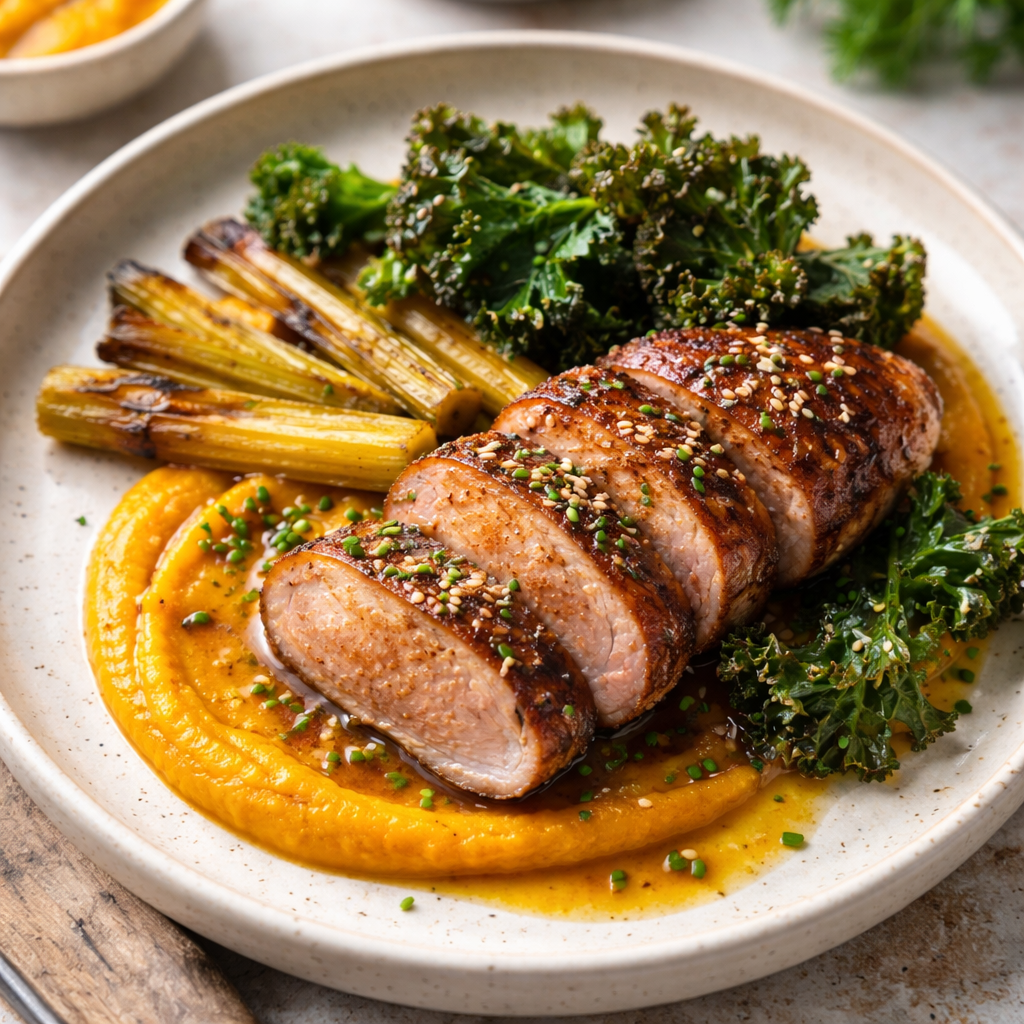
A seasonal main dish that combines East Asian and Central European cuisine: juicy duck breast with a glossy glaze of miso and fresh orange juice, served on creamy puree of roasted celery and pumpkin, and garnished with crispy kale chips and ruby pomegranate seeds. The dish has deep umami notes from the miso and soy sauce, sweetness from the orange and honey, and earthy, buttery puree, while the contrast of textures is created by the crunchy chips and juicy pomegranate. It looks impressive — vibrant colors: golden duck skin, orange-red sheen of the glaze, creamy beige of the puree, and green-red decorative accents. Perfect for winter dinners, parties, and occasions when you want to impress your guests with a combination of flavors and aesthetic presentation.
Ingredients (18)
- Duck breast 4 szt.
- Light miso (shiro miso) 60 g
- Freshly squeezed orange juice 200 ml
- Brown sugar 30 g
- Rice vinegar 20 ml
- Soy sauce 30 ml
- Honey 40 ml
- Butter 50 g
- Celeriac 400 g
- Hokkaido pumpkin 300 g
- Olive oil 30 ml
- Kale (leaves) 100 g
- Pestki granatu 100 g
- 🌿 Przyprawy
- Salt 0.2 szczypt
- Ground black pepper 2 szczypty
- ✨ Opcjonalne
- 30% cream 50 ml
- Chili flakes 2 szczypty
- Nasiona sezamu 0.7 łyżka
💡 Kliknij na składnik aby oznaczyć jako użyty
Preparation steps
Preparation of ingredients
Puree of roasted celery root and pumpkin
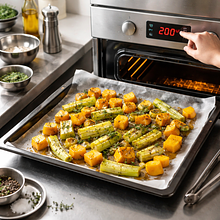
Preheat the oven to 200°C (top-bottom). On a baking sheet lined with parchment paper, spread the pieces of celery and pumpkin, drizzle with 15 g of olive oil, lightly salt (about 2 g of the salt provided), and mix by hand. Bake for about 35-45 minutes, until the vegetables are tender — you can check this by inserting a knife: it should easily go into the center.
When the vegetables are soft, transfer them to a large bowl. Add 30 g of butter and, if using, 50 g of 30% cream (optional ingredient). Use a masher or an immersion blender to puree until smooth. If the consistency is too thick, add 1-2 tablespoons (15-30 g) of hot roasting water until you achieve a silky but thick puree. Season to taste with 1-2 g of salt and a pinch of pepper.
Kale Chips
Preheat the oven to 160°C. Tear the kale leaves into medium pieces (remove the tough stems), drizzle with 10 g of olive oil, sprinkle very lightly with salt (about 1 g), and gently mix with your hands so that each piece has a thin layer of oil. Spread the leaves in a single layer on a baking sheet lined with parchment paper. Bake for 8-12 minutes, until the leaves are dry and crispy, being careful not to burn them (black edges indicate burning). After baking, set aside to cool — they will become even crispier.
Miso-orange glaze
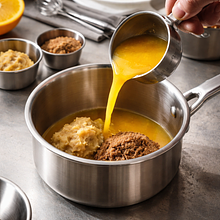
In a small saucepan, combine 200 g of fresh orange juice, 60 g of light miso, 30 g of brown sugar, 30 g of soy sauce, 20 g of rice vinegar, and 40 g of honey. Heat over medium-low heat and whisk until the sugar and miso dissolve. Gently simmer (small, steady bubbles) for 8-12 minutes, until the sauce reduces by about 25-30% and thickens to a glossy, thick glaze consistency. Finally, remove from heat and vigorously whisk in 20 g of cold butter — this will add shine and smooth out the flavor. The sauce should nicely coat the back of a spoon.
Preparing duck breast
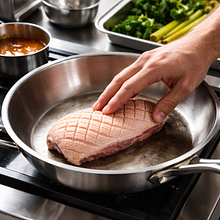
Prepare the breasts: with a sharp knife, score the skin in a crosshatch pattern (depth about 3-4 mm, do not cut into the meat), making lines in both directions. Sprinkle the skin and meat with salt (use the rest of the salt sparingly) and freshly ground pepper on both sides. Heat a large skillet (preferably cast iron or with a thick bottom) over medium-high heat, without adding any fat.
Frying duck breast
Place the breasts skin-side down in a cold skillet (this method will allow the fat to gradually render). Turn the burner to medium-high. Cook for 8-12 minutes, gently pressing the meat with a wide spatula and releasing the rendered fat; the skin should shrink and become golden and crispy. Pour off the excess fat into a bowl (you can save it for other dishes). Flip the breasts to the meat side and cook for 3-5 minutes, until they reach an internal temperature of about 58-62°C for medium doneness. If you don't have a thermometer, press the meat with your finger: it should be firm but not hard.
Resting the meat and final glazing
After frying, transfer the breasts to a cutting board, loosely cover with foil, and let rest for 8-10 minutes to allow the juices to redistribute. Finally, slice each breast diagonally into pieces about 1 cm thick. Just before serving, warm the prepared glaze over low heat and gently brush the duck slices on both sides with a culinary brush — a thin layer is enough for shine and flavor. If you want a stronger taste, heat the slices in the glaze for 30-60 seconds in a pan.
Assembly and serving
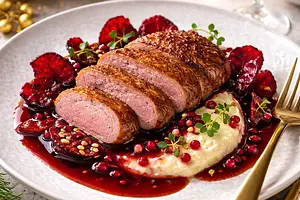
On a plate, spread 2-3 tablespoons of puree (about 100-120 g) to create a teardrop or a blot. Arrange slices of duck (4-5 slices per person) gently overlapping each other on the puree. With a brush, add 1-2 tablespoons of glaze on top. Surround the plate with kale chips and sprinkle with 25 g of pomegranate seeds to add freshness and color. Optionally, sprinkle with 2-3 g of toasted sesame seeds and possibly chili flakes (2 g) for a spicy touch.
Final touches and serving
Taste the dish and, if necessary, season with additional freshly ground pepper or very lightly with salt (remember the saltiness of the soy sauce). Serve immediately, as the duck tastes best warm, and the kale chips will remain crispy for only a short time.
Fun Fact
Miso is a soy pasta from Japan, whose fermentation can last from a few months to several years; by adding it to the glaze, you introduce natural umami that pairs wonderfully with richer meats like duck.
Best for
Tips
Serve the duck slices slightly tilted on the puree, so the glaze beautifully drips over the meat. Use a dark plate to highlight the color contrast. Serve with a light, tangy arugula salad for a palate refresher.
Store meat and puree separately in airtight containers in the refrigerator for up to 2 days. Kale chips should be stored separately in a dry container to prevent them from becoming soggy. To reheat the duck, warm it in the oven at 140-150°C for 6-10 minutes, then quickly sear it skin-side down in a pan for 1-2 minutes to restore crispiness. The glaze can be stored in the refrigerator for up to 4 days; gently reheat and stir before use.
📸 Ugotowane przez społeczność
Zaloguj się, aby dodać zdjęcieDodaj zdjęcie gotowej potrawy
Po zatwierdzeniu przez moderatora otrzymasz 10 punktów doświadczenia.
Nikt jeszcze nie dodał zdjęcia. Bądź pierwszy!
Comments (0)
Be the first to comment on this recipe!
Add a comment