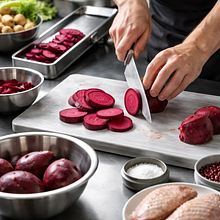
Take the duck breasts out of the fridge 30 minutes before cooking to reach room temperature (this will allow for even frying). Rinse the beets and dry them with a paper towel. Peel the celery and cut it into equal pieces about 2-3 cm to cook evenly. Separate the pomegranate seeds from the skins: cut the pomegranate in half and hit the skin with a spoon over a bowl until the seeds fall out. Slice the red onion into thin half-rings.
Description
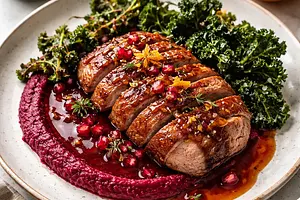
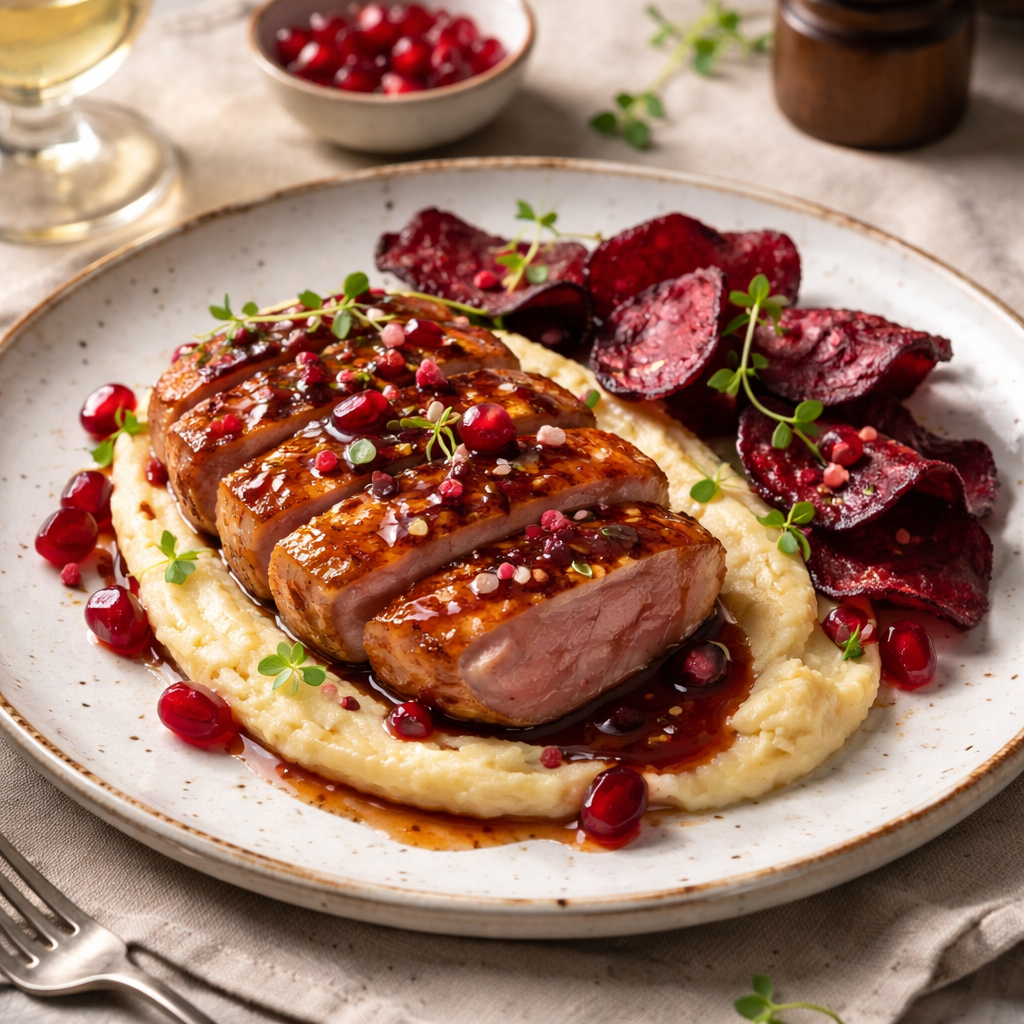
A modern, seasonal main dish that combines juicy, caramelized duck breast with an intense, slightly tangy pomegranate glaze and creamy celery puree. The dish is complemented by crispy beet chips and quickly pickled red onion, which add contrast in texture and color — the crimson pomegranate seeds act as "jewels," giving the plate a spectacular appearance. This dish is inspired by fusion cuisine: classic frying and roasting techniques are combined with fruit reduction and simple preservation methods, creating a refined, balanced flavor profile. Perfect to serve with roasted potatoes, seasonal green vegetables, or a light salad. The dish features contrast: the fatty, golden skin of the duck, the silky puree, and the crunchy beet element — it tastes exquisite and looks stunning on the plate.
Ingredients (19)
- Duck breast with skin 800 g
- Beets 500 g
- Celeriac 500 g
- Butter 60 g
- Milk 100 ml
- Olive oil 30 ml
- Pomegranate (seeds) 150 g
- Pomegranate juice 100 ml
- Honey 30 ml
- Balsamic vinegar 30 ml
- Red onion 0.7 szt.
- Wine vinegar 40 ml
- sugar 15 g
- Garlic 2 ząbki
- Fresh thyme 0.1 pęczków
- 🌿 Przyprawy
- Salt 0.1 szczypt
- Ground black pepper 2 szczypty
- ✨ Opcjonalne
- Microgreens (optional) 30 g
- Roasted pistachios (optional) 40 g
💡 Kliknij na składnik aby oznaczyć jako użyty
Preparation steps
Preparation of ingredients
Beets: chips and roasted
Preheat the oven to 190°C (top-bottom). Thinly slice half of the beets into 1-2 mm thick slices using a mandoline or sharp knife (these will be chips). Cut the remaining beets into wedges. In a large bowl, toss the slices with 1 tablespoon of oil and a pinch of salt, arranging them in a single layer on a baking sheet lined with parchment paper — do not overlap. Bake the slices for 12-18 minutes until the edges become slightly curled and crispy; check after 10 minutes. On a second baking sheet, toss the beet wedges with 1 tablespoon of oil, salt, and pepper, and bake for 30-35 minutes until they are tender and slightly caramelized.
Celeriac puree
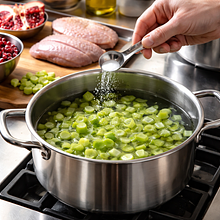
Place the chopped celery in a pot with cold water so that it is covered; add 1 teaspoon of salt. Bring to a boil, reduce the heat, and cook for 20-25 minutes until the pieces are tender (insert a knife — it should go in smoothly). Drain the celery, reserving some of the cooking water. Transfer the celery to a blender or use a masher; add butter (50 g), 100 ml of milk, and 1 clove of finely chopped garlic. Blend until smooth; if too thick, add a tablespoon of the cooking water to achieve a creamy consistency. Season with salt and pepper to taste. The puree should be smooth, silky, and slightly shiny from the butter.
Onion marinade
In a bowl, mix 40 ml of wine vinegar, 15 g of sugar, and a pinch of salt until the sugar dissolves. Add thinly sliced red onion and set aside for at least 15 minutes (you can do this in advance) — the onion should become soft and pinkish. This is a quick marinade: it removes the sharpness and adds freshness.
Pomegranate glaze
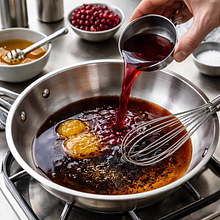
In a medium skillet, combine 100 ml of pomegranate juice, 30 g of honey, 30 ml of balsamic vinegar, 1 finely chopped garlic clove, and 2 sprigs of thyme. Cook over medium heat for 12-15 minutes until the volume is reduced by half, stirring occasionally — the mixture should thicken to a syrup-like consistency (somewhat sticky, coating the spoon). Taste and adjust the sweetness/acidity: if it's too sour, add a bit of honey; if it's too sweet, add a splash of vinegar. After removing from heat, discard the thyme sprigs.
Duck breasts
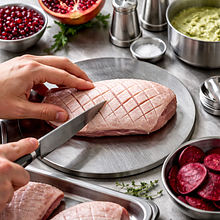
Score the skin of the duck breasts in a crosshatch pattern (being careful not to cut into the meat) with the skin side up, at intervals of about 1 cm. Sprinkle the meat with salt (about 2 g) and pepper. Heat a dry cast iron or heavy skillet over medium-high heat. Place the breasts skin side down without adding fat — the fat will render from the skin. Cook for 6-8 minutes, pressing gently, until the skin is golden and crispy, and the fat has rendered. Flip the breasts and cook for 3-4 minutes on the meat side for medium doneness (to 57-60°C internally). If you have a thermometer, insert it into the thickest part. After cooking, transfer the breasts to a cutting board and let rest for 6-8 minutes to allow the juices to stabilize.
Finishing the duck with glaze
While the breasts rest, pour 2-3 tablespoons (30-45 ml) of hot pomegranate glaze into the skillet used for frying and bring to a boil for 1 minute, scraping the caramelized bits of meat from the bottom (deglazing). Dip each breast in the glaze or brush it on and heat briefly for 30-60 seconds. A shiny, slightly sticky coating should form. Slice the breasts diagonally to reveal the pink center.
Assembly and decoration
On a warm plate, place 2-3 tablespoons of celery puree as a base, spreading it with a spoon to create a boat shape. Arrange slices of duck slightly overlapping on the puree. Next to it, place a few roasted beet wedges and some chips for contrast in texture. Add a spoonful of quick-pickled onions and generously sprinkle with fresh pomegranate seeds. Drizzle the remaining glaze over the dish and, if desired, a few drops of balsamic cream. Additionally, you can add microgreens and chopped pistachios for color and crunch.
Serving
Serve each plate immediately after finishing. You can also melt a teaspoon of butter on the puree for shine and flavor. Try the combination of flavors: first a piece of duck with the puree, then with a piece of roasted beet and pomegranate seeds — the contrasts of flavors and textures will be most pronounced.
Fun Fact
Pomegranate has been a symbol of rebirth and fertility in many cultures; in the kitchen, it adds not only flavor but also a spectacular color, making the plate look like a small work of art.
Best for
Tips
Serve the dish hot; it's best to have all components (puree, chips, glaze) warm before final assembly. For contrast, serve a light, tangy salad with arugula or young greens. Duck pairs well with red wine with moderate tannins (e.g., Pinot Noir).
Store the puree and roasted beets separately in airtight containers in the refrigerator for up to 48 hours; when reheating, use low power and add a little milk to restore the consistency. The glaze can be stored for up to 3 days in the refrigerator. It is best to eat the duck fresh; a portion can be stored for 1 day, but the skin will lose its crispiness. Store the beet chips separately in an airtight container at room temperature for a maximum of 24 hours to maintain their crunchiness.
📸 Ugotowane przez społeczność
Zaloguj się, aby dodać zdjęcieDodaj zdjęcie gotowej potrawy
Po zatwierdzeniu przez moderatora otrzymasz 10 punktów doświadczenia.
Nikt jeszcze nie dodał zdjęcia. Bądź pierwszy!
Comments (0)
Be the first to comment on this recipe!
Add a comment