Prepare all the ingredients before you start cooking (mise en place): grate the parmesan on a fine grater into a bowl; peel and finely chop the onion (dice about 5 mm); press or finely chop the garlic; slice the zucchini into 5 mm half-moons; cut the pepper into 1 cm cubes or strips; peel the carrot and cut it into small cubes. Measure the rice and prepare hot broth in a separate pot - it must be warm when adding.
Description
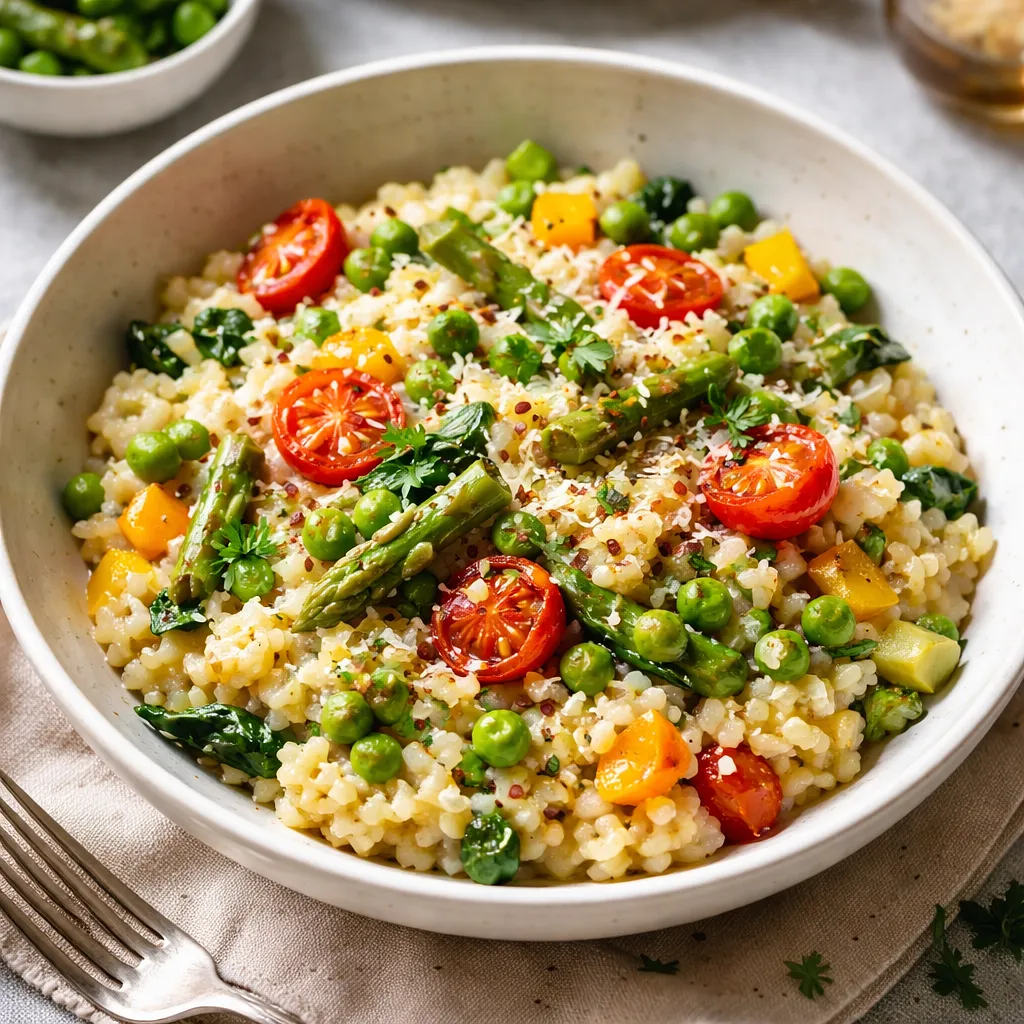
Creamy vegetable risotto is a delicate, aromatic Italian dish transformed into a version perfect for a romantic Valentine's dinner. It is based on short arborio rice, slowly cooked in hot vegetable broth and finished with butter and parmesan for a silky consistency. The addition of colorful vegetables (zucchini, bell pepper, carrot, peas) makes the dish both visually appealing and rich in vitamins. Serve hot in small portions as a side dish or a light main course; it pairs wonderfully with a green salad and a glass of white wine. The balanced flavors and creamy texture make the risotto look elegant and taste sophisticated — perfect for Valentine's Day.
Ingredients (16)
- Arborio rice 320 g
- Vegetable broth 1200 ml
- Olive oil 30 ml
- Butter 30 g
- Parmesan (grated) 80 g
- Onion 1 szt.
- Garlic 3 ząbki
- Zucchini 0.8 szt.
- Red bell pepper 0.8 szt.
- Carrot 1.3 szt.
- Frozen peas 100 g
- White wine 100 ml
- 🌿 Przyprawy
- Salt 0.1 szczypt
- Black pepper 4 szczypty
- ✨ Opcjonalne
- Fresh basil 1 pęczek
- Pine nuts 30 g
💡 Kliknij na składnik aby oznaczyć jako użyty
Preparation steps
Preparation of ingredients
Frying vegetables
Heat a large skillet or wide pot (preferably 24-28 cm in diameter) over medium heat. Pour in the oil (30 g) and wait 30-40 seconds until it heats up (it should shimmer slightly). Add the carrot and bell pepper, sauté for 4-5 minutes, stirring every 30-40 seconds, until they soften and lightly brown. Add the zucchini and sauté for another 2-3 minutes, until it is soft but still firm. Transfer the vegetables to a plate — they will be added to the risotto at the end of cooking.
Cooking risotto
In the same pan, reduce the heat to medium-low and add a tablespoon of oil if needed. Add the finely chopped onion and sauté for 3-4 minutes until it becomes translucent and soft (do not brown it too much). Add the garlic and sauté for an additional 30-40 seconds — the garlic should be fragrant but not burnt (burning will add bitterness).
Pour the arborio rice (320 g) into the pan with the sautéed onion. Stir vigorously for 1-2 minutes until each grain becomes slightly translucent at the edges — this is called 'toasting' the rice, which helps maintain its structure and enhance the flavor.
Slightly increase the heat and pour in the white wine (100 ml). Stir continuously for 1-2 minutes until the alcohol evaporates and the liquid practically disappears — the rice will absorb the wine and become creamy. If you are not using wine, add 2 ladles of hot broth instead of the wine.
Reduce the heat to medium. Add hot broth one ladleful (about 100-150 ml) at a time to the rice, stirring frequently (every 20-30 seconds). Wait until the rice absorbs most of the liquid before adding the next ladleful. Continue this process for about 16-18 minutes — the rice should be soft on the outside and slightly al dente in the center. The total amount of broth may vary; use as much as needed to achieve a creamy, slightly runny consistency (the risotto should spread slightly on the plate).
Finishing and serving
About 2-3 minutes before the end of cooking, add the frozen peas (100 g) and the previously sautéed vegetables (transferred from the pan). Stir to ensure the vegetables are heated evenly and combined with the risotto. Taste and season with salt (3 g) and freshly ground pepper (2 g) — remember that Parmesan is salty, so season carefully.
Turn off the heat. Add cold butter (30 g) and grated Parmesan (80 g). Stir vigorously for 1-2 minutes until the butter and cheese melt and the risotto becomes glossy and creamy. If the consistency is too thick, add 1-2 tablespoons of hot broth. After mixing, set the pan aside for 1-2 minutes to let the flavors meld.
If you are using pine nuts and fresh basil (optional), lightly toast the nuts in a dry pan for 1-2 minutes over medium heat until they are lightly golden — stir constantly to avoid burning. Chop the basil leaves. Serve the risotto in warm, shallow plates: place a portion of risotto in the center, sprinkle with freshly grated Parmesan, pine nuts, and garnish with basil leaves.
Serving
Serve immediately after finishing: distribute even portions (about 200-220 g of risotto per serving) on plates. You can place an additional plate with parmesan on the table for guests to sprinkle, along with glasses of chilled white wine.
Fun Fact
Risotto comes from northern Italy (the regions of Lombardy and Piedmont). Traditionally, the creaminess of risotto is achieved by slowly adding broth and vigorously stirring, which releases the starch from the rice grains.
Best for
Tips
Serve the risotto in shallow plates, garnished with a few fresh basil leaves and a sprinkle of freshly ground pepper. For a Valentine's presentation, optionally shape the risotto into a heart using a kitchen ring. Serve with a glass of cold, dry white wine.
Risotto is best consumed immediately. If there are leftovers, store them in the refrigerator in an airtight container for up to 24 hours. When reheating, add 2-3 tablespoons of broth or water and heat on low, stirring to regain creaminess. Freezing is not recommended — the texture will deteriorate after thawing.
📸 Ugotowane przez społeczność
Zaloguj się, aby dodać zdjęcieDodaj zdjęcie gotowej potrawy
Po zatwierdzeniu przez moderatora otrzymasz 10 punktów doświadczenia.
Nikt jeszcze nie dodał zdjęcia. Bądź pierwszy!
Comments (0)
Be the first to comment on this recipe!
Add a comment