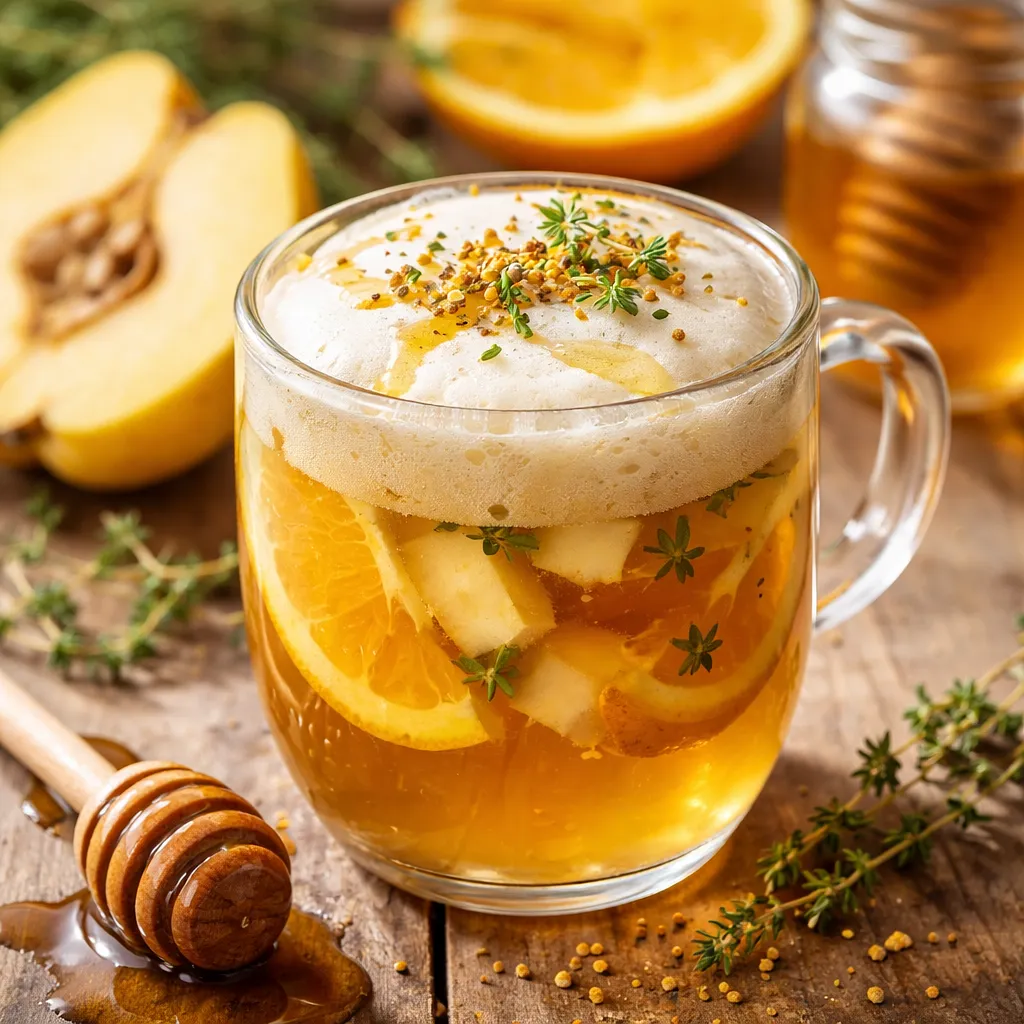
Traditional quince and orange infusion with honey foam

Drinks European cuisine 60 min Medium 10 wyświetleń ~23.59 PLN - (0)
Rate:
(0)
Start Cooking

Description

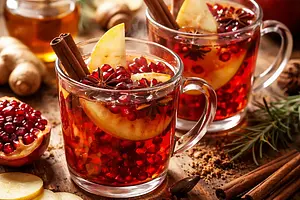
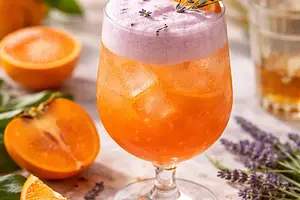
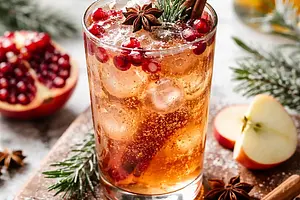
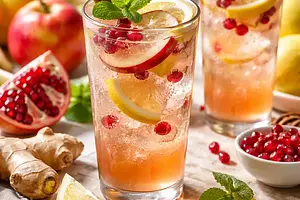
A warming, traditional infusion of quince and orange combines juicy, slightly tart quince with the aroma of citrus and spices. The drink is clear, golden-amber, with a rich, sweet-and-sour flavor featuring notes of cinnamon, cloves, and anise; topped with a delicate, sweet honey foam that adds elegance and a slightly creamy texture. This dish comes from the cuisine of Central European regions, where quince was valued for its intense fragrance and ability to create aromatic compotes and infusions. Serve the infusion hot as a warming drink on chilly days or chilled on summer evenings, garnished with a slice of orange and a sprig of rosemary or candied peel for a contrast of flavors. Visually appealing: a clear amber liquid, white foam, and shiny fruit slices.

Ingredients Used

Ingredients (12)

Servings:
4
  • Quince 300 g
  • Orange 0.8 szt.
  • Water 1000 ml
  • Honey 80 ml
  • Lemon juice 30 ml
  • Egg white 60 g
  • Star anise 3 szt.
  • 🌿 Przyprawy
  • Cinnamon stick 5 szt.
  • Cloves 3 g
  • Salt 0.0 szczypt
  • ✨ Opcjonalne
  • Fresh rosemary 0.3 pęczków
  • Candied orange peel 30 g
💰 Szacowany koszt dania: ~23.59 PLN (5.90 PLN/porcję)

💡 Kliknij na składnik aby oznaczyć jako użyty

Preparation steps

Preparing the fruits

1

Wash the quince and orange under running water. On a cutting board, use a sharp knife: peel the quince (the skin of the quince is tough), cut it into quarters, and remove the hard core with seeds and fibers. Cut the flesh into thin slices or small pieces about 5-8 mm thick. Cut the orange into slices about 3-5 mm thick; set aside two nice slices for decoration. If the orange has a thick skin, peel off some of the white layer to avoid adding too much bitterness.

Ingredients: Quince, Orange
Use a large, stable cutting board and a sharp chef's knife. Be careful when peeling the quince, its flesh is hard - cut slowly. Prepare all the ingredients before you start cooking.
Brewing the infusion

2

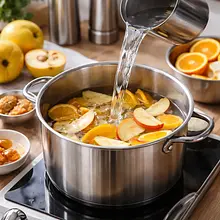
In a large pot (minimum capacity of 2 liters), pour in 1000 ml of water. Add the chopped quince, orange slices (except for those set aside for decoration), 2 cinnamon sticks (10 g), 6 g of star anise, 3 g of cloves, and 1 g of salt. Place the pot on the stove over medium heat and bring to a gentle boil. Once it starts boiling, reduce the heat to low and simmer very gently for 20-25 minutes, until the quince is soft (check by pressing with a fork - it should go in easily but not fall apart completely).

Ingredients: Water, Quince, Orange, Cinnamon stick, Cloves, Star anise, Salt
Use a wide pot with a heavy bottom (e.g. stainless steel or enameled) to prevent burning. Adjust the heat so that the flame does not reach the sides of the pot. If the liquid evaporates too much, add up to 50 ml of water and continue cooking.

Seasoning and sweetening

3

After the cooking time has elapsed, remove the pot from the heat. Add 60 g of honey (from the 80 g prepared, we will keep the rest for the foam) and 30 ml of lemon juice. Gently stir with a spoon until the honey is completely dissolved. Taste the infusion and if necessary, add a little more honey (a maximum of 10-20 g) if you prefer a sweeter flavor. After seasoning, let the infusion sit for 10 minutes to allow the flavors to 'heal'.

Ingredients: Honey, Lemon juice
Honey dissolves better in warmer liquid; do not boil the infusion after adding the honey to avoid destroying its aromas. Use a spoon with a long handle.

Straining and Clarifying

4

Strain the infusion through a fine sieve into a clean pitcher or bowl: use a sieve with fine mesh or cheesecloth placed over the sieve. Gently press with a spoon on the remaining fruit in the sieve to extract additional flavor, but do not press too hard if you want the infusion to be clear. Discard all spices and larger pieces of fruit. If you want the drink to be completely clear, filter it again through cheesecloth.

Ingredients: Quince, Orange
The best tool is a metal sieve with fine mesh and a spatula. Do not stir vigorously to avoid aerating the infusion - we want to maintain clarity.

Honey Foam

5

Prepare the honey foam: in a cool, clean bowl, place 60 g of pasteurized egg white. Add the remaining 20 g of honey (from the total of 80 g). Using an electric mixer with a whisk attachment, beat the egg white on medium speed for 2-3 minutes until it starts to foam, then increase the speed and beat for 2-4 minutes until soft peaks form and the foam is thick and glossy. The foam should be stable and hold its shape for a few minutes. If you are not using egg white (for dietary reasons), instead whip 60 g of aquafaba (chickpea water) with 20 g of honey for 4-6 minutes until a stiff foam forms.

Ingredients: Egg white, Honey
Use a cold metal bowl and cold mixer attachments - this helps to whip the egg whites faster. If you don't have a mixer, you can vigorously whip the egg whites by hand for 8-10 minutes with a whisk, which requires effort. Note: use pasteurized egg whites or aquafaba to reduce the risk of raw egg contamination.

Finishing and serving

6

Serve the infusion according to your preference: hot (about 60-70°C) or chilled (before serving, place the jug in the refrigerator for 30-60 minutes). Pour the infusion into 4 transparent glasses or mugs (about 250 ml each). For each serving, add a spoonful of honey foam (about 15 g of foam per serving) to create a thick layer on the surface. Garnish with a slice of orange and (optionally) a piece of candied orange peel and a sprig of rosemary for aroma and visual effect. Serve immediately, as the foam will settle after a few minutes.

Ingredients: Candied orange peel, Fresh rosemary, Orange
It's best to use transparent dishes to highlight the color of the infusion and the contrast with the foam. If serving hot, make sure the foam is whipped and stable - a short wait after placing the foam will allow it to slightly 'stabilize' on the surface.

Optional serving suggestions

7

If you want a non-alcoholic version with a deeper aroma, you can add 20 ml of rum or orange liqueur to a small portion of the infusion before separating it from the fruits (optional). For a completely clear version, remove all particles by additional filtering. If the drink will be chilled, store the foam separately and add it just before serving.

Ingredients: Candied orange peel, Fresh rosemary
You can achieve an interesting decorative effect by briefly toasting the candied peel over a flame, but be careful.

Fun Fact

💡

Quince was valued in ancient times for its intense aroma — in the Middle Ages, it was used to flavor wines and compotes, and in folk cuisine, it served as a natural sweetening and thickening agent.

Best for

Tips

🍽️ Serving

Serve in transparent tumbler glasses or in tall mugs for hot drinks to showcase the golden color and white foam. Add a thin slice of orange on the rim of the glass and a sprig of rosemary poked into the foam for aroma. The foam holds its shape best for a few minutes — add it just before serving.

🥡 Storage

Store the infusion (without foam) in the refrigerator for up to 3 days in a closed container. Before serving again, heat to a temperature of about 60°C or chill according to preference. It is best to prepare the foam fresh; whipped foam from egg whites or aquafaba can be stored in the refrigerator for up to 24 hours, but it loses some volume.

📸 Ugotowane przez społeczność

Zaloguj się, aby dodać zdjęcie
Dodaj zdjęcie gotowej potrawy

Po zatwierdzeniu przez moderatora otrzymasz 10 punktów doświadczenia.

🍲

Nikt jeszcze nie dodał zdjęcia. Bądź pierwszy!

Comments (0)

Be the first to comment on this recipe!

Add a comment

You might also like

Recipe Categories

Drinks
Drinks in: Valentine's Day

Romantic drinks that will enhance the atmosphere and highlight the flavors of the dishes, perfect for a Valentine's Day dinner.

See all recipes in this category

European cuisine is a mosaic of culinary traditions from the Old Continent - from Spain to Scandinavia. Valencian paella and tapas from Spain - sunshine on a plate. Boeuf bourguignon and ratatouille from France - elegance and finesse. Wiener schnitzel and strudel from Austria - Central European c...

See all recipes in this category
Reklama