Take the salmon fillet out of the fridge 20 minutes before cooking to reach room temperature — this will ensure even baking/frying. In the meantime, rinse the jasmine rice in cold water: place the rice in a large bowl, cover with cold water, stir vigorously with your fingers, and pour off the cloudy water; repeat 3–4 times until the water is almost clear. Set the drained rice aside for 10 minutes.
Description
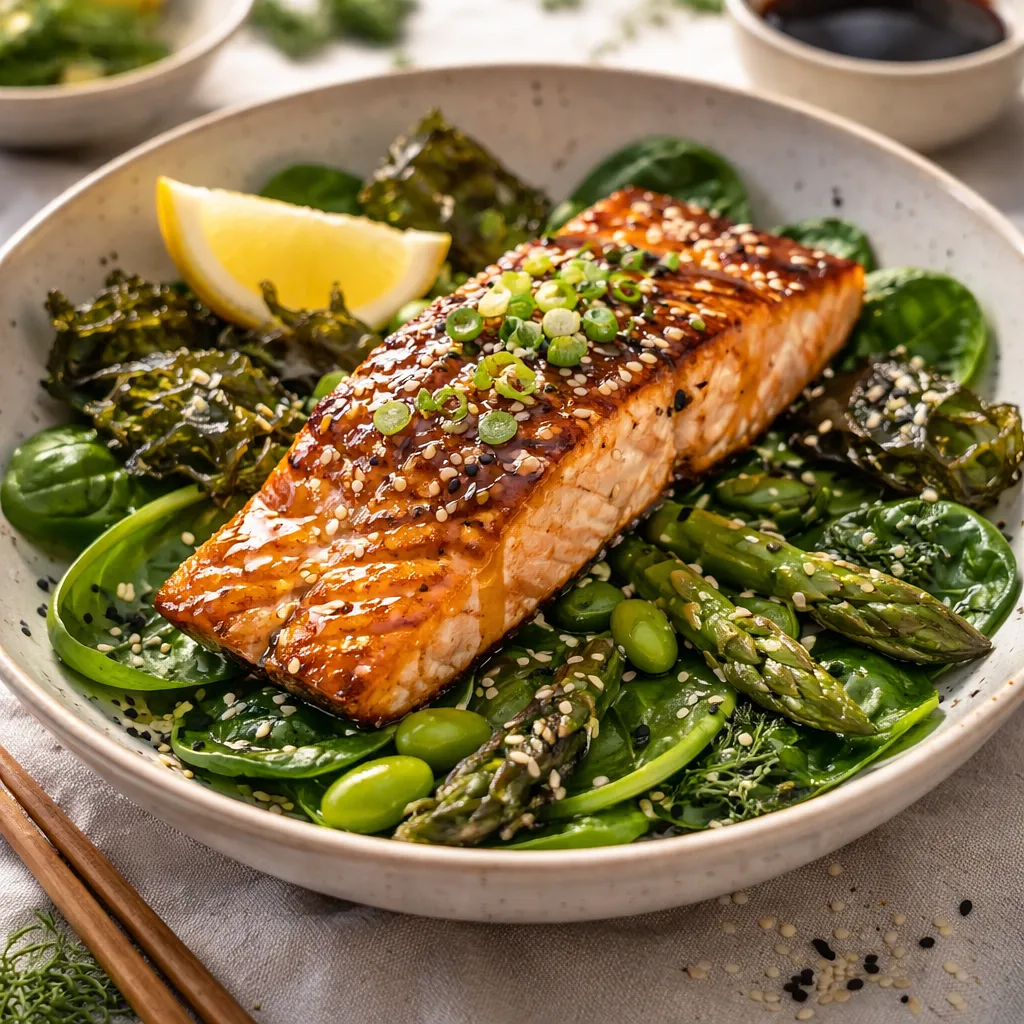
A modern, seasonal dish that combines the classic flavor of baked/fried salmon with Asian notes: a sweet and salty miso-citrus dressing and crispy nori chips with toasted sesame. The dish is light, colorful, and impressive — juicy, tender salmon with a golden crust served on fresh young spinach, blanched green asparagus, and crunchy radishes, accompanied by fluffy jasmine rice. Perfect as a spring dinner or a main course for a gathering — it catches the eye with the contrast of greens, pinks, and golden elements while balancing flavors: umami from the miso, sweetness from the orange, and a hint of sesame.
Ingredients Used
Ingredients (21)
- Skinless salmon fillet 600 g
- Green asparagus 400 g
- Young spinach 200 g
- Radishes 150 g
- Edamame (shelled, frozen) 150 g
- Jasmine rice (dry) 300 g
- White miso paste 60 g
- Light soy sauce 4 łyżki
- Dark sesame oil (for dressing) 30 ml
- Honey (or maple syrup for the vegan version) 30 ml
- Rice vinegar 30 ml
- Fresh ginger (peeled and grated) 20 g
- Garlic 2 ząbki
- Nori (sheets, for chips) 8 g
- Fresh orange juice 80 ml
- 🌿 Przyprawy
- Sesame (toasted) 30 g
- Salt 0.1 szczypt
- Black pepper 4 szczypty
- ✨ Opcjonalne
- Avocado 0.6 szt.
- Dried chili flakes 2.5 łyżeczki
- Microgreens (for decoration) 30 g
💡 Kliknij na składnik aby oznaczyć jako użyty
Preparation steps
Preparation of ingredients
Dressing / marinade
Prepare the miso-citrus dressing: in a medium bowl, combine miso paste (60 g) with orange juice (80 ml) and soy sauce (60 ml). Add honey (30 ml), grated ginger (20 g), finely chopped garlic (10 g), and sesame oil (30 ml). Whisk vigorously with a whisk or fork until a smooth, slightly emulsified mixture forms. If it is very thick, add 1-2 tablespoons (15–30 ml) of water.
Marinating
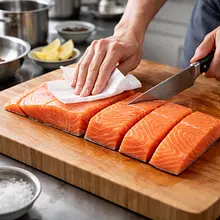
Prepare the surface of the salmon: pat the fillet dry with a paper towel, cut into 4 equal portions of about 150 g each. Place the pieces in a shallow dish and drizzle with 2/3 of the prepared dressing — gently massage the marinade with your hand or a spoon over the top to coat evenly. Set aside for 15–20 minutes in a cool place (no longer than 30 minutes, so the miso doesn't "cook" the fish).
Rice
Cooking rice: transfer the rinsed rice to a pot with a lid. Add water in a ratio of 1 part rice : 1.5 parts water (e.g. 300 g rice = 450 ml water). Add 1 g of salt (a pinch). Bring to a boil over medium heat without a lid, then reduce the heat to the lowest setting and cover. Cook for 12–14 minutes without lifting the lid. After this time, turn off the heat and let it sit covered for 10 minutes to allow the rice to "rest." Fluff the rice gently with a fork, separating the grains.
Preparing the vegetables
Slice the radishes into thin rounds using a mandoline or a sharp knife (thickness 2–3 mm). Heat the edamame in boiling water for 2–3 minutes, drain, and let cool. Snap off the woody ends of the asparagus (bend the stalk and it will break where it starts to get tough), and cut the remaining parts in half lengthwise if they are thick. Blanch the asparagus in boiling water for 2 minutes, then immediately transfer to a bowl of ice-cold water to stop the cooking process and retain the bright green color. Pat the vegetables dry with a paper towel.
Nori Chips
Preheat the oven to 180°C (top and bottom heat). Cut the nori sheets into triangles (e.g., into 6–8 pieces). Arrange them on a baking sheet lined with parchment paper. Gently brush each piece with a little sesame oil (or neutral oil) and sprinkle with a thin layer of sesame seeds. Bake for 4–6 minutes — watch closely: the nori should become crispy and slightly darker, but not burnt. Remove and cool on a rack (they will harden further).
Frying the salmon
In a large skillet (preferably heavy, non-stick, or cast iron), heat 1 tablespoon of neutral oil over medium-high heat until it starts to lightly smoke. Pat the salmon pieces dry of excess marinade (but do not wipe them completely), and place them in the skillet skin-side down. Cook for 3–4 minutes without moving them, until the outer layer is golden and easily releases from the skillet. Gently flip to the other side and cook for another 2–3 minutes — the salmon will be ready when the flesh becomes opaque and flakes easily with a fork; for medium doneness, the internal temperature should be around 55–60°C.
Glazing the salmon
In the last 30–60 seconds of frying, brush the top of the salmon with the remaining 1/3 of the miso-citrus dressing using a spoon — this will allow it to caramelize and create an aromatic glaze. Be careful not to burn the miso (reduce the heat if it starts to darken quickly). After glazing, remove the salmon from the pan and let it rest for 2 minutes to allow the juices to stabilize.
Seasoning the vegetables
In a large bowl, mix young spinach, blanched asparagus (cut into 4–5 cm pieces), radish slices, and edamame. Drizzle with 1 tablespoon of soy sauce and 1–2 tablespoons of the prepared dressing (the rest will be used as a glaze). Gently mix to ensure the spinach leaves do not wilt from too much liquid. Taste and season with a pinch of salt and freshly ground pepper.
Plate assembly
On each plate, place a portion of rice (about 75 g of dry rice per serving, which will be fluffy when cooked — divide the cooked rice into 4 equal parts). Next to the rice, arrange the spinach and asparagus mixture. On top, place a portion-sized piece of salmon, skin side down (if you had skin) or with the exposed golden glaze. Add a few nori chips as decoration, sprinkle everything with toasted sesame seeds (about 1/2 tablespoon per plate) and possibly pieces of avocado. Add a few microgreens and, if you like heat, a pinch of chili flakes.
Finishing and serving
On the plates, you can gently drizzle a few drops of the remaining dressing around the salmon (not too much, so as not to soak the chips). Add freshly ground pepper to taste. Check the temperature — the dish should be warm (rice and salmon), while the vegetables should be slightly chilled, creating a pleasant contrast of temperatures and textures.
Dietary alternatives and tips
If you want a vegan version: replace the salmon fillet with thick slices of marinated and baked smoked tofu (about 600 g) and use maple syrup instead of honey. To reduce salt, use low-sodium soy sauce and decrease the amount of salt added to the rice.
Fun Fact
Miso is a traditional Japanese paste made from fermented soybeans — its umami acts as a natural 'flavor enhancer', similar to yeast in Western cuisine. Using miso in a marinade for fish is a popular method in Japanese cooking, here enriched with a citrus note of orange.
Best for
Tips
Serve immediately after preparation to keep the nori chips crispy and the salmon juicy. For an elegant effect, use large white plates and arrange the ingredients asymmetrically: rice on one side, vegetables on the other, and salmon on top. You can serve an additional small miso-citrus sauce in a sauce boat for drizzling.
It is not recommended to store the salmon dish for a long time — it is best consumed within 24 hours. Store the rice, vegetables, and salmon separately in airtight containers in the fridge for up to 24 hours. Gently reheat the salmon in the oven at 160°C for 6–8 minutes or in a covered pan for 3–4 minutes to avoid drying it out. Store the nori chips separately in a dry container.
📸 Ugotowane przez społeczność
Zaloguj się, aby dodać zdjęcieDodaj zdjęcie gotowej potrawy
Po zatwierdzeniu przez moderatora otrzymasz 10 punktów doświadczenia.
Nikt jeszcze nie dodał zdjęcia. Bądź pierwszy!
Comments (0)
Be the first to comment on this recipe!
Add a comment