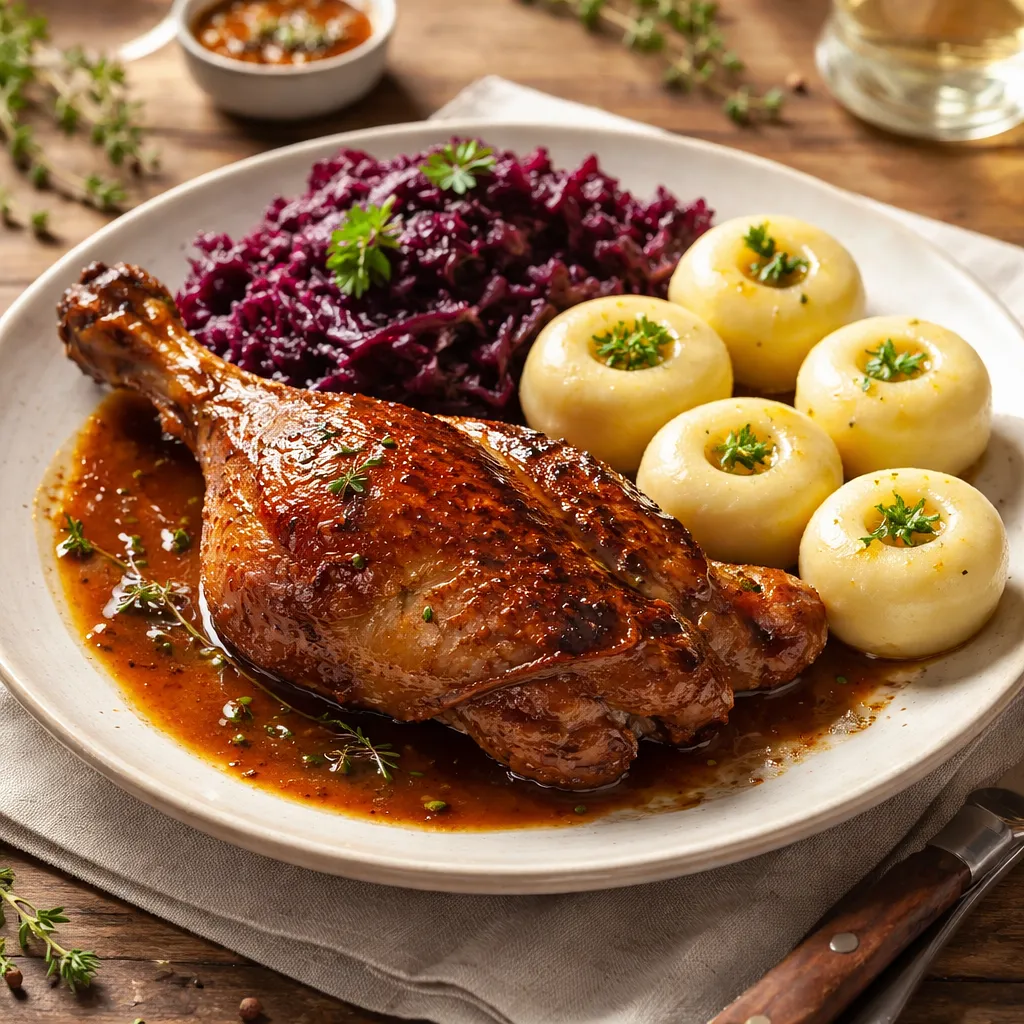
Roast Duck Kujawy Style with Red Cabbage and Silesian Dumplings

Regional Cuisine of Poland Main dishes 150 min Medium 25 wyświetleń ~99.18 PLN - (0)
Rate:
(0)
Start Cooking

Description

A traditional, seasonal dish from the regional cuisine of Poland: juicy, golden duck roasted with apples and marjoram, served with aromatic red cabbage stewed with apples and soft Silesian dumplings. The dish combines the sweetness of apples and cranberries with the tartness of apple cider vinegar, while the crispy skin of the duck and glossy sauce create an impressive, rustic plate. Perfect for a family dinner or holidays; delicious and visually appealing due to the contrast of the golden duck, ruby cabbage, and white dumplings. The dish has distinct, balanced notes: sweet, sour, and buttery, and the textures—crispy, soft, and silky—harmonize beautifully.

Ingredients Used

Ingredients (17)

Servings:
4
  • Duck (whole) 1800 g
  • Apple 1.7 szt.
  • Red cabbage 800 g
  • Onion 1 szt.
  • Butter 50 g
  • Apple cider vinegar 30 ml
  • Sugar 30 g
  • Potatoes 5.3 szt.
  • Potato flour 200 g
  • Egg 2 szt.
  • Chicken broth 250 ml
  • 🌿 Przyprawy
  • Salt 10 g
  • Black pepper 8 szczypt
  • Marjoram 4 g
  • ✨ Opcjonalne
  • Honey 30 ml
  • Parsley 1 pęczek
  • Dried cranberries 60 g
💰 Szacowany koszt dania: ~99.18 PLN (24.80 PLN/porcję)

💡 Kliknij na składnik aby oznaczyć jako użyty

Preparation steps

Preliminary preparation

1

Remove the duck from the refrigerator 30 minutes before preparation to allow the meat to reach room temperature. If the carcass has a neck and innards in a bag — remove them and save for use in broth. Pat the duck dry thoroughly with paper towels (inside and out). Gently prick the outer layer of the skin with a thin needle or the tip of a knife in many places (only the skin, not the meat) at a distance of 1-1.5 cm — this will help render the fat.

Ingredients: Duck (whole)
Use a large countertop and paper towels. Gently pierce the skin, do not make deep holes in the meat - this will cause it to dry out. If you are taking the duck out of the freezer, make sure it is completely thawed.
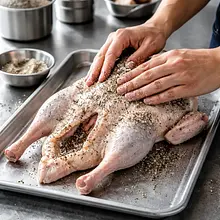

Preparing the duck

2

Rub the duck inside and out evenly with 7 g of salt and 2 g of pepper (subtract from the amounts in the ingredients). Fill the inside with half of the chopped apples (about 150 g) and 2 g of marjoram. Cut the remaining apples into quarters and place them in the roasting pan next to the duck — the roasted apples will add sweetness to the sauce. Tie the legs with kitchen twine and leave uncovered in the refrigerator for 1 hour, so the salt can gently penetrate (if you're in a hurry, 20-30 minutes will suffice).

Ingredients: Duck (whole), Salt, Black pepper, Apple, Marjoram
Use disposable gloves or wash your hands thoroughly after handling raw poultry. A roasting pan with a rack is best — the fat will drip to the bottom and the skin will be crispier.

Roasting the duck

3

Preheat the oven to 180°C (160°C if using a fan oven). Place the duck breast side up on a rack over a roasting pan (if you have one) or directly in the roasting pan. Roast for the first 20 minutes at full power, then reduce the temperature to 170°C and roast for 100–110 minutes (total time about 2 hours for a 1.8 kg bird). Every 20–25 minutes, baste the duck with the rendered fat (scoop it with a spoon and spread it over the skin) to ensure the skin browns evenly. The duck is ready when the internal temperature in the thigh reaches 75°C and the juices run clear (not pink) when the meat is pierced. After removing from the oven, let the duck rest on a board for 15 minutes under loosely tented aluminum foil — the meat will 'rest' and the juices will redistribute evenly.

Ingredients: Duck (whole), Apple
Use a kitchen thermometer to check the temperature. If you don't have a thermometer, pierce the thigh between the bone and the joint — the juices should be clear. Do not cover the duck while roasting (the skin will not brown).

Preparation of red cabbage

4

Chop half of the remaining onion (75 g) into small cubes. In a large skillet, heat butter (30 g) over medium heat, add the onion and sauté for 4-5 minutes until it becomes translucent and slightly golden. Meanwhile, finely shred the red cabbage (easier with a mandoline or sharp knife). Add the cabbage to the skillet, stir, and sauté for 3-4 minutes, stirring, until it softens slightly. Add the chopped apple (remaining approx. 150 g), sugar (30 g), and apple cider vinegar (30 g). If using dried cranberries (optional), add 60 g now. Reduce the heat to low and simmer covered for 40-50 minutes, stirring every 8-10 minutes — the cabbage should become soft and have an intense color. If necessary, add 2-3 tablespoons of water to prevent burning. Finally, season with salt and pepper to taste.

Ingredients: Onion, Butter, Red cabbage, Apple, Sugar, Apple cider vinegar, Dried cranberries
Use a large skillet or pot with a thick bottom; a thin vessel may cause burning. If the cabbage is very tough, cook longer — you will recognize it's ready by the absence of tough fibers and a pleasant softness.

Preparation of Silesian dumplings

5

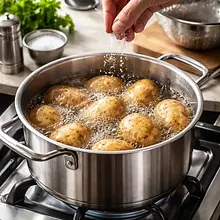
Start by boiling the potatoes (800 g) in their skins in salted water for about 25-30 minutes until they are soft (check with a fork). Drain and let cool for 5-10 minutes, then peel the potatoes (be careful, they are hot). Pass them through a potato ricer or mash very thoroughly into a smooth puree (there should be no lumps). Measure the amount of puree (it should remain moist) — to the warm puree add 200 g of potato flour and 120 g of eggs (2 eggs), 3 g of salt and knead quickly with a wooden spoon, then with your hands until the mixture becomes smooth and slightly elastic. If the mixture is too sticky, add 1 tablespoon (15 g) of potato flour at a time until you achieve a workable consistency. Take a portion of the dough the size of a walnut, form a smooth ball in your hands, and then use your finger to make a characteristic indentation (so that the dumpling holds the sauce after cooking). Cook the dumplings in batches in a large pot of well-salted boiling water: once they float, cook for another 3-4 minutes, then remove with a slotted spoon.

Ingredients: Potatoes, Potato flour, Egg, Salt
Use a potato masher or ricer to achieve a smooth puree. The mixture should be warm — cold potatoes will make the dough difficult. If you don't have potato flour, do not substitute it with wheat flour — the texture of the dumplings will change.

Preparing the roasting sauce

6

While the duck is resting, strain the fat and juices from the roasting pan through a sieve into a container (reserve about 60–80 ml of fat and 150–200 ml of juices for the sauce; you can discard the excess fat). Place the roasting pan on the stove over medium heat (caution — very hot). Add 250 ml of broth and use a wooden spoon to scrape up the browned bits from the bottom (deglaze). Cook for 6–8 minutes until the liquid reduces and thickens slightly. If you want a sweet glaze, add 30 g of honey (optional) and 1–2 tablespoons of cranberries or a few roasted apples from the roasting pan, mix, and season with salt and pepper to taste. Strain the sauce through a fine sieve into a small saucepan and keep warm.

Ingredients: Chicken broth, Honey, Apple
Use kitchen gloves when pouring hot juices. Deglazing is the key to a flavorful sauce — do not skip this step. If the sauce is too greasy, chill it in the fridge and remove the solidified fat from the surface.

Assembly and serving

7

Cut the duck into portions: first separate the thighs, then the wings, and slice the breasts diagonally into pieces about 1 cm thick. On a plate, arrange a portion of red cabbage next to 3–4 Silesian dumplings. Drizzle 1–2 tablespoons of warm sauce over the meat. Garnish with parsley (optional). Serve immediately to ensure the skin is as crispy as possible, and the dumplings and cabbage are hot.

Ingredients: Duck (whole), Red cabbage, Potato flour, Dried cranberries, Parsley
Use a sharp knife to slice the breast to avoid tearing the fibers. Let the meat rest before slicing — this helps retain juiciness. Additionally, you can add dried cranberries to enhance the flavor and color.

Final tips

8

Check the seasoning — you can add a bit of salt or vinegar just before serving to brighten the flavors. Store the leftover duck separately from the cabbage to avoid softening the skin. If you plan the meal in advance, roast the duck a day earlier, and before serving, reheat it in the oven for 15–25 minutes at 160°C to partially restore the crispiness of the skin.

Ingredients: Duck (whole)
For reheating, use the oven, not the microwave, if you want to maintain the texture. Pay attention to food safety — store in the refrigerator at a temperature of <4°C.

Fun Fact

💡

Duck as a roasted dish was popular in regions of Poland with developed poultry and goose farming — in Kujawy and Greater Poland cuisine, duck was often served with apples and pears, which stems from the tradition of pairing meat with local fruits.

Best for

Tips

🍽️ Serving

Serve the duck portions on wide plates, so that the cabbage and dumplings do not come into too much contact with the skin — this will keep it crispy. It pairs well with a slightly acidic red wine (e.g. Pinot Noir) or dark beer. Arrange the dumplings on the plate with the indentations facing up — they will hold the sauce and look impressive.

🥡 Storage

Store leftovers in the fridge for up to 48 hours in airtight containers. Reheat the duck in the oven at 160°C for 15–25 minutes to restore the crispiness of the skin. Dumplings can be frozen spread out on a baking sheet, and after freezing, transferred to bags; defrost and heat in water or steam. Cabbage can be stored for up to 4 days and reheated in a pan with a little butter.

📸 Ugotowane przez społeczność

Zaloguj się, aby dodać zdjęcie
Dodaj zdjęcie gotowej potrawy

Po zatwierdzeniu przez moderatora otrzymasz 10 punktów doświadczenia.

🍲

Nikt jeszcze nie dodał zdjęcia. Bądź pierwszy!

Comments (0)

Be the first to comment on this recipe!

Add a comment

You might also like

Recipe Categories

Traditional recipes from various regions of Poland that showcase the richness of local flavors and ingredients.

See all recipes in this category

Main courses are the heart of every meal - hearty, nutritious, and full of flavor. In this category, we present a rich selection of recipes for lunches and dinners that will satisfy even the most discerning palates. From classic Polish pork chops to aromatic chicken dishes, to exquisite steaks an...

See all recipes in this category
Reklama